
 By Siti Muinah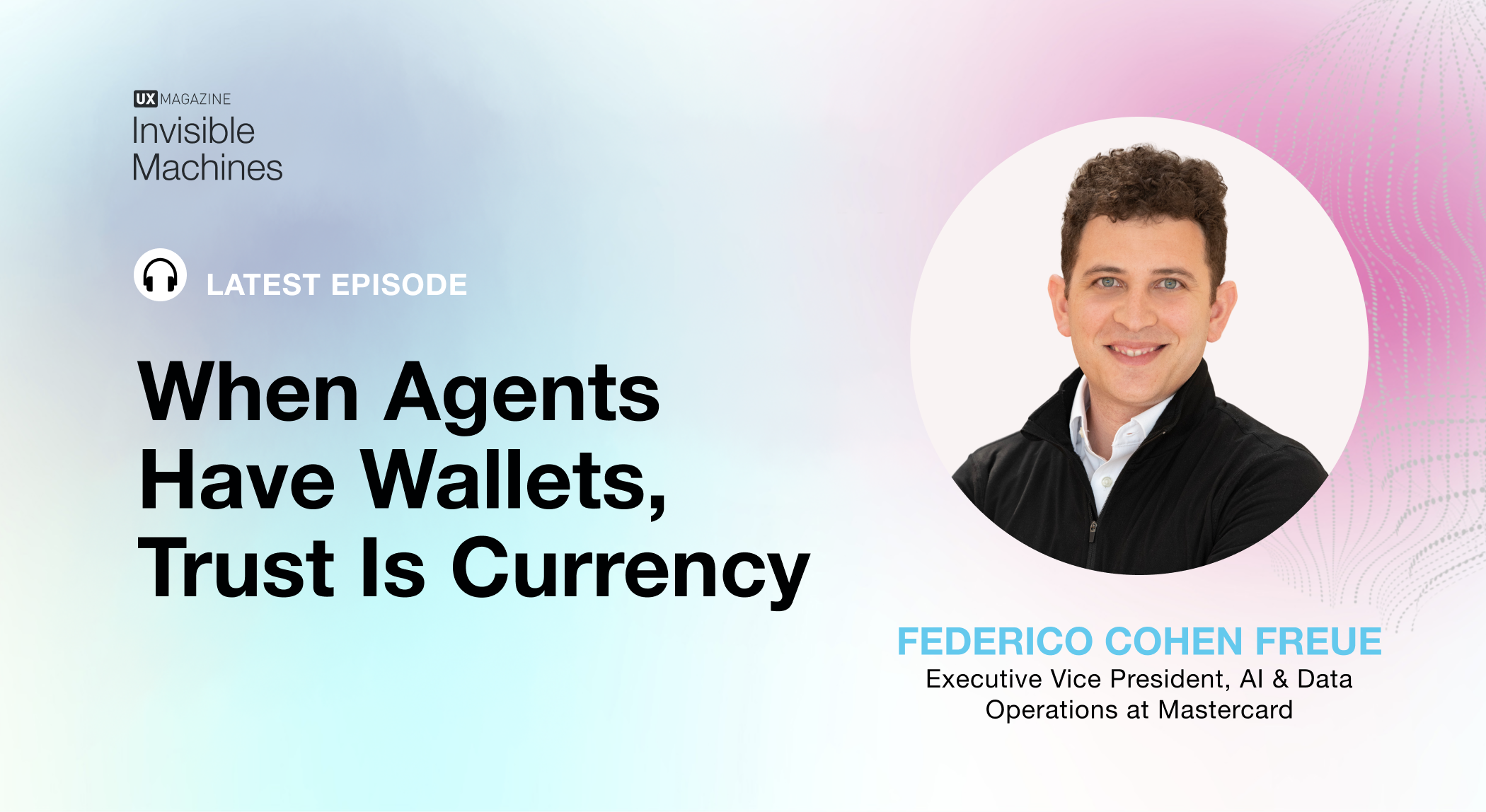
In the high-stakes landscape of global finance, the conversation surrounding Artificial Intelligence has undergone a seismic shift. For Federico Cohen Freue, who helms Mastercard’s central AI and data initiatives, this evolution is measured not just in lines of code, but in the nature of the requests flooding his department. Managing roughly a thousand AI proposals annually, Cohen Freue has observed a profound maturation in the corporate consciousness: the transition from the era of the passive chatbot to the age of the autonomous agent.
For years, organizations fixated on the "Q&A" interface—chatbots designed to simulate conversation. Today, more than half of the proposals crossing Cohen Freue’s desk focus on agentic workflows: AI systems designed not merely to talk, but to take action, interface with complex systems, and execute tasks on behalf of human users. While this shift signals a sophisticated understanding of AI’s potential, it brings with it a daunting reality: the gap between wanting an agent and being prepared to deploy one is vast.
The Ball Bearing Problem: Discerning Polish from Precision
To understand why so many enterprise AI projects fail, one must look past the flashy user interface. Cohen Freue employs a striking analogy to illustrate the fragility of modern AI deployments: the "Ball Bearing Problem."
Imagine two ball bearings, visually identical to the naked eye. One is perfectly machined, engineered with exact tolerances and high-grade materials. The other is a cheap imitation. When held, they appear the same. But place the inferior bearing into an airplane engine, and the result is catastrophic.
"Agent demos work the same way," Cohen Freue notes. "Even a sophisticated observer cannot distinguish a demo that represents a viable, robust solution from one that is a beautifully polished failure waiting to happen."
This visual equivalence is the primary trap for leadership teams. When an AI agent successfully books a travel itinerary in a controlled demo environment, it looks like a finished product. However, in an enterprise production environment, the "engineering" behind that demo—data integrity, edge-case handling, and security protocols—is often nonexistent. Consequently, Mastercard has pivoted toward a philosophy of extreme fluency before deployment. By educating internal teams on what "correctly machined" AI looks like, the organization is not just reducing failure rates; it is fostering a culture of technical literacy that allows staff to identify flaws long before they impact the bottom line.
Strategic Frameworks: Prioritization at Scale
With a thousand incoming ideas annually and a technology stack that evolves weekly, how does a global behemoth like Mastercard maintain focus? The answer lies in a strategy of radical simplicity.
Mastercard utilizes a framework that can be articulated in a single sentence: Use AI to make commerce more secure, smarter, more personal, and to make Mastercard stronger.
This is not a bureaucratic checklist or a compliance mandate; it is a strategic lens. When every department—from fraud detection to product development—uses the same language to evaluate AI initiatives, the process of prioritization shifts from a grueling negotiation to a streamlined conversation. If a proposed project doesn’t tangibly advance one of those four pillars, it is discarded. This simplicity serves as a filter that prevents the "innovation theater" that often plagues large organizations, ensuring that resources are directed only toward initiatives that offer clear, strategic value.
Trust as the New Currency of Innovation
The most pressing frontier for AI in finance is the rise of agentic payments—AI agents empowered to execute transactions on behalf of users. The demand for this is no longer speculative; it is a reality driven by shifts in consumer search patterns and the rapid integration of LLMs into shopping ecosystems.
Mastercard’s posture toward this development is one of cautious, foundational building. Rather than rushing to build the most "exciting" downstream consumer applications—such as multi-vendor autonomous booking or algorithmic negotiation between buyer and seller agents—the company is focusing on the "rules of the road."
This involves establishing robust infrastructure for:
- Agent Identity Verification: Ensuring that the AI agent performing a transaction is who it claims to be.
- Delegated Authority Frameworks: Clearly defining the scope and limits of an agent’s power to spend.
- Merchant Acceptance Standards: Creating a universal set of rules that allow every party in the ecosystem to verify the legitimacy of an agentic transaction.
"Trust is the currency of innovation," Cohen Freue asserts. As transactions become increasingly complex—involving autonomous agents, dynamic pricing, and multi-party coordination—the role of a trusted network doesn’t diminish; it becomes the most critical node in the system. The "middleman" that many predicted would become irrelevant in a decentralized AI future is instead evolving into the ultimate arbiter of safety.
Knowledge Before Action: A New Approach to Enterprise Learning
In the latter half of his strategic analysis, Cohen Freue critiques the traditional enterprise approach to knowledge management. Most companies build a static knowledge base—a document repository—and then wait for users to query it. This reactive model places the burden of inquiry on the employee, assuming they already know what questions to ask.
Mastercard is exploring an alternative: a proactive, AI-first architecture. Instead of a document repository, the goal is a "knowledge model"—a structured, canonically correct map of information. In this system, each concept exists only once, linked to its related ideas with a full history of its evolution.
From this map, the system generates a "learning twin"—a real-time representation of an employee’s current knowledge gaps. The AI then solves what might be termed the "Traveling Salesman Problem" of education: determining the most efficient path for an individual to master a domain. Rather than a static curriculum, the learning path is dynamic, recalculated at every step based on what the user has learned and how the underlying domain knowledge has changed.
This is effectively "GPS for expertise." However, Cohen Freue is quick to point out that this is not merely a technical challenge. "This is a cultural problem," he warns. "Asking people to engage with knowledge as a dynamic, ongoing process rather than a one-time onboarding event requires a fundamental shift in what organizations reward."
Implications: The Sequence of Success
The thread connecting all of Mastercard’s AI initiatives is a strict adherence to sequence: Understand first, then act.
Most enterprise AI initiatives fail because they reverse this order. They attempt to automate a process before they truly understand the data or the knowledge requirements behind it. They deploy agents to perform tasks that the underlying organization has not yet mastered. When these systems fail, the blame is placed on the technology, but the root cause is almost always an "infrastructure of knowledge" deficit.
The reframe offered by Mastercard is essential for any modern enterprise: before asking what an AI agent can do, an organization must ask what it knows. If a company cannot map its own knowledge reliably, it cannot build agents that operate reliably.
Ultimately, Mastercard’s strategy serves as a blueprint for the future of the enterprise. By treating knowledge as a foundational infrastructure, prioritizing strategic clarity over technical experimentation, and centering trust as the non-negotiable prerequisite for automation, the organization is navigating the AI revolution with a level of precision that few others can match. As the lines between human and machine agency blur, the winners will not be those with the most powerful models, but those who have built the most stable, trusted, and knowledgeable foundations upon which those models can act.
 Ammar Sabilarrohman
  Neng Nana
  Sagoh
Sagoh 