
 By Pevita Pearce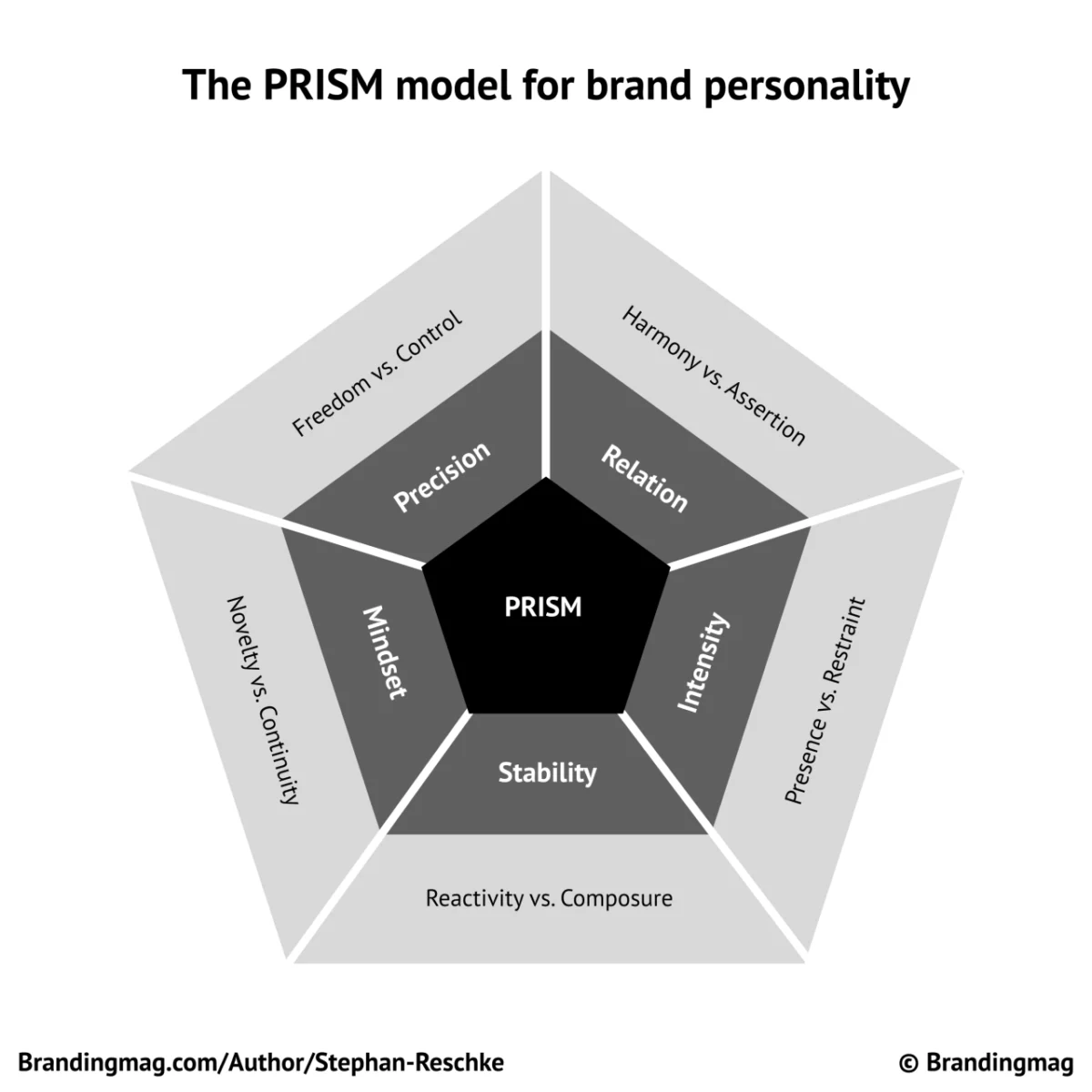
Introduction: The Shift from Tools to Agents
For decades, technology was a static instrument—a lever we pulled or a screen we tapped. Today, that relationship has undergone a fundamental metamorphosis. With the rise of artificial intelligence, technology is no longer something we operate with; it is something we operate in. We have moved from the era of transactional computing to the age of conversational immersion. AI systems are no longer mere conduits for information; they are generative engines that create new context and content in real-time.
As interactions become increasingly human-like, the bridge between consumer and company is being rebuilt by algorithms. This paradigm shift demands a complete rethink of how brands cultivate loyalty. The traditional marketing playbook, long reliant on static archetypes and fixed visual identities, is being rendered obsolete by the autonomy of digital agents. Enter the PRISM model, a sophisticated framework designed to help brands navigate the "Agentic Economy" by defining digital personalities that are as nuanced as the humans they serve.
Chronology of an Evolution: From Lovemarks to Agentic Intelligence
The journey toward this new model has been decades in the making. To understand why PRISM is necessary, one must look at the evolution of brand psychology:
- Early 20th Century: The birth of emotional marketing. Brands began to move away from purely functional advertising, realizing that tapping into consumer emotions drove higher brand equity and long-term loyalty.
- The Archetypal Revolution (2000): Margaret Mark and Carol Pearson published The Hero and the Outlaw, introducing 12 universal brand archetypes. This framework gave marketers a rational system to map irrational consumer behavior, standardizing how brands "looked, spoke, and behaved."
- The Lovemark Era: Kevin Roberts, former CEO of Saatchi & Saatchi, coined the term "Lovemark" to describe brands that command loyalty beyond reason.
- The AI Inflection Point (2024–2026): Arjan Kapteijns, successor to the Saatchi & Saatchi legacy in the Netherlands, challenged the status quo by introducing the concept of "Agentic Lovemarks." Kapteijns argued that in a world where digital agents mediate consumer decisions, emotional connections are now facilitated by machines.
- The Emergence of PRISM (2026): Recognizing that traditional archetypes were too vague for machine interpretation, industry thought leaders began developing the PRISM model—a high-fidelity personality framework based on the "Big Five" (OCEAN) psychology model.
The Problem with Traditional Archetypes
For twenty-five years, the 12-archetype model served as the gold standard. However, it suffers from a fatal flaw in the age of generative AI: interpretation gap.
Archetypes are poetic and conceptual; they provide a "vibe" but lack the technical granularity required for machine-learning instruction. If you tell an AI to act as a "Sage" or a "Hero," the model’s interpretation of those terms is subject to the training data of the LLM. The result is inconsistency—a "randomized logo" of an experience that changes every time a consumer interacts with the brand. In an agentic economy, where consistency is the bedrock of trust, this ambiguity is a liability.
The Legible-Lovable Law: A Technical Mandate
Thomas Marzano, a veteran brand strategist formerly of Philips and ASML, codified the requirement for this new era in his manifesto, Brand Constitutions. He introduced the Legible-Lovable Law, which posits that a brand must satisfy two masters:
- Legible to AI: The brand must be structured in a way that machines can read, parse, and render reliably.
- Lovable by Humans: The brand must retain the emotional resonance that triggers human decision-making.
A brand that is only "legible" is a commodity; a brand that is only "lovable" is invisible to the algorithms that increasingly drive discovery and purchase. The PRISM model serves as the technical bridge between these two states.

Defining the PRISM Model: The Five Core Domains
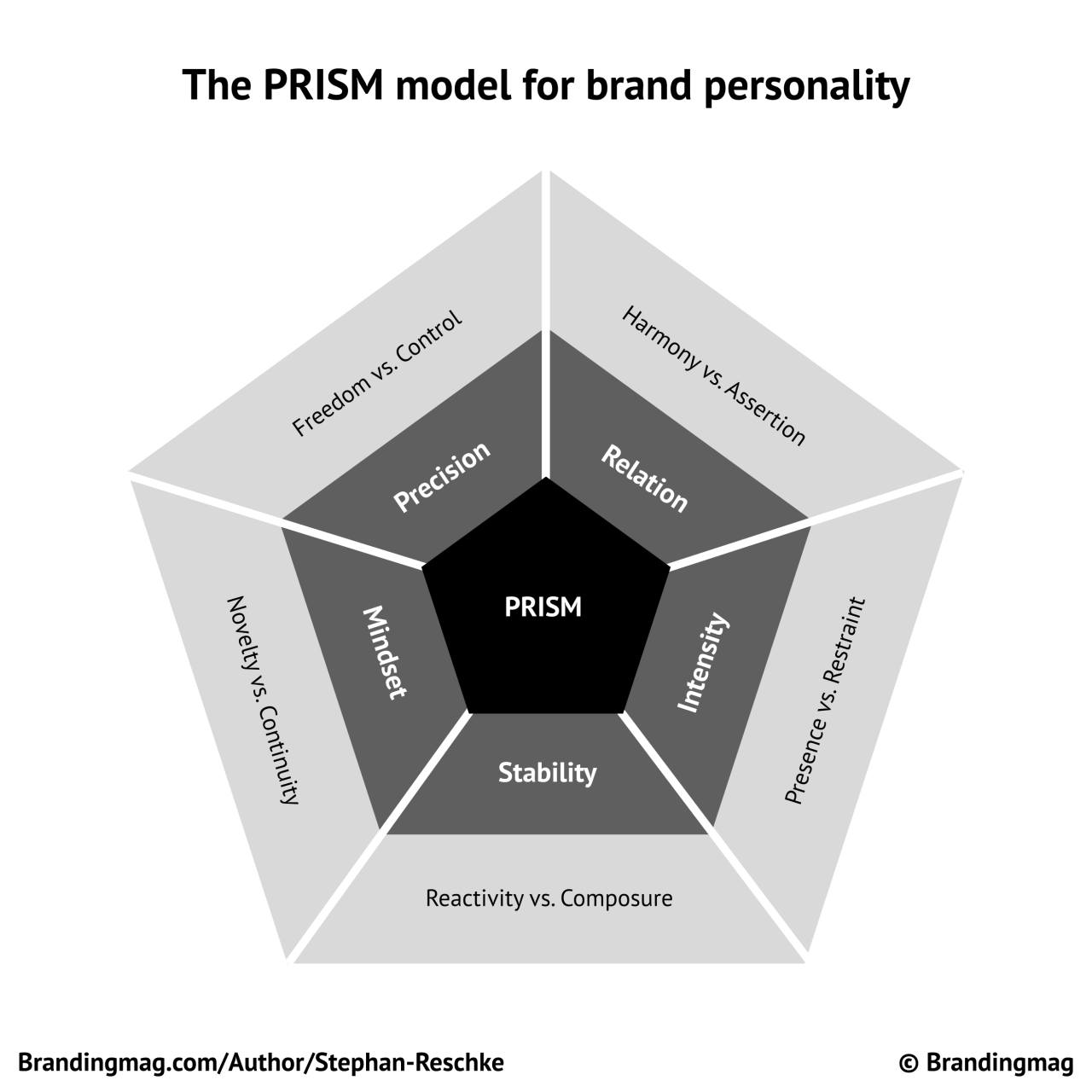
The PRISM model adapts the OCEAN (Openness, Conscientiousness, Extraversion, Agreeableness, Neuroticism) psychology model for a brand context. By moving away from broad archetypes and toward a five-dimensional personality spectrum, PRISM allows for a level of customization that machines can effectively process.
1. Openness (The Brand’s Curiosity)
This domain measures how a brand approaches new ideas, innovation, and unconventional solutions. It dictates how an AI should handle queries regarding change or creative problem-solving.
2. Conscientiousness (The Brand’s Reliability)
This defines the brand’s commitment to structure, order, and responsibility. High conscientiousness in an AI agent manifests as precision, accuracy, and a meticulous adherence to safety protocols and quality standards.
3. Extraversion (The Brand’s Social Energy)
Does the brand lead the conversation, or is it a supportive, quiet listener? This domain determines the "energy level" of the AI’s voice, from assertive and energetic to reserved and contemplative.
4. Agreeableness (The Brand’s Empathy)
Perhaps the most crucial for human connection, this domain sets the tone for how the brand handles conflict, disagreement, and customer service interactions. It governs the AI’s capacity for warmth, compassion, and collaborative spirit.
5. Neuroticism (The Brand’s Emotional Stability)
In a brand context, this measures resilience and composure under pressure. It defines how a brand responds to market crises, service failures, or heated customer feedback, ensuring the AI maintains a consistent, steady "emotional" baseline.
Each of these domains is composed of six defining characteristics, plotted on a scale. This provides a granular, data-driven "personality fingerprint" that can be baked directly into the system prompts of an LLM.
Implications for the Future: From Campaigns to Brand Language
The shift to AI-mediated brand experiences means that the "brand campaign" is being replaced by "brand language." Because LLMs do not "watch" commercials, they interact with data. Therefore, the primary touchpoint between a brand and a customer is now the vocabulary, grammar, and syntax of the brand’s AI agent.
The "Experience Engine"
The PRISM model functions as the primary layer of the "Experience Engine." By inputting the brand’s PRISM profile into the LLM’s system instructions, companies can ensure that every interaction—whether via voice assistant, chatbot, or holographic interface—is consistent. This allows for:
- Dynamic Personalization: The AI can adapt its tone to the user’s personality while staying firmly within the brand’s PRISM-defined guardrails.
- Semantic Integrity: The brand’s values are translated into the machine’s reasoning, ensuring that recommendations and responses reflect the brand’s actual mission.
- Automated Consistency: The AI serves as a brand ambassador that never tires, never has a "bad day," and operates with a singular, high-fidelity personality.
Official Perspectives and Industry Reception
Leading voices in the branding space, including Arjan Kapteijns and Thomas Marzano, emphasize that this is not the end of brand strategy—it is its professionalization. The transition from "artistic" branding to "architectural" branding is an inevitable response to the technological landscape.
While some traditionalists may fear that the PRISM model risks "dehumanizing" the brand, proponents argue the opposite: by giving the machine a precise personality structure, we are finally enabling technology to facilitate the deep, empathetic, and human-centric connections that were previously only possible through physical human-to-human interaction.
Conclusion: The Path Forward
The uncertainty surrounding the Agentic Economy is valid, but the anxiety is unnecessary. The most effective way to address the changing tides of AI-driven commerce is to lean into the structural shift.
The PRISM model offers a blueprint for those ready to leave the era of vague archetypes behind. It invites brands to define their "digital soul" with precision, ensuring they remain legible to the machines that control discovery and lovable to the humans who hold the wallets. The conversation has already begun; the brands that thrive will be those that have learned to speak the language of the future.
 Azzam Bilal Chamdy
  Nana Wu
  Raul Delapena Setiawan