
 By Sagoh
The digital marketing and search engine optimization (SEO) industries breathed a collective sigh of relief on Friday, July 3, 2026, as Google successfully resolved a major data lag within Google Search Console (GSC). The Page Indexing report, which serves as a critical diagnostic dashboard for website owners, had been frozen for more than three weeks.
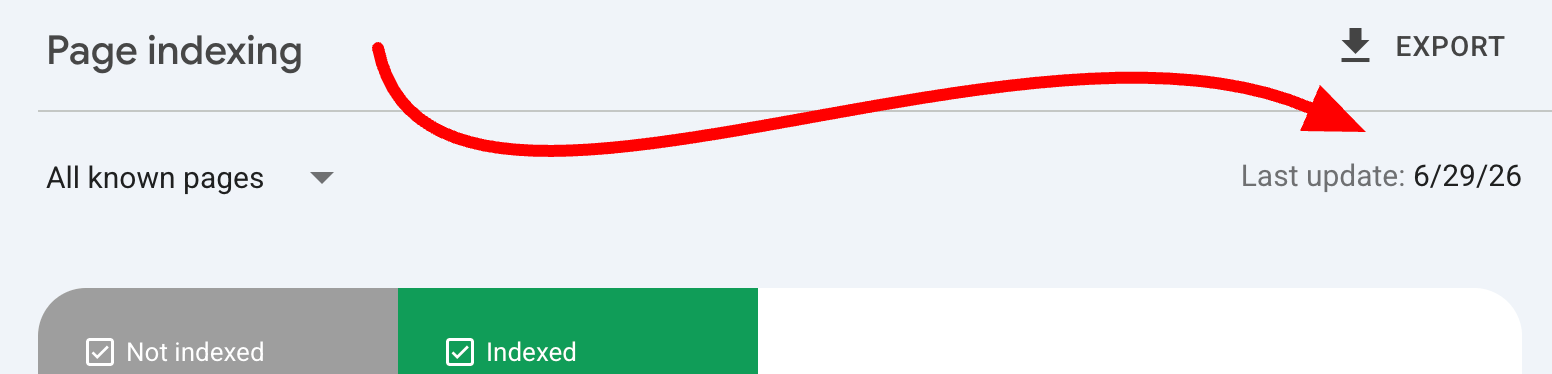
Prior to the resolution, the report was stuck displaying data last updated on June 11, 2026. Following an unannounced update pushed by Google’s engineering teams, the report has now been brought up to speed, displaying fresh diagnostic data up to June 29, 2026.
This prolonged data outage left technical SEOs, webmasters, and digital agencies operating in the dark during a critical period. For twenty-two days, digital teams were unable to verify whether search bots were discovering, rendering, and indexing new web content or if recent site migrations and technical fixes had been successfully processed by Google’s index.
1. Main Facts: The Mechanics of the GSC Freeze
Google Search Console is a free service offered by Google that helps website publishers monitor, maintain, and troubleshoot their site’s presence in Google Search results. Within this platform, the Page Indexing report (formerly known as the Index Coverage report) is arguably the most vital tool for technical health monitoring. It informs webmasters exactly which pages of their website Google has crawled and added to its search index, and which pages have been excluded—along with the specific technical reasons for those exclusions.
On June 11, 2026, the data pipeline feeding the Page Indexing report ceased updating. While Google’s search spiders continued to crawl the web and index pages normally in real-time, the user-facing reporting interface in GSC failed to display any new processing logs.

For over three weeks, the "Last Updated" timestamp remained frozen. This created a massive blind spot for search marketers. On the morning of July 3, 2026, Google refreshed the pipeline, jumping the data forward by nearly three weeks to June 29, 2026.
2. Chronology of the Outage
The timeline of the delay illustrates the mounting tension within the search marketing community as the outage stretched from days into weeks.
| Date | Event / Status | Impact on Webmasters |
|---|---|---|
| June 11, 2026 | Last day of normal, continuous data processing. | The reporting dashboard operates as expected with standard 2-to-3-day latency. |
| June 14–18, 2026 | Initial reports of a delay surface in industry forums. | Webmasters notice the "Last Updated" date remains fixed on June 11. Initial assumptions lean toward a routine minor delay. |
| June 25, 2026 | The delay crosses the two-week mark. | Industry publications, including Search Engine Land and Search Engine Roundtable, formally document the stagnation. SEOs express concern over pending "Validate Fix" requests. |
| June 30, 2026 | The delay reaches a critical three-week threshold. | Digital marketing agencies face difficulties reporting to clients on the success of mid-June site launches, migrations, and technical audit implementations. |
| July 3, 2026 (Morning) | Google deploys an update to the GSC data pipeline. | The Page Indexing report is successfully refreshed, displaying comprehensive data up to June 29, 2026. |
3. Supporting Data & Technical Breakdown
To understand why this delay caused such disruption, it is necessary to examine the technical architecture of the Page Indexing report and how webmasters rely on its granular data points.
The Anatomy of the Page Indexing Report
The GSC Page Indexing dashboard is divided into two primary visual and analytical sections:
- The Status Chart: This interactive graph categorizes the website’s URLs into two primary buckets:
- Indexed (Green): Pages that have been successfully crawled, parsed, and added to the Google Search index, making them eligible to appear in search engine results pages (SERPs).
- Not Indexed (Gray): Pages that Google has discovered but has chosen not to index, or pages that are blocked by intentional technical directives.
- The Impressions Overlay: Users can overlay organic search impressions (how many times a URL appeared in search results) directly onto the indexing chart. This allows SEOs to quickly correlate drops in indexing with sudden losses in organic visibility.
- The Exclusion Reasons Table: Below the chart, Google lists the specific diagnostics preventing indexing. These are classified into distinct error or status categories, such as:
- Server error (5xx)
- Redirect error
- Alternative page with proper canonical tag
- Not found (404)
- Excluded by ‘noindex’ tag
- Crawled – currently not indexed
- Discovered – currently not indexed
The Impact of a Three-Week Reporting Freeze
When these metrics do not update, webmasters lose the ability to perform closed-loop technical validation. For example, if a developer fixes a sitewide canonicalization error on June 15, they would typically request a validation run through GSC.

Under normal circumstances, Google recrawls the affected URLs within several days and updates the status chart. During the three-week freeze, however, these validation queues were stalled in a "pending" state, leaving developers unable to confirm if their fixes had successfully resolved the underlying issues.
4. Official Responses and Community Reaction
Historically, Google has maintained that search engine console reporting delays do not impact actual crawling, indexing, or ranking. The search engine’s algorithmic infrastructure operates independently of the reporting dashboards.
Google’s Position on GSC Latency
While Google’s search advocacy team (including prominent figures like John Mueller and Danny Sullivan) has historically reassured the public that GSC delays are merely "reporting lags" and do not represent search engine indexing failures, the lack of real-time communication during this specific incident drew criticism from industry veterans.
Technical glitches of this duration are rare for Google. The length of this freeze led to speculation among industry experts that Google may have been undergoing a massive infrastructure migration or database optimization project behind the scenes, causing a temporary bottleneck in the data extraction pipelines that feed Search Console.
The SEO Community’s Response
The SEO community reacted with a mixture of frustration and relief. Barry Schwartz, a highly respected search technologist and Contributing Editor to Search Engine Land, heavily tracked the development of the delay. Writing on Search Engine Roundtable, Schwartz highlighted the challenges faced by SEOs trying to debug websites without access to current data.
On social media platforms such as X (formerly Twitter) and LinkedIn, the sentiment was clear: while search professionals understood that actual indexing was still occurring, the lack of updated diagnostic data made client reporting and technical troubleshooting nearly impossible for most of June. Many noted that explaining a "three-week Google reporting bug" to non-technical corporate stakeholders is a notoriously difficult task for agencies.
5. Implications for SEOs and Webmasters
Now that the Page Indexing report has been updated with data through June 29, webmasters and technical SEO teams must immediately begin a triage process to address the backlog of data.
Step-by-Step Triage Protocol for Webmasters
With the data feed restored, digital teams should execute the following steps to ensure their sites are performing correctly:
- Verify "Validate Fix" Requests: Navigate to the Page Indexing report and check any validation campaigns initiated in mid-June. Verify whether the status has transitioned from "Pending" to "Passed" or "Failed."
- Analyze the "Discovered – Currently Not Indexed" Trend: A sharp spike in this category during the delay period could indicate that Google discovered a large volume of new URLs but lacked the crawl budget or rendering resources to index them.
- Monitor XML Sitemap Processing: Cross-reference the newly updated indexing numbers with your active XML sitemaps to ensure that newly published content is being successfully crawled and indexed.
- Audit Soft 404 and Redirect Errors: Look for any sudden increases in non-indexing categories that occurred during the black-out period, particularly if your team deployed code releases or content updates in mid-to-late June.
The Strategic Takeaway: Building Redundancy
This incident highlights a fundamental vulnerability in modern digital marketing: an over-reliance on a single, free proprietary tool from Google. To mitigate the impact of future Search Console outages, enterprise SEO teams should invest in building independent monitoring redundancies.
By utilizing server log file analyzers, third-party cloud crawlers (such as Lumar or Screaming Frog), and monitoring tools that leverage Google’s Indexing API, technical teams can maintain high-level visibility into search engine bot behavior—even when Google’s official reporting dashboards experience extended downtime.
 Jia Lissa
  Nana Muazin
  Layla Zulfa