
 By Asep Darmawan
In an increasingly crowded digital landscape, where the average consumer is bombarded with thousands of marketing messages daily, the ability to be recognized—and trusted—is the ultimate competitive advantage. For modern organizations, the key to this recognition lies not in a flashy logo or a viral trend, but in the intangible yet powerful force of a brand voice.

A brand voice is the consistent, distinct way a company portrays itself through language. It is the verbal manifestation of a brand’s soul, encompassing tone, vocabulary, and stylistic choices. When executed correctly, it transforms a faceless corporate entity into a relatable persona, fostering deep connections that translate directly into loyalty and revenue.

Defining the Core: What is Brand Voice?
At its essence, a brand voice is your company’s personality expressed through words. It is the thread that ties together every piece of communication, from a high-stakes press release to a casual reply in a TikTok comment section.
While many professionals conflate "voice" with "tone," the two are distinct. Think of your brand as a human being: your personality (your voice) remains constant regardless of the situation. However, the way you speak (your tone) shifts based on the context—whether you are celebrating a milestone or navigating a crisis. A strong brand voice is fixed, while brand tone is fluid, allowing for necessary adjustments in emotional temperature.
The Five Pillars of a Strong Brand Voice
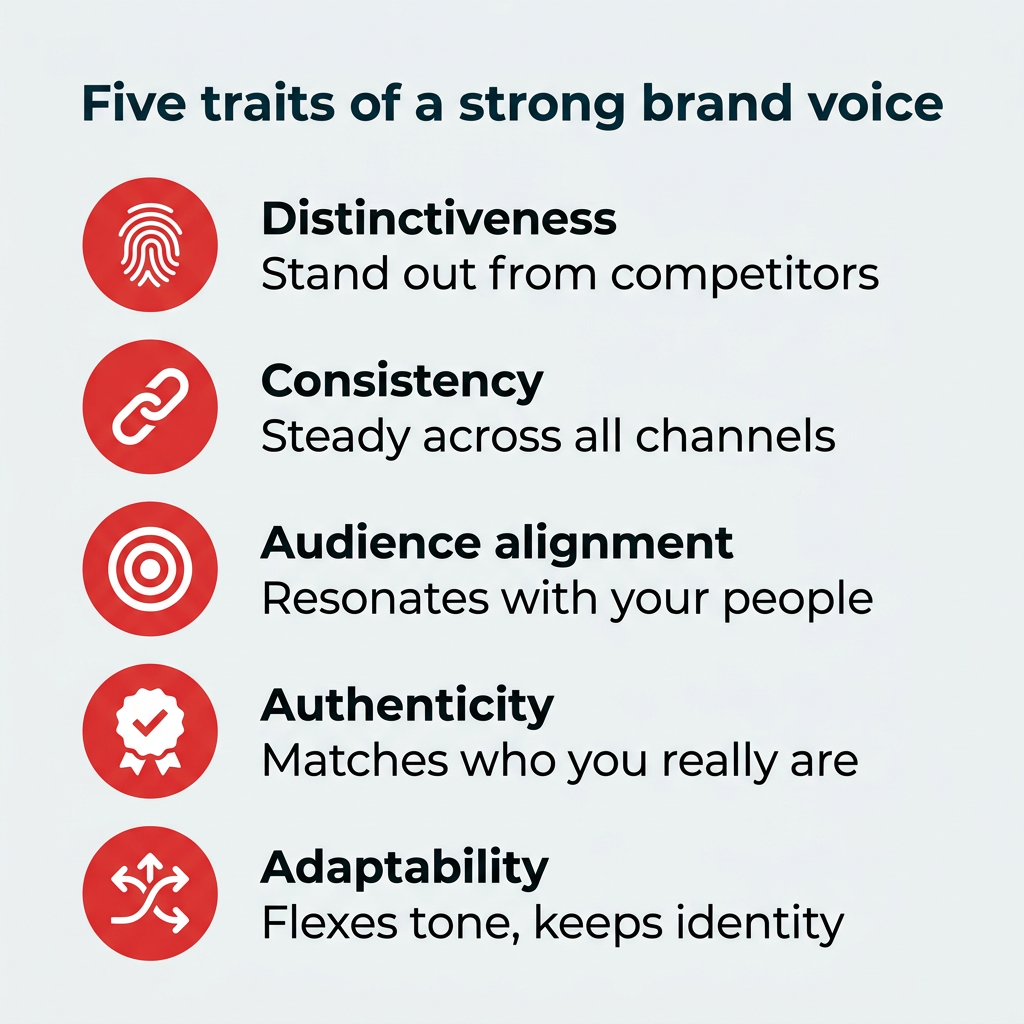
To transcend simple messaging, a brand voice must embody five core traits:
- Distinctiveness: It must be instantly recognizable, standing out from the "sea of sameness" in your industry.
- Consistency: It must remain uniform across all platforms to prevent audience confusion.
- Audience Alignment: It must speak the language of your target demographic, not just the language of your board of directors.
- Authenticity: It must reflect genuine values, as modern consumers are highly adept at sniffing out "performative" branding.
- Adaptability: It must be flexible enough to address different platforms—like LinkedIn’s professional atmosphere versus Instagram’s visual-first environment—without losing its core identity.
The Financial and Strategic Implications of Consistency
The impact of a consistent voice is not merely aesthetic; it is a measurable business imperative. Research consistently shows that brands that maintain a coherent voice across all channels can see revenue increases of up to 33%.

When a brand speaks with a singular, recognizable personality, it creates a "cognitive shorthand" for the consumer. Recognition happens faster, trust is established more quickly, and the brand becomes significantly harder for competitors to displace. Furthermore, in an era where AI-generated content is becoming ubiquitous, a unique, human-centric brand voice serves as a firewall against generic, trust-eroding communications. Data from Klaviyo and Datalily indicates that consumers are four times more likely to distrust a brand that relies on overtly robotic or AI-scripted content. A defined voice provides the necessary "north star" to benchmark all content—human or AI-assisted—ensuring quality control.
A Chronological Roadmap to Building Your Brand Voice
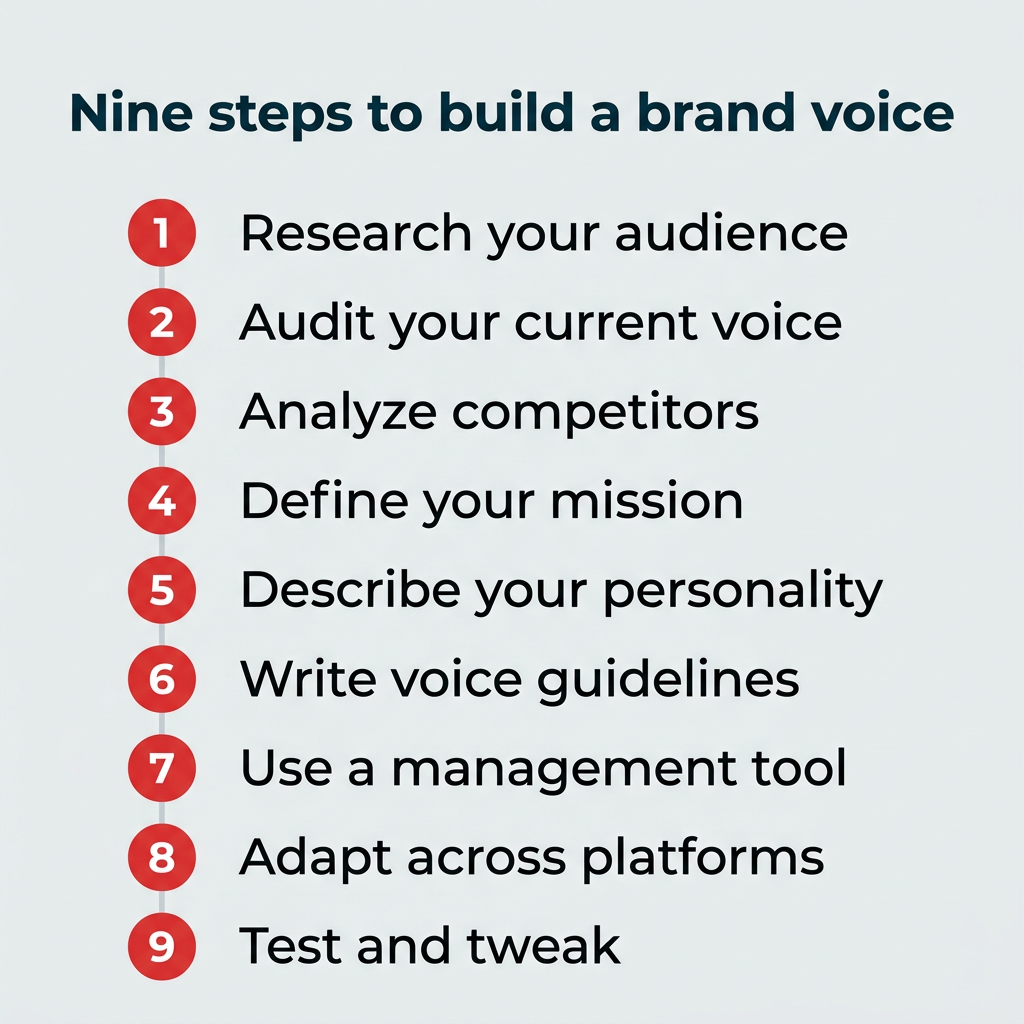
Building a voice is not an overnight task; it is a strategic process that requires research, documentation, and rigorous testing.

Phase 1: Discovery and Research
Before you can define how you speak, you must understand who you are speaking to. This begins with market research. By analyzing where your audience hangs out, what they value, and how they express themselves, you gain the insights necessary to mirror their energy. Simultaneously, conduct a "voice audit" of your existing content. Identify what is currently resonating with your audience and isolate the elements that feel "off-brand" or disjointed.

Phase 2: Competitive Benchmarking
Analyze your competitors to understand the current "noise" in your space. If every firm in your sector sounds overly formal and corporate, you have an opportunity to disrupt the market with a warmer, more human tone. The goal is to find a "white space" in the conversation that your competitors are ignoring.

Phase 3: Defining the Persona
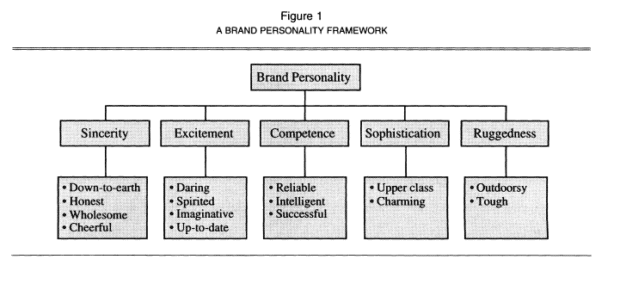
Utilize established frameworks, such as Jennifer Aaker’s Dimensions of Brand Personality (sincerity, excitement, competence, sophistication, and ruggedness), to categorize your brand. By choosing a set of primary traits, you can build a profile that feels like a real person. This makes it infinitely easier for your creative teams, external agencies, and freelancers to generate content that sounds like "you" on the first draft.
Phase 4: Documentation and Deployment
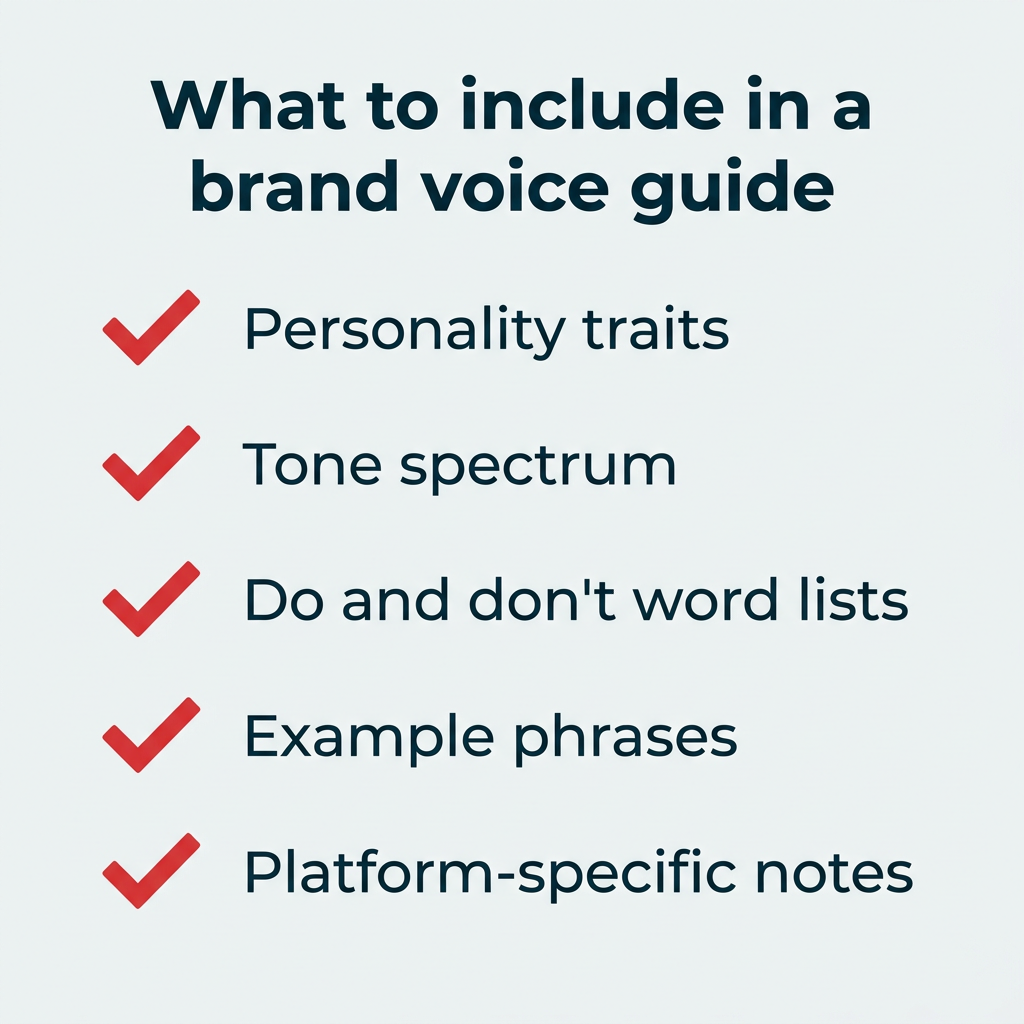
Your voice must live in a central, accessible document—your brand style guide. This should include:

- A Voice Chart: A table outlining your core traits, descriptions, and concrete examples of "Do" vs. "Don’t" language.
- Platform-Specific Nuance: Guidelines on how to translate your core voice for different channels (e.g., how to be professional on LinkedIn without being stiff).
- Crisis Communication Scripts: Pre-approved tones for handling negative feedback or sensitive topics.
Real-World Examples: From Water to Workplace Software
The power of a committed brand voice is best illustrated by those who have turned it into a primary differentiator.

- Liquid Death: By adopting a "heavy metal" persona, they turned the commodity of canned water into a lifestyle brand. Their voice is aggressive, irreverent, and undeniably distinct, proving that even a basic product can capture a massive share of voice through personality.
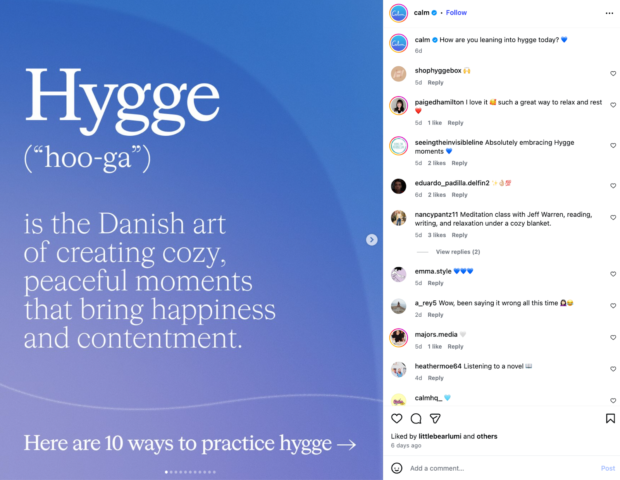
- La Croix: In stark contrast, La Croix leans into a bubbly, optimistic, and colorful voice. By utilizing emojis, puns, and a "bestie" tone, they have cultivated a community of loyalists who feel that the brand is part of their daily joy.
- Slack: Slack demonstrates that B2B software doesn’t have to be sterile. Their voice is friendly, clear, and slightly witty, effectively humanizing complex features and making the workplace feel more approachable.
- Trader Joe’s: Trader Joe’s uses a conversational, storytelling approach. Instead of listing product specs, they act like a knowledgeable friend in the aisle, sharing the "why" and "how" behind every item.
Implications for Modern Organizations
As we look toward the future, the importance of brand voice will only intensify. With the rise of social-led commerce and the constant flux of social media algorithms, your voice is the only constant. It is your strongest asset in protecting your brand from impersonation and ensuring that your team remains aligned, regardless of whether they are drafting an internal email or a global marketing campaign.

Maintaining Relevance through Iteration
A brand voice is not a static monolith. It must evolve alongside your business and the shifting cultural landscape. The strategy for 2024 may not be appropriate for 2026. Therefore, treat your brand voice as a "living" document. Monitor social analytics, observe how your audience reacts to shifts in tone, and be prepared to refine your guidelines.

Final Thoughts
In a digital world, the most successful brands are those that can hold a conversation. By investing the time to define, document, and consistently apply your brand voice, you are doing more than just choosing words; you are building a bridge to your audience. Whether you are a small startup or a multinational corporation, the commitment to a clear, human, and authentic voice is the surest way to cut through the digital noise and build a brand that lasts.

Strategic Checklist for Implementation:
- Conduct an annual voice audit: Review your top-performing and lowest-performing content.
- Centralize your guidelines: Ensure every department has access to the brand voice documentation.
- Use social media management tools: Platforms like Hootsuite allow for approval workflows that ensure no content goes live without being vetted against your brand voice standards.
- Empower your teams: Train staff not just on the "what" of your products, but the "how" of your personality.
 Suro Senen
  Jia Lissa