
 By Dwi Wanna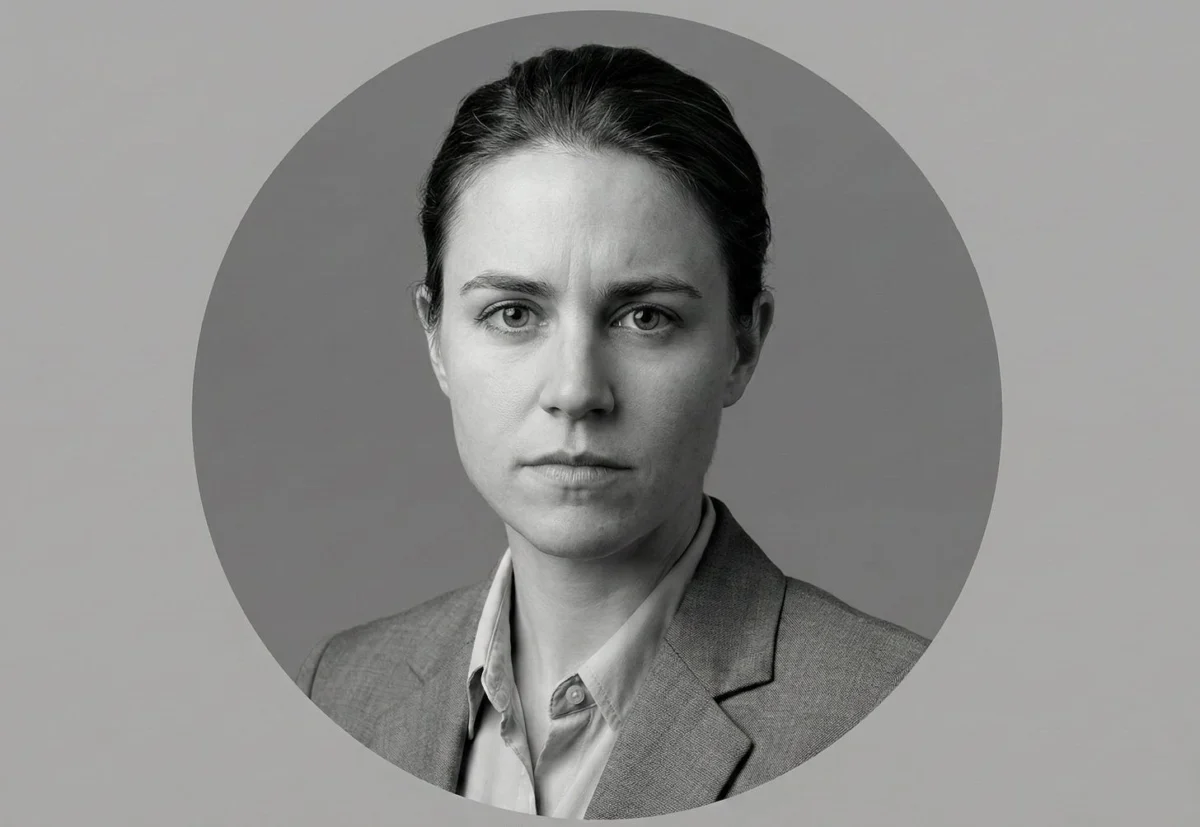
The traditional academic "chalk talk"—a rite of passage for tenure-track faculty candidates—has long been viewed as the ultimate crucible of intellectual capability. It is a session where candidates are expected to stand before a committee, armed with nothing but a dry-erase marker, to spontaneously articulate the future of their research programs. However, a recent, controversial interview at a prominent Connecticut-based research university has ignited a fierce debate about the obsolescence of this tradition in the age of generative artificial intelligence.
The candidate, a postdoctoral researcher currently affiliated with Stanford University, arrived at the interview with a radical, modern approach to the ritual: she attempted to conduct the presentation using the assistance of ChatGPT. Her subsequent rejection and the resulting public discourse have highlighted a widening chasm between the practical reality of modern scientific inquiry and the performative expectations of traditional university hiring committees.
The Chronology of an Academic Collision
The interview process had been, by all accounts, a success. The candidate’s research seminar was lauded, and her one-on-one meetings with faculty members were described as highly productive. The tension only materialized when the committee transitioned to the "chalk talk" segment of the visit.
The candidate, who requested anonymity due to her continued presence on the job market, entered the room, placed her laptop on the conference table, and prepared to interface with her generative AI tools to assist in the presentation. The search committee, anticipating a display of raw, unassisted cognitive performance, was immediately taken aback.
According to witnesses, the interaction was brief and jarring. When the committee chair questioned the presence of the laptop, the candidate argued that using AI was not an "add-on," but rather the core of her daily scientific workflow. When pushed to proceed "from memory" and "in her own words," the candidate struggled, noting that her cognitive processes have evolved to function as a collaborative loop with large language models (LLMs). The committee, viewing this reliance as a lack of foundational knowledge and independent thought, concluded the interview shortly thereafter.
The "Prompt-Box" Paradigm: A New Scientific Workflow
To understand the candidate’s perspective, one must examine how the nature of "scientific work" has shifted over the last three years. The candidate asserts that her research—spanning complex topics like phase separation in transcriptional regulation—is fundamentally a collaborative effort between her own oversight and the computational power of LLMs.
How the Modern Lab Operates
The candidate’s workflow, which she maintains is the standard for a new generation of scientists, includes:
- Literature Synthesis: Using AI to identify gaps in research and generate draft introductions for manuscripts.
- Experimental Design: Utilizing models like Claude to suggest specific, optimized controls for complex CRISPR knockout studies.
- Grant Development: Deploying LLMs to draft specific aims for R01 grant applications that balance innovation with the conservative expectations of NIH study sections.
From this viewpoint, the "chalk talk" is not merely outdated; it is a performance of an archaic skill set. The candidate argues that asking a modern researcher to memorize the fine details of a molecular pathway is akin to asking a professional carpenter to construct a house without using power tools. She maintains that "independent thinking" is no longer about holding facts in biological memory, but about the quality of the "prompts" one constructs and the rigor with which one edits the output.
Implications for Higher Education
The rejection of this candidate carries significant implications for the future of academic hiring. As universities continue to value "performative intellectualism"—the ability to extemporize on complex subjects without technological assistance—they may be systematically filtering out a new generation of scientists whose skills are optimized for AI-augmented discovery.
The Conflict of Pedagogical Values
The academic committee’s rejection email cited "concerns about independent thinking" and "foundational knowledge." This reflects a deeply held belief in the ivory tower: that a scientist’s value is tied to their internal library of knowledge.
However, critics of this traditionalist view argue that the "human-only" standard ignores the reality of 21st-century science. If a researcher can produce high-impact papers, secure funding, and mentor students effectively, does it matter if the pathway map is stored in their hippocampus or in a secure cloud-based repository?
The Industry Pivot
The candidate’s experience mirrors a growing trend: high-level researchers finding a warmer reception in private industry than in traditional academia. Corporate sectors, particularly in biotechnology and pharmaceutical research, are reportedly embracing candidates who demonstrate an ability to "rapidly generate and synthesize information" through AI tools.
In industry, the focus is on the "deployment rate"—the speed and efficiency with which a hypothesis can be tested and a solution brought to market. By this metric, the candidate’s reliance on LLMs is an asset, not a liability. As academia continues to struggle with the integration of AI in research and pedagogy, it faces the risk of a "brain drain," where the most technologically fluent researchers abandon the university for the more pragmatic environments of the private sector.
Expert Analysis: Is the Chalk Talk Dead?
Dr. Marcus Thorne, a professor of molecular biology who has sat on dozens of search committees, suggests that the "chalk talk" is designed to test for more than just memory. "We aren’t looking for a human encyclopedia," Thorne says. "We are looking for the ability to synthesize, pivot, and handle uncertainty under pressure. The problem isn’t the technology; it’s the reliance on the technology as a crutch during the one moment we have to assess how a candidate thinks when they are stripped of their safety nets."
Conversely, proponents of the candidate’s approach argue that the "safety net" argument is flawed. "We don’t live in a world where we are stripped of our tools," argues Dr. Elena Rossi, a digital humanities scholar. "If you take away a pilot’s GPS and ask them to navigate by the stars, their failure to do so doesn’t make them a bad pilot. It just makes the test irrelevant to the actual job."
Conclusion: The Academy at a Crossroads
The incident in Connecticut serves as a microcosm for a broader, painful transition period within higher education. As AI continues to redefine the boundaries of human cognition and professional practice, universities will eventually be forced to choose: will they continue to gatekeep positions based on the mastery of 20th-century methods, or will they evolve to recognize that the "co-investigator" model of AI-human partnership is the future of discovery?
For the candidate, the rejection was a stinging reminder of the academy’s resistance to change. For the rest of the scientific community, it is a warning. The next generation of scientists is being trained in a landscape where the "prompt box" is as essential as the microscope. If institutions fail to recognize this, they may find themselves presiding over an intellectual tradition that is perfectly preserved, yet fundamentally disconnected from the world it claims to study.
As for the candidate, she remains hopeful, though she admits her "independent" research vision is now permanently housed in a Google Doc, ready for the next committee that is willing to look at the screen.
 rifanmuazin
  Layla Zulfa
  Evan Lee Salim