
 By Asep Darmawan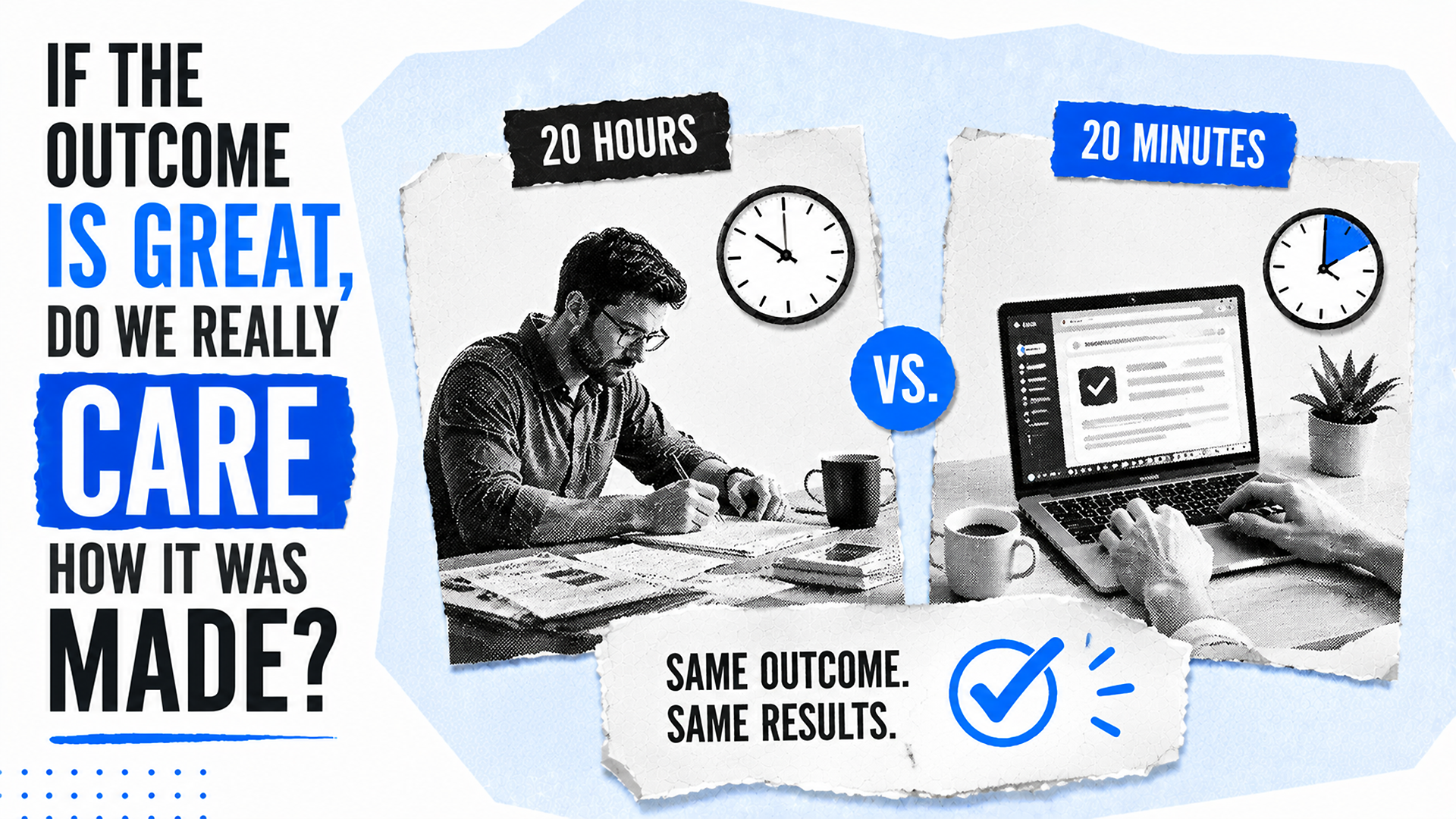
By Journal Staff
1. Main Facts: The Friction of the 20-Minute Deliverable
Consider a common scenario unfolding in boardrooms and agency-client meetings worldwide: A client receives two distinct strategic deliverables. Both solve the exact problem they were commissioned to address. Both are highly accurate, actionable, and lead to identical, successful business outcomes. The client is initially delighted, seeing no discernible difference in the quality of the results.
Then, the curtain is pulled back. The client discovers that Deliverable A took an experienced consultant 20 hours of manual labor to draft, refine, and format. Deliverable B took the same consultant 20 minutes, leveraging a highly optimized generative artificial intelligence workflow.
Suddenly, the client’s satisfaction evaporates, replaced by skepticism and a barrage of questions:
- “Why am I paying thousands of dollars for 20 minutes of work?”
- “Am I being overcharged if a machine did the heavy lifting?”
- “Should we renegotiate our retainer if your operational costs have plummeted?”
This tension highlights a profound psychological paradox at the heart of the modern knowledge economy. While professionals enthusiastically adopt generative AI tools to streamline their workflows and buy back their time, they face severe friction when their clients discover that those same tools were used to produce paid deliverables.
This friction was recently spotlighted in a viral LinkedIn poll conducted by SEO consultant and industry commentator Nick LeRoy. LeRoy posed a fundamental question to his network: If the outcome of a service is outstanding, does it actually matter how it was produced?
                  THE CLIENT DILEMMA

          ┌────────────────────────────────┐
          │   Excellent Business Outcome   │
          └───────────────┬────────────────┘
                          │
            ┌─────────────┴─────────────┐
            ▼                           ▼
  ┌───────────────────┐       ┌───────────────────┐
  │   Deliverable A   │       │   Deliverable B   │
  │   (20 Hours of    │       │   (20 Minutes of  │
  │   Manual Labor)   │       │   AI-Assisted Work)│
  └─────────┬─────────┘       └─────────┬─────────┘
            │                           │
            ▼                           ▼
  ┌───────────────────┐       ┌───────────────────┐
  │  Client Reaction: │       │  Client Reaction: │
  │ "This is highly   │       │ "Why am I paying  │
  │     valuable."    │       │  for 20 minutes?" │
  └───────────────────┘       └───────────────────┘
The resulting debate revealed that the primary objections to AI-generated deliverables have very little to do with the quality of the final output. Instead, they stem from a deeply ingrained cognitive bias that equates human effort with financial value, clashing head-on with a rapidly accelerating technological reality.
2. Chronology: The Evolution of Billing and Value Models
To understand why the integration of generative AI feels so disruptive today, it is necessary to trace how the professional services sector has historically measured and monetized value.
┌─────────────────────────────────────────────────────────────────────────┐
│                           HISTORICAL TIMELINE                           │
├───────────────────┬─────────────────────────────┬───────────────────────┤
│ Era               │ Pricing Model               │ Core Metric           │
├───────────────────┼─────────────────────────────┼───────────────────────┤
│ Industrial Era    │ The Billable Hour           │ Time & Physical Labor │
│ Digital/Info Age  │ Value-Based Pricing         │ Expertise & Outcomes  │
│ Generative AI Era │ The Accountability Premium  │ Trust & Risk-Mitigation│
└───────────────────┴─────────────────────────────┴───────────────────────┘
Phase 1: The Industrial Legacy and the Billable Hour (Late 19th Century to Present)
The modern billing paradigm is a direct descendant of industrial-era labor models. In factories, productivity was directly proportional to time spent on the assembly line. When professional services—such as law, accounting, and advertising—institutionalized in the 20th century, they adopted the "billable hour" as their primary currency.
Under this model, value is explicitly linked to effort. If an agency spends 40 hours on a campaign, the client feels comfortable paying for 40 hours of work. This system incentivizes inefficiency, as service providers are financially rewarded for taking longer to complete tasks.
Phase 2: The Shift to Value-Based Pricing (Late 20th Century to 2022)
As specialized knowledge became more critical than brute-force labor, forward-thinking professionals began pushing back against hourly billing. They popularized value-based pricing, arguing that clients should pay for the results of expertise, not the time spent executing it.
This shift is famously illustrated by the classic, widely circulated anecdote of the broken ship engine:
A massive cargo ship’s engine failed, halting operations and costing the owners thousands of dollars per hour. After several elite mechanics failed to fix it, they brought in an engineer with 40 years of experience.
The engineer inspected the engine for a few minutes, pulled a small hammer from his bag, and tapped a specific valve once. The engine instantly roared back to life.
A week later, the shipowners received an invoice for $10,000. Furious, they demanded an itemized bill. The engineer sent back the following breakdown:
- Tapping the engine with a hammer: $1.00
- Knowing where to tap: $9,999.00
The moral of the story became the rallying cry for value-based consultants: clients are not paying for the physical action; they are paying for the decades of accumulated expertise that made the action possible.
Phase 3: The Generative AI Shockwave (Late 2022 to Present)
The launch of ChatGPT in November 2022 shattered this delicate equilibrium. For decades, "knowing where to tap" required a human brain. Suddenly, generative AI models could synthesize vast amounts of information, draft code, write copy, and perform complex analysis in seconds.
The time-to-output ratio collapsed. Tasks that previously required 20 hours of senior-level synthesis can now be drafted in 20 minutes. This sudden shift has forced a reckoning: when the "effort" required to deploy expertise approaches zero, how do we price the output?
3. Supporting Data: The Psychology of the "Effort Heuristic"
The friction surrounding AI deliverables is deeply rooted in a cognitive bias known in behavioral economics as the "Effort Heuristic."
Behavioral Science Insights
Coined by researchers Justin Kruger, Derrick Wirtz, and others in a seminal 2004 study, the effort heuristic is a mental shortcut where people use the perceived effort invested in an object or service as a proxy for its quality and monetary worth.
In their experiments, participants were shown identical paintings or read identical poems. Those who were told the work took months to create rated it significantly higher in quality, value, and aesthetic appeal than those told it took only a few hours.
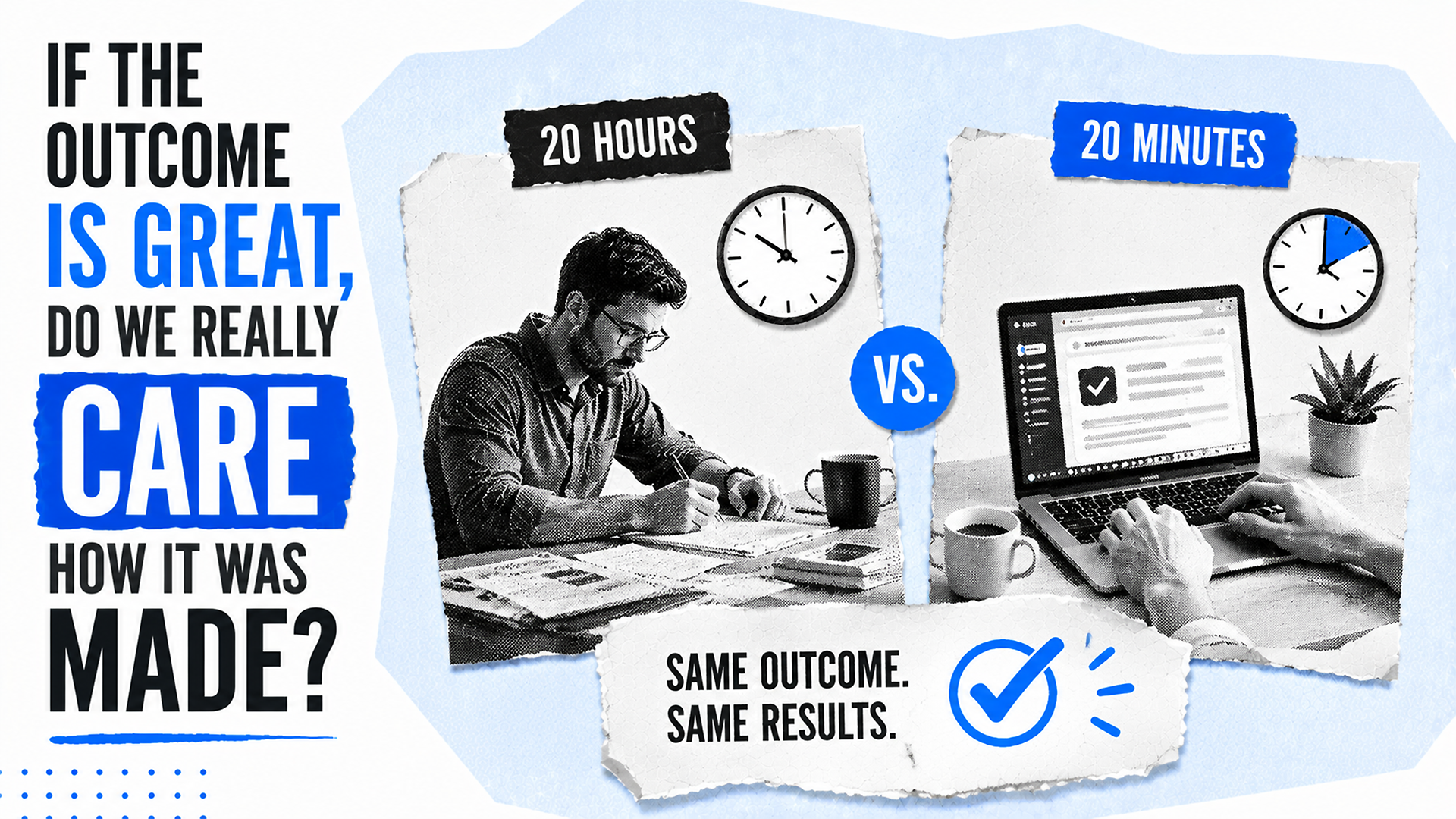
THE EFFORT HEURISTIC IN PRACTICE

  High Perceived Effort (20 Hours) ──► High Perceived Value ──► High Price Justified
  Low Perceived Effort (20 Mins)   ──► Low Perceived Value  ──► Price Contested
When applied to generative AI, the effort heuristic backfires on service providers. Because the client knows an AI can generate a comprehensive SEO audit or a marketing strategy in seconds, they perceive the effort—and therefore the value—as negligible, regardless of how effectively the output solves their business problem.
Industry Poll Data
This psychological friction is clearly reflected in industry sentiment. In Nick LeRoy’s LinkedIn poll, which gathered responses from hundreds of marketing, SEO, and business professionals, a telling dichotomy emerged:
- The Pragmatic Majority: A significant portion of respondents argued that the tool is irrelevant if the business metrics (ROI, traffic, conversions) are met. For these professionals, the focus must remain entirely on outcomes.
- The Skeptical Minority: A vocal group of buyers expressed deep discomfort with paying premium rates for automated outputs. Their arguments were not centered on the quality of the work, but on transparency, fairness, and the feeling of being "arbitraged" by agencies markups.
This data suggests that the primary barrier to AI adoption in B2B transactions is not a technological limitation, but a trust gap exacerbated by traditional pricing structures.
4. Official Responses and Industry Perspectives
As this tension escalates, agency leaders, corporate procurement officers, and legal experts are establishing new guidelines to navigate the AI-human collaborative boundary.
The Procurement Backlash: Demanding "AI Disclosures"
Corporate procurement departments are actively adjusting their vendor agreements to protect against what they view as "AI margin inflation."
"We are seeing an increase in master service agreements (MSAs) that explicitly require agencies to disclose whether generative AI was used in the creation of deliverables," says Sarah Jenkins, a corporate procurement consultant specializing in agency contracts. "Clients are demanding to know if they are paying for bespoke human strategic thinking or an optimized prompt. If it’s the latter, they expect to see those cost savings passed down to them in the form of lower fees."
The Agency Defense: The Premium of Human Judgment
Conversely, agency leaders argue that the value of their work has actually increased in the AI era, because the risks of unchecked automation are catastrophic.
In an editorial response on Search Engine Land, contributors pointed out that while AI can accelerate execution, the human professional remains the vital filter of quality and brand safety:
"The premium won’t come from refusing to use AI. It will come from judgment, taste, decision-making, communication, and accountability. AI can accelerate execution, but humans still decide what should be built, what should be published, and what risks are acceptable."
5. Implications: The Rise of the "Accountability Premium"
The transition from effort-based valuation to outcome-based valuation has profound implications for the future of professional services, corporate liability, and human labor.
1. The Redefinition of Risk and Liability
The most critical argument against pure AI automation is that algorithms cannot bear accountability.
If an AI-generated SEO strategy inadvertently violates Google’s spam policies and wipes out a client’s organic traffic, the client cannot sue the LLM. If an AI-drafted legal brief contains hallucinated case law—as has occurred in several high-profile legal scandals—the court holds the human attorney responsible, not the software.
               THE ACCOUNTABILITY SHIELD

         ┌──────────────────────────────────┐
         │       Generative AI Tool         │
         │  (Speeds up execution & drafts)  │
         └────────────────┬─────────────────┘
                          │ (Produces Output)
                          ▼
         ┌──────────────────────────────────┐
         │     Human Professional / Agent   │
         │  (Applies taste, verifies facts, │
         │   assumes legal liability)       │
         └────────────────┬─────────────────┘
                          │ (Signs Name / Delivers)
                          ▼
         ┌──────────────────────────────────┐
         │             Client               │
         │   (Receives secure, guaranteed   │
         │            outcome)              │
         └──────────────────────────────────┘
Therefore, when a client pays a premium for a deliverable, they are no longer paying for the manual labor of creation. They are paying for the Accountability Premium—the assurance that a qualified human expert has verified the work, signed their name to it, and assumed the professional and legal liability for the outcome.
2. The Death of the Billable Hour
The proliferation of AI will inevitably force the final demise of hourly billing. Agencies that cling to time-tracking as their primary revenue driver will find themselves in a race to the bottom, as competitors leveraging AI will easily underbid them on time while delivering comparable or superior results.
To survive, service providers must transition to:
- Flat-Rate, Value-Based Pricing: Pricing based on the complexity of the problem solved and the financial impact of the solution.
- Performance-Based Retainers: Tying agency compensation directly to key performance indicators (KPIs), such as lead generation, revenue growth, or search visibility.
3. The "Outcome Test" for Deliverables
To determine whether the use of AI in a workflow is ethical and valuable, professionals and clients alike should apply the Outcome Test. This framework shifts the conversation away from the tools used and back toward business efficacy:
                  THE OUTCOME TEST

          ┌──────────────────────────────┐
          │  Does the deliverable meet   │
          │    all quality standards?    │
          └──────────────┬───────────────┘
                         ▼ Yes
          ┌──────────────────────────────┐
          │    Does it solve the exact   │
          │   business problem posed?    │
          └──────────────┬───────────────┘
                         ▼ Yes
          ┌──────────────────────────────┐
          │   Is it safe, compliant,     │
          │     and free of errors?      │
          └──────────────┬───────────────┘
                         ▼ Yes
          ┌──────────────────────────────┐
          │     Does a human assume      │
          │     full accountability?     │
          └──────────────┬───────────────┘
                         ▼ Yes
          ┌──────────────────────────────┐
          │   The tool used is academic. │
          │   The value is fully met.    │
          └──────────────────────────────┘
If a deliverable successfully passes all four stages of the Outcome Test, the specific mechanism of its creation becomes academic.
Conclusion: The Winners of the AI Transition
Ultimately, the professionals who thrive in this shifting landscape will not be those who reject AI in an attempt to preserve the illusion of manual effort. Nor will they be those who blindly automate everything to maximize short-term margins while sacrificing quality and trust.
The winners will be the professionals who use AI to eliminate the friction of execution, while doubling down on the qualities that machines cannot replicate: strategic taste, deep empathy, contextual business judgment, and absolute accountability. Those who lose to AI will not be replaced by the technology itself, but by competitors who stopped selling their time and started selling guaranteed outcomes.
 Jia Lissa
  Nana Muazin
  Layla Zulfa