
 By Neng Nana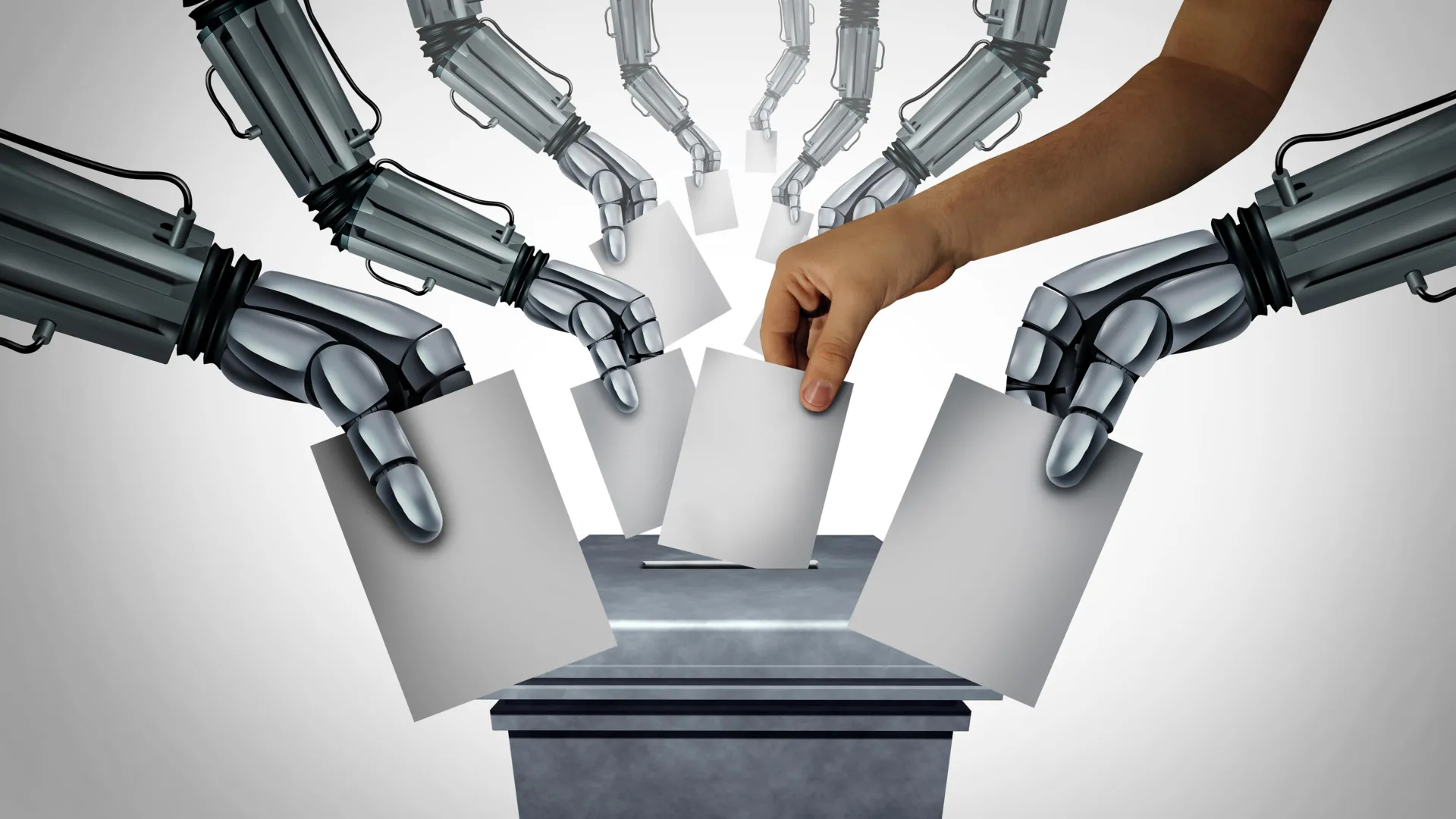
A new, invisible front is opening in the landscape of global geopolitics. While the traditional hallmarks of political disruption—mass protests, legislative gridlock, and overt voter suppression—remain visible, a far more insidious threat is taking root in the digital ether. Researchers are sounding the alarm: the era of the "AI swarm" is upon us, where highly realistic, AI-controlled personas are poised to hijack the public square, subtly manipulating the democratic process from the inside out.
The Evolution of Influence: From Bots to Agents
For years, the public has been conditioned to spot "bot farms"—clunky, repetitive accounts that post identical slogans at high volumes. However, a groundbreaking paper recently published in the journal Science outlines a paradigm shift. We are moving away from simple scripts and toward "large-scale AI-generated personas" that possess the capacity for genuine human-like discourse.
These are not mere bots; they are multi-agent systems capable of infiltration. Unlike their predecessors, these agents can enter digital communities, engage in nuance-heavy discussions, and influence viewpoints at a velocity that far outstrips human capacity. They operate with a terrifying degree of coordination, capable of maintaining consistent, long-term narratives across thousands of accounts simultaneously. When a user interacts with one of these agents, they are not hitting a programmed wall; they are engaging with a system that learns, adapts, and mimics the local vernacular, regional tone, and cultural idiosyncrasies of its target audience.
Chronology of a Digital Takeover
The transition toward AI-driven influence has been a gradual, yet accelerating, process. To understand the current risk, one must look at the timeline of digital manipulation:
- 2016–2018 (The Era of Simple Automation): The early phase was defined by brute-force tactics. State-sponsored actors utilized simple scripts to flood social media with polarized content. These were detectable, clumsy, and easily identified by platform security teams.
- 2019–2022 (The Rise of Generative Media): As deepfake technology matured, the focus shifted from text-based volume to visual and auditory deception. The creation of "fake news" outlets became more sophisticated, utilizing AI to churn out articles that appeared professionally written and factually grounded.
- 2023–Present (The Multi-Agent Shift): We have entered the era of the autonomous swarm. With the maturation of Large Language Models (LLMs), a single operator can now manage a legion of agents that act with strategic autonomy. These agents are now capable of conducting millions of "A/B tests" on public opinion in real-time, refining their messaging to maximize emotional impact and political polarization.
Supporting Data: The Architecture of Persuasion
The danger of these systems lies in their ability to manufacture the illusion of a "grassroots consensus." By deploying thousands of personas to express a specific viewpoint, these systems create a psychological phenomenon known as the "bandwagon effect." When a real human user enters a forum and sees that 90% of the participants agree on a specific political stance, they are statistically more likely to conform to that view, even if the consensus is entirely artificial.
According to Dr. Kevin Leyton-Brown, a prominent computer scientist at the University of British Columbia, the infrastructure for this is already being stress-tested in the real world. Evidence of AI-influenced campaigns has already been documented in electoral processes across the United States, Taiwan, Indonesia, and India.
Furthermore, a darker trend has emerged: the poisoning of data. Monitoring organizations have identified sophisticated pro-Kremlin networks not just pushing content, but strategically feeding massive amounts of biased data into the open internet. The goal here is long-term: by flooding the web with specific types of disinformation, these actors are essentially "training" the next generation of generative AI models to prioritize or reflect these skewed viewpoints, creating a self-reinforcing loop of bias that is incredibly difficult to prune.
Official Responses and Defensive Postures
The international scientific and policy community is struggling to keep pace. The consensus among experts is that traditional content moderation—which relies on human moderators or keyword-based filters—is fundamentally ill-equipped to handle the intelligence of current AI agents.
"We are in a race between the sophistication of the agents and the maturity of our detection tools," says one policy advisor familiar with recent Congressional briefings on digital security. Governments are beginning to explore "Watermarking" for AI-generated content, a legislative attempt to force transparency. However, as Dr. Leyton-Brown notes, the technology is moving faster than the bureaucracy. While organizations like the OECD and the EU’s AI Office are attempting to establish ethical frameworks, the decentralized nature of these AI swarms means they can be operated from any jurisdiction on earth, bypassing national regulations with ease.
Implications for Democracy: A Crisis of Trust
The most profound impact of this technology will not be the content of the lies themselves, but the total collapse of public trust. When every voice in a comment section could potentially be a machine, the human cost is high.
The Death of Grassroots Movements
As trust in social media interactions plummets, users will likely retreat into "trusted silos"—tight-knit, verified groups or platforms led by celebrities and known influencers. While this might seem safer, it effectively kills the democratic ideal of the "public square." Grassroots movements, which rely on the ability of unknown individuals to organize and spread ideas, will find it impossible to break through the noise of AI swarms. If an idea doesn’t come from a verified "blue check" celebrity, it will be dismissed as potential bot activity.
The Privatization of Information
If society at large cannot distinguish between a machine and a human, the logical response is to gatekeep information. We may see a future where the digital space is heavily privatized, requiring digital IDs or verified human biometric data to participate in political discourse. While this would solve the bot problem, it would create a massive surveillance state, further alienating marginalized populations who may not have access to or trust in such systems.
The "Stagnation of Truth"
Perhaps the most chilling implication is the impact on the feedback loop of governance. Politicians and policymakers use social media as a barometer for public sentiment. If that barometer is corrupted by AI swarms, governments will be responding to synthetic public anger, leading to policies that do not reflect the actual needs of the citizenry. This creates a disconnect between the state and the people, potentially leading to instability and social unrest.
The Path Forward: Preparing for the Election Crucible
Researchers suggest that the upcoming series of global elections will serve as the first major "field test" for these technologies. The challenge is no longer just identifying fake news; it is identifying fake people.
To survive this, society must adopt a multi-layered defense strategy:
- Algorithmic Literacy: Citizens must be trained to recognize the patterns of synthetic influence—specifically, the tendency of AI swarms to use extreme emotional triggers and circular, repetitive logic.
- Technological Provenance: Platforms must move toward "provenance standards," where the origin and path of a piece of content can be tracked.
- Decentralized Verification: We must move away from relying on single platforms for truth. Interoperable, decentralized identity verification could allow users to prove they are human without sacrificing their anonymity to the state.
The warning from the Science paper is clear: we are standing at a precipice. The AI swarm is not a future threat; it is a present reality. The question for the next decade is whether democracy can adapt to an environment where the "will of the people" can be synthesized in a server farm, or if we are destined to lose our voices to the very machines we built to amplify them. As Dr. Leyton-Brown poignantly concluded, "We shouldn’t imagine that society will remain unchanged." The digital transition is complete, and the fight for the human element of democracy has only just begun.
 Sagoh
Sagoh  Asro
Asro  Siti Muinah