
 By Basiran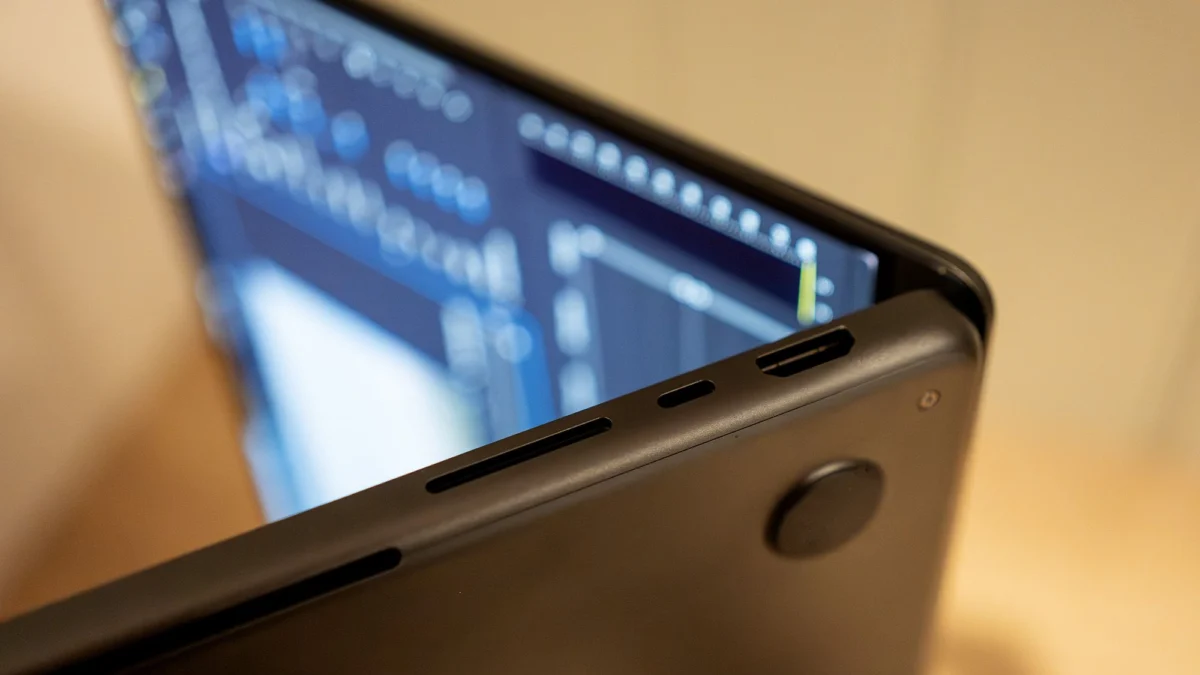
[City, Date] – In the rapidly evolving landscape of professional computing, the demand for powerful, efficient, and reliable hardware is unceasing, especially within the creative industries. From graphic design and video editing to complex CAD work and 3D rendering, professionals require machines that not only keep pace with their innovative visions but also anticipate future demands. Leading tech reviewers and industry analysts consistently evaluate the latest offerings, with Apple’s MacBook Pro series frequently topping recommended lists. The latest buzz, highlighted by a recent review from Creative Bloq, centers on a highly anticipated, albeit currently speculative, iteration: the Apple MacBook Pro M5.
Creative Bloq, a prominent authority on creative technology, has positioned the MacBook Pro M5 as a frontrunner for professionals. While specific details of an M5 chip remain largely in the realm of prediction and industry speculation, the review’s focus underscores the immense expectations placed on Apple’s silicon development roadmap. This article delves into the core aspects of this emerging discussion, examining the "Main facts" presented, tracing the "Chronology" of Apple Silicon, exploring potential "Supporting data" for an M5-powered device, considering "Official responses" from Apple’s design philosophy, and analyzing the "Implications" for the creative world.
Main Facts: A Glimpse into the Future of Creative Powerhouses
Creative Bloq’s preliminary insights into the "MacBook Pro M5" position it as a significant contender for professionals across various creative disciplines. The review, available in both a quick video format and an in-depth written analysis, seeks to answer a critical question: "Is this the best Mac for creatives?" This inquiry alone signals a high level of expectation for a device carrying the "M5" designation, suggesting a leap forward in performance and efficiency that would solidify Apple’s dominance in the professional market.
The publication, renowned for its comprehensive guides on laptops and computers tailored for graphic design, CAD work, and other creative pursuits, conducts regular, rigorous reviews of new hardware. This consistent evaluation process informs their recommendations, making their endorsement of the "MacBook Pro M5" noteworthy. The review is presented as a crucial resource for potential buyers navigating the complex choices in high-performance computing.
Beyond the review itself, Creative Bloq emphasizes community engagement, directing readers and viewers to their active social media channels on YouTube, TikTok, Instagram, and Facebook. This multi-platform approach not only disseminates their expert advice but also fosters a dialogue around the latest technology and creative trends, making their content a hub for inspiration and practical guidance. The focus on the "M5" in this context points to a broader industry anticipation for the next generation of Apple’s bespoke silicon, and the MacBook Pro line that would house it.
Chronology: The Evolution of Apple Silicon and the MacBook Pro
To understand the significance of a potential "MacBook Pro M5," it’s essential to trace the revolutionary journey of Apple Silicon and its impact on the MacBook Pro line. For decades, the MacBook Pro, originally powered by PowerPC and later Intel processors, served as a cornerstone for creative professionals. Its robust macOS ecosystem, coupled with high-quality displays and durable build, made it a preferred choice for designers, video editors, and developers.
The Intel Era: A Foundation for Professional Use
Prior to 2020, MacBook Pros relied on Intel’s x86 architecture. While these machines were powerful for their time, they often faced challenges with power efficiency, heat management, and the integration of specialized hardware components. Apple’s control over its software and hardware was extensive, but the reliance on a third-party CPU vendor meant certain architectural limitations and a lack of full vertical integration. This era saw the MacBook Pro establish its reputation, but also laid bare the potential for a more harmonized system.
The Paradigm Shift: Introducing Apple Silicon (M1)
The announcement of Apple Silicon in 2020 marked a pivotal moment. The first generation, the M1 chip, introduced a System on a Chip (SoC) design for personal computers, bringing ARM-based architecture with unprecedented power efficiency and performance gains. The M1 MacBook Pro, despite being an entry-level professional machine, demonstrated remarkable speed, extended battery life, and silent operation, largely outperforming its Intel predecessors in many creative tasks. This initial success validated Apple’s ambitious transition.
Scaling Up: M1 Pro and M1 Max
Apple quickly followed up with the M1 Pro and M1 Max chips, specifically designed for the higher-end MacBook Pro models. These chips significantly expanded the CPU and GPU core counts, increased memory bandwidth, and introduced dedicated media engines for accelerated video encoding/decoding. This allowed the MacBook Pro to tackle professional video editing (even 8K footage), complex 3D rendering, and demanding software development with ease, cementing Apple Silicon’s place at the apex of mobile workstations.
Iterative Refinement: M2, M2 Pro, and M2 Max
The M2 generation, launched in 2022, built upon the M1’s foundation, offering further improvements in CPU and GPU performance, memory bandwidth, and neural engine capabilities. The M2 Pro and M2 Max chips continued to push the boundaries, providing even greater power for professionals while maintaining the signature efficiency of Apple Silicon. This generation demonstrated Apple’s commitment to consistent, year-over-year performance enhancements.
The Leap Forward: M3, M3 Pro, and M3 Max
In late 2023, Apple unveiled the M3 family of chips, notable for being the first personal computer chips built on 3-nanometer process technology. This advancement brought substantial improvements in performance, particularly for the GPU, which introduced features like hardware-accelerated mesh shading and dynamic caching for more efficient resource allocation in graphics-intensive tasks. The M3 Max, in particular, showcased desktop-class performance in a portable form factor, solidifying the MacBook Pro’s position as a powerhouse for the most demanding creative workflows.
The Unseen Horizon: M4 and the Anticipated M5
While the M3 series represents the current pinnacle, Apple’s rapid release cycle and continuous innovation suggest that the M4 is likely in development, and the "M5" as referenced by Creative Bloq, would represent the subsequent, even more advanced, iteration. Historically, each new generation has delivered significant leaps in CPU and GPU performance, memory efficiency, and specialized accelerators (like the Neural Engine). The "M5" would therefore be expected to build upon the 3nm process, potentially refining it or moving to an even denser fabrication, and further optimizing every aspect of the SoC to handle future demands of AI, real-time rendering, and immersive content creation. This chronological progression highlights a clear trajectory of increasing power, efficiency, and specialized capabilities tailored for professional users.
Supporting Data: Projecting the Capabilities of a MacBook Pro M5
Given the historical trajectory of Apple Silicon, we can project a plausible set of "Supporting data" for a hypothetical MacBook Pro M5, imagining the advancements it would bring to creative professionals. These projections are based on observed trends in Apple’s chip design, industry advancements, and the evolving needs of the creative sector.
Unprecedented Raw Performance
- CPU: The M5 would likely feature an even greater number of high-performance cores, potentially moving beyond the 12-core CPU configuration of the M3 Max, with significantly enhanced single-core and multi-core performance. A 20-30% generational leap in CPU performance over the M3 Max would not be out of the question, enabling faster compilation times for developers, quicker processing of large datasets, and smoother operation of complex multi-threaded applications.
- GPU: The graphical capabilities would see a substantial boost. Building on the M3’s advancements in hardware-accelerated ray tracing and mesh shading, the M5’s GPU could offer a 30-40% increase in performance. This would translate to dramatically faster rendering in 3D applications (like Blender, Cinema 4D), smoother real-time previews in video editors (DaVinci Resolve, Adobe Premiere Pro), and enhanced performance for generative AI art tools. More dedicated hardware for video encoding/decoding (ProRes, H.264, HEVC) would also be expected, further accelerating media workflows.
- Neural Engine: As AI and machine learning become increasingly integral to creative workflows (e.g., AI-powered upscaling, content generation, intelligent image manipulation), the M5’s Neural Engine would undoubtedly be significantly more powerful. A 2x or even 3x increase in AI performance over current generations could enable on-device AI models to run faster, more efficiently, and with greater complexity, revolutionizing tasks like object recognition, smart cropping, and stylistic transfers.
Revolutionary Unified Memory Architecture
Apple’s unified memory architecture is a key differentiator. The M5 would likely support even higher capacities (potentially up to 256GB or more for the Max variant) and significantly increased bandwidth. This allows the CPU, GPU, and Neural Engine to access the same pool of high-speed memory with extremely low latency, eliminating bottlenecks common in systems with discrete memory pools. For creatives working with massive files, multi-layered designs, or large video projects, this means fewer memory-related crashes, faster asset loading, and the ability to handle larger, more complex projects simultaneously.
Next-Generation Display and Connectivity
- Liquid Retina XDR Display: The MacBook Pro’s display is already industry-leading. An M5 generation could see refinements such as increased peak brightness for HDR content, even greater color accuracy, and potentially an evolution of ProMotion technology for even smoother adaptive refresh rates, enhancing the visual experience for all creative tasks.
- Connectivity: Support for Wi-Fi 7 and potentially a new generation of Bluetooth would be expected, offering faster wireless transfer speeds and more robust connections for peripherals. Thunderbolt 5 (if available and integrated) would provide even greater external bandwidth for high-speed storage, multiple 8K displays, and eGPUs (though the latter is less critical with powerful integrated GPUs).
Enhanced Power Efficiency and Thermal Management
Despite the performance gains, Apple Silicon is renowned for its power efficiency. The M5, likely leveraging an even more advanced manufacturing process (e.g., refined 3nm or even 2nm), would deliver superior performance per watt. This translates to longer battery life under heavy loads, crucial for professionals working on location, and sustained peak performance without thermal throttling, ensuring consistent power for prolonged creative sessions. The fan systems would likely remain quiet, maintaining a comfortable working environment.
Software Optimizations and Ecosystem Benefits
The tight integration between Apple Silicon and macOS ensures unparalleled software optimization. Creative applications like Final Cut Pro, Logic Pro, and even Adobe Creative Cloud suite members (Photoshop, Illustrator, Premiere Pro) are meticulously optimized to leverage the M-series chips’ unique architecture. An M5 would further accelerate these applications, potentially enabling new features that rely on its advanced Neural Engine or graphics capabilities. The cohesive Apple ecosystem, including seamless integration with iPad, iPhone, and Apple Vision Pro, would also continue to offer unique workflows and collaborative possibilities for creatives.
Storage and I/O
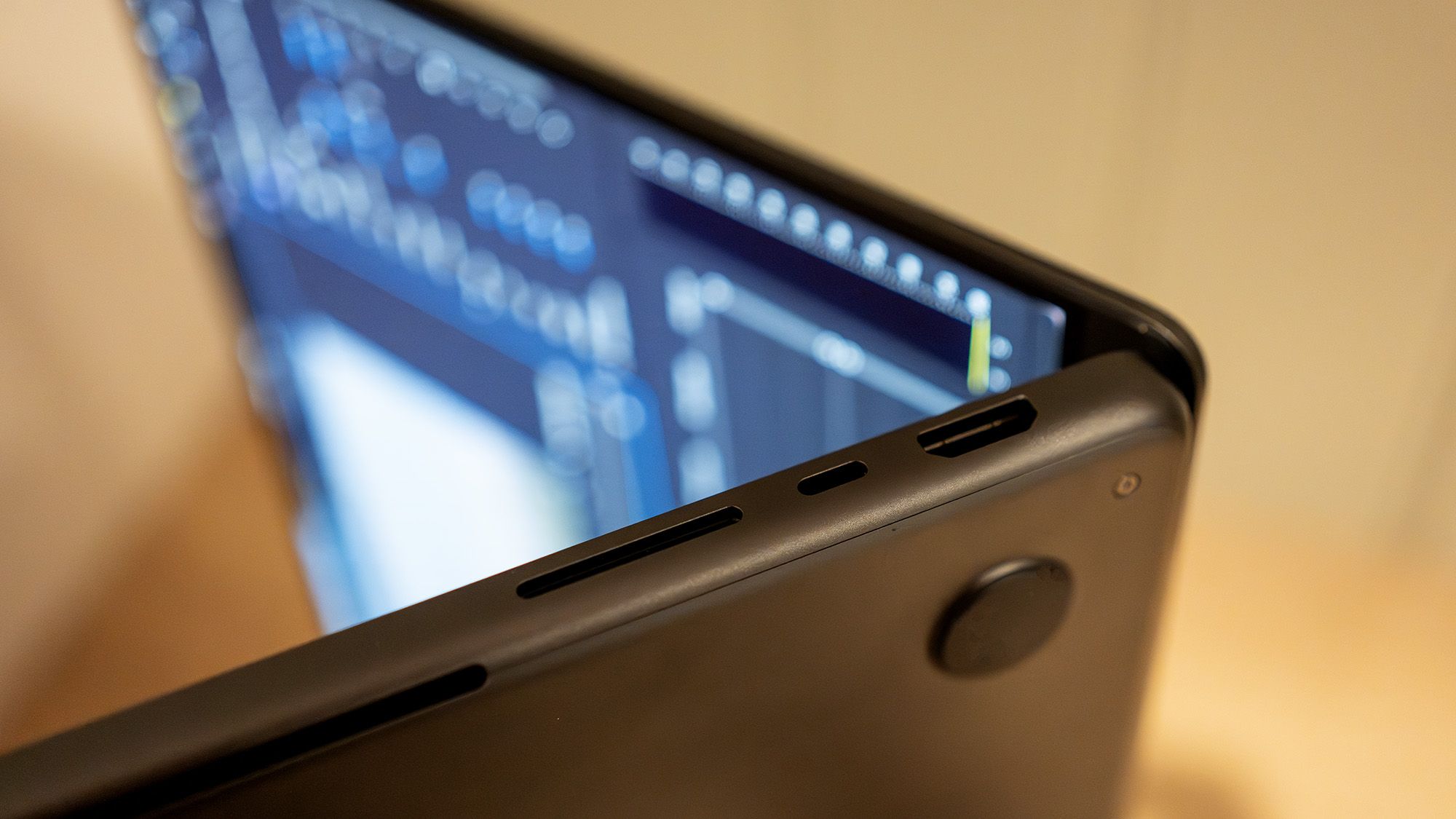
The M5 MacBook Pro would continue to offer blazing-fast SSD storage, with capacities potentially reaching 8TB or even 16TB, crucial for video editors and 3D artists. The I/O selection would likely remain generous, featuring multiple Thunderbolt ports, an HDMI port, an SDXC card slot, and a high-impedance headphone jack, catering to the diverse needs of creative peripherals.
In summary, the supporting data for a hypothetical M5 MacBook Pro paints a picture of a machine that would not just incrementally improve upon its predecessors but would redefine what’s possible in portable professional computing, particularly for the most demanding creative applications.
Official Responses: Apple’s Philosophy and the Vision for M-Series
While Apple has not officially announced an M5 chip, the company’s consistent messaging and strategic direction provide clear "Official responses" regarding its philosophy behind Apple Silicon and its vision for the MacBook Pro in the professional space. These overarching principles guide the development of each chip generation and the products they power.
Vertical Integration and End-to-End Control
At the core of Apple Silicon’s success is Apple’s philosophy of vertical integration. By designing its own chips, operating system (macOS), and hardware, Apple achieves an unprecedented level of control over the entire computing stack. This allows for deep optimization, where every component is designed to work in perfect harmony with every other. Tim Cook, Apple’s CEO, and other executives have repeatedly emphasized that this integrated approach leads to superior performance, efficiency, and user experience that cannot be matched by systems relying on third-party components. For the "M5," this means further refinement of this integrated design, pushing the boundaries of what a unified system can achieve.
Performance Per Watt: The Efficiency Mandate
A recurring theme in Apple’s presentations on its M-series chips is "performance per watt." This isn’t just about raw speed but about delivering that speed with minimal power consumption and heat generation. This mandate directly benefits professional users by providing:
- Extended Battery Life: Crucial for creatives on the go or working remotely.
- Sustained Performance: Less thermal throttling means peak performance can be maintained for longer periods, essential for rendering or complex computations.
- Silent Operation: Fan noise can be distracting; efficient chips allow for quieter, more comfortable workspaces.
This commitment to efficiency is a foundational "official response" that would undoubtedly define the M5’s design, allowing for powerful performance in a thin and light form factor.
Empowering Creative Professionals
Apple has always positioned the MacBook Pro as the ultimate tool for creative professionals. With Apple Silicon, this commitment has intensified. Executives often highlight how the M-series chips enable artists, designers, developers, and filmmakers to push the boundaries of their work. Features like dedicated media engines for ProRes acceleration, high-bandwidth unified memory, and powerful neural engines are direct responses to the specific needs of these users. The "M5" would be a continuation of this focus, engineered to unlock new possibilities in demanding applications, especially those leveraging AI and advanced graphics.
Developer Enablement
A critical part of Apple’s strategy is ensuring developers can fully leverage the power of Apple Silicon. Through comprehensive SDKs, development tools like Xcode, and strong documentation, Apple facilitates the optimization of third-party applications for its custom chips. The transition from Intel to Apple Silicon was remarkably smooth due to these efforts, and subsequent M-series chips continue to offer developers new avenues for performance. This developer-centric approach ensures that when an "M5" arrives, the ecosystem of professional software will be ready to harness its full potential from day one.
A Vision for the Future of Computing
Apple’s M-series chips are not just about incremental upgrades; they represent a long-term vision for the future of personal computing. This vision includes a seamless, powerful, and efficient experience across all Apple devices, with a strong emphasis on machine learning and specialized hardware for specific tasks. The "M5" would be a testament to this ongoing evolution, demonstrating Apple’s relentless pursuit of innovation and its commitment to shaping the next generation of computing for professionals worldwide. While official statements on an M5 are absent, the patterns and principles articulated by Apple over the past few years serve as a clear guide to what such a chip would embody.
Implications: Reshaping the Creative Landscape
The arrival of a MacBook Pro M5, as anticipated by Creative Bloq, would have profound "Implications" across the creative industries, influencing workflows, market dynamics, and the very nature of digital creation.
Redefining Performance Expectations
Each generation of Apple Silicon has reset performance benchmarks for portable workstations. An M5 would continue this trend, raising the bar significantly. This means tasks that were once time-consuming or required powerful desktop machines could be performed faster and more efficiently on a laptop. Video editors could handle more complex timelines with more layers and effects in real-time, 3D artists could render scenes faster and iterate on designs more quickly, and graphic designers could work with incredibly large files without slowdowns. This sustained increase in performance empowers creatives to be more ambitious and less constrained by hardware limitations.
The Acceleration of AI-Powered Creativity
The enhanced Neural Engine capabilities of an M5 would unlock new frontiers for AI in creative applications. Imagine generative AI tools that create variations of designs, generate complex textures, or even assist in animating characters with unprecedented speed and accuracy, all running locally on the device. AI-powered upscaling, denoising, and content analysis would become standard, streamlining mundane tasks and allowing artists to focus on conceptualization and refinement. This integration of powerful on-device AI could democratize advanced creative techniques, making them accessible to a wider range of professionals.
Enhanced Mobility and Flexibility
The combination of extreme performance and exceptional power efficiency in an M5-powered MacBook Pro would significantly enhance mobility. Creatives would no longer be tethered to power outlets or bulky desktop setups to perform demanding tasks. This flexibility is invaluable for filmmakers on location, designers presenting concepts to clients, or architects working on-site. The ability to render a complex scene or export a high-resolution video in the field fundamentally changes professional workflows, fostering greater collaboration and responsiveness.
Impact on the Competitive Landscape
The continuous advancements of Apple Silicon exert considerable pressure on competitors. PC manufacturers relying on Intel and AMD processors, along with NVIDIA GPUs, are constantly challenged to match Apple’s unique blend of performance, efficiency, and integrated experience. An M5 would further widen this gap, particularly in the portable workstation segment. This competition, however, can also drive innovation across the industry, leading to better products for all consumers in the long run. The M5 would solidify Apple’s market share in the premium professional segment, making it an even more compelling choice for those prioritizing an optimized ecosystem.
Fostering Innovation in Software Development
The consistent and predictable architecture of Apple Silicon encourages software developers to optimize their applications deeply. With an M5, developers of creative software would have an even more powerful and efficient platform to build upon, potentially leading to the development of new features and functionalities that were previously impossible or impractical on mobile hardware. This symbiotic relationship between hardware and software innovation ultimately benefits the end-user, providing more powerful and intuitive tools.
Economic Considerations and Total Cost of Ownership
While MacBook Pros typically come with a premium price tag, the M5’s efficiency and longevity could present a strong argument for its total cost of ownership (TCO). Its ability to handle demanding tasks for many years without needing an upgrade, coupled with its energy efficiency, can offset the initial investment. For businesses and freelancers, this translates to predictable performance, reduced operational costs, and a reliable return on investment, making it a strategic purchase rather than just an expense.
A Catalyst for Future Creative Endeavors
Ultimately, the implications of a MacBook Pro M5 extend to acting as a catalyst for future creative endeavors. By removing technological barriers and empowering professionals with unprecedented tools, it fosters an environment where creativity can flourish unhindered. Whether it’s pioneering new forms of digital art, revolutionizing film production workflows, or accelerating scientific visualization, the M5 would be more than just a computer; it would be a foundational element for the next generation of creative innovation. The anticipation stirred by Creative Bloq’s review underscores this potential, signaling a future where the boundaries of what’s possible are continually expanded.
 Evan Lee Salim
  Nana
Nana  Ammar Sabilarrohman