
 By Pevita Pearce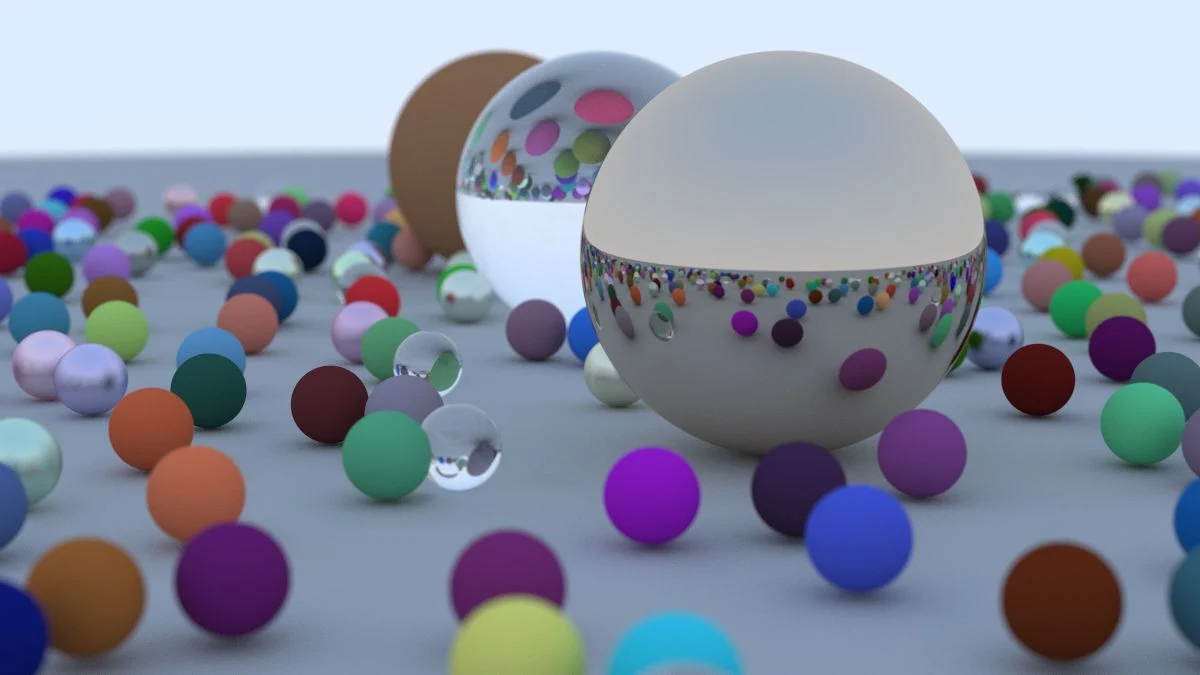
For aspiring developers looking to break into the high-stakes world of graphics programming, the landscape has never felt more complex—or more confusing. Between the rapid evolution of rendering hardware and the deafening noise surrounding Artificial Intelligence, separating essential skills from passing trends is a challenge. To help provide clarity, we have synthesized the essential pillars of becoming a hireable graphics programmer, grounded in industry-standard practices and technical reality.
The Core Competencies: A Dual-Focus Framework
Modern rendering is essentially a bifurcated discipline. To be truly effective, a developer must balance two distinct areas of expertise:
- Low-Level API Proficiency: Understanding how to interface with the GPU, manage memory, and execute draw calls.
- Rendering Techniques and Theory: The application of mathematics and physics to simulate light, materials, and geometry.
Attempting to master both simultaneously is a recipe for burnout. For those focusing on the second pillar—the "art" of rendering—it is often more efficient to utilize high-level abstractions like OpenGL, WebGL, or DirectX 11. Conversely, for those aiming for the "engine-level" work of the first pillar, the goal should be granular: render a triangle, then a mesh, then a scene. The aesthetic beauty of the output is secondary to the functional mastery of the pipeline.
The Path Tracer: Your Essential Foundation
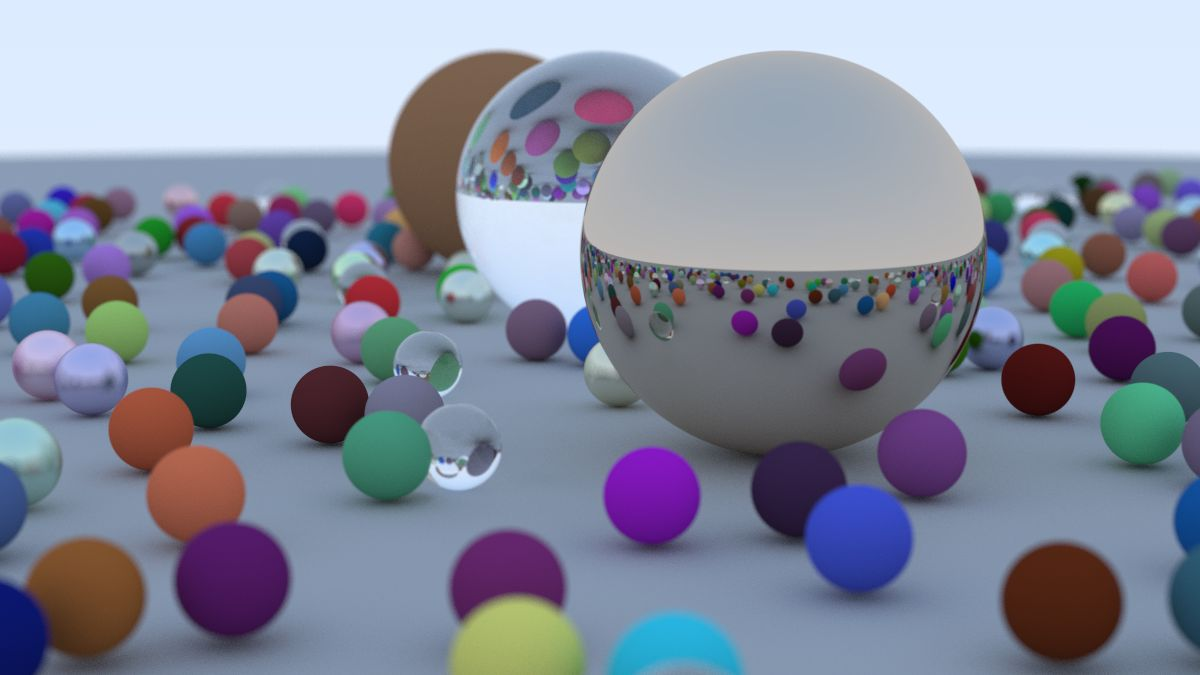
If you intend to specialize in rendering theory, building a path tracer is a rite of passage. Path tracing represents the gold standard of cinematic rendering, and mastering it provides the bedrock for understanding real-time approximations. The gold-standard resource for beginners remains Ray Tracing in One Weekend, a project that demystifies the path from code to photorealistic output.
Industry Standards: The Shift to Physically Based Rendering (PBR)
In the past, lighting in games was often a chaotic patchwork of "hacks"—custom equations and artist-tweaked parameters that would fall apart the moment a light source moved or a scene shifted. The industry-wide adoption of Physically Based Rendering (PBR) changed this entirely.
PBR is "principled," meaning it operates on the laws of physics. By adhering to these physical constraints, assets look consistent under any lighting condition, drastically reducing the labor-intensive process of creating multiple material versions for different environments. While PBR has streamlined the workflow, asset creation remains a primary bottleneck in game development.
For those ready to dive deep, the progression is clear:
- The Theory: Start with the LearnOpenGL PBR guide.
- The Implementation: Study the Filament documentation for a deeper look into the calculus and statistics powering modern engines.
- The Bible: Consult the PBRT book, the industry standard for theory-to-implementation transitions.
The Role of Mathematics and Algorithms
A common point of anxiety for students is the mathematical barrier to entry. In reality, the "necessary" math is relatively concise: Linear Algebra (matrices, dot/cross products), basic trigonometry, and elementary calculus.
However, the beauty of graphics programming lies in the "unbounded" nature of the field. While you only need a baseline to get started, the amount of math you can apply to optimize or enhance a system is virtually infinite.
Algorithmically, the same principle applies. While advanced data structures have their place, the fastest code is often the simplest. An array will almost always outperform a linked list in cache-heavy graphics environments. Mastering foundational data structures—hash tables, sorting, and search algorithms—is more critical than chasing overly complex, niche solutions.
Tech Stack and Language Requirements
For anyone serious about a career in the game industry, C++ remains the undisputed king. While languages like Rust are gaining cultural momentum and WebGPU is emerging as a potential platform for web-based graphics, C++ remains the standard language of the CPU-side engine work.
- Shader Languages: HLSL is the most common industry standard, though GLSL remains prevalent in cross-platform environments. Often, these shaders are transpiled to ensure compatibility across various hardware targets.
- The WebGPU Question: While WebGPU offers significant advantages over WebGL, it has yet to see widespread adoption in the professional hiring market. It is a powerful tool, but C++ should be your primary focus if your goal is immediate employability.
The "LLM Era": A Measured Perspective
We are currently navigating a volatile period in computer science defined by the rise of Large Language Models (LLMs). While current marketing suggests that AI will revolutionize the field, a pragmatic assessment reveals a different reality.
The Pendulum Swing
Much like the hype cycles that preceded it, the current frenzy around ML will likely experience a correction. The "grifters" of the tech world are already pivoting, and the industry will eventually settle into a more realistic view of what ML can and cannot do. However, this does not mean ML is useless. Fitting and optimization techniques derived from ML are valuable tools in the modern computer science toolkit.
Practical Application vs. Illusion
For the graphics programmer, LLMs like Claude are useful for sanity-checking math, querying research papers, or debugging code. They excel at identifying "yes/no" bugs, provided the developer has the expertise to verify the answer.
The danger lies in over-reliance. If a programmer uses an LLM to write code they do not personally understand, they have not gained efficiency—they have merely deferred the work. If you don’t understand the logic, you haven’t actually solved the problem; you’ve just inherited a black-box liability.
Implications for the Future of Graphics
The current age of LLMs serves as a "dress rehearsal" for more advanced, potentially human-level artificial intelligence in the future. Whether that arrives in this lifetime or the next, the lesson remains the same: Fundamentals remain the only reliable currency.
- Don’t rely on black boxes: If you cannot debug the code an AI generates, you are not qualified to use it in a professional engine environment.
- Focus on "The Bare Metal": The ability to understand the hardware-software interface will always be more valuable than the ability to prompt an LLM.
- Prioritize timeless skills: Algorithms, linear algebra, and PBR physics will be relevant long after the current hype cycle has faded into obscurity.
Conclusion
Becoming a graphics programmer is not about following the latest hype; it is about building a durable foundation of knowledge. By mastering the dual pillars of API management and rendering theory, keeping your math skills sharp, and prioritizing the core C++ toolset, you position yourself to excel regardless of which trends dominate the industry. The barrier to entry is high, but for those who take the time to understand the "how" and "why" behind the pixels, the reward is the ability to build the visual worlds of tomorrow.
 rifanmuazin
  Layla Zulfa
  Evan Lee Salim