
 By Neng Nana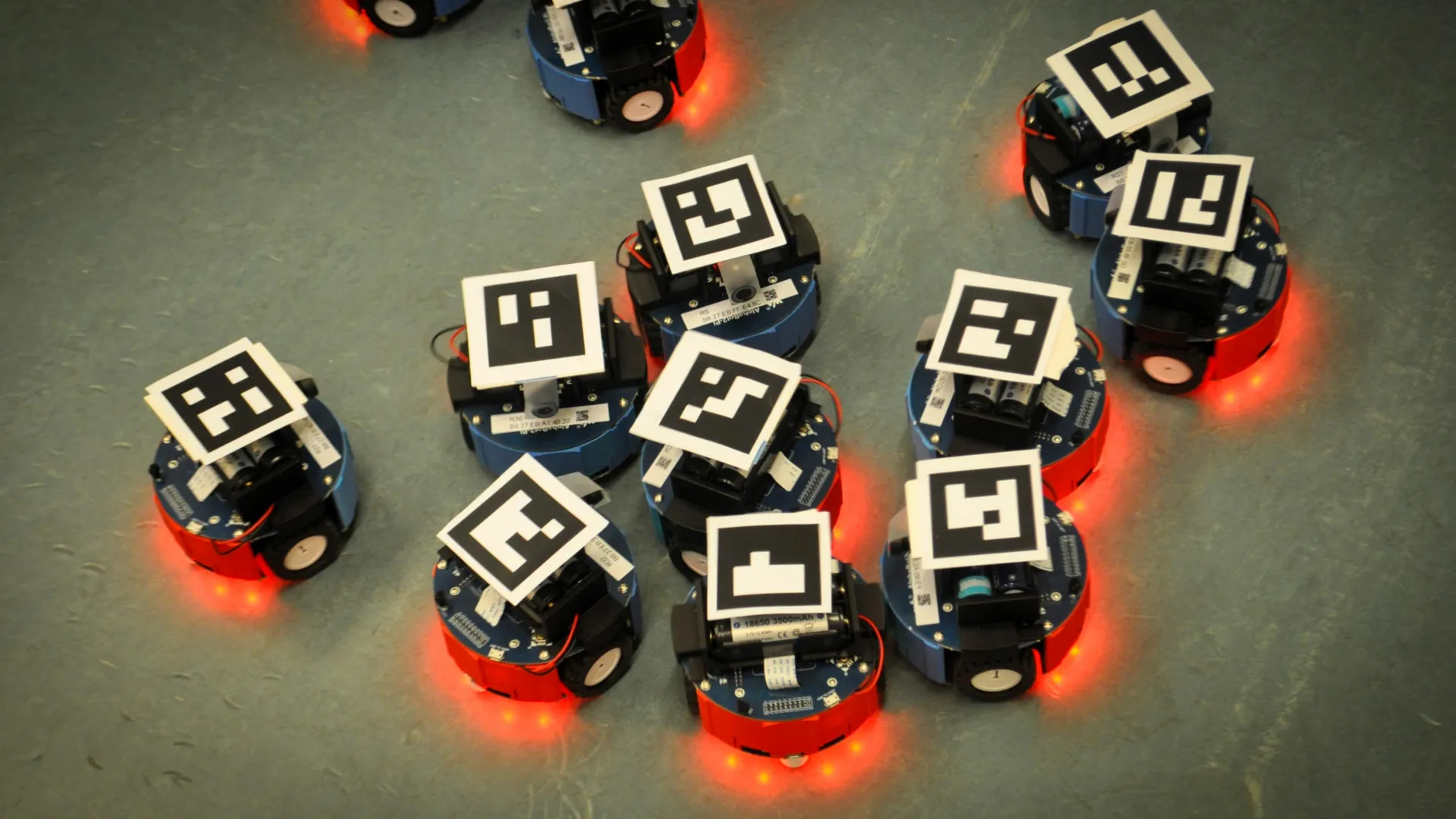
In the high-stakes world of autonomous robotics, bigger is often considered better. Whether the task is deploying a fleet of drones to survey a disaster zone, utilizing swarms of ground robots to clean up a hazardous oil spill, or coordinating automated guided vehicles (AGVs) on a massive factory floor, the logic seems intuitive: more machines should mean faster results. However, engineers have long struggled with the "crowding bottleneck." As the density of robots increases, the benefits of extra labor are rapidly negated by traffic jams, physical collisions, and a breakdown in systemic flow.
New research from Harvard University suggests that the solution to this mechanical gridlock may lie in a counterintuitive concept: randomness. A study led by researchers at the John A. Paulson School of Engineering and Applied Sciences (SEAS) has discovered that by injecting a specific, "Goldilocks" level of variability into the movement patterns of autonomous agents, engineers can effectively dissolve traffic jams and maximize productivity.
The Chronology of the Discovery
The journey to this discovery began with a fundamental question: at what point does a robotic swarm stop being an asset and start being an obstacle? Led by applied mathematics Ph.D. student Lucy Liu, under the guidance of L. Mahadevan—the Lola England de Valpine Professor of Applied Mathematics, Organismic and Evolutionary Biology, and Physics—the research team sought to bridge the gap between theoretical physics and applied robotics.
The research process unfolded in three distinct phases over several years:
- Conceptualization: The team moved away from the idea of "perfectly intelligent" robots, instead treating each unit as a simple agent. They hypothesized that the complexity of swarm behavior arises not from the intelligence of individual robots, but from their local interactions.
- Simulated Evolution: Using computational models, the team simulated thousands of agents in a confined space. They varied the "noise" (randomness) in the agents’ movement paths, observing how different levels of erraticism affected the total rate of goal completion.
- Empirical Validation: The team transitioned from the digital realm to a physical laboratory at the Eindhoven University of Technology. Working with physicist Federico Toschi, they deployed real wheeled robots equipped with QR-code tracking systems to see if the simulated "sweet spot" for noise held up in the messy, imperfect world of physical hardware.
The results, published in the Proceedings of the National Academy of Sciences, represent a significant milestone in the field of "active matter"—the study of systems composed of many self-propelled units that consume energy to move.
Supporting Data: Finding the "Goldilocks Zone"
The core of the study rests on the relationship between "noise" and "goal attainment rate." The researchers defined "noise" as the deviation from a straight-line path to a destination.
In their simulations, the team observed three distinct performance regimes:
- The Deterministic Trap (Zero Noise): When robots were programmed to follow the shortest, perfectly straight path to their destination, the system suffered from massive congestion. Because every robot was optimizing for the same path, they frequently collided or blocked one another, leading to long-lived clusters that brought the entire swarm to a standstill.
- The Erratic Extreme (High Noise): When the robots were programmed with high levels of randomness, they became "lost" in their own movement. While they avoided traffic jams, they spent too much time wandering, significantly reducing the frequency with which they arrived at their assigned targets.
- The Optimal Middle (The Goldilocks Zone): Between these two extremes, the researchers identified a range where performance peaked. In this state, robots bumped into each other just enough to maintain contact, but the randomness allowed them to "slip" past obstacles rather than getting permanently stuck. This balance kept the system in a state of fluid motion, similar to the way gas molecules move through a container.
"When you have a lot of randomness, it becomes possible to take averages—average distances, average times, average behaviors," Liu explained. "This makes it a lot easier to make predictions." By introducing noise, the researchers effectively turned a chaotic, unpredictable traffic problem into a manageable, statistically predictable system.
Official Responses and Expert Perspectives
The findings have resonated within the robotics and physics communities, primarily because they challenge the conventional wisdom that precision is the ultimate goal of autonomous system design.
L. Mahadevan, who supervised the project, believes the implications reach far beyond the engineering of machines. "Understanding how active matter, whether it is a swarm of ants, a herd of animals, or a group of robots, becomes functional and executes tasks in crowded environments using the principles of self-organization, is relevant to many questions in behavioral ecology," Mahadevan said. "Our study suggests strategies that might well be much broader than the instantiation we have focused on."
The use of simple, local rules to achieve complex goals—a concept known as "emergent behavior"—is a cornerstone of the Harvard lab’s philosophy. By proving that high-level coordination does not necessarily require a central "brain" or complex artificial intelligence, the team has provided a blueprint for more robust, scalable robotic systems. If a swarm can be optimized through simple, randomized movement rules, it requires less computing power, lower-cost sensors, and fewer communication protocols between units.
Implications for Future Technology and Urban Planning
The potential applications of this research are vast, spanning across multiple industries and disciplines.
1. Warehouse and Factory Automation
Modern fulfillment centers, such as those operated by major e-commerce retailers, rely on thousands of robots moving in tight, confined aisles. Current systems often require complex central traffic controllers to prevent collisions. Implementing the "Goldilocks" noise strategy could decentralize these systems, allowing them to operate more efficiently with less reliance on central servers.
2. Traffic Management for Autonomous Vehicles
As cities transition toward autonomous vehicle (AV) infrastructure, the problem of congestion becomes paramount. If future self-driving cars can be programmed with a degree of "controlled variability," they might be able to navigate dense urban intersections more fluidly, preventing the "stop-and-go" waves that currently cripple traffic flow.
3. Crowd Dynamics and Pedestrian Safety
Beyond machines, the mathematics of the study offers insights into human behavior. Large events, such as music festivals or subway exits, often experience "crush" conditions. By understanding the mathematical threshold at which a crowd transitions from flowing to jammed, city planners could design spaces that naturally encourage the type of movement that prevents dangerous density, perhaps through the strategic placement of obstacles that induce a "healthy" amount of path-diversion.
4. Search and Rescue Operations
In a disaster scenario, such as an earthquake or chemical spill, communication infrastructure is often unreliable. A swarm of robots that does not need a centralized controller—but instead relies on local, randomized rules to navigate a debris-filled environment—would be infinitely more resilient than a high-tech system that requires constant connectivity to a command center.
Conclusion: Embracing the Messy Reality
The Harvard study serves as a poignant reminder that nature often solves complex problems with simple, elegant, and seemingly chaotic solutions. For decades, the tech industry has chased the "perfect" algorithm—a set of instructions that would eliminate all errors and inefficiencies.
However, as Lucy Liu and her colleagues have demonstrated, perfection can be the enemy of performance. By embracing a degree of randomness, we can avoid the rigid traps of our own design. In the future of autonomous systems, the most efficient robot may not be the one that knows exactly where it is going and how to get there in a straight line; it may be the one that knows how to wander just enough to let everyone else through.
Funding for this research was provided by the National Science Foundation Graduate Research Fellowship Program (Grant No. DGE 2140743), the Simons Foundation, and the Henri Seydoux Fund.
 Sagoh
Sagoh  Asro
Asro  Siti Muinah