
 By Layla Zulfa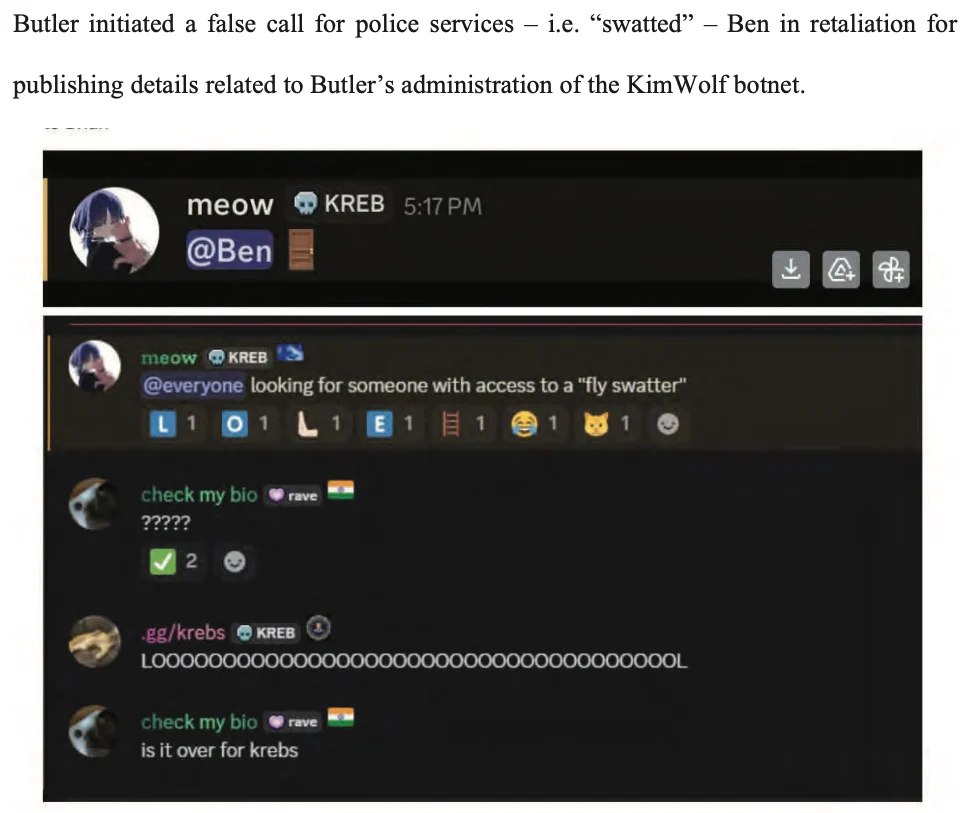
In a landmark victory for international cybersecurity cooperation, Canadian and U.S. authorities have successfully apprehended the individual behind one of the most destructive IoT (Internet of Things) botnets in history. Jacob Butler, a 23-year-old Ottawa resident operating under the online alias "Dort," was taken into custody this week by the Ontario Provincial Police. His arrest marks the culmination of a high-stakes, months-long investigation into the Kimwolf botnet, a digital juggernaut responsible for record-shattering distributed denial-of-service (DDoS) attacks that crippled infrastructure and targeted the U.S. Department of Defense.
Butler, who now faces a litany of criminal hacking charges in both Canada and the United States, stands accused of masterminding a network that enslaved millions of connected devices—ranging from web cameras to digital photo frames—to conduct large-scale cyber warfare. The operation, which drew the ire of federal investigators for its sheer scale and audacity, highlights the growing danger posed by insecure IoT ecosystems in an increasingly interconnected world.
The Chronology of a Digital Reign of Terror
The saga of Kimwolf was not merely a story of code and servers, but one of escalating criminal behavior that eventually led to the suspect’s downfall.
The Early Expansion (Late 2025)
In late 2025, the cybersecurity community began noticing a surge in highly efficient, rapid-fire DDoS attacks. The culprit was Kimwolf, a botnet designed specifically to exploit "firewalled" IoT devices that users erroneously believed were secure. By compromising these devices, the botnet created a massive, distributed army capable of delivering unprecedented traffic volumes.
The Exposure (February 2026)
The turning point in the investigation occurred in February 2026, when KrebsOnSecurity published a detailed exposé identifying "Dort" as Jacob Butler. By meticulously analyzing email addresses, forum registrations, and public interactions on platforms like Telegram and Discord, researchers were able to peel back the layers of anonymity surrounding the botmaster. Rather than retreating, Butler responded with a campaign of intimidation, launching DDoS attacks, doxing, and even orchestrating swatting incidents against those who exposed him.
The Global Takedown (March 2026)
On March 19, 2026, the walls began to close in. Law enforcement agencies launched a synchronized global operation to seize the technical infrastructure underpinning Kimwolf and three rival botnets: Aisuru, JackSkid, and Mossad. These four entities had been locked in a competitive struggle for control over the same pool of vulnerable IoT hardware. Simultaneously, Canadian police executed a search warrant at Butler’s Ottawa residence, seizing a cache of digital devices that would eventually serve as the "smoking gun" for prosecutors.
The Final Arrest (May 2026)
Following the completion of the evidentiary review, the Department of Justice unsealed a criminal complaint in an Alaska district court. Acting on a U.S. extradition warrant, the Ontario Provincial Police arrested Butler. He is currently held in Canadian custody, awaiting an initial court hearing scheduled for late May.
Supporting Data: The Magnitude of Kimwolf
The technical capabilities of the Kimwolf botnet were nothing short of alarming. According to the U.S. Department of Justice, Kimwolf was linked to DDoS attacks measured at a staggering 30 Terabits per second (Tbps)—a benchmark that shattered all previous records for attack volume.
Scale of the Operation
- Total Attack Commands: The botnet is alleged to have issued more than 25,000 distinct attack commands.
- Infrastructure Impact: Beyond civilian and commercial targets, the botnet compromised internet address ranges associated with the U.S. Department of Defense (DoD). This triggered a high-priority investigation by the Defense Criminal Investigative Service (DCIS) in conjunction with the FBI.
- Financial Toll: The ripple effects of these attacks were profound. Victims reported financial losses exceeding $1 million per incident, stemming from service downtime, lost productivity, and the costs associated with incident remediation.
The criminal complaint reveals that Butler’s operational security was surprisingly lax. Investigators linked him to the botnet’s administration through a combination of IP addresses, transaction records, and digital messaging history. Despite his technical prowess in building the botnet, Butler frequently blurred the lines between his "Dort" persona and his real-life identity, leaving a trail of breadcrumbs that made his ultimate identification inevitable.
Official Responses and Strategic Collaboration
The dismantling of Kimwolf was not an isolated event but part of a broader international crackdown on "DDoS-for-hire" services. In April 2026, the DOJ, working in tandem with European law enforcement, seized domain names tied to nearly 48 such services.
The Role of Private Industry
The investigation benefited significantly from the assistance of the private sector. One notable partner was Synthient, a security startup whose founder, Ben Brundage, was a frequent target of Butler’s harassment. After Synthient identified and helped mitigate the specific security vulnerability that allowed Kimwolf to spread so rapidly, Butler retaliated with multiple swatting attacks.
"Hopefully, this will end the harassment," Brundage stated following the news of the arrest. His relief is shared by security professionals globally, who view the arrest as a critical step in deterring young cybercriminals who believe they are untouchable behind a screen.
Legal Implications
In Canada, Butler faces charges including unauthorized use of a computer, possession of a device to commit mischief, and mischief in relation to computer data. In the United States, he is charged with one count of aiding and abetting computer intrusion.
Legal experts note that while the U.S. charge carries a potential 10-year prison sentence, the final outcome remains subject to the U.S. Sentencing Guidelines. These guidelines often consider mitigating factors such as the defendant’s age, lack of a prior criminal history, and the level of cooperation provided to federal authorities during the extradition process.
Implications for the Future of IoT Security
The Kimwolf case serves as a grim reminder of the "Internet of Things" security crisis. For years, manufacturers have prioritized connectivity and ease-of-use over baseline security protocols, shipping devices with hard-coded credentials or unpatchable firmware vulnerabilities.
A Call for Hardware Responsibility
The fact that Kimwolf could enslave millions of devices that were supposedly "firewalled" proves that traditional perimeter security is failing. Modern botnets do not just target computers; they target the smart lightbulbs, the web-connected baby monitors, and the digital appliances that now inhabit every corner of the modern home.
Deterrence and Law Enforcement
The success of this operation highlights the efficacy of the "follow the money" and "follow the infrastructure" approaches. By seizing the command-and-control servers and disrupting the financial channels used by botnet operators, law enforcement can force cybercriminals to retreat. However, the ease with which Butler was able to transition from a forum user to a multi-million-dollar botmaster suggests that the barrier to entry for high-level cybercrime remains dangerously low.
As the legal proceedings move forward, the case of Jacob Butler will likely serve as a textbook example for future prosecutions. It underscores a reality that many in the digital underground have chosen to ignore: the internet is not a lawless frontier. Even for those who hide behind aliases and encryption, the combination of sophisticated digital forensics and international law enforcement cooperation is a net that eventually closes—no matter how fast the botnet spreads.
 Sagoh
Sagoh  Evan Lee Salim
  Ammar Sabilarrohman