
 By Siti Muinah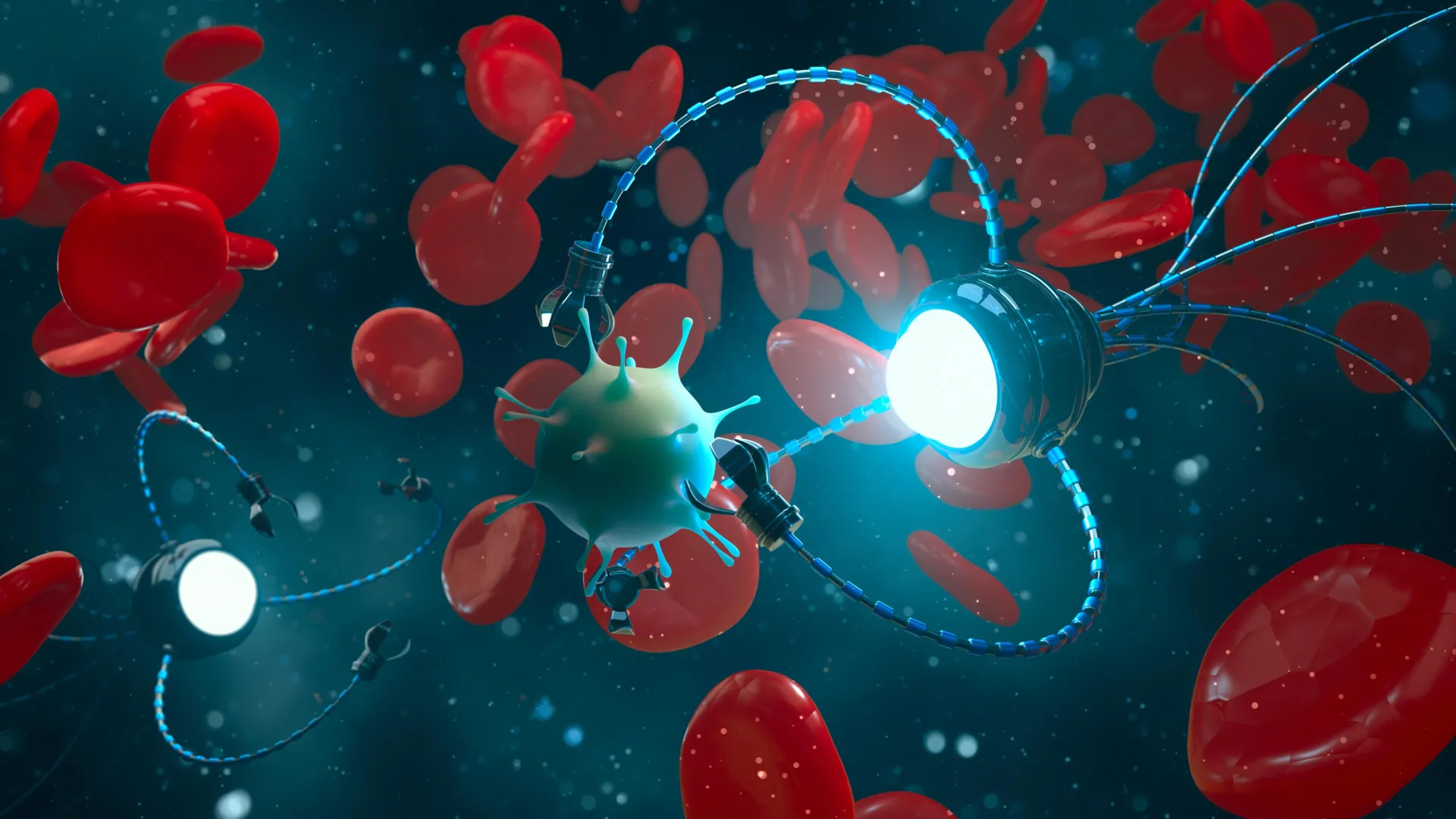
The landscape of robotics is undergoing a seismic shift. For decades, our conception of a "robot" has been tethered to the physical world of silicon chips, steel gears, and lithium-ion batteries. However, at the very foundation of life—within the double helix of deoxyribonucleic acid (DNA)—scientists are quietly constructing the next generation of autonomous machinery. These DNA nanorobots, invisible to the naked eye, represent a convergence of molecular biology, computer science, and mechanical engineering that promises to redefine how we treat disease, manufacture materials, and process information.
The Dawn of the Molecular Age: Main Facts
At its core, DNA nanotechnology leverages the predictable, programmable nature of DNA base pairing—where adenine (A) pairs with thymine (T), and cytosine (C) pairs with guanine (G)—to create intricate, self-assembling structures. Unlike traditional manufacturing, which relies on "top-down" approaches like etching and machining, DNA robotics utilizes "bottom-up" self-assembly. By designing specific sequences of DNA, researchers can program these molecules to fold into complex 3D shapes, from simple geometric lattices to articulated robotic arms.
These microscopic machines are engineered to navigate the chaotic, fluidic environment of the human bloodstream. Their objective is clear: to act as intelligent agents capable of delivering localized therapies, capturing viral pathogens, or functioning as building blocks for sub-nanometer computing architectures. While currently operating primarily in controlled laboratory settings, these "proof-of-concept" machines represent the first steps toward a future where biological machines perform the tasks we once thought impossible.
Chronology: From Theoretical Concept to Nanoscale Reality
The trajectory of DNA robotics has been marked by a transition from static architecture to dynamic motion:
- The Early Era (1980s–1990s): The field was pioneered by Nadrian Seeman, who first proposed the concept of using DNA as a structural material to create branched junctions. This established the foundational theory that DNA could serve as a "scaffold" for molecular engineering.
- The Origami Breakthrough (2006): Paul Rothemund introduced "DNA origami," a technique that allowed researchers to fold a long, single-stranded DNA molecule into virtually any desired shape by using short "staple" strands. This was the pivotal moment that transformed DNA nanotechnology from an abstract theory into a versatile design platform.
- The Rise of Dynamics (2010s): Building on structural stability, researchers began incorporating "switches" and "hinges." This period saw the development of DNA walkers—molecules capable of moving along a surface—and mechanical sensors that could change shape in response to environmental triggers.
- The Integration Phase (2020s–Present): Today, the focus has shifted toward practical integration. Scientists are moving beyond simple movement to develop systems that can communicate, process binary information, and perform autonomous medical functions, such as identifying and neutralizing viral threats like SARS-CoV-2.
Supporting Data: The Mechanics of the Invisible
To engineer these machines, researchers borrow heavily from classical robotics, scaling down principles of rigid, compliant, and origami-based design.
1. Structural Engineering at the Nanoscale
DNA provides a unique mechanical advantage: it is stiff enough to hold a shape yet flexible enough to undergo conformational changes. By engineering DNA "joints," scientists can create robots with moving parts. Compliant mechanisms—structures that gain their motion from the flexibility of the material itself rather than traditional hinges—are particularly effective at this scale, as they minimize the need for complex, multi-part assemblies that are difficult to construct at the nanometer level.
2. Control Systems: The Brains of the Operation
Controlling a robot in the molecular realm is fraught with challenges, primarily because the environment is dominated by Brownian motion—the random, jittery movement of particles suspended in a fluid. To counter this, researchers employ:
- DNA Strand Displacement: A biochemical "fueling" mechanism where a specific DNA sequence acts as a key to unlock or trigger a movement. By carefully labeling sequences as "fuel" or "structure," researchers can program sequences of events.
- External Signal Modulation: Beyond biochemistry, scientists are utilizing external forces. Electromagnetic fields, light pulses, and pH fluctuations act as remote controls, allowing researchers to steer these robots through an environment without needing to be physically present at the site of operation.
Implications: A Revolution in Healthcare and Manufacturing
The potential applications for DNA nanorobotics are vast, spanning across industries that require extreme precision.
The Nano-Surgeon
In the medical field, the most promising application is targeted drug delivery. Current systemic treatments, such as chemotherapy, often harm healthy cells alongside diseased ones. A DNA nanorobot, programmed to recognize the specific molecular "signature" of a cancer cell, could travel through the bloodstream, dock onto the target, and release its therapeutic payload only when and where it is needed. This level of precision could drastically reduce side effects and increase the efficacy of toxic medications.
Advanced Manufacturing and Molecular Computing
Beyond the body, DNA robots serve as programmable templates for nanotechnology. By positioning nanoparticles with sub-nanometer accuracy, these robots can create new types of optical devices—such as ultra-efficient light sensors—and potentially serve as the hardware for molecular computers. Because DNA can store and process information, these systems could eventually lead to computing devices that operate within biological environments, potentially even interfacing directly with living tissue.
Official Responses and Challenges
Despite the optimism surrounding the field, researchers are pragmatic about the barriers to entry. The scientific community, including leading labs in synthetic biology and mechanical engineering, highlights several critical hurdles:
- The Brownian Barrier: "At the nanometer scale, everything is constantly shaking," notes a leading research team. Controlling these movements requires sophisticated dampening and energy-management strategies that are still in their infancy.
- The Knowledge Gap: There is a notable lack of standardized databases for the mechanical properties of DNA. Designing a robot currently requires trial-and-error, as we lack the robust simulation tools that allow aerospace engineers to model a plane before it leaves the hangar.
- The Isolation Problem: Most current robots function in isolation. Scaling them to work in a collaborative, "swarm" intelligence fashion—where thousands of robots work in concert to achieve a complex goal—remains a significant engineering challenge.
The Path Forward: What Needs To Happen Next
To bridge the gap between proof-of-concept and clinical reality, the scientific community has outlined a roadmap for the next decade:
- Standardization: Developing "parts libraries" is essential. Just as computer engineers use standard transistors and capacitors, DNA engineers need a catalog of well-characterized, reliable DNA components that behave predictably in diverse environments.
- Artificial Intelligence: AI and machine learning are being deployed to predict how complex DNA sequences will fold and behave. These simulations are essential for reducing the design cycle from months to days.
- Bio-manufacturing: Moving from lab-bench synthesis to industrial-scale production requires new methods of bio-manufacturing that can create high-purity DNA structures at a lower cost.
- Interdisciplinary Collaboration: The complexity of the field demands a merger of expertise. Mechanical engineers must teach biologists how to build robust frames; computer scientists must teach chemists how to program logical gates into molecular structures.
Conclusion: Mastering the Molecular World
The vision for the future of robotics is not limited to the shiny, metallic frames we see on factory floors or in science fiction. The robots of tomorrow will be biological, programmable, and intelligent. They will inhabit the very spaces where life occurs—the cell, the bloodstream, and the synapse.
As we continue to refine our ability to manipulate DNA, we are effectively learning the "machine code" of nature itself. By mastering the nanometer scale, we are equipping ourselves with the tools to repair the biological damage of aging, neutralize viral threats before they take hold, and manufacture materials with a level of precision that was once considered impossible. "These will be the tools that allow us to finally master the molecular world," the researchers conclude, signaling that while the technology is still in its infancy, its potential to alter the human experience is profound. We are no longer just observers of biology; we are becoming its engineers.
 Sagoh
Sagoh  Asro
Asro 