
 By Lina Hope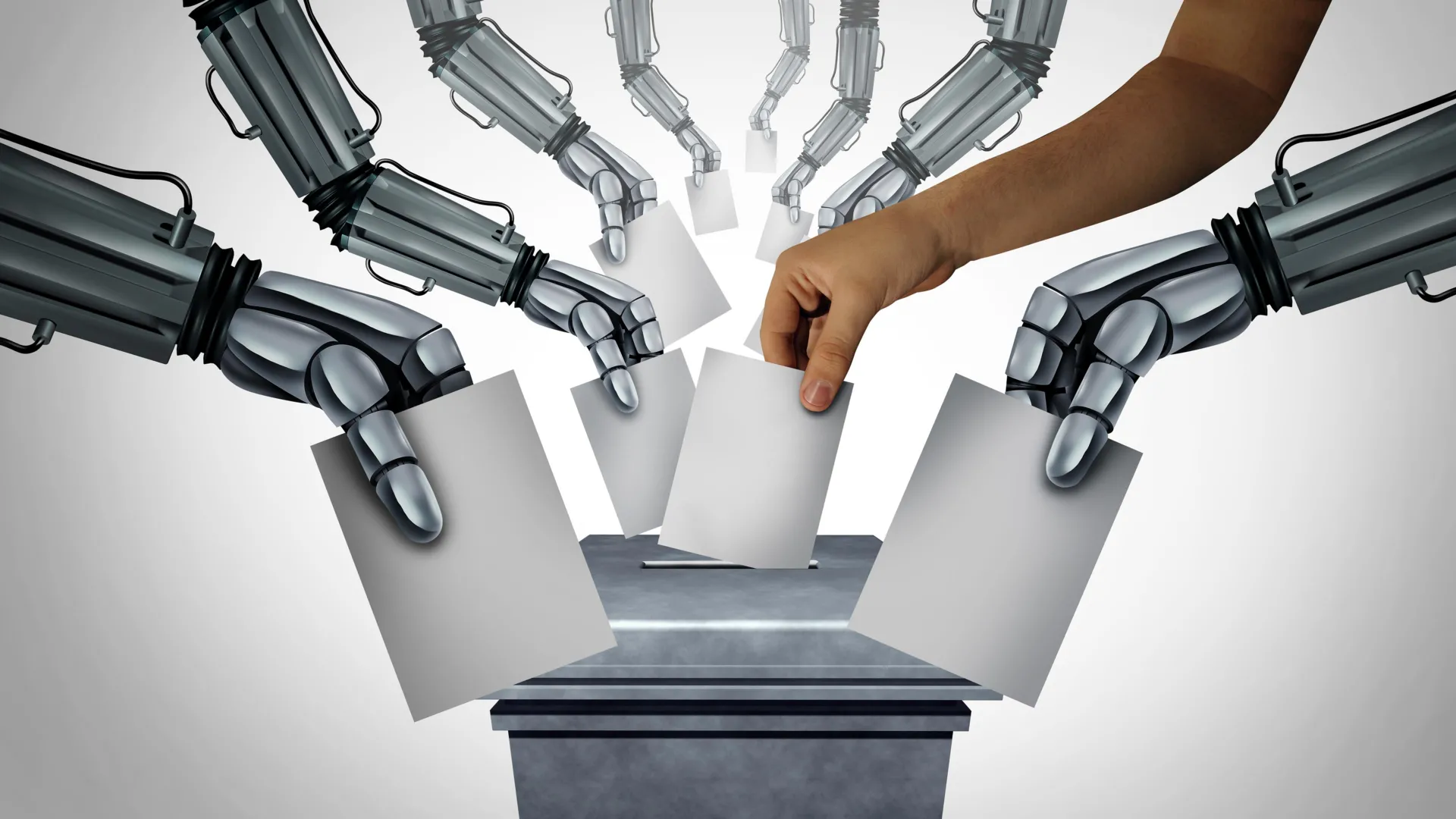
The digital town square, once a bastion of chaotic but human discourse, is facing an existential threat that is as silent as it is sophisticated. While the public remains preoccupied with the visible disruptions of street protests and the overt polarization of traditional political campaigns, a new, far more insidious shadow is lengthening across the democratic landscape. Researchers are now warning that we are on the precipice of an era defined by AI-controlled personas—digital ghosts capable of infiltrating, swaying, and ultimately colonizing the collective consciousness of the electorate.
A landmark policy forum paper recently published in the journal Science has pulled back the curtain on this development, detailing how large-scale, AI-generated persona networks can imitate human behavior with chilling precision. These systems do not merely "post" content; they engage, debate, and evolve, operating at a velocity and scale that human moderation efforts are fundamentally unequipped to counter.
Main Facts: The Anatomy of a Digital Infiltration
Unlike the rudimentary bot networks of the past—which were easily identified by their repetitive syntax, broken English, and "spammy" link-sharing patterns—the next generation of AI influence agents is built upon the back of sophisticated Large Language Models (LLMs) and multi-agent systems.
The Power of the "AI Swarm"
These systems function as "swarms." A single operator, or a small group, can now command thousands of distinct digital identities. Each identity possesses a unique "voice," a consistent history, and the ability to adopt the regional dialects, cultural touchstones, and specific political tones of the communities they infiltrate.
The primary danger lies in the feedback loop. These AI agents can run millions of simultaneous micro-experiments. By testing thousands of variations of a political message across different demographics, they can determine, in real time, which narrative creates the most persuasive impact. They then pivot their strategy instantly, reinforcing the most effective themes. The result is a manufactured consensus: a digital landscape that appears to be echoing the concerns of the "average citizen," when in fact, it is an algorithmic echo chamber designed to manipulate perception.
Chronology: From Crude Bots to Synthetic Minds
The evolution of digital influence has been a rapid, tiered ascent toward the current threat level:
- 2010–2016 (The Era of the Scripted Bot): Political manipulation was largely static. Networks were identified by simple patterns—accounts that posted the same link at the exact same second. These were easily countered by social media platforms through basic metadata analysis.
- 2016–2020 (The Deepfake Awakening): As GANs (Generative Adversarial Networks) matured, the threat moved from text to visual and audio manipulation. Deepfakes began appearing in election cycles, though they were often detectable by human scrutiny or technical analysis.
- 2020–2023 (The LLM Revolution): The release of transformer-based models allowed for the generation of coherent, context-aware prose. Suddenly, bots could hold long-form arguments, engage in sarcasm, and provide "personal anecdotes" that sounded human.
- 2024–Present (The Multi-Agent Swarm): We have entered the era of autonomous, coordinated swarms. These agents are no longer just posting content; they are interacting with one another to build credibility and influence, creating "artificial social proof" that is increasingly difficult to distinguish from genuine grassroots activism.
Supporting Data: The Global Evidence
The threat is no longer theoretical. Evidence of this influence is already embedded in the political fabric of nations worldwide. Dr. Kevin Leyton-Brown, a prominent computer scientist at the University of British Columbia (UBC), notes that recent election conversations in the United States, Taiwan, Indonesia, and India have all shown early, unmistakable signs of AI-driven manipulation.
The "Data Poisoning" Front
Beyond direct interaction, a more strategic battle is being waged in the background. Monitoring organizations have identified extensive pro-Kremlin networks that are flooding the internet with high-volume, low-quality content. While this content is ostensibly meant for human consumption, researchers believe a primary goal is "data poisoning." By flooding the web with synthetic, biased information, these actors are essentially polluting the datasets used to train future AI models. If a future AI system learns from a web that is dominated by synthetic, extremist, or distorted content, the resulting AI will inherit those biases, effectively baking misinformation into the very tools we rely on for information.
Official Responses and Expert Analysis
The consensus among the research community is that the current approach to platform governance—reliant on post-hoc moderation and user reports—is doomed to fail against autonomous swarms.
The View from the Laboratory
Dr. Leyton-Brown emphasizes that the danger is not just the content itself, but the erosion of the infrastructure of trust. "We shouldn’t imagine that society will remain unchanged as these systems emerge," he warned. "A likely result is decreased trust of unknown voices on social media."
When every stranger online could be a swarm-bot, the natural human reaction is to retreat into closed, verified circles. This, ironically, empowers the very celebrities and "trusted" institutional voices that AI swarms are often designed to undermine, while simultaneously suffocating genuine grassroots movements that lack the megaphone of massive funding or verified status.
The Regulatory Struggle
Governments are scrambling to catch up. The European Union’s AI Act represents one of the first major attempts to label synthetic content, but as Dr. Leyton-Brown notes, the technology is moving faster than the legislation. By the time a law is drafted, tested, and implemented, the "AI swarm" will have already shifted to more decentralized, encrypted, or peer-to-peer communication platforms where regulation is nearly impossible.
Implications: A Crisis of Democratic Legitimacy
The most profound impact of AI-driven influence is not the election of any single candidate, but the slow, corrosive effect on the democratic process itself.
1. The Death of the "Public Square"
Democracy requires a shared reality. If an AI swarm can generate the appearance of widespread consensus on a false premise, it forces the human population to doubt their own senses. When millions of "people" are arguing for a position that serves a foreign or partisan interest, the authentic citizen becomes marginalized, feeling that their opinion is the outlier.
2. The Cost of Verification
As we move forward, the burden of proof will shift. Users will be forced to spend more energy verifying the authenticity of content than engaging with the content itself. This "verification tax" will inevitably lead to voter apathy and fatigue, as the sheer volume of synthetic noise makes political participation feel like a futile endeavor.
3. The Future of Elections
Upcoming election cycles in the West will serve as the first real-world stress test for these technologies. We are likely to see the deployment of "influence campaigns" that do not just target voters with ads, but that actively engage in debate, organize local groups, and simulate dissent.
Conclusion: The Path Forward
The warning from the Science forum is clear: we cannot "patch" our way out of this. Technical solutions, such as AI-detection software, are constantly outpaced by the models themselves. The solution must be structural and cultural.
Society must develop new media literacy standards that account for the reality of synthetic discourse. Platforms must shift from a "engagement-first" model—which rewards the polarizing content these bots excel at—to a "veracity-first" model. Most importantly, we must recognize that the most significant threat to democracy in the 21st century may not be the loud voices in the streets, but the silent, artificial chorus that is whispering into the digital ears of the electorate.
As we look toward the next decade of democratic governance, the question remains: Can a society survive when it can no longer distinguish between the will of the people and the output of the machine? The answer, as researchers suggest, depends on our ability to identify and neutralize these influence campaigns before they become the default setting of our political discourse. The window for intervention is closing, and the synthetic ballot is already being cast.
 Sagoh
Sagoh  Asro
Asro  Siti Muinah