
 By Sagoh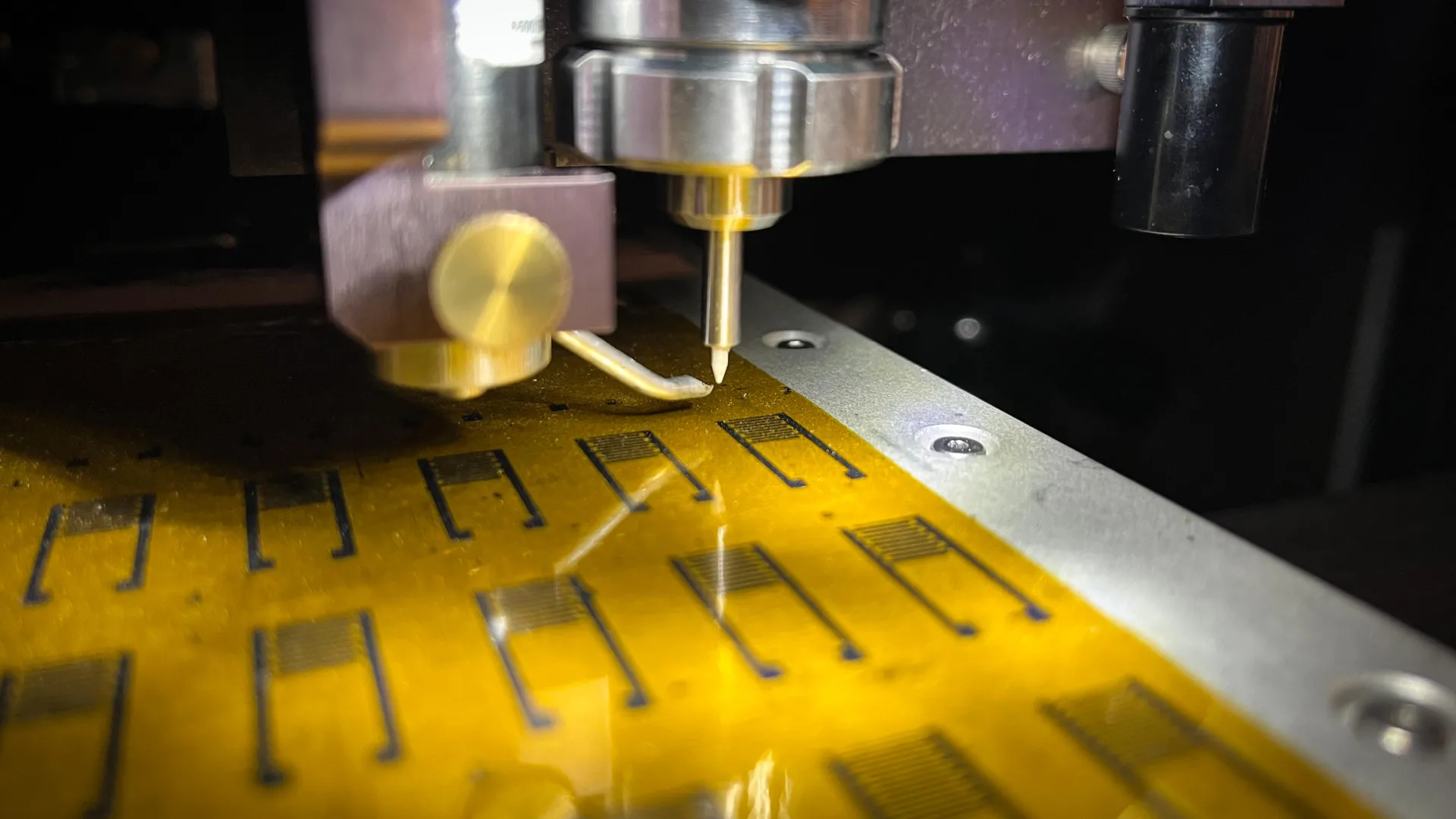
In a development that blurs the boundary between synthetic hardware and biological tissue, researchers at Northwestern University have unveiled a groundbreaking advancement in neuromorphic engineering: flexible, printable artificial neurons capable of direct, real-time communication with living brain cells.
This achievement, detailed in a study published in the April 15 issue of Nature Nanotechnology, marks a pivotal departure from traditional silicon-based computing. By leveraging aerosol jet printing and unique nanomaterials, the team has created devices that do not merely mimic the firing patterns of human neurons—they speak the same electrical language, allowing them to interface seamlessly with biological neural circuits.
The Convergence of Biology and Electronics: Main Facts
The core innovation lies in the device’s architecture. Unlike the rigid, two-dimensional silicon transistors that have powered the digital age for decades, these new artificial neurons are soft, three-dimensional, and highly dynamic. Constructed from electronic inks containing molybdenum disulfide (MoS₂) and graphene, the neurons are printed onto flexible polymers.
When these devices are powered, they undergo a sophisticated, spatially inhomogeneous decomposition of the polymer matrix. This creates a narrow, conductive filament that acts as a "firing" mechanism, allowing the device to generate complex electrical spikes—including single pulses, continuous firing, and bursting patterns—that are nearly indistinguishable from those produced by biological neurons.
In controlled laboratory experiments, these artificial devices were applied to slices of mouse cerebellum. The results were striking: the biological neurons responded to the artificial signals with high fidelity, proving that the electronic devices could effectively "talk" to living tissue.
A Chronological Leap in Neuromorphic Research
The path to this breakthrough began with a fundamental questioning of how modern computing handles data. For years, the tech industry has relied on the scaling of rigid silicon transistors. However, as AI models grow in complexity, this approach has hit a wall of energy inefficiency and hardware rigidity.
- Early Conceptualization: The research team, led by Mark C. Hersam, the Walter P. Murphy Professor of Materials Science and Engineering at Northwestern, recognized that the human brain—which operates with immense complexity using only about 20 watts of power—is the ultimate model for future computing.
- Material Innovation: Moving away from standard CMOS (Complementary Metal-Oxide-Semiconductor) fabrication, the team experimented with printable nanomaterials. They discovered that by retaining portions of the polymer binder in their electronic inks—rather than removing it as a "flaw"—they could control the electrical conductivity at a microscopic level.
- The Printing Process: Utilizing aerosol jet printing, the researchers deposited these materials in precise patterns. This additive manufacturing process allows for the creation of intricate, brain-like networks at a fraction of the cost of traditional clean-room semiconductor manufacturing.
- Validation: The final phase involved a cross-disciplinary collaboration with the Feinberg School of Medicine. By testing the printed neurons against mouse brain slices, the team confirmed that the temporal dynamics—the speed and shape of the electrical spikes—matched biological requirements. This was a "Goldilocks" result: the signals were neither too fast (like metal oxides) nor too slow (like previous organic attempts), but perfectly tuned to the brain’s own rhythm.
Decoding the Brain: Supporting Data and Mechanics
To understand why this invention is so significant, one must look at the fundamental differences between silicon-based logic and neural logic.
The Heterogeneous Advantage
Modern silicon chips are defined by uniformity; billions of identical transistors perform identical tasks. The brain, conversely, is defined by its heterogeneity. It consists of various cell types, each with specialized functions, arranged in a dynamic 3D architecture that continuously rewires itself based on experience.
The Power of Complexity
The Northwestern team’s artificial neurons utilize a property called "multi-order complexity." Because a single artificial neuron can produce a wide array of firing patterns, a network of these devices requires significantly fewer components to perform the same task as a massive, energy-hungry traditional circuit.
Data provided by the research team highlights that their devices operate within a "temporal range" previously unachieved by artificial systems. While other artificial neurons have struggled to mimic the specific spike shapes of biological neurons, the MoS₂-graphene devices replicate the timing and amplitude of neural signals with enough precision to trigger a response in living biological networks.
Official Responses and Expert Perspectives
Mark C. Hersam, who co-led the study with research associate professor Vinod K. Sangwan, emphasized the urgency of this research in the context of the current AI boom.
"The way you make AI smarter is by training it on more and more data," Hersam noted. "This data-intensive training leads to a massive power-consumption problem. Because the brain is five orders of magnitude more energy-efficient than a digital computer, it makes sense to look to the brain for inspiration for next-generation computing."
Indira M. Raman, the Bill and Gayle Cook Professor of Neurobiology at Northwestern and a key collaborator on the study, provided the essential biological validation. By applying the artificial signals to the cerebellum, Raman’s team confirmed that the artificial neurons were capable of stimulating neural circuits in a biologically relevant manner.
"We’ve demonstrated signals that are not only the right timescale but also the right spike shape to interact directly with living neurons," Hersam added, noting that this degree of compatibility has been a "holy grail" for neuro-prosthetic researchers.
Implications: From Sustainable AI to Restorative Medicine
The implications of this technology extend far beyond the laboratory, touching upon two of the most pressing challenges of our time: the environmental impact of computing and the restoration of human sensory function.
The Environmental Crisis of AI
The current trajectory of AI development is unsustainable. As tech companies build "gigawatt data centers"—some of which are being paired with dedicated nuclear power plants to meet energy demands—the environmental strain grows. Beyond the electricity required, the cooling of these facilities places immense stress on local water supplies.
The printable artificial neuron offers a path toward "brain-inspired" hardware that could drastically reduce this power consumption. By moving toward computing systems that operate like the human brain, we could potentially reduce the carbon and water footprint of artificial intelligence by several orders of magnitude.
Neuroprosthetics and Human Interfaces
On the medical front, the potential for direct neural interfaces is profound. Because these devices are flexible and biologically compatible, they represent a significant step toward next-generation neuroprosthetics. Future implants could potentially bypass damaged areas of the nervous system to restore hearing, vision, or motor function, interacting with the brain as a native component rather than an intrusive foreign object.
A New Manufacturing Paradigm
Finally, the transition to additive, printable electronics signals a shift toward more sustainable manufacturing. Aerosol jet printing deposits material only where it is needed, drastically reducing waste compared to the subtractive, chemical-heavy processes used in traditional silicon chip fabrication.
As the study concludes, the team looks toward the next phase: scaling these printed networks into more complex systems. By successfully bridging the gap between electronic printing and biological function, Northwestern’s researchers have laid the groundwork for a future where our computers are not just faster, but fundamentally more aligned with the biology that powers the most sophisticated machine in the known universe: the human brain.
The research was supported by the National Science Foundation, underscoring the strategic importance of this technology to the future of both national security and global scientific leadership.
 Asro
Asro  Siti Muinah