
 By Siti Muinah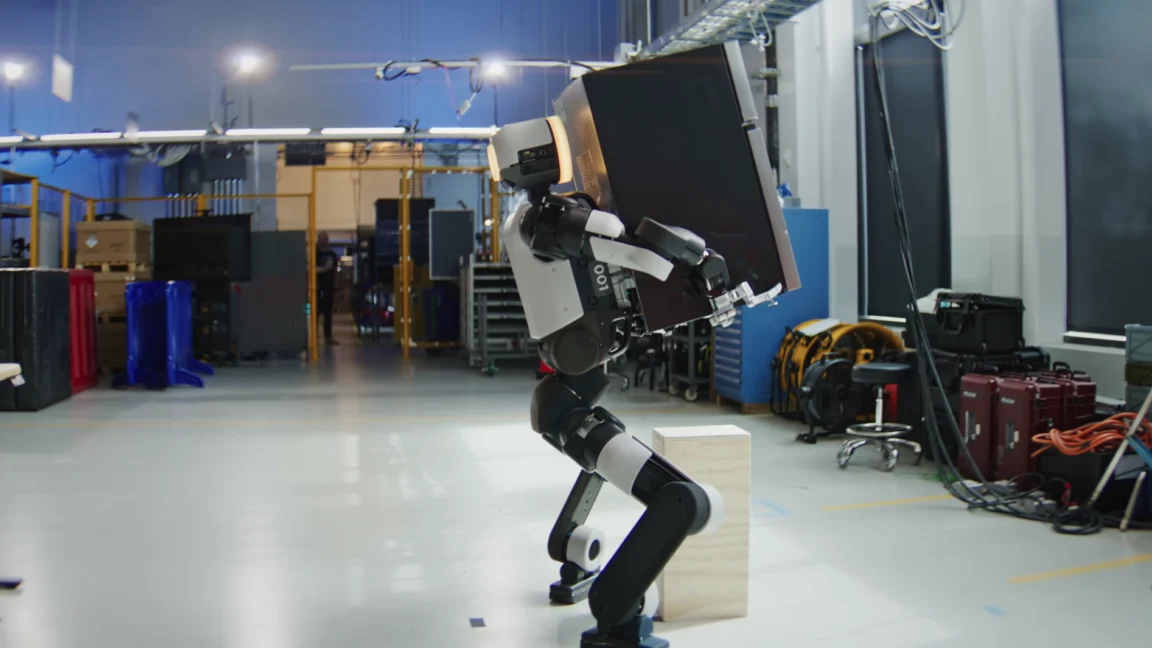
In a move that signals a tectonic shift in the global industrial landscape, the South Korean government, in close partnership with the nation’s tech titans, has unveiled a monumental $1 trillion investment initiative. This strategy—focused on the "triple axis" of memory semiconductors, AI data centers, and physical AI—aims to cement South Korea’s position as the bedrock of the global artificial intelligence economy by 2028.
As the AI boom continues to strain global supply chains and push the limits of current hardware, Seoul is positioning itself not merely as a participant, but as the essential architect of the future. However, this ambition arrives at a complex crossroads, where record-breaking corporate profits collide with labor unrest and the looming challenge of powering a massive, energy-intensive digital infrastructure.
The Triple Axis: A Strategic Overview
President Lee Jae Myung, in a televised address on June 29, characterized the initiative as a "great leap forward." The strategy rests on three fundamental pillars:
- Semiconductor Dominance: Scaling up DRAM production to meet the insatiable demand for AI-driven computing power.
- Infrastructure Expansion: Constructing a massive network of AI-specialized data centers across the nation’s provinces to localize and secure high-speed processing capabilities.
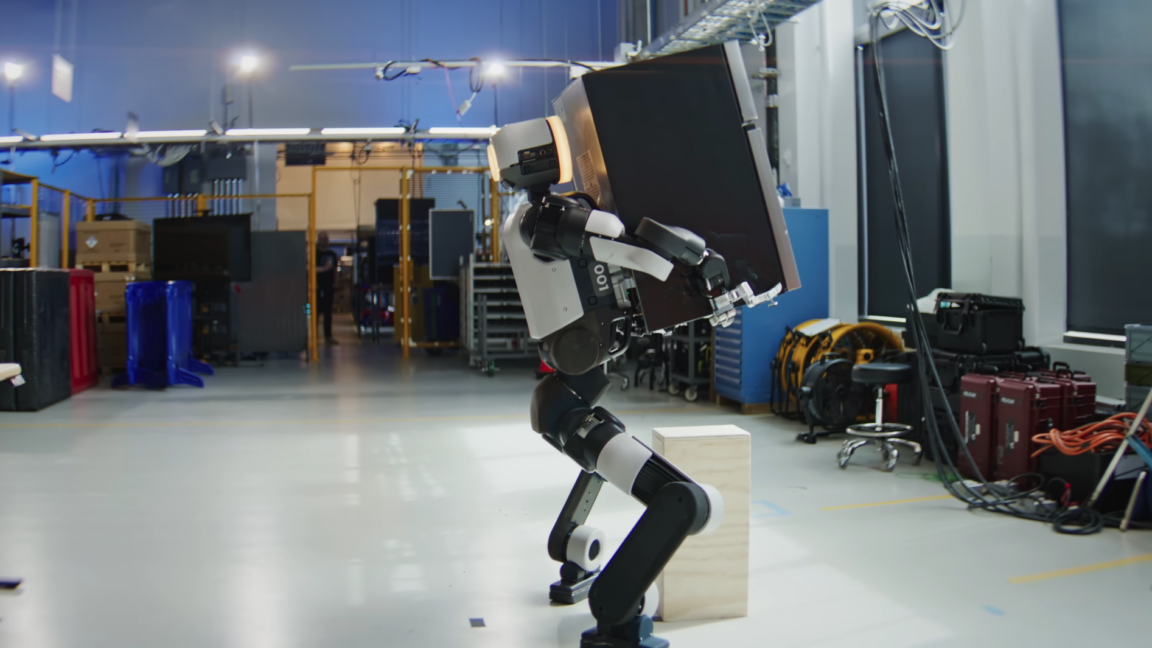
- Physical AI Integration: Transitioning from software-based AI to "physical AI," focusing on the mass deployment of humanoid robots into the manufacturing and automotive sectors.
The sheer scale of this investment is unprecedented. By committing $585 billion to chip fabrication alone, Samsung and SK Hynix are signaling that they view the current AI "gold rush" as a multi-decade structural change rather than a passing trend.
Chronology: The Road to the $1 Trillion Commitment
The current push follows years of market turbulence and technological acceleration.
- 2021: Hyundai Motor Company completes its acquisition of Boston Dynamics, signaling a long-term shift toward robotics as a core business vertical.
- 2024: South Korea’s dependence on fossil fuels and natural gas—exacerbated by the Strait of Hormuz crisis—highlights the vulnerability of the nation’s energy grid to industrial demands.
- January 2026: Global RAM shortages reach a breaking point, causing price spikes for everything from Apple’s MacBook lineup to Valve’s Steam Machine, forcing a re-evaluation of semiconductor supply chain resilience.
- June 2026: Samsung and SK Hynix record historic quarterly profits, triggering national debates regarding "excess wealth" and the potential for a "national dividend" for citizens.
- June 25-29, 2026: Hyundai’s labor union secures the right to strike in anticipation of the deployment of Atlas robots, coinciding with the government’s official unveiling of the $1 trillion "Triple Axis" project.
Supporting Data: The Industrial Engine
The economic engine driving these projects is the memory chip market. High-bandwidth memory (HBM) and next-generation DRAM are the lifeblood of modern AI. With companies like Samsung and SK Hynix currently struggling to keep pace with demand, the government’s plan to double DRAM production capacity within five years is seen as a necessary response to market instability.
However, the expansion comes with significant logistical hurdles. SK Hynix Chairman Chey Tae-won has publicly noted that building a high-tech chip cluster is a marathon, not a sprint. Pointing to the nine-year development cycle of the Yongjin cluster, analysts warn that the relief promised to global consumers—lower prices for consumer electronics—may be further off than the government’s ambitious 2028 timeline suggests.
The Energy Equation
The most critical bottleneck for these projects is electricity and water consumption. The Ministry of Climate, Energy and Environment has been tasked with a massive infrastructure undertaking:
- Water Requirements: 650,000 tons of water daily for the new southwestern chip plants.
- Electricity Requirements: An additional 6.3 gigawatts for chip fabrication and 8 gigawatts for AI data centers.
To meet these targets, the government is looking toward a diversified energy portfolio including renewable energy and nuclear power. Yet, the reliance on natural gas—which currently accounts for roughly 25 percent of the nation’s electricity generation—remains a "strategic vulnerability" in the face of geopolitical instability in the Middle East.
The Rise of Physical AI and Labor Resistance
Perhaps the most controversial facet of the government’s plan is the "national strategic industry" designation for physical AI. The vision is to move AI out of the cloud and into the factory, utilizing humanoid robots to handle tasks that are too dangerous, monotonous, or precise for human workers.
Hyundai’s investment of $5.8 billion in the Saemangeum region is the flagship project for this initiative. The company aims to manufacture 30,000 Atlas humanoid robots annually by 2028. This move is designed to integrate the robotics expertise of Boston Dynamics with the massive, existing South Korean automotive supply chain.
The Human Element
The push toward automation has met immediate, organized resistance. The labor union at Hyundai, fearing that robots will displace human workers or undermine bargaining power, has engaged in aggressive negotiations. The union’s decision to pursue a legal strike is a stark reminder that the "Fourth Industrial Revolution" is as much a social issue as it is a technical one.
The tension is exacerbated by the broader national discourse on wealth inequality. Government officials have encouraged tech giants to share their "AI-driven windfalls" with suppliers and staff. While the "national dividend" proposal floated in May was retracted as a personal view, the fact that it was discussed at the highest levels of the presidential office underscores a growing public sentiment that the prosperity generated by AI must be distributed to avoid social fragmentation.
Implications: A Global Ripple Effect
The success of South Korea’s trillion-dollar gambit will have profound implications for the global economy.
1. Supply Chain Resilience: If South Korea succeeds in doubling its DRAM production, it could stabilize the volatile pricing currently plaguing the global consumer electronics market. A steady supply of high-capacity memory is the only way to prevent the "RAM chaos" that has stifled innovation in the PC and data center sectors over the last eighteen months.
2. The New Industrial Standard: The commercialization of humanoid robots in ten major industries by 2028 will likely set a global standard. If Hyundai can prove that Atlas-class robots can safely and efficiently work alongside humans in a high-volume manufacturing environment, it will spark an immediate wave of adoption across Europe and North America.
3. Energy Policy and Sustainability: The sheer energy requirements of these data centers and chip fabs will force South Korea to accelerate its transition to modular nuclear reactors and advanced grid management. How the country balances this immense power hunger with its environmental commitments will serve as a case study for other nations in the AI era.
4. Social Contracts in the Age of Automation: The standoff between Hyundai’s labor union and the corporate board is a preview of the "Great Negotiation" that many nations will face. As physical AI replaces human labor, the definition of "work" and the structure of corporate profit-sharing will require radical re-imagination.
Conclusion: The Path Ahead
South Korea is essentially attempting to "construct additional pylons"—to borrow a phrase from the digital culture that helped inspire the country’s rise—to power a future where physical and digital intelligence converge. The $1 trillion investment is an audacious statement of intent, suggesting that the nation is willing to endure short-term labor friction and massive infrastructure costs for long-term technological hegemony.
Whether the country can meet its 2028 targets depends on its ability to solve the "triple challenge": securing a stable energy supply, negotiating a sustainable peace with its labor force, and overcoming the physical limitations of scaling chip fabrication. As the world watches, South Korea is not just building robots and chips; it is attempting to write the blueprint for the next century of industrial civilization.
 rifanmuazin
  Layla Zulfa
  Evan Lee Salim