
 By Evan Lee Salim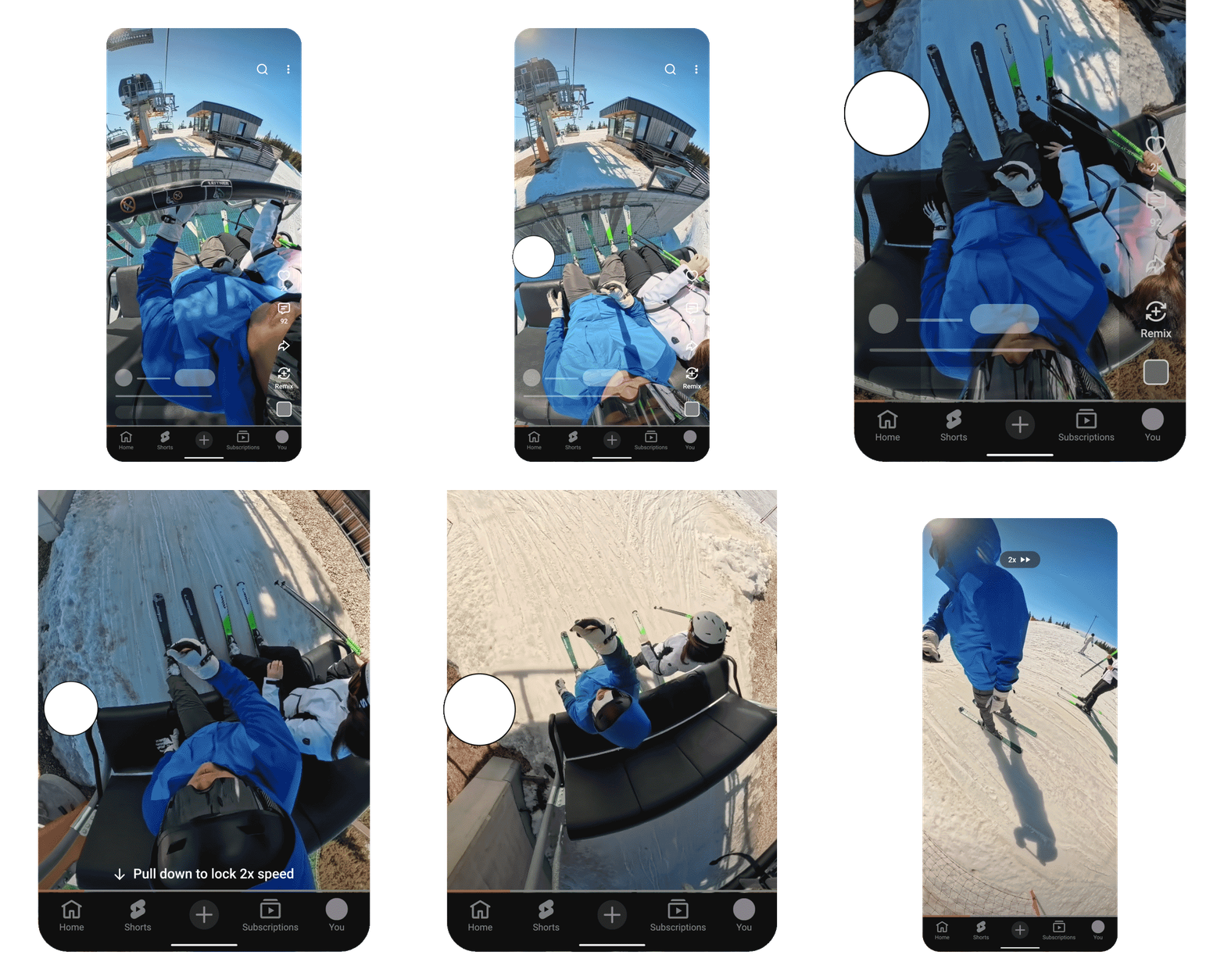
In a significant update to its short-form video platform, YouTube has announced a suite of new features for Shorts that bring the user experience closer to its primary competitor, TikTok. These changes, unveiled in a blog post on Thursday, are designed to streamline navigation, enhance user control, and simplify the interaction model for the platform’s massive audience. From a "clear screen" mode that declutters the interface to a revamped liking mechanism, YouTube is aggressively iterating to ensure Shorts remains a dominant force in the attention economy.
The Core Updates: What’s Changing?
The latest update introduces three primary UI and UX adjustments that fundamentally change how viewers consume short-form content on YouTube.
The "Clear Screen" Mode
Perhaps the most requested feature for long-time mobile video consumers is the ability to view content without the distraction of overlaid text, like buttons, channel names, and engagement metrics. YouTube’s new "clear screen" mode allows users to strip away these interface elements, providing an immersive, uninterrupted view of the video content. This mirrors a similar feature that has been a staple of the TikTok experience for years, acknowledging that users often want to focus entirely on the visual storytelling rather than the surrounding platform infrastructure.
The Heart of Interaction
In a move that standardizes the visual language of social media engagement, YouTube is replacing its traditional "thumbs-up" icon with a "heart" icon. While the functionality remains largely synonymous with a positive vote, the shift to a heart is a strategic design choice. It aligns YouTube Shorts with the industry-standard iconography used by Instagram, TikTok, and other major social platforms, creating a more intuitive experience for a generation of users conditioned to associate the heart symbol with a "like."
Precision Playback and Speed Control
YouTube is also handing more power over playback to the viewer. Users can now watch Shorts at 2x speed—a feature that caters to the fast-paced consumption habits of modern audiences. The execution of this feature is notably dynamic: users can initiate a speed boost by holding down the edge of their screen, returning to normal speed the moment they lift their finger. For those who prefer a consistent accelerated pace, the app now allows users to lock the 2x speed by pressing the player and swiping down. Additionally, a dedicated "mute" button has been introduced, accessible via a simple tap on the video, allowing for discreet viewing in public spaces.

A Chronology of the "Shorts" Evolution
The journey of YouTube Shorts from a experimental project to a cornerstone of the platform has been marked by rapid adaptation.
- 2020: The Genesis: Responding to the meteoric rise of TikTok, YouTube launched the beta version of Shorts in India. The initial goal was to provide a native tool for creators to build audiences using nothing but their smartphones.
- 2021: Global Expansion: Following the success of the Indian pilot, YouTube expanded Shorts to over 100 countries, signaling its intent to compete globally.
- 2022: Monetization and Integration: YouTube began introducing revenue-sharing models for Shorts, attempting to attract top-tier talent who were previously tethered to TikTok’s creator funds.
- 2024: Advanced UI Refinements: The current updates represent the next phase of maturity. By focusing on UI/UX parity, YouTube is signaling that it is no longer just "the other short-form app," but a refined competitor that has learned from the market leader’s interface successes.
Supporting Data: The Battle for Screen Time
The pressure to evolve is driven by hard data. According to industry analysis, short-form video consumption has become the primary driver of growth for social media platforms. YouTube’s own quarterly reports have consistently highlighted that Shorts are a critical funnel for channel discovery.
While YouTube remains the king of long-form content, the "Shorts" segment now accounts for billions of daily views. However, the stickiness of the platform remains a metric that tech giants monitor obsessively. By introducing features like 2x speed and "clear mode," YouTube is attempting to reduce "friction"—the minor inconveniences that might cause a user to abandon the app and switch to a competitor. Data suggests that platforms with higher degrees of user control over playback speed tend to see higher retention rates among Gen Z and Alpha audiences, who value efficiency in their media consumption.
Official Responses and Strategic Shifts
YouTube’s official communication regarding these changes emphasizes user-centric design. In their recent blog post, the company framed the update as a response to direct user feedback. "We are constantly looking for ways to make the experience more seamless," the company noted.
However, the most controversial aspect of the update is the removal of the "dislike" button. YouTube is now guiding users toward the "Not interested" and "Don’t recommend this channel" options found within the three-dots menu. This is a strategic move to curate a more positive environment for creators, effectively shifting the feedback loop from public shaming (downvoting) to internal algorithm signaling. By de-emphasizing public negativity, YouTube aims to keep the creator ecosystem healthy while still gathering the data necessary to refine the user’s recommendation feed.

Implications for the Future of Social Video
The convergence of UI/UX across major video platforms—YouTube, TikTok, and Instagram Reels—raises interesting questions about the future of digital media.
The Death of Platform Differentiation?
As all three major players adopt similar "heart" icons, swipe-based navigation, and clear-screen modes, the platforms are becoming increasingly indistinguishable from a design perspective. This implies that the competition will no longer be fought on the battlefield of "features," but rather on the quality of content, the strength of the creator economy, and the intelligence of the underlying recommendation algorithms.
Impact on Creators
For creators, these changes mean that the "hook" of a video is more important than ever. With users now able to speed up content to 2x or swipe through in a "clear mode," the time to capture a viewer’s attention is shrinking. Content creators must now optimize for high-impact visual storytelling that remains engaging even at double speed. The removal of the public "dislike" button also offers a measure of protection for creators, potentially encouraging more experimentation without the fear of immediate public backlash.
The Algorithm’s New Role
By pushing users toward "Not interested" and "Don’t recommend this channel," YouTube is effectively outsourcing the moderation and curation of the Shorts feed to the users themselves. This creates a highly personalized feedback loop. Every time a user interacts with these new, simplified menus, they are training the algorithm to serve them content that aligns more closely with their specific preferences. In the long run, this could lead to an even more fragmented, but highly satisfying, consumption experience for the end user.
Conclusion
YouTube’s latest updates to Shorts are a testament to the platform’s willingness to evolve in an unforgiving competitive landscape. By adopting the best practices of its rivals—specifically those pioneered by TikTok—YouTube is ensuring that its interface remains familiar to modern users. While some power users may miss the granularity of previous interaction models, the trade-off for a cleaner, faster, and more personalized viewing experience appears to be a calculated gamble that YouTube is prepared to win. As the line between these platforms continues to blur, the ultimate victor will be the platform that best balances user control with the addictive nature of endless, high-quality, short-form discovery.
 Raul Delapena Setiawan
  Siti Muinah
  Asro
Asro 