
 By Nila Kartika Wati
The U.S. Cybersecurity & Infrastructure Security Agency (CISA)—the very entity tasked with safeguarding the nation’s critical infrastructure and advising the private sector on defensive posture—is currently embroiled in a severe internal security crisis. Following a report by investigative journalist Brian Krebs of KrebsOnSecurity, it has been revealed that a CISA contractor inadvertently exposed highly sensitive AWS GovCloud keys and an extensive cache of agency secrets on a public GitHub repository.
The fallout has been immediate and severe. Members of Congress, already wary of the agency’s stability following significant workforce reductions, are now demanding an exhaustive accounting of the breach. As of late May 2026, CISA remains in a race against time to invalidate compromised credentials and secure systems that were left exposed for months.
The Anatomy of the Breach: "Private-CISA"
The incident centers on a public GitHub profile titled "Private-CISA," created by a contractor with administrative access to CISA’s code development infrastructure. According to security researchers, the repository—which existed as a public-facing entity since November 2025—contained plaintext credentials, API keys, and configuration files that provided a "roadmap" to internal CISA systems.
Analysis of the repository’s commit history indicates that the contractor manually disabled GitHub’s built-in security features, which are specifically designed to scan for and block the publication of sensitive credentials. By bypassing these safeguards, the contractor essentially created a high-visibility target for malicious actors. Rather than serving as a standard project repository, the account appeared to function as a "scratchpad" or synchronization mechanism, used to move files between the contractor’s work environment and personal systems.
The repository included files with alarming names such as Important AWS Tokens.txt, kube-config.txt, and various browser-exported password CSVs. These documents provided the keys to the kingdom for CISA’s cloud-based operations.
Chronology of the Incident
- November 2025: The "Private-CISA" repository is established on GitHub. It begins to accumulate sensitive files and credentials, functioning as a shadow storage space for a CISA contractor.
- Late April 2026: The repository is updated with several of its most sensitive and critical credentials, significantly escalating the security risk.
- May 18, 2026: KrebsOnSecurity publicly exposes the existence of the repository after receiving information from security firm GitGuardian.
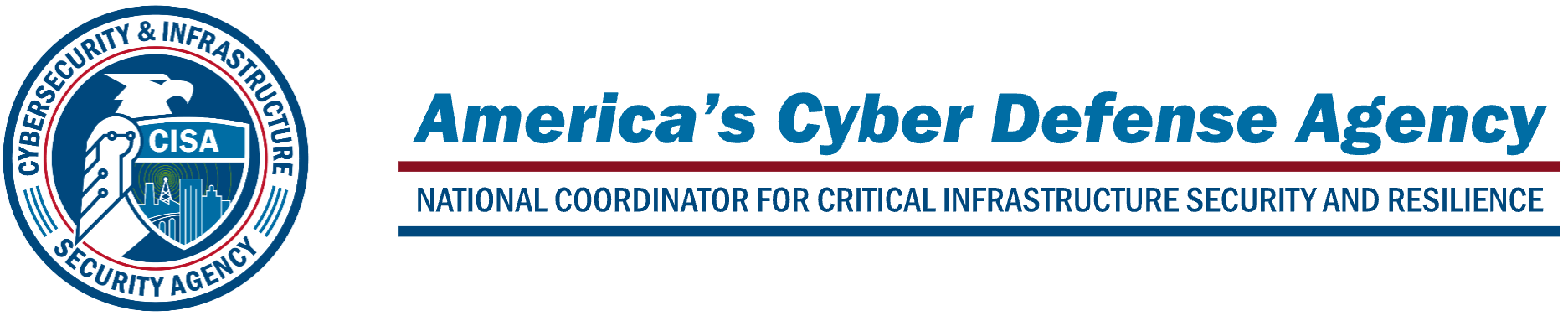
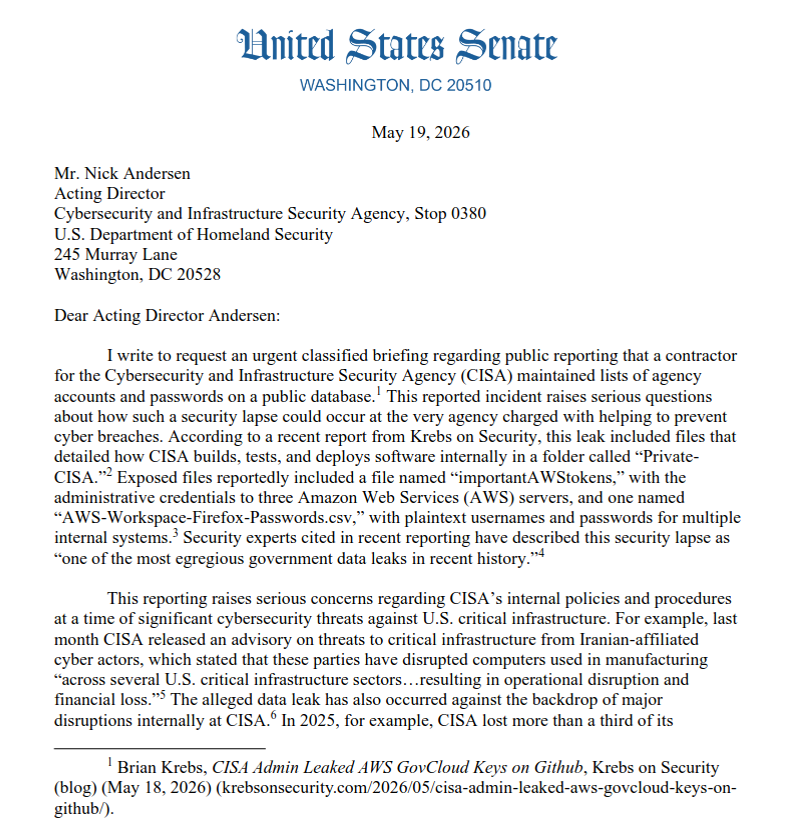
- May 19, 2026: Sen. Maggie Hassan (D-NH) and Rep. Bennie Thompson (D-MS) issue formal letters to CISA’s acting director, Nick Andersen, demanding answers regarding internal policy failures.
- May 20, 2026: Security researcher Dylan Ayrey, creator of the open-source tool TruffleHog, notifies CISA that an RSA private key—granting full administrative access to the CISA-IT GitHub organization—remains active and unrevoked.
- Late May 2026: CISA begins the laborious process of rotating credentials, while officials continue to face mounting pressure to explain how such a massive lapse could occur within the federal government’s lead cybersecurity agency.
Technical Implications: The "TruffleHog" Warning
The severity of the leak was compounded by the duration of the exposure. Dylan Ayrey, who monitors public code repositories for leaked secrets, noted that the presence of the RSA private key was particularly egregious.
"An attacker with this key could read source code from every repository in the CISA-IT organization, including private repositories," Ayrey explained. Beyond simple data theft, an adversary could have registered rogue "self-hosted runners"—software that executes code within a CI/CD (Continuous Integration and Continuous Delivery) pipeline. This would allow an attacker to hijack the agency’s automated software deployment processes, potentially injecting malicious code into the very tools CISA uses to secure the nation’s infrastructure.
While CISA reportedly invalidated the RSA key after being prompted by Ayrey on May 20, the agency has been slower to rotate other critical secrets deployed across its technology portfolio. The fact that an external researcher had to point out the persistence of the most dangerous credentials underscores a potential breakdown in CISA’s internal incident response protocols.
Congressional Scrutiny and the Question of Agency Culture
The political repercussions have been swift. Sen. Maggie Hassan (D-NH) expressed profound alarm in her May 19 letter, highlighting that the incident is not an isolated event but rather a symptom of a larger, systemic problem.
"This reporting raises serious concerns regarding CISA’s internal policies and procedures at a time of significant cybersecurity threats against U.S. critical infrastructure," Hassan wrote. Her concerns are amplified by the recent, chaotic state of CISA’s leadership and workforce. The agency has recently seen a loss of more than one-third of its staff following a series of forced retirements, buyouts, and resignations initiated by the Trump administration.
Rep. Bennie Thompson, the ranking member of the House Homeland Security Committee, along with Rep. Delia Ramirez, raised the specter of foreign intelligence interference. In their co-signed letter, they noted: "It’s no secret that our adversaries—like China, Russia, and Iran—seek to gain access to and persistence on federal networks. The files contained in the ‘Private-CISA’ repository provided the information, access, and roadmap to do just that."
The lawmakers are demanding a full briefing on how the contractor was vetted, what oversight existed regarding their access to sensitive systems, and why the agency’s internal monitoring failed to detect the exfiltration of data to a public GitHub account for over six months.
The "Human Problem" vs. Technical Controls
Security experts are divided on whether this incident could have been prevented through technology alone. James Wilson, editor of the Risky Business security podcast, pointed out that while organizations can set "top-down policies" to prevent the disabling of GitHub security features, these policies often rely on the assumption that employees are using managed corporate accounts.
Adam Boileau, Wilson’s co-host, offered a more sobering perspective: "Ultimately, this is a thing you can’t solve with a technical control. This is a human problem where you’ve hired a contractor to do this work, and they have decided of their own volition to use GitHub to synchronize content from a work machine to a home machine."
The incident highlights a critical blind spot in modern cybersecurity: the "shadow IT" created by individual contributors. When employees or contractors prioritize personal convenience—moving code from a locked-down enterprise environment to a personal repository for "easier" access—they effectively punch a hole in the agency’s firewall that no automated software can plug.
Official Response and Path Forward
CISA’s official communication has been characteristically guarded. In a brief statement following the disclosure of Ayrey’s findings, the agency noted: "CISA is actively responding and coordinating with the appropriate parties and vendors to ensure any identified leaked credentials are rotated and rendered invalid and will continue to take appropriate steps to protect the security of our systems."
However, this statement does little to quiet critics who argue that the agency’s lack of transparency regarding the duration of the exposure is unacceptable. Experts suggest that because GitHub’s public activity feed is monitored by both security researchers and cybercriminal syndicates, it is highly probable that the data was harvested by bad actors long before the agency began its remediation efforts.
As the investigation continues, the spotlight remains firmly on CISA’s leadership. With the agency already struggling to maintain its operational capacity, this breach serves as a stark reminder that even the most sophisticated cybersecurity organizations are vulnerable to the most basic human errors. For CISA, the task is now twofold: first, to perform a comprehensive "clean sweep" of its digital infrastructure to ensure no backdoors remain, and second, to rebuild the trust of the American public and the legislative bodies tasked with its oversight.
The incident is likely to trigger a new wave of federal regulations regarding how contractors handle government source code, with calls for stricter identity and access management (IAM) controls, and potentially a ban on the use of personal cloud storage and code repositories for any work related to federal systems. Whether these measures can be implemented effectively in an agency currently reeling from a mass exodus of its most experienced personnel remains an open, and deeply concerning, question.
 Sagoh
Sagoh  Evan Lee Salim
  Ammar Sabilarrohman