
 By Jia Lissa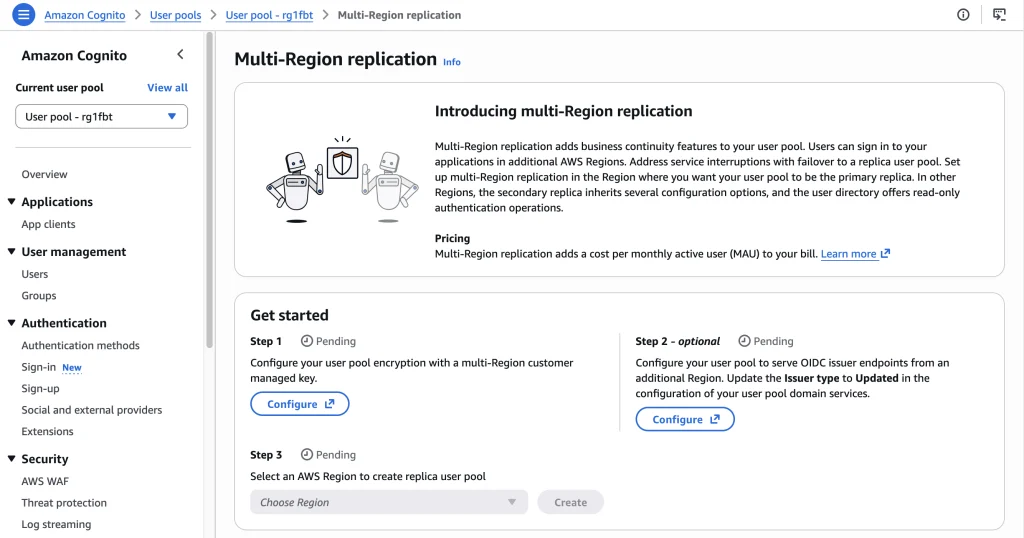
In an era where digital continuity is synonymous with business viability, the challenge of maintaining seamless authentication across geographically dispersed infrastructure has become a primary concern for architects and developers. Today, Amazon Web Services (AWS) has addressed this critical operational hurdle by introducing two pivotal updates to its flagship authentication service: multi-Region replication for Amazon Cognito and expanded support for customer managed keys (CMKs). These enhancements mark a significant evolution in how organizations can manage user identity, security, and high availability in a globalized cloud environment.
The Evolution of Authentication Resilience
For years, developers have navigated the complexities of maintaining consistent user sessions and machine-to-machine (M2M) credentials across different AWS Regions. The traditional approach—manual synchronization—was fraught with operational friction. Engineering teams were often tasked with building bespoke replication logic, which not only increased development overhead but also introduced significant security risks, including potential data exposure and the drift of user configurations between Regions.
When a regional service interruption occurred, the impact was immediate and often severe. Users frequently faced forced password resets, re-authentication loops, or, in the case of M2M communications, service outages caused by the inability of backend systems to validate access tokens issued by a now-inaccessible regional authority.
The newly launched multi-Region replication feature for Amazon Cognito fundamentally changes this paradigm. By enabling a native, automated, and secure path for synchronizing user profiles, credentials, and pool configurations, AWS is allowing organizations to prioritize resilience without the burden of managing complex, custom-built infrastructure.

Chronology of the Implementation
Implementing these new capabilities is a structured process designed to ensure both security and operational integrity. For developers looking to integrate these features, the workflow follows a precise, three-step methodology:
1. Establishing the Encryption Foundation
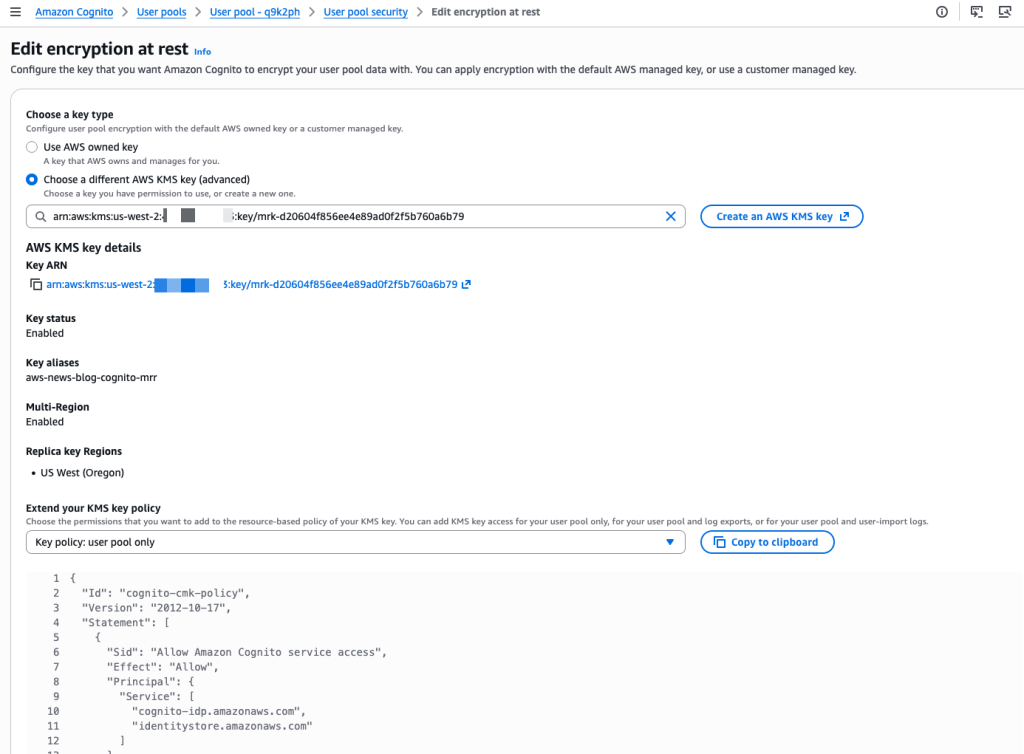
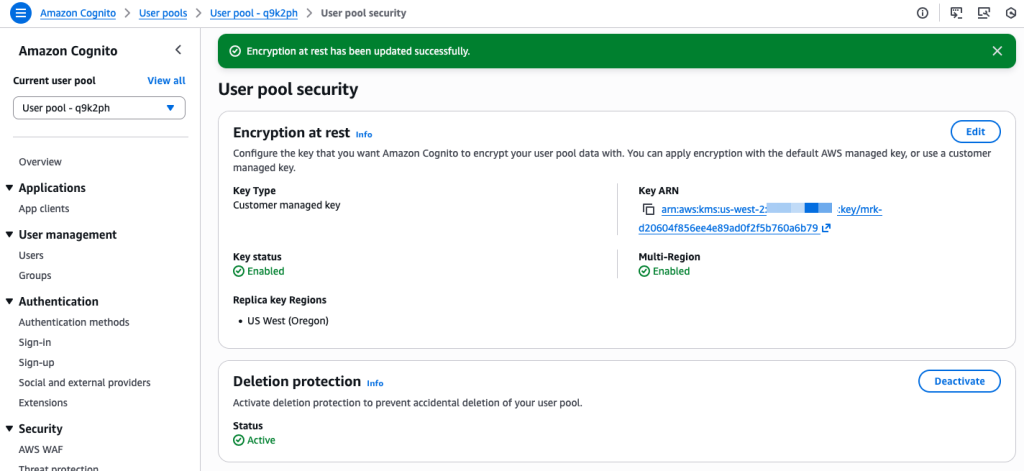
Before any data replication occurs, administrators must establish a multi-Region customer managed key (CMK) within AWS Key Management Service (AWS KMS). This ensures that user data is encrypted at rest with a consistent, user-controlled strategy across all involved Regions. During this phase, users must update their key policies to grant Amazon Cognito the necessary permissions to perform cryptographic operations, ensuring that the service can securely read and write data during the synchronization process.

2. Configuring OIDC Endpoints
The second phase involves transitioning to a multi-Region-aware configuration. Developers must update their OIDC issuer types within the Cognito console. This is a critical step that requires a corresponding update to client-side and server-side applications. Failure to update these endpoints—which are the URLs that applications use to verify authentication tokens—will result in service disruptions, as the applications will remain tethered to the legacy, single-Region configuration.
3. Activating the Replica
Once the encryption keys are validated and the OIDC endpoints are configured, the administrator selects the target destination Region. The system then initiates the replication of the primary pool to the secondary location. The time required for this process scales based on the volume of user data stored in the pool. Once synchronization is confirmed, the administrator manually activates the secondary Region, effectively placing it in a "ready-to-serve" state.
Supporting Data and Technical Implications
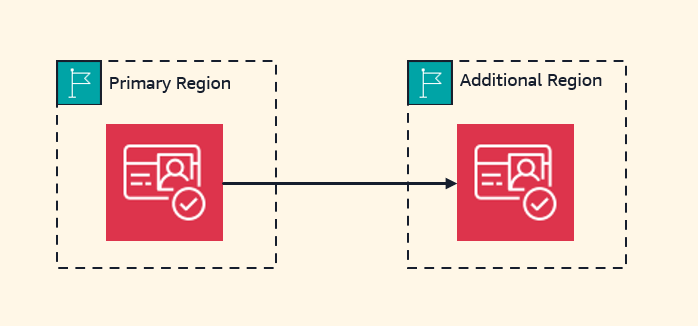
The architecture of this new feature is designed for high-availability scenarios where the primary Region acts as the source of truth, and the secondary Region operates in a read-only capacity.
Seamless Failover
One of the most significant technical achievements of this update is the handling of existing user sessions. Because both the primary and secondary Regions are configured to recognize access tokens issued by either, users who are already logged in experience zero disruption during a failover event. If a primary Region goes offline, the traffic can be rerouted to the secondary Region, where users can sign in using their existing credentials without needing to re-authenticate.
Scope of Authentication Methods
The resilience provided by this feature is not limited to standard username/password logins. It encompasses:
- Federated Identity: Support for social providers including Amazon, Google, Apple, and Facebook.
- Enterprise Standards: Full compatibility with Security Assertion Markup Language (SAML) and OpenID Connect (OIDC) integrations.
- API Authorization: Sustained availability for machine-to-machine backend service authentication, ensuring that microservices continue to communicate securely even during regional shifts.
The Role of Regulatory Compliance
The integration of customer managed keys is particularly significant for sectors governed by strict data sovereignty and security regulations, such as financial services, healthcare, and government contracting. By allowing organizations to use their own KMS keys, AWS provides a granular layer of control over data access. This enables compliance teams to satisfy requirements that mandate specific encryption standards and the ability to revoke access to data at the key level, regardless of the physical storage location.

Strategic Implications for Modern Architectures
The move toward "agentic AI" and complex microservices architectures has made machine-to-machine (M2M) authentication a top priority. As backend services grow in number, the ability for these services to authenticate reliably—without being dependent on a single regional endpoint—is vital.
Operational Efficiency
By offloading the replication logic to the managed service, developers can redirect their focus from building infrastructure to building product features. The "operational overhead" of maintaining consistency between regions, which was previously a heavy lift for DevOps teams, is now abstracted away by the AWS platform.

Cost Considerations
AWS has introduced a transparent pricing model for these capabilities. The multi-Region replication add-on is available for both Essentials and Plus tiers.
- User Authentication: Charged per monthly active user (MAU) per replica Region.
- M2M Authentication: A 30% surcharge on top of standard volume-based pricing for successful tokens.
This model allows organizations to calculate the cost-benefit ratio of their disaster recovery strategies with precision, ensuring that the investment in resilience is aligned with the actual traffic volume of their applications.

Official Guidance and Best Practices
While the automation provided by AWS is robust, it does not absolve the architect of the need for a comprehensive failover strategy. AWS highlights that while user data and authentication state are synchronized, other resources—such as Lambda triggers used for custom authentication, SMS/Email notification configurations, log streaming, and AWS WAF (Web Application Firewall) policies—must be manually deployed and configured in the secondary Region.
Monitoring and Health Checks
To effectively manage a failover, organizations should implement an automated monitoring strategy. This includes:

- Health Checks: Implementing Route 53 health checks or similar monitoring tools to track the status of authentication services.
- Criteria Definition: Establishing clear thresholds for error rates or latency that trigger an automated or manual traffic shift.
- Testing: Regularly practicing failover during low-traffic periods to verify that the secondary Region is fully operational and that all dependent services are correctly synchronized.
Conclusion
The introduction of multi-Region replication and customer managed keys in Amazon Cognito is a clear response to the maturation of cloud-native application development. As businesses increasingly rely on distributed architectures to serve a global user base, the demand for highly available, secure, and compliant authentication services has never been higher.
By simplifying the path to regional resilience, AWS is not only reducing the operational burden on developers but is also raising the standard for what constitutes a "production-ready" authentication system. For organizations looking to future-proof their applications against regional outages and meet the stringent security demands of modern industry regulations, these updates provide the necessary tools to build with confidence, speed, and uncompromising security.
 Neng Nana
  Suro Senen
  Lina Hope