
 By Siti Muinah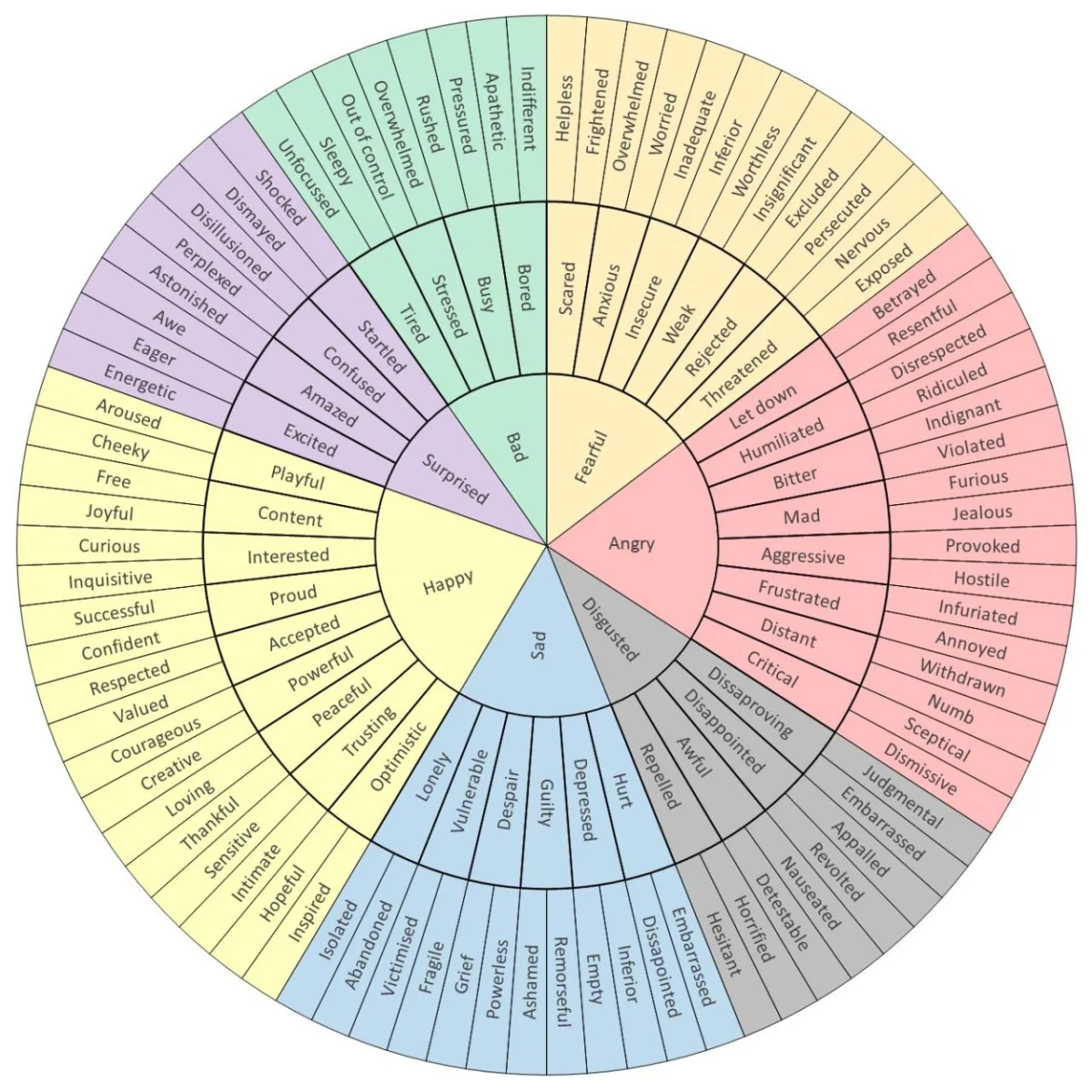
In the competitive landscape of modern product development, a dangerous gap has emerged between what companies believe their users want and the messy, often contradictory reality of how those users actually behave. For years, the industry has relied on "burning questions" and direct surveys, operating under the assumption that users are rational actors capable of articulating their needs. However, as user experience (UX) experts are increasingly discovering, what people say, feel, think, and do are often entirely different things.
To bridge this gap, industry leaders are moving away from surface-level "validation" and toward a more rigorous, multi-layered approach to customer understanding. By adopting frameworks such as Hannah Shamji’s "Four Levels of Customer Understanding" and integrating mixed-method research, organizations are beginning to look past obvious reasons to uncover the hidden motivations that truly drive retention and engagement.
Main Facts: The Fallacy of Direct Inquiry
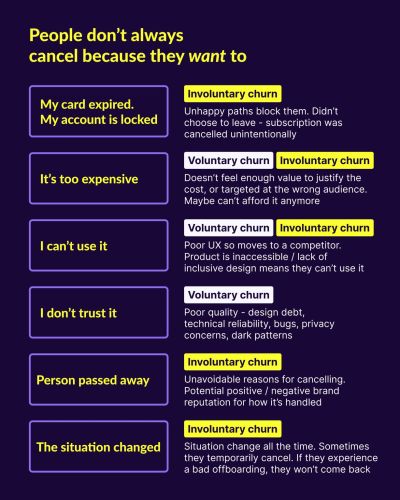
The central challenge in modern UX research is the unreliability of direct feedback. Many companies operate on "big hunches" supported by little real evidence. When a user cancels a subscription, for instance, they might select "too expensive" from a dropdown menu. While this is an "obvious reason," it rarely paints the full picture. The underlying cause might be an involuntary churn due to an expired credit card, a lack of perceived value, or a competitor’s superior onboarding process.
According to research highlighted by Vitaly Friedman and other UX pioneers, direct questioning is often the least effective way to gain actionable insights. This is due to several psychological factors:
- Social Desirability Bias: Users often give answers they think the researcher wants to hear.
- Lack of Introspection: People are frequently unaware of their true motivations or the cognitive shortcuts they take.
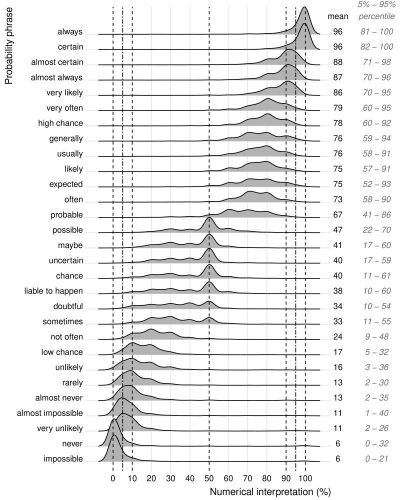
- Linguistic Ambiguity: The words users choose—such as "possible," "probable," or "likely"—have wildly different numerical interpretations depending on the individual, leading to significant data noise.
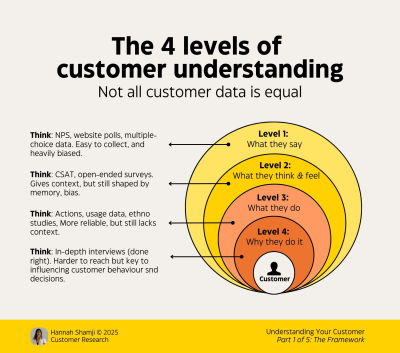
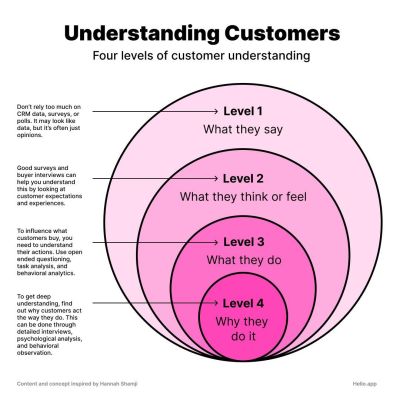
To combat this, the "Four Levels of Customer Understanding" framework suggests that researchers must triangulate data across four distinct domains: what users say, what they think or feel, what they actually do, and ultimately, why they do it.
Chronology: The Evolution of User Research Methodologies
The shift from simple feedback loops to complex behavioral diagnosis has evolved over several decades, marked by a move from quantitative metrics to qualitative nuance.
The Era of "Ask and Receive" (1990s – Early 2000s)
In the early days of digital product design, "user testing" often consisted of focus groups and surveys. Companies asked users what features they wanted, and engineers built them. This era was characterized by feature bloat, as users—focusing on edge cases and unrealistic scenarios—requested tools they would never actually use.
The Rise of Usability Testing and NPS (Mid-2000s – 2015)
As the field of UX matured, the industry adopted more observational methods. The "speak-aloud" protocol became the gold standard, where users were asked to narrate their thoughts while navigating a site. Simultaneously, the Net Promoter Score (NPS) became the ubiquitous metric for "customer satisfaction," despite its later criticism for being a lagging indicator that fails to capture the "why" behind user sentiment.
The Shift to Behavioral Observation (2015 – Present)
Today, the industry is entering a "diagnostic" phase. Experts like Erika Hall have argued that asking questions directly is a "worst practice." The focus has shifted to passive observation—tracking mouse movements, scroll depths, and hesitation points—without the disruption of the speak-aloud protocol. The goal is no longer to "validate" a design (which implies seeking confirmation for an existing idea) but to "research" and "evaluate" behavior in its natural state.
Supporting Data: The Ambiguity of Language and Emotion
The necessity of looking beyond the "Say" level is supported by significant linguistic and psychological data.
The Probability Gap
A study on Dutch verbal probability terms, cited by Thomas D’hooge, illustrates the danger of relying on verbal feedback. When users use terms like "maybe" or "uncertain," their internal interpretation of the probability of an event can range from 20% to 70%. Without a standardized numerical framework, "what people say" becomes a minefield of misinterpretation.
The Spectrum of Empathy
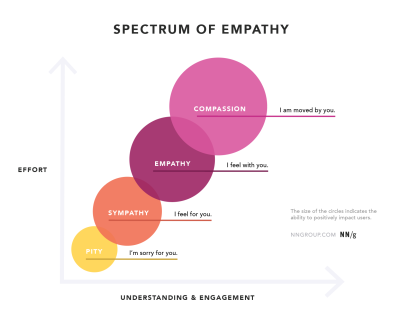
Research from the Nielsen Norman Group (NN/g), led by Sarah Gibbons, emphasizes the need to move along a spectrum of engagement: from Pity (feeling sorry for the user) to Sympathy (acknowledging their pain) to Empathy (sharing their feeling) and finally to Compassion (taking action to solve the problem). Data suggests that designs rooted in empathy—understanding the emotional "Think/Feel" layer—result in higher long-term retention than those that merely solve functional tasks.
Behavioral Cues in Usability Testing
Modern research techniques now prioritize "micro-behaviors." Observations of a user scratching their neck, raising an eyebrow, or hovering their mouse without clicking provide more "Level 3" (What they do) data than any post-task survey. These "signals" act as a diagnostic tool for identifying friction points that the user may not even consciously register.
Official Responses: Expert Perspectives on the "Empathy Debate"
The role of emotion in UX design remains a point of contention among industry leaders, creating a healthy dialogue about the limits of empathy.
The Pro-Empathy View:
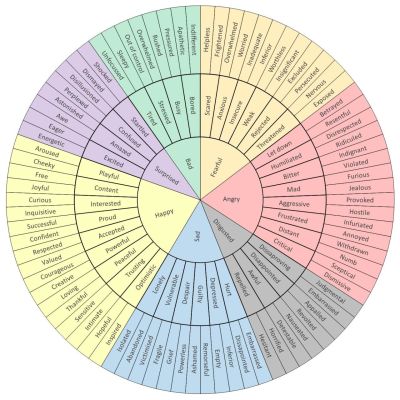
Sarah Gibbons and Hannah Shamji argue that capturing emotions is essential for capturing nuance. Shamji’s framework suggests that Level 2 (Think/Feel) is the gateway to Level 4 (Why). Without understanding the emotional state of a user—captured through tools like the "Emotion Wheel"—designers cannot create products that resonate on a human level.
The Practical Problem-Solving View:
Conversely, Alin Buda offers a "case against empathy." Buda argues that the belief that one must "emotionally absorb" a user’s experience to build great things is flawed. "Our job is to make sense of the mess and then do something about it," Buda states. From this perspective, focusing too much on "emoting" can distract from the core task: diagnosing and solving the functional problem.
The Ethical Perspective:
Indi Young adds a layer of "inclusive design" to the conversation, noting that different solutions can cause different levels of harm—ranging from mild frustration to systemic exclusion. Young argues that research should focus less on "validation" and more on identifying potential harms, moving the conversation from "Does the user like this?" to "Does this solution cause lasting harm?"
Implications: Moving Toward a Diagnostic Culture
The shift from surface-level feedback to deep customer understanding has profound implications for how companies structure their product and design teams.
1. From Validation to Research
The word "validation" is increasingly viewed with skepticism in high-maturity UX organizations. Validation implies a desire to be proven right. To truly innovate, companies must adopt a "diagnostic" mindset. This involves investigating, assessing, and learning without the bias of preconceived notions. As Nikki Anderson suggests, replacing "let’s validate this" with "let’s investigate this" changes the psychological approach of the entire team.
2. The Death of the "Speak-Aloud" Protocol?
While narration has its place, the trend is moving toward "silent observation." By allowing users to complete tasks without interruption, researchers can capture authentic emotional responses that are often obscured by the cognitive load of speaking. Post-task interviews, using techniques like "mirroring" (repeating the user’s words back to them), are then used to uncover the "Why" without polluting the "Do" data.
3. Democratizing User Pain
To make a real impact, user struggles must be visible across the entire organization, not just tucked away in a researcher’s PDF. Practical strategies include:
- Highlight Reels: Sharing short video clips of users struggling with a specific feature during all-hands meetings.
- The "Wall of Pain": A physical or digital space where current user frustrations are displayed to rally engineering and marketing teams.
- Mixed-Method Triangulation: Reconciling conflicting data (e.g., high NPS but low feature usage) through deep-dive qualitative interviews.
4. Financial and Strategic Impact
Ultimately, this multi-layered approach is about business impact. As Vitaly Friedman notes in his "Measure UX & Design Impact" guide, tracking how design changes influence business metrics is the only way to secure long-term investment in UX. By understanding the "Why" (Level 4), companies can avoid the "expensive hunches" that lead to failed product launches and high churn rates.
Conclusion
Understanding the customer is not a matter of asking the right questions; it is a matter of building a sincere, honest, and trustworthy relationship that allows for deep observation. By navigating the four levels—Say, Think/Feel, Do, and Why—designers can move beyond the "noisy reality" of surface-level feedback. In an era where "good enough" design is no longer a competitive advantage, the ability to diagnose the root causes of user behavior is the ultimate differentiator. As the industry moves forward, the most successful companies will be those that stop seeking validation and start seeking the truth.
 Nana Wu
  Nana
Nana 