
 By Nana Muazin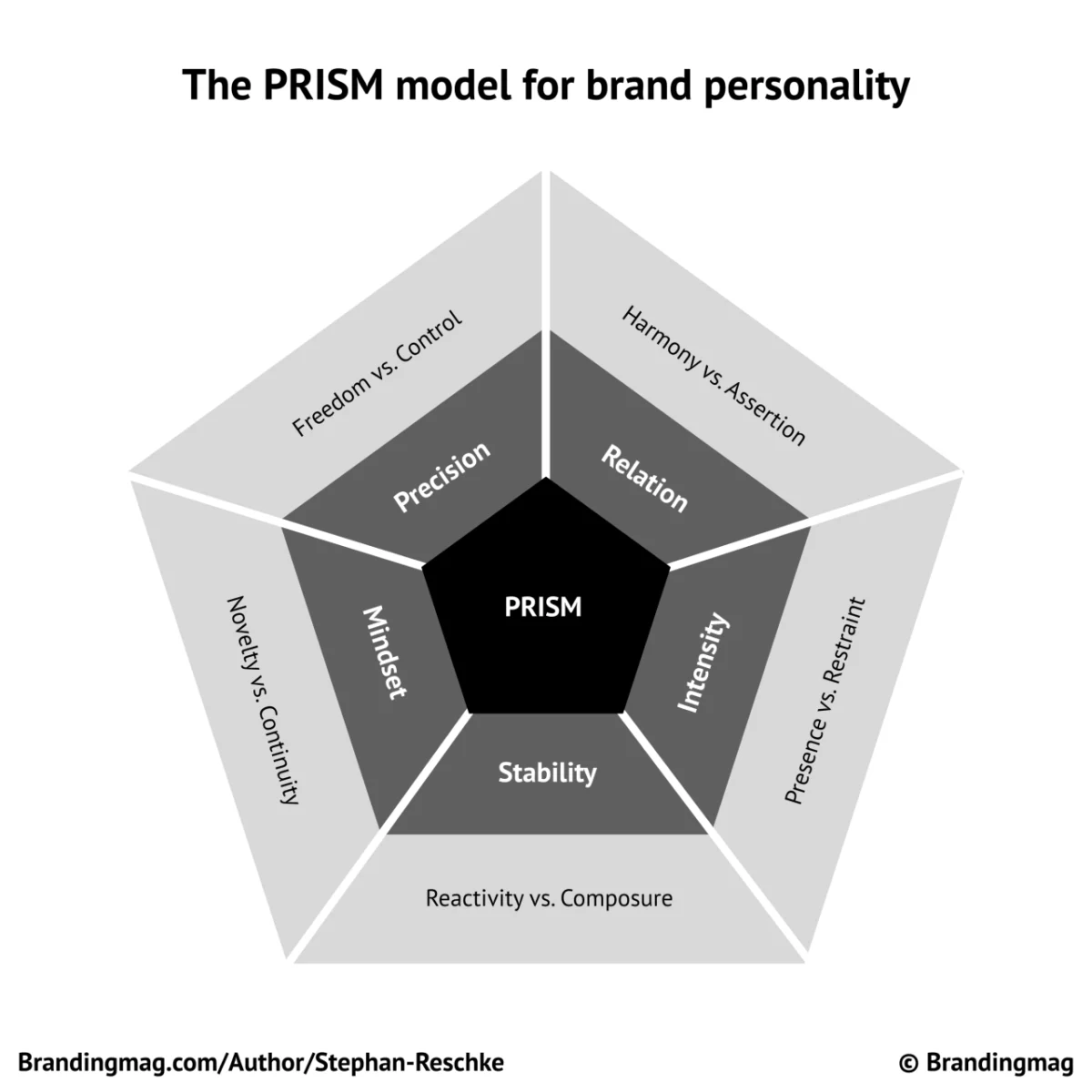
In the early 20th century, the dawn of psychological marketing taught us that brands were not merely products; they were vessels for human emotion. For decades, the industry relied on archetypal frameworks—the Hero, the Outlaw, the Sage—to anchor consumer loyalty. However, as we cross the threshold into the mid-2020s, the ground beneath our feet is shifting. Technology is no longer a tool we operate; it is an environment we inhabit. With the rise of artificial intelligence, our interactions have evolved from static transactions to dynamic, conversational experiences.
To remain relevant, brands must pivot from the legacy models of the past toward a new, technologically fluent paradigm: the PRISM Model.
Main Facts: The Shift to the Agentic Economy
We have entered the age of "Agentic Lovemarks"—a term coined by former Saatchi & Saatchi Netherlands CEO Arjan Kapteijns. This concept redefines Kevin Roberts’ legendary "Lovemark" theory for a world where digital agents act on our behalf.
The core reality is that AI agents are now the primary intermediaries between consumers and corporations. If a brand cannot be "read" and understood by an AI, it effectively ceases to exist in the digital ecosystem. The transition from visual-centric campaigns to voice-and-conversation-driven interactions means that brand identity must move beyond logos and color palettes; it must manifest as a programmable, consistent digital personality.
Chronology of a Paradigm Shift
The evolution of brand building has been marked by three distinct eras:
- The Era of Persuasion (1920s–1990s): Marketing focused on emotional storytelling and the "Unique Selling Proposition." Psychology was applied to human behavior to trigger purchase intent.
- The Era of Archetypes (1999–2024): With the publication of The Hero and the Outlaw by Margaret Mark and Carol Pearson, the industry gained a rational guide to irrational behavior. The 12-brand archetype model provided a human-like persona that consumers could trust and love.
- The Era of Agentic Interaction (2025–Present): As brands began to integrate AI, the limitations of static archetypes became clear. Archetypes were too interpretative; they allowed machines to "hallucinate" a brand’s personality in inconsistent ways. Today, we require technical precision to ensure brand equity is maintained across millions of autonomous AI conversations.
Supporting Data: The Legible-Lovable Law
The necessity of this shift is underscored by the "Legible-Lovable Law," a cornerstone of the Brand Constitutions manifesto by Thomas Marzano, former brand lead at Philips and ASML.

- Legibility: A brand must be structured in a way that LLMs (Large Language Models) can parse its values, tone, and constraints.
- Lovability: The resulting AI-driven output must still resonate with human emotion, ensuring that the machine’s responses feel authentic rather than robotic.
Without a structured framework like PRISM, a brand’s personality becomes a gamble. If an AI is given only a loose archetype to work with, it may adopt a different tone, vocabulary, or behavioral nuance every time a user initiates a search. This inconsistency fragments brand identity, leading to the erosion of trust—the exact opposite of what a Lovemark aims to achieve.
The PRISM Model: A New Framework for Digital Personality
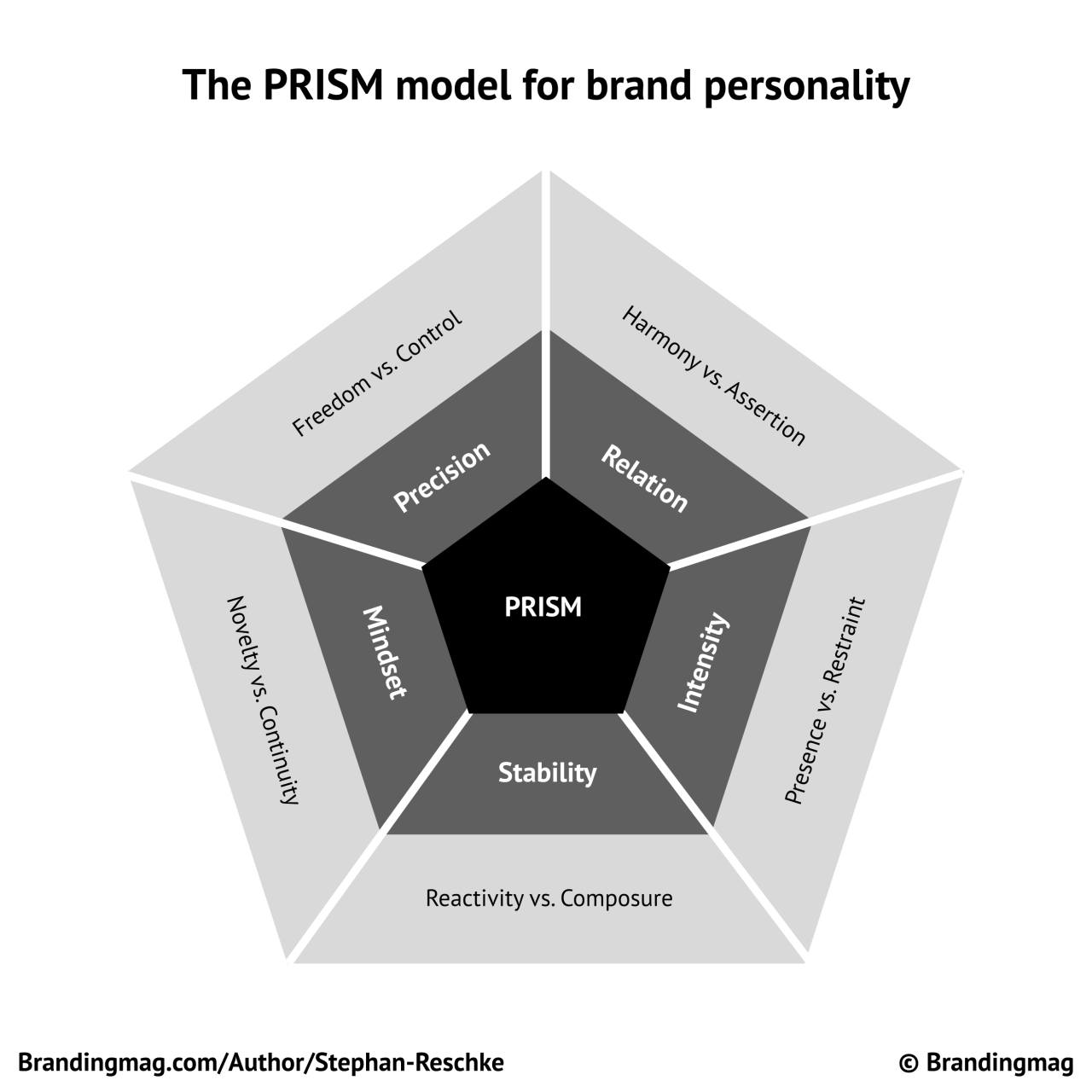
The PRISM model is designed to bridge the gap between human complexity and machine precision. Inspired by the "Big Five" (OCEAN) personality traits—Openness, Conscientiousness, Extraversion, Agreeableness, and Neuroticism—PRISM adapts these psychological principles specifically for brand architecture.
The Five Core Domains of PRISM
- Purpose (P): The underlying drive and mission of the brand.
- Relatability (R): How the brand approaches human connection and empathy.
- Intellect (I): The depth and nature of the brand’s knowledge and communication style.
- Style (S): The verbal and aesthetic "grammar" of the brand’s interactions.
- Maturity (M): The stability and consistency of the brand’s decision-making behavior.
Each of these domains is further divided into six defining characteristics, measured on a granular scale. This allows marketers to move away from vague "brand books" and toward a structured, data-rich "digital soul."
Official Perspectives: Translating Personality into System Prompts
Industry experts are increasingly clear: the future of brand equity lies in the integration of these models directly into the technical stack. Stephan Reschke, a key architect behind the PRISM framework, suggests that the model’s value lies in its ability to be translated into "system prompts."
When a brand’s PRISM profile is embedded into the backend of an LLM, the AI doesn’t just "guess" how to speak; it adheres to a defined personality. This ensures:
- Contextual Stability: The brand sounds the same, regardless of the platform or the query.
- Predictable Empathy: The AI can modulate its responses based on the user’s emotional state while staying within the defined bounds of the brand’s personality.
- Operationalized Branding: The brand is no longer just a creative concept; it is an "Experience Engine" that functions in real-time.
Implications for Future Marketing
The shift to the PRISM model has profound implications for how companies allocate their resources.
From Campaigns to Language
Marketing departments must stop thinking solely about "campaigns" and start thinking about "brand language." In a voice-first world, your brand is defined by the words it uses, the cadence of its responses, and the vocabulary it avoids. PRISM acts as the filter through which this language is generated.
The Death of Static Assets
The era of the "fixed" brand asset is ending. While visual identity remains important, the primary touchpoint is now conversational. A brand that cannot carry on a sophisticated, on-brand conversation with an AI agent will be relegated to the bottom of search rankings and recommendations.
The Anxiety of the Unknown
Many marketing leaders express anxiety regarding the loss of control in an agentic world. However, as the PRISM model demonstrates, control is not lost; it is simply moved from the surface to the structure. By codifying brand personality into a format that AI can interpret, brands can actually exert more control over their digital presence than they ever could with traditional advertising.
Conclusion: The Path Forward
The future will be populated by human-like agents, and the brands that thrive will be those that view their personality as a technical asset. The PRISM model provides the roadmap for this journey. It is a bridge between the irrational human need for connection and the rational, data-driven architecture of modern AI.
As we move forward, the divide between "human" and "machine" will continue to blur. Those who wait for the dust to settle may find themselves left behind in a marketplace where the machines are doing the choosing. The time to define your brand’s digital soul is now. By embracing frameworks like PRISM, companies can ensure that when the AI speaks on their behalf, it speaks with the voice, heart, and mind of the brand they have spent decades building.
The conversation has already begun. The only question remaining is: how will your brand respond?
 Azzam Bilal Chamdy
  Nana Wu
  Raul Delapena Setiawan