
 By Dwi Wanna
In a landmark shift for the digital economy, Amazon Web Services (AWS) has unveiled a transformative capability within its Web Application Firewall (WAF) service: AI traffic monetization. As artificial intelligence models increasingly rely on the vast oceans of data hosted on the public web, the relationship between content creators and AI developers has become fraught with tension. Today, AWS is providing a technical bridge to resolve this, allowing digital publishers and content owners to charge AI bots and autonomous agents for access to protected web content directly at the network edge.
This innovation represents a fundamental change in how the internet functions, moving from a passive, open-access model for crawlers to an active, transactional ecosystem where data—the fuel of the AI revolution—is finally treated as a billable asset.
The Core Mechanism: Monetization at the Edge
Historically, website owners have had limited recourse against AI scrapers. While traditional search engine crawlers were welcomed as engines of discovery—sending traffic back to the source—AI bots often consume content to generate synthetic summaries, effectively cannibalizing the audience of the original publisher.
The new AWS WAF capability shifts the power dynamic. By leveraging the existing AWS WAF Bot Control infrastructure, content owners can now identify, categorize, and—crucially—bill AI entities for every request made to their servers. This is achieved without the need for complex backend infrastructure or custom application code.
How It Works
The system operates at the network edge, ensuring that blocked or unverified traffic never reaches the origin server. When an AI agent attempts to access protected content, the WAF can return an HTTP 402 "Payment Required" response. This response contains a machine-readable price manifest in JSON format, adhering to the x402 open protocol for machine-to-machine payments.
Compatible AI agents can autonomously process these payment requests, submitting signed transactions on blockchain networks like Base or Solana to gain immediate, authorized access to the content. The entire settlement process occurs on-chain, with payments routed directly to the publisher’s preferred cryptocurrency wallet.

Chronology of a Digital Disruption
The road to this announcement has been paved by the meteoric rise of generative AI and the subsequent strain it has placed on web infrastructure.
- 2023–2024 (The Scraper Surge): As Large Language Models (LLMs) gained mainstream adoption, AI-specific crawlers grew by more than 300% year-over-year. Content providers began reporting that AI bots accounted for over 50% of their total web traffic, yet this traffic yielded zero ad impressions or subscription revenue.
- Early 2025 (The Visibility Gap): AWS responded to the growing demand for control by expanding its Bot Control feature, allowing customers to view, block, or rate-limit AI traffic. However, customers demanded a way to capture value from this high-volume consumption.
- Mid-2026 (The Monetization Pivot): Following intensive development, AWS introduces native AI traffic monetization. By integrating with Coinbase’s x402 Facilitator, AWS provides the first "out-of-the-box" payment infrastructure for web content.
- Future Roadmap: AWS has signaled that integrations with Stripe for fiat-based payments and broader support for the Machine Payments Protocol (MPP) are already in the pipeline, signaling an intent to make this the standard for web-wide data licensing.
Supporting Data: The Economic Case for Monetization
The necessity for this tool is underscored by staggering shifts in web traffic patterns. For many digital publishers, the "AI tax" is no longer theoretical.
- Infrastructure Costs: Publishers have been forced to bear the full cost of bandwidth and server processing for AI agents that provide no return on investment.
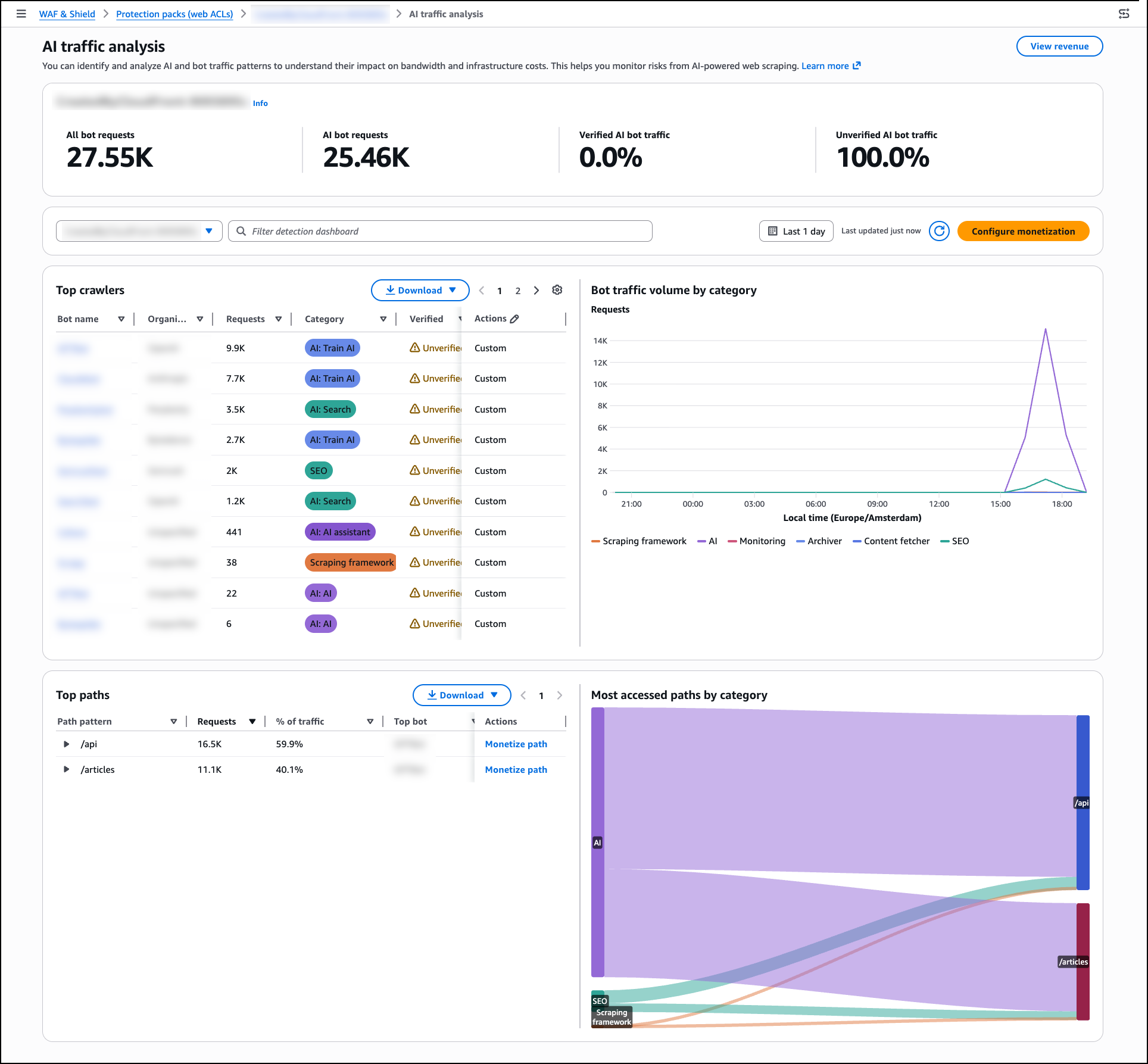
- Volume Metrics: With over 650 distinct AI bot and agent types now tracked—including industry giants like GPTBot, Claude-Web, and Perplexity-Bot—the granularity of control provided by the new dashboard is critical.
- The Heatmap Advantage: The new AI traffic analysis dashboard provides a per-path heatmap, allowing publishers to see exactly which articles, datasets, or media files are being "scraped" most frequently. By cross-referencing this with bandwidth consumption metrics, owners can now calculate the exact cost of their AI traffic and set pricing tiers that reflect the true value of their data.
Official Perspective and Implementation
According to AWS, the goal is to eliminate the friction that has historically plagued content licensing. "Publishers bear the infrastructure costs of serving that traffic without the page views, ad impressions, or subscription conversions that typically offset those costs," the company stated in its release notes.
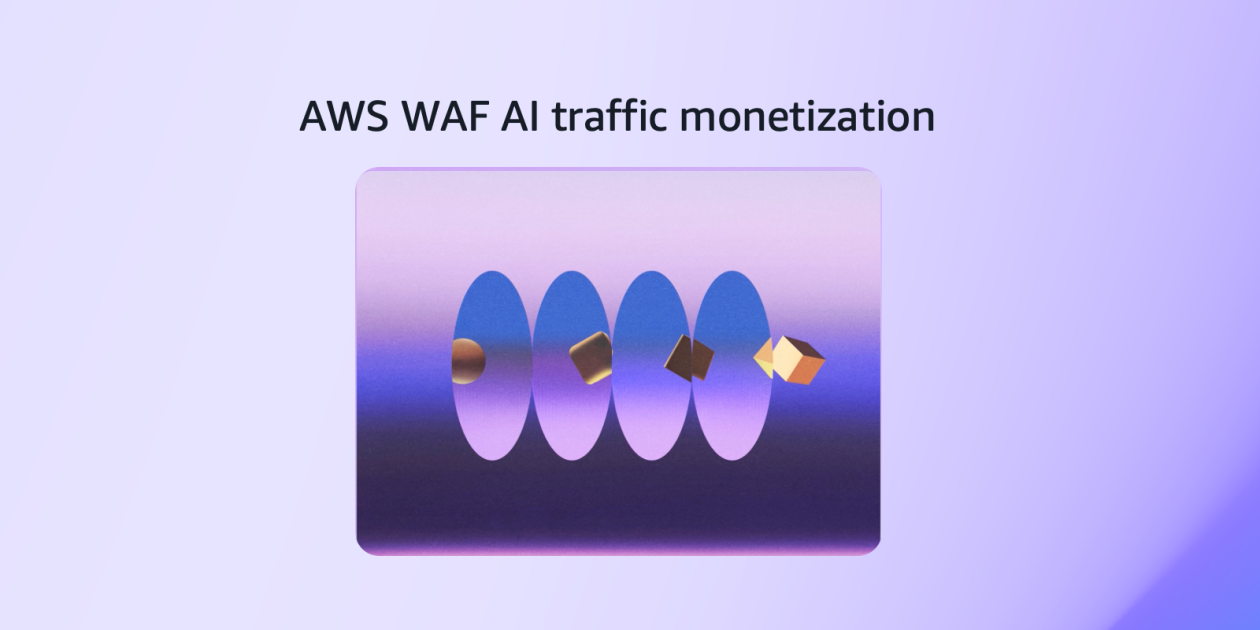
Setting Up Your Protection Pack
For organizations looking to deploy this, the process is integrated directly into the AWS Management Console:
- Bot Control Verification: Ensure that WAF Bot Control is enabled at the Common or Targeted level.
- Creating a Protection Pack: This acts as the administrative container for your monetization rules, defining which content paths are billable and which license terms apply.
- Configuring Actions: Owners can choose from six specific actions for incoming requests, including Monetize, Allow, Block, Count, CAPTCHA, or Challenge.
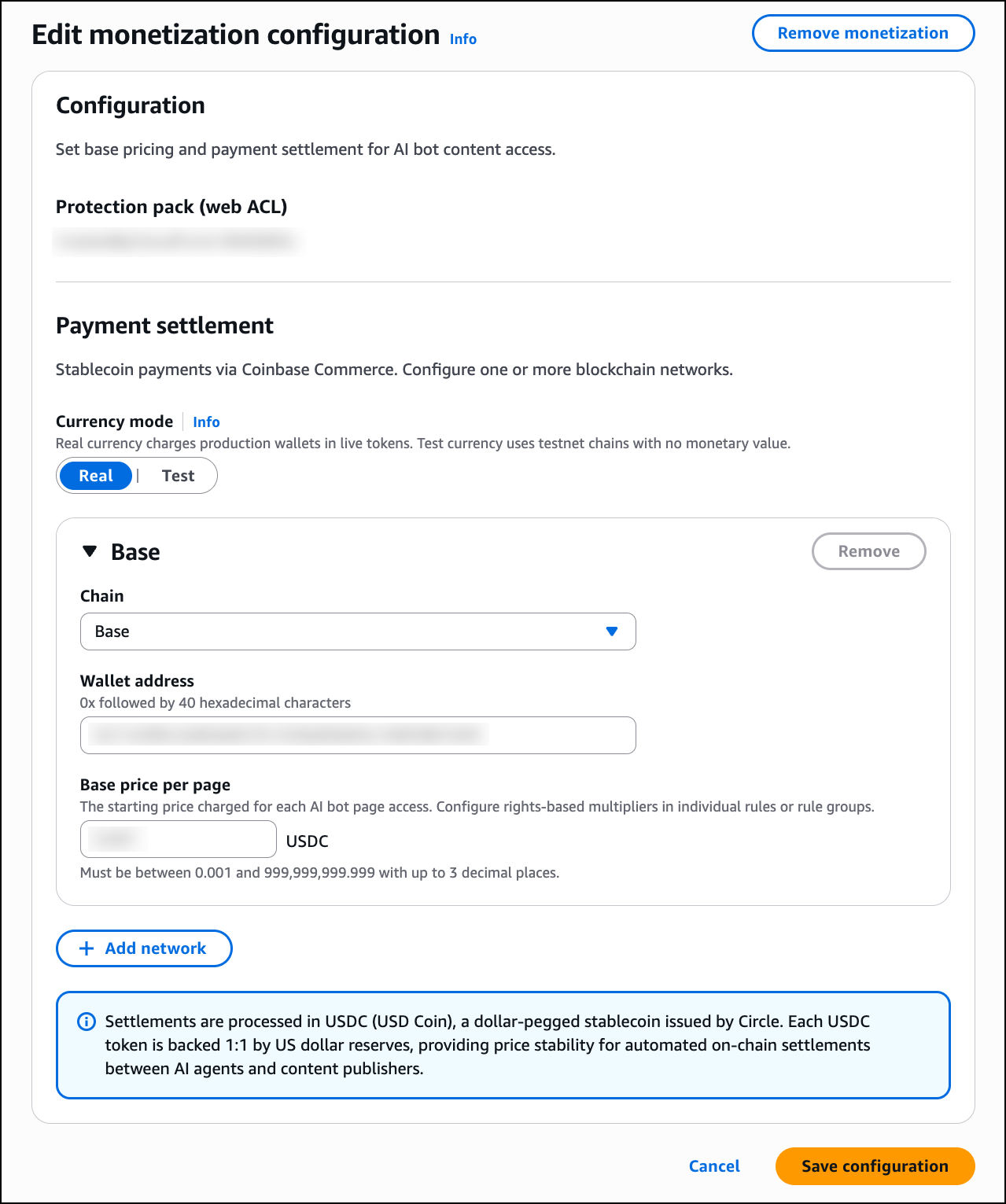
- Testing vs. Real Mode: AWS has included a "Currency Mode" toggle. This allows developers to test their payment flows on testnets like Base Sepolia or Solana Devnet, ensuring that the integration is flawless before moving to real-world USDC transactions.
Implications for the Future of the Web
The launch of AI traffic monetization marks a defining moment for the digital landscape. It signals the end of the "free-for-all" era of AI data scraping and the beginning of a mature, transactional web.
1. The Death of the "Free" Scrape
For years, the internet operated on an implicit understanding: public information is free to index. However, the rise of LLMs changed the nature of indexing to "content consumption." By formalizing this through the x402 protocol, AWS is essentially creating a global marketplace for data.
2. A Boon for Specialized Publishers
Niche content creators—such as academic journals, professional news agencies, and proprietary data providers—are the biggest winners. They can now protect their intellectual property while providing a standardized, legal path for AI companies to pay for the high-quality data they need to train their models.
3. Challenges and Hurdles
Despite the promise, the system faces challenges. Universal adoption requires that AI agents actually participate in the payment flow. If major AI labs refuse to honor the 402 status codes, publishers may be forced to revert to blocking access entirely. Furthermore, the reliance on blockchain and stablecoins for settlement may introduce regulatory and technical complexities for traditional media organizations not currently versed in crypto-asset management.
4. The Potential for Standardization
If the x402 protocol gains widespread traction, it could become the de facto standard for the internet. Similar to how the "robots.txt" file became the standard for search engine indexing, the x402 manifest could become the standard for "AI-indexing," where every bot arrives with a digital wallet ready to transact.
Conclusion: A New Economic Order
AWS has provided the tools, but the power remains in the hands of the content owners. By turning their web infrastructure into a profit center rather than a cost center, publishers can finally reclaim their autonomy.
As we look toward the latter half of the decade, the integration of AI monetization into the WAF layer will likely be remembered as the moment the web evolved from an information library into a marketplace. Whether this leads to a more equitable internet for creators or a tiered system of information access remains to be seen. However, one thing is clear: the era of harvesting the web without compensation is coming to a swift and calculated end.
For developers and site owners, the time to audit their traffic patterns and evaluate their content’s value in the AI age is now. With the tools available in the AWS WAF console, the barrier to entry for managing this new economic frontier has never been lower.
 Lina Irawan
  Ammar Sabilarrohman
  Reynand Wu