
 By Layla Zulfa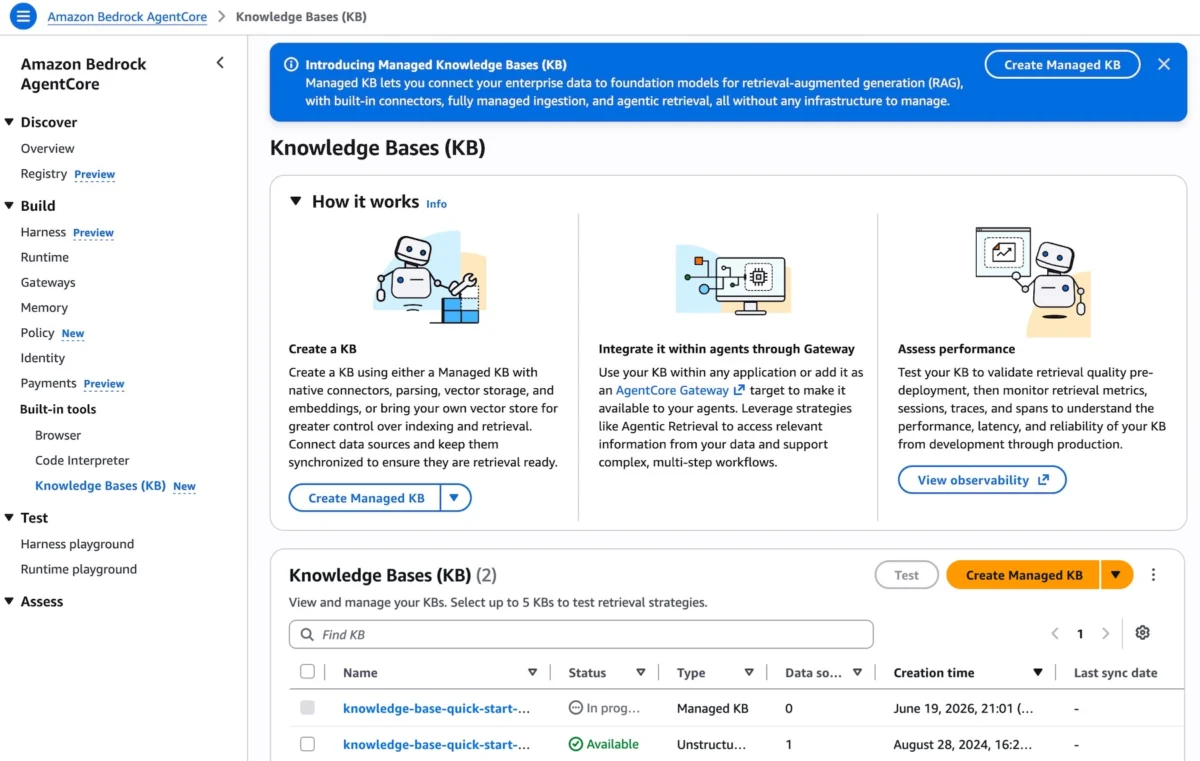
In a major leap forward for the generative AI ecosystem, Amazon Web Services (AWS) has unveiled the Amazon Bedrock Managed Knowledge Base. This new suite of capabilities is designed to fundamentally change how organizations bridge the gap between their proprietary data and the power of foundation models. By abstracting the complex, labor-intensive infrastructure of Retrieval-Augmented Generation (RAG) pipelines into a single managed primitive, AWS is enabling developers to deploy enterprise-grade AI applications in minutes rather than months.
Main Facts: What is Managed Knowledge Base?
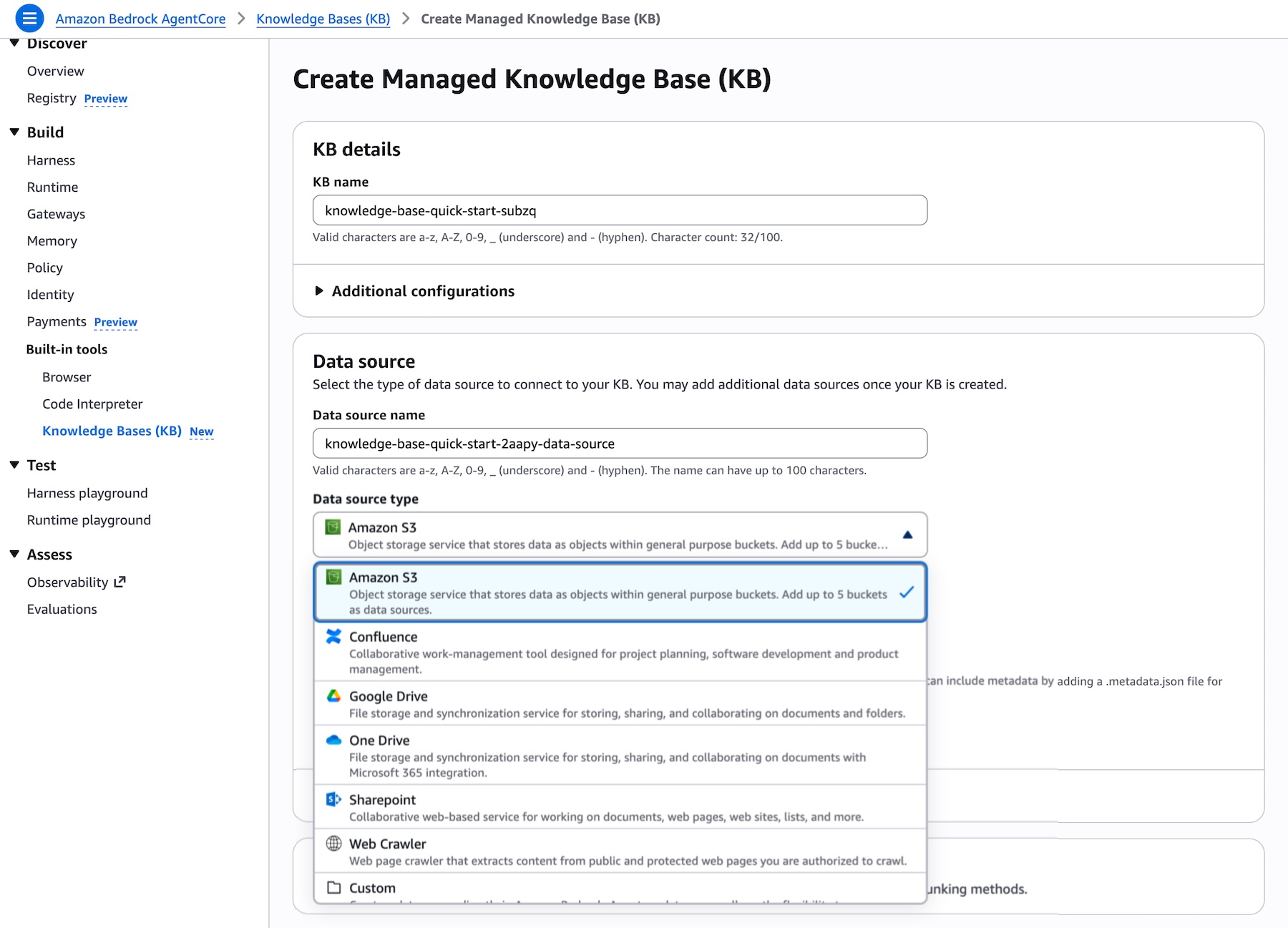
At its core, the Amazon Bedrock Managed Knowledge Base serves as a sophisticated, automated layer that sits between an enterprise’s data repositories and its AI agents. For years, the primary hurdle for businesses aiming to leverage their internal documents—such as SharePoint files, Confluence pages, or S3-hosted datasets—was the heavy lifting required to build a RAG pipeline. This included configuring storage, managing vector embeddings, implementing re-ranking algorithms, and selecting foundational models.
Managed Knowledge Base eliminates this "undifferentiated heavy lifting." It offers a turn-key solution that automatically selects and manages embedding models, re-rankers, and foundational models by default. However, it maintains the flexibility that enterprise developers demand, allowing them to swap out specific models as their performance and cost requirements evolve.
The service is deeply integrated with the Amazon Bedrock AgentCore Gateway, enabling developers to treat their knowledge bases as pre-built targets. This integration, coupled with the adoption of the Model Context Protocol (MCP), allows these knowledge bases to be discovered and utilized by any MCP-compatible framework, including popular industry tools like LangChain, CrewAI, LlamaIndex, and LangGraph.
Chronology of Development and Deployment
The release follows a period of intense feedback from enterprise customers who found the "plumbing" of AI—the RAG pipeline—to be the single greatest barrier to production deployment.
- Pre-2026: Developers relied on manual orchestration of vector databases, custom parsing scripts, and complex retrieval logic. This resulted in fragile pipelines that were difficult to maintain and scale.
- Early 2026: AWS began prioritizing the "agentic" capabilities of Bedrock, focusing on how models can reason across multiple data sources rather than simply answering static questions.
- June 2026 (Launch): AWS officially announced the Managed Knowledge Base, positioning it as the ultimate solution for "Agentic Retrieval."
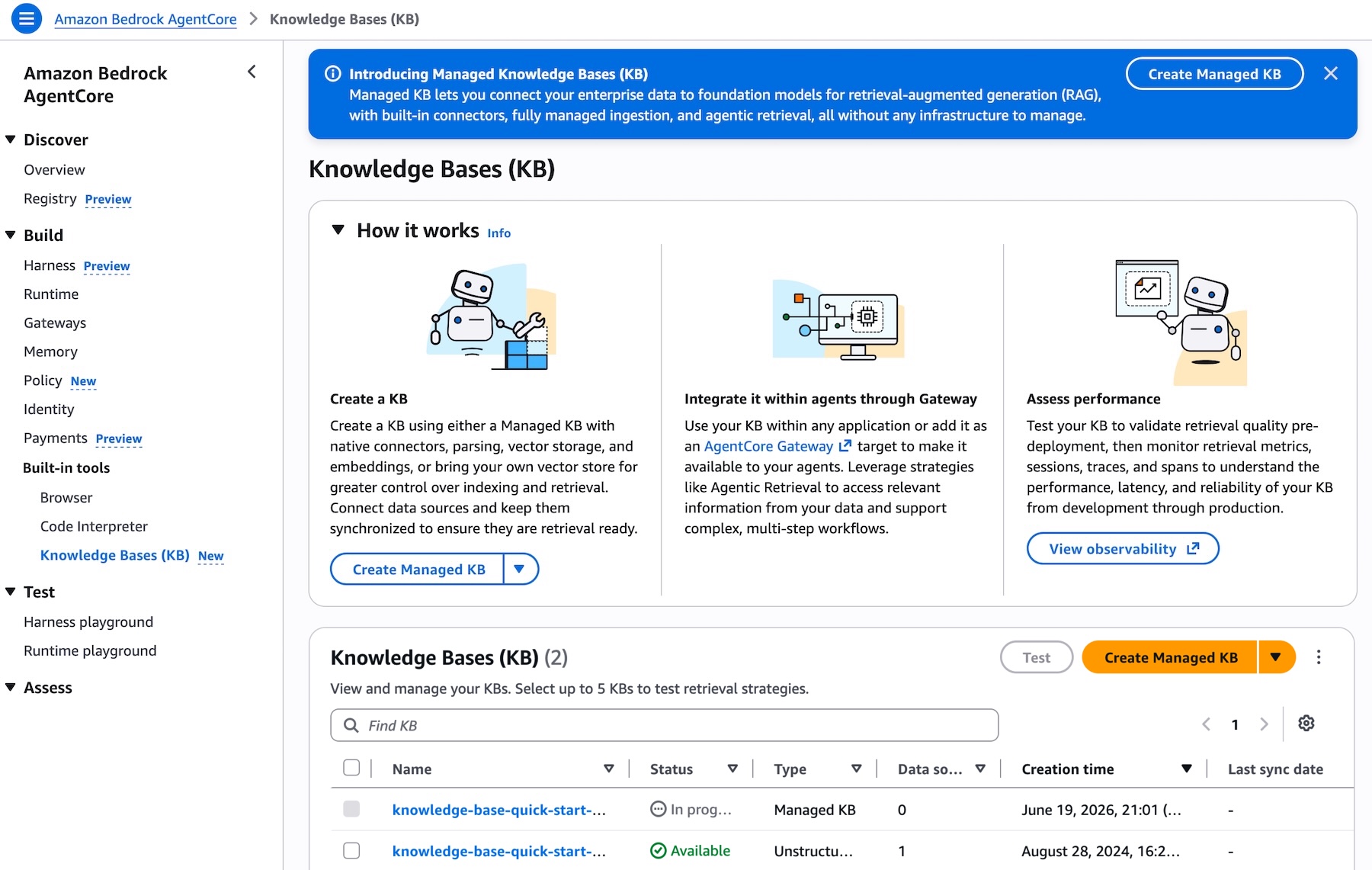
- June 19, 2026: A post-launch update ensured that documentation and user interface guidance, including critical screenshots, were synchronized with the latest console updates, streamlining the user experience for early adopters.
Supporting Data: Why "Smart Parsing" and "Agentic Retrieval" Matter
The efficacy of a RAG pipeline is only as good as the data it retrieves. AWS has introduced two primary innovations that define the Managed Knowledge Base:

1. Smart Parsing for Data Ingestion
Raw enterprise data is often messy, consisting of PDFs, spreadsheets, and complex nested documents. Managed Knowledge Base uses Smart Parsing, which automatically determines the optimal ingestion strategy. It combines layout analysis, optical character recognition (OCR) where necessary, and structural extraction to ensure that data is indexed accurately. This automation replaces weeks of manual experimentation, ensuring that the model retrieves meaningful context rather than fragmented, nonsensical text.
2. The Agentic Retriever
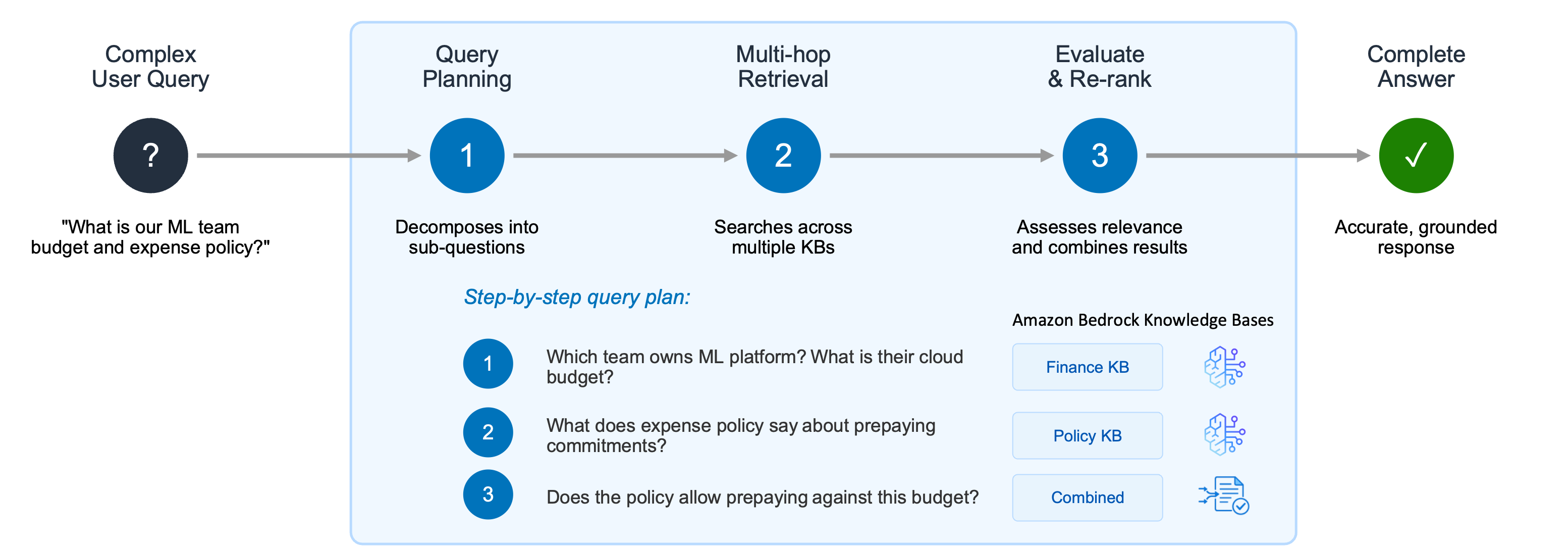
Traditional RAG systems often fail at multi-step reasoning. If a user asks a two-part question involving budget allocation and internal policy, a simple search will often retrieve documents for only one part of the query. The Agentic Retriever changes this dynamic by:
- Decomposing the query: The system breaks down complex questions into a step-by-step plan.
- Multi-hop retrieval: It performs successive searches, using the findings of step one to inform the search criteria for step two.
- Intermediate evaluation: The system assesses the relevance of retrieved passages in real-time, stopping once it has sufficient information to form a grounded, accurate answer.
Implications for the Enterprise
The introduction of Managed Knowledge Base has profound implications for how companies operate in the era of Generative AI.
Lowering the Barrier to Entry
By moving the complexity of RAG into a managed service, AWS is effectively democratizing enterprise-grade AI. A startup or a mid-sized firm no longer needs a team of specialized data engineers to manage vector databases and fine-tune embeddings. They can now focus on the "business outcomes"—the logic and the user interface of their agents—rather than the infrastructure.
The Role of Model Flexibility
Unlike some proprietary "walled garden" AI solutions that force users to adopt a single model provider, Amazon Bedrock Managed Knowledge Base maintains a vendor-agnostic posture. Because the service separates the orchestration of the data from the model itself, developers can:
- Switch models based on price-performance metrics.
- Utilize specialized models for specific domains (e.g., medical or legal) without rebuilding the entire data pipeline.
- Future-proof their applications against the rapid evolution of the foundational model market.
Standardizing Interoperability
Perhaps the most significant long-term implication is the embrace of the Model Context Protocol (MCP). By making Managed Knowledge Base an MCP-compatible service, AWS is signaling a move toward an open, interoperable AI ecosystem. This ensures that an enterprise using Bedrock today isn’t locked into a specific development framework. Whether a company prefers the graph-based workflows of LangGraph or the agentic autonomy of CrewAI, the Bedrock knowledge base remains a plug-and-play component.
Official Perspective and Future Outlook
In his technical briefing on the launch, Daniel Abib emphasized that the goal is to provide a "single managed primitive" that scales automatically. For the enterprise, this means predictable performance. Security, a non-negotiable for large organizations, is handled through automatic AWS Identity and Access Management (IAM) role generation, ensuring that data access remains governed by existing corporate policies.
The service is currently available in major AWS regions, including US East (N. Virginia), US West (Oregon), Asia Pacific, and Europe, as well as AWS GovCloud. This wide availability underscores the enterprise-first nature of the release, catering to highly regulated industries that require both data residency and robust security controls.
Economic Impact
The pricing model follows the "pay-as-you-go" philosophy of AWS, based on the size of indexed data and the volume of retrievals. This allows enterprises to scale their AI usage in alignment with demand, avoiding the high upfront capital expenditures typically associated with AI infrastructure. For new customers, the inclusion of these capabilities under the AWS Free Tier is a strategic move to encourage rapid prototyping and adoption.
Conclusion: A New Standard for RAG
The Amazon Bedrock Managed Knowledge Base is more than just a tool; it is a fundamental shift in how AI applications are architected. By automating the most difficult parts of the data retrieval process—parsing, multi-hop reasoning, and infrastructure maintenance—AWS has removed the "plumbing" friction that has stalled many enterprise AI projects.
As the industry moves away from simple chatbots toward autonomous, agentic workflows, the ability to reliably access and reason over internal data will become the primary competitive advantage. With this release, AWS has provided the foundation upon which the next generation of intelligent enterprise applications will be built. For developers, the message is clear: the era of manual RAG orchestration is ending, and the era of managed, agentic intelligence has arrived.
 Neng Nana
  Suro Senen
  Lina Hope