
 By Iffa Jayyana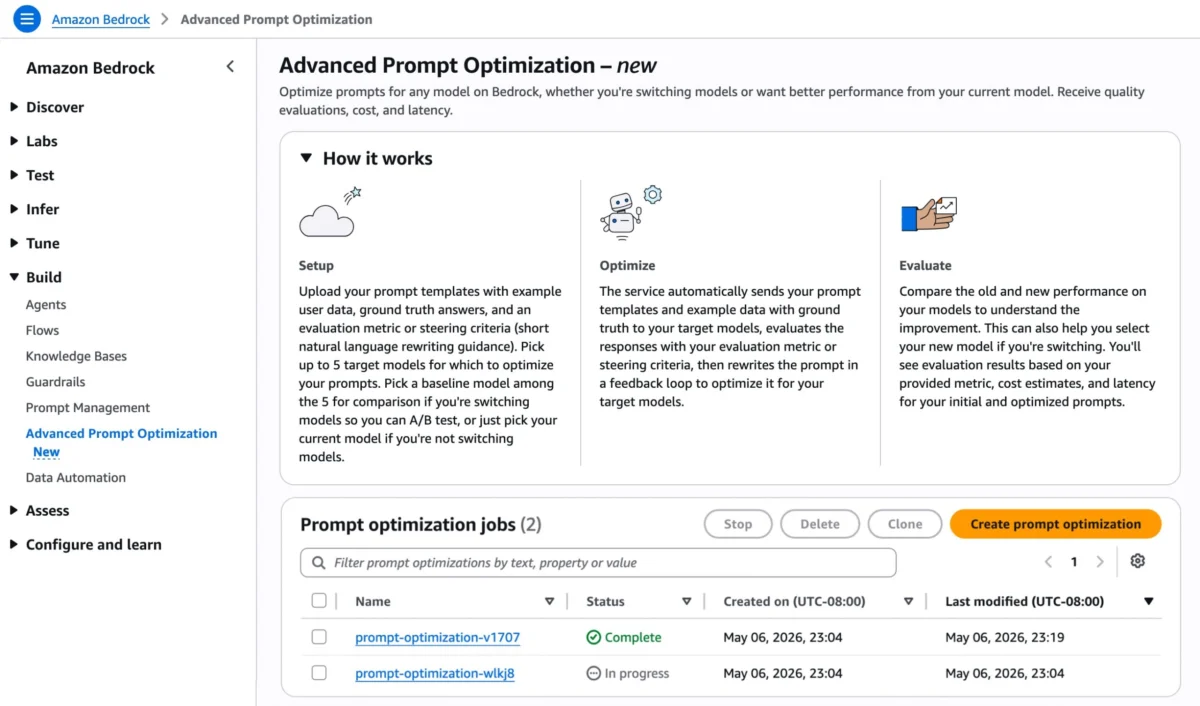
In the rapidly evolving landscape of generative artificial intelligence, the efficacy of a Large Language Model (LLM) is often tethered to the quality of the "prompt"—the instructions provided to the machine. Recognizing that crafting the perfect prompt is an iterative, labor-intensive, and often hit-or-miss process, Amazon Web Services (AWS) has introduced a transformative new capability: Amazon Bedrock Advanced Prompt Optimization.
This new suite of tools, integrated directly into the Amazon Bedrock console, is designed to automate the fine-tuning of prompt templates. By leveraging a metric-driven feedback loop, AWS is shifting the burden of prompt engineering from human developers to a systematic, machine-assisted process. This development promises to accelerate the deployment of AI applications, streamline model migrations, and significantly reduce the time spent on trial-and-error experimentation.
The Core Mechanics: How Advanced Prompt Optimization Works
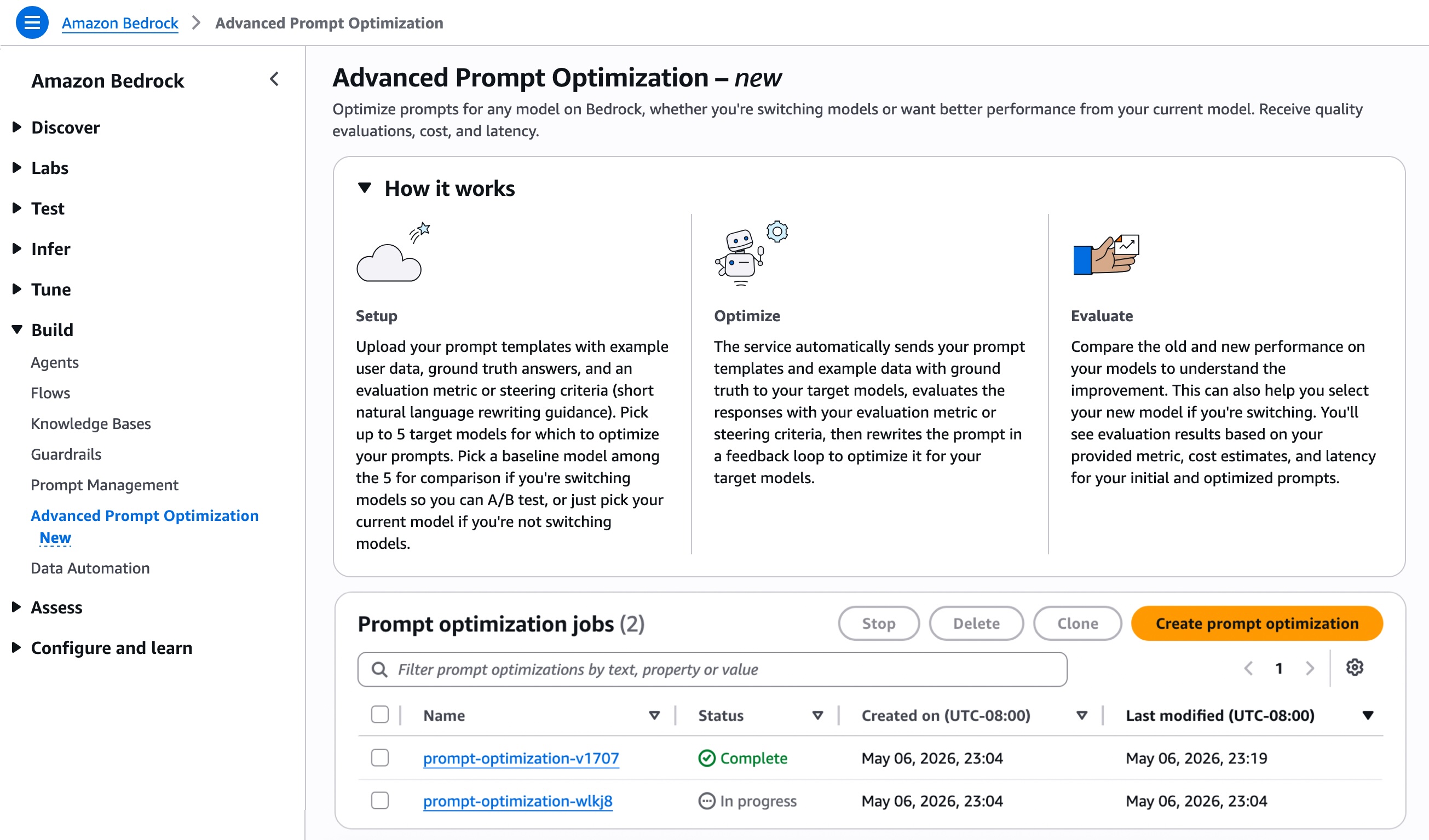
At its heart, the Advanced Prompt Optimization tool is an orchestration layer that sits atop your existing Bedrock workflows. It accepts a "prompt template"—the structural core of your AI interaction—and subjects it to a rigorous optimization cycle.
A Metric-Driven Feedback Loop
The system operates on a feedback loop that evaluates model responses against defined ground truth data. Users provide example inputs, expected outputs (the "ground truth"), and a specific evaluation metric. The platform then iterates on the prompt, testing variations across up to five different models simultaneously.
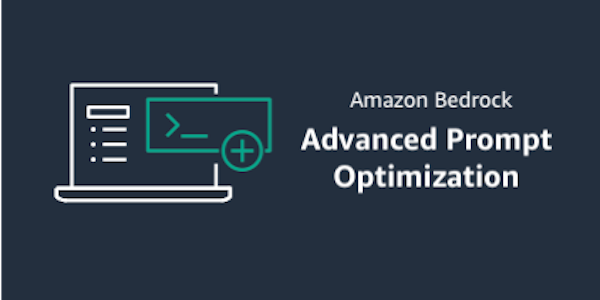
By comparing the performance of these variations, the system generates a comparative analysis that includes:
- Evaluation Scores: Quantifying how well the model followed instructions.
- Latency Metrics: Measuring the time-to-first-token and overall response speed.
- Cost Estimates: Providing transparency into the consumption of inference tokens, allowing businesses to balance quality with operational expenses.
Multimodal Capabilities
The tool is not limited to text. Recognizing the shift toward multimodal AI, AWS has ensured that the optimizer supports image and document analysis. Users can incorporate png, jpg, and pdf files directly into their templates. This makes the tool invaluable for enterprise applications involving complex workflows like automated invoice processing, document auditing, or visual quality control in manufacturing.
Chronology of Development and Deployment
The release of Advanced Prompt Optimization represents the culmination of a broader strategy by AWS to lower the barrier to entry for generative AI.
- Phase 1: Foundation. Since the inception of Amazon Bedrock, the focus remained on providing a diverse selection of high-performing base models (such as Claude, Titan, and Command).
- Phase 2: Evaluation. AWS introduced various evaluation frameworks, allowing users to benchmark model responses. However, these tools were largely passive—they told you how your prompt was performing but left the improvement to the user.
- Phase 3: Automation (Current). With this launch, the process becomes active. The system now takes the evaluation data and writes the improved prompt on behalf of the developer.
- Launch Phase: As of May 2026, the feature is live across a wide array of global AWS Regions, including US East (N. Virginia, Ohio), US West (Oregon), Asia Pacific (Mumbai, Seoul, Singapore, Sydney, Tokyo), Canada (Central), Europe (Frankfurt, Ireland, London, Zurich), and South America (São Paulo).
Supporting Data and Technical Implementation
To utilize the service, developers are required to structure their data in a JSONL (JSON Lines) format. This format allows for the batch processing of multiple test cases, ensuring that the optimization is statistically significant rather than based on anecdotal evidence.

The JSONL Schema
The schema requires a templateId and the promptTemplate itself, alongside optional steeringCriteria to guide the model’s tone or behavior. The evaluationSamples section acts as the "test set" for the model.
For technical teams, the flexibility of the scoring mechanism is a standout feature. AWS offers three distinct methods for evaluating the success of a prompt:
- Lambda Functions: For teams with specific business logic, they can deploy an AWS Lambda function containing custom Python code to score responses.
- LLM-as-a-Judge: This method utilizes a secondary, highly capable model to act as an adjudicator, grading the output based on a custom rubric.
- Natural Language Steering: For more intuitive, qualitative improvements, users can provide a short, natural language description of what constitutes a "good" response, and the system will optimize accordingly.
The Strategic Implications for Enterprise AI
The introduction of this tool is not merely a technical upgrade; it has profound implications for how organizations manage their AI life cycles.
1. Seamless Model Migration
One of the most significant challenges for CTOs is the "model lock-in" phenomenon. When a business builds an application around a specific model’s quirks, switching to a newer, more efficient model can break the application. Advanced Prompt Optimization removes this friction by allowing developers to set their current model as a baseline and test the same prompt against four potential alternatives simultaneously. This data-driven approach to migration minimizes the risk of performance regressions.
2. Democratization of Prompt Engineering
Prompt engineering has emerged as a specialized skill, often requiring a deep understanding of tokenization and model architecture. By automating this process, AWS is democratizing AI development. A product manager or a data analyst, rather than a specialized AI researcher, can now improve the performance of their tools simply by providing a few examples of "correct" output.
3. Operational Efficiency
In an enterprise environment, latency and cost are as important as accuracy. By providing clear visibility into the cost-per-inference of optimized prompts, AWS is enabling companies to optimize for the "triple constraint" of AI projects: quality, speed, and cost.
Official Perspective and Future Outlook
AWS has framed this release as a critical step in their mission to provide "the most capable and easiest-to-use" generative AI platform in the cloud. By integrating this directly into the Amazon Bedrock console, the company is signaling that the era of manual, ad-hoc prompt engineering is coming to an end.
"The goal is to move from guessing to knowing," says the AWS engineering team. By relying on a metric-driven feedback loop, businesses can ensure that their AI models are not only intelligent but also reliable and cost-effective.
Future Trajectory
While the current version supports five models per job, industry observers expect this to scale as AWS introduces more models into the Bedrock ecosystem. Furthermore, the integration with AWS S3 for data storage and retrieval suggests a future where prompt optimization could be triggered automatically by CI/CD pipelines. Imagine a scenario where, every time a new version of a model is released, an automated job runs in the background to ensure your prompt templates remain perfectly tuned for the new model version, with no human intervention required.
Conclusion
Amazon Bedrock Advanced Prompt Optimization is a sophisticated solution to a pervasive problem. By turning the "art" of prompt engineering into an "engineering discipline," AWS is helping enterprises move from the experimental phase of AI to the production phase.
For organizations currently struggling with prompt drift, high costs, or the complexity of managing multiple model versions, this tool offers a clear path forward. By leveraging the power of AWS’s cloud infrastructure to automate the evaluation and refinement of AI instructions, businesses can ensure their AI applications remain at the cutting edge of performance and efficiency.
To begin, developers are encouraged to visit the Amazon Bedrock console or consult the comprehensive documentation provided in the AWS Bedrock User Guide. As the generative AI market matures, tools like these will define the winners—those who can iterate faster, scale smarter, and deliver more reliable intelligence to their end users.
 Ammar Sabilarrohman
  Reynand Wu
  Suro Senen