
 By Sagoh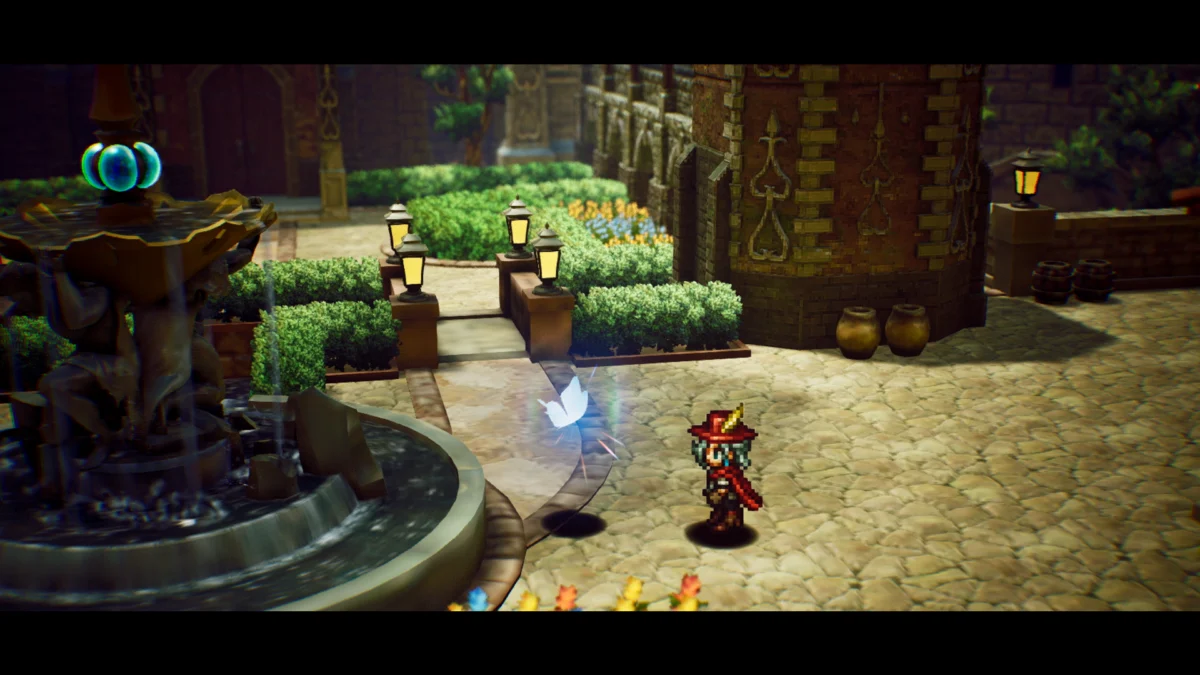
In an era where the “Zelda-like” genre has become a saturated landscape—ranging from the monumental heights of Tears of the Kingdom to the inventive, bite-sized charms of Echoes of Wisdom—it takes something truly distinctive to stand out. Indie developers have spent the last few years deconstructing and rebuilding the classic action-adventure formula, experimenting with Soulslike combat, cozy aesthetics, and miniature-scale narratives. Yet, Square Enix has managed to carve out a unique space for itself with its latest venture: The Adventures of Elliot: The Millennium Tales.
By blending the structural DNA of classic top-down action-adventure games with the narrative depth and aesthetic flair of Square Enix’s acclaimed “HD-2D” engine, The Adventures of Elliot is not just another tribute. It is a bold, genre-bending experiment that feels like the logical evolution of the 16-bit golden age.
The Core Concept: A Convergence of Genres
At its heart, The Adventures of Elliot is an RPG that mirrors the pacing and progression of the Legend of Zelda series while grounding its storytelling in the character-driven, dialogue-heavy traditions of the Final Fantasy franchise. The game casts players as Elliot, a quintessential adventurer living in a world teetering on the edge of collapse. The geography is perilous, with only a single bastion of civilization—protected by the magical grace of a young princess—remaining safe from the roaming beast tribes that plague the landscape.
As an adventurer, Elliot is tasked with the dangerous errands that common citizens cannot perform. What begins as a localized quest to protect his home quickly spirals into an epic conflict involving a power-hungry royal advisor, a looming threat to the kingdom, and a time-bending narrative that spans a thousand years.
Chronological Complexity: A World Through the Ages
Perhaps the most ambitious aspect of The Adventures of Elliot is its world-building. Inspired by the nonlinear temporal mechanics of Chrono Trigger, the game forces players to navigate the same map across four distinct time periods. This isn’t merely a visual trick; it is a fundamental mechanic that shapes how the player interacts with the world.
The Four Eras of Elliot
- The Age of Magic: A period of technological and mystical prosperity where the architecture is pristine and the landscape is lush.
- The Era of Ruin: A direct consequence of the conflicts that follow, where players scavenge through the decaying husks of once-great cities.
- The Foundation: A primitive, early-history version of the map where geography is shifted, bridges are non-existent, and the world is still in its infancy.
- The Current Epoch: The world as it stands in Elliot’s time, caught between the legacies of the past and an uncertain future.
The game encourages players to jump freely between these timelines. A quest might require an item found in the past, or the solution to a puzzle may rely on planting a seed in the Foundation era to harvest a vine in the Age of Magic. This creates a “lived-in” feeling that few action-adventure titles achieve, rewarding player curiosity with a sense of historical continuity.
Supporting Data: Mechanics and Systems
While the surface level of the game screams Zelda—cutting grass for jewels, collecting heart pieces, and unlocking classic tools like bombs and boomerangs—the systems beneath the hood are undeniably RPG-centric.
Customization and Combat
Square Enix has introduced a “magicite” system, allowing players to customize their weapons with unique attributes. This modular approach to gear means that no two players will necessarily tackle a boss in the same way. Furthermore, the fairy companion—often a point of contention in the genre—serves as a primary spellcaster, capable of learning new abilities such as pyromancy or emergency warping.
Difficulty and Accessibility
The game strikes a delicate balance between challenge and approachability. Recognizing that modern players appreciate both difficulty and convenience, The Adventures of Elliot utilizes a generous save-point system and an intuitive fast-travel mechanic. This allows players to reach the brink of a major dungeon, return to town to restock, and dive back into the fray.

For those who find the bosses insurmountable, the game offers a unique "revival" mechanic facilitated by the fairy, though the cost of resurrection scales with each use, encouraging players to master the combat loop rather than relying on brute force. Skill is rewarded via a sophisticated combo system; defeating enemies without taking damage yields significantly better loot, incentivizing high-level play.
The HD-2D Aesthetic: A Modern Classic
The Adventures of Elliot is the latest entrant in the "HD-2D" lineage—a collection of titles that prioritize a marriage of pixel-art nostalgia and modern lighting, depth-of-field, and texture effects. Following in the footsteps of Octopath Traveler, Triangle Strategy, and the Dragon Quest III remakes, Elliot utilizes this style to make the environment pop with life.
The visual fidelity is more than just a stylistic choice; it serves the gameplay. The clarity of the HD-2D engine allows for complex environmental puzzles where light, shadow, and architectural detail provide vital clues to the player. Whether it is the glimmer of a hidden cat (which, notably, act as collectible markers for rare items) or the subtle change in a building’s structure across the four time periods, the aesthetic serves the narrative mission perfectly.
Official Commentary and Industry Implications
Square Enix has positioned this title as a cornerstone of their 2026 release schedule. In a recent press briefing, the development team noted that The Adventures of Elliot was conceived as an answer to the "open-world fatigue" that has permeated the industry.
“We wanted to return to the joy of the dungeon-crawler,” says the lead director. “The goal was to provide the satisfaction of a linear, well-paced puzzle adventure while injecting the emotional weight and depth of a traditional JRPG.”
The industry response has been largely positive, noting that by leaning into the "chatty" nature of the protagonist—who is, in effect, a version of Link who can actually articulate his feelings—the game establishes a much stronger emotional anchor than many of its peers. The implications for the industry are clear: there is a significant, underserved market for high-budget, high-polish titles that utilize traditional 2D-inspired gameplay loops but apply modern, massive-scale production values.
Future Outlook: A New Standard?
As we look toward the June 18th launch on Nintendo Switch 2, PS5, Xbox, and Steam, The Adventures of Elliot: The Millennium Tales feels like a harbinger of a new sub-genre. It proves that the "Zelda-like" formula is far from exhausted—it simply needs the right creative injection to stay fresh.
By bridging the gap between the action-oriented pacing of the 1990s and the sophisticated, multi-layered storytelling of the 2020s, Square Enix has created something that manages to be both a nostalgic callback and a forward-thinking innovation. Despite the whimsical nature of its name, the game is a serious, polished, and remarkably expansive experience.
For those who have spent hundreds of hours in Hyrule and are looking for a new world to inhabit, The Adventures of Elliot offers a compelling, time-spanning journey that is well worth the investment. It is not merely a clone; it is a celebration of the genre’s past and a promising blueprint for its future. As June 18th approaches, players should prepare themselves: this is one tale that, once begun, is very difficult to put down.
 Nana Muazin
  Raul Delapena Setiawan
  Nana Wu