
 By Azzam Bilal Chamdy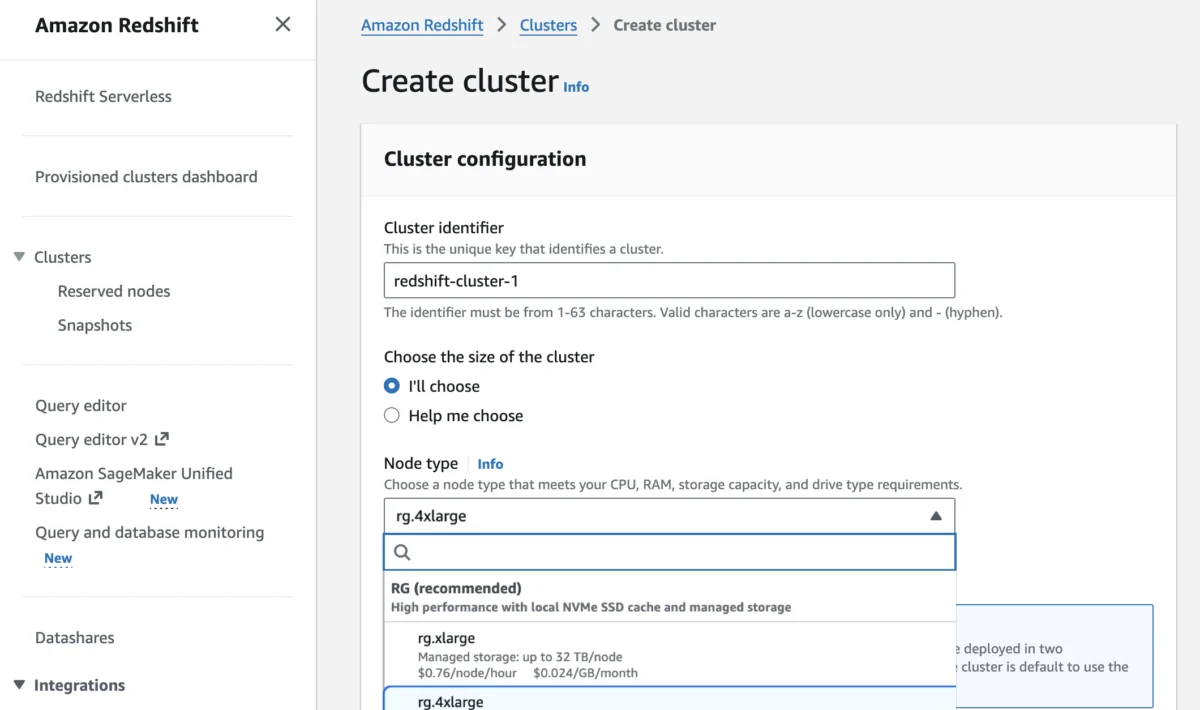
Since its inception in 2013, Amazon Redshift has served as the backbone for countless organizations, transforming the economics of data warehousing by providing enterprise-grade analytics at a fraction of the cost of traditional on-premises hardware. Today, as data volumes explode and the demand for real-time intelligence grows, AWS is marking a significant milestone in its cloud-native analytics strategy.
The company has officially unveiled Amazon Redshift RG instances, a new family of high-performance compute nodes powered by AWS’s proprietary Graviton processors. This release represents a fundamental shift in how businesses handle the dual burden of structured data warehouse workloads and massive, unstructured data lake queries, offering a streamlined, faster, and more cost-efficient architecture for the era of agentic AI.
Main Facts: A New Benchmark for Cloud Analytics
The introduction of the RG instance family is designed to address the "spiraling operational costs" that many enterprises face when scaling their analytics stacks to accommodate both human BI analysts and autonomous AI agents.
The RG instances offer a dramatic performance leap over the current-generation RA3 instances, delivering:
- Up to 2.2x faster data warehouse performance.
- A 30% reduction in price per vCPU.
- Integrated Data Lake Querying: The new architecture allows users to query data across both the warehouse and Amazon S3 data lakes using a single engine.
- Performance Gains in Open Formats: Queries on Apache Iceberg are up to 2.4x faster, while Apache Parquet performance sees a 1.5x improvement over RA3 instances.
Perhaps most significantly, the new architecture eliminates the need for Amazon Redshift Spectrum, the previously required service for querying S3-based data. By executing data lake queries directly on the cluster nodes, AWS is removing the $5/TB scanning fee, keeping data within the VPC boundary, and streamlining the operational footprint for data engineers.
The Chronology of Innovation
To understand the magnitude of the RG instance launch, one must view it as the latest chapter in a long-standing tradition of iterative improvement within the AWS ecosystem.
- 2013: Amazon Redshift enters the market, democratizing data warehousing with a cloud-first approach that challenged high-cost, on-premises providers.
- The Mid-2010s: AWS begins the move toward decoupled compute and storage, exemplified by the introduction of RA3 instances. This allowed customers to scale compute and storage independently, a key requirement for modern cloud architectures.
- 2022–2023: The rise of Redshift Serverless marks a transition toward an "on-demand" model, further simplifying infrastructure management for organizations that do not want to manage clusters manually.
- March 2026: AWS implements a major performance boost for BI dashboards and ETL pipelines, increasing query speeds by up to 7x. This set the stage for the infrastructure-level upgrade seen today.
- May 2026: The launch of RG instances arrives, integrating the specialized performance of Graviton processors into the heart of the Redshift ecosystem.
This progression reflects a clear strategy: moving from monolithic data warehousing to a fluid, integrated data platform that treats data lakes and warehouses as a single, performant entity.
Supporting Data: Why RG Instances Matter
The financial and operational implications of the RG rollout are backed by significant performance benchmarks. For organizations balancing cost-efficiency with high-frequency query demands, the technical specs of the RG instances provide a compelling upgrade path.
Comparative Performance Matrix
| Current RA3 Instance | Recommended RG Instance | vCPU | Memory (GB) | Primary Use Case |
|---|---|---|---|---|
ra3.xlplus |
rg.xlarge |
4 | 32 | Small cluster departmental analytics |
ra3.4xlarge |
rg.4xlarge |
12–16 | 96–128 | Standard production workloads |
Beyond raw compute power, the removal of the "Spectrum tax" is a major selling point. By integrating data lake query processing directly into the cluster, AWS has eliminated the per-terabyte scan costs that previously plagued data-heavy analytics. This structural change means that for high-volume data lake queries, the total cost of ownership (TCO) drops significantly, especially for businesses leveraging Apache Iceberg or Parquet formats.
Official Perspective and Implementation Strategy
AWS emphasizes that this transition is designed for seamless adoption. Organizations currently running on RA3 instances can migrate to the new RG family with minimal friction. According to official documentation, the migration process includes automated paths that calculate costs, validate system compatibility, and execute the switch with minimal downtime.
"Your external tables, schemas, and query syntax remain unchanged," noted Channy Yun, a principal developer advocate at AWS, in his announcement. "There is no need to recreate external tables or modify application code."
This commitment to backward compatibility is critical for enterprise customers who have spent years optimizing complex ETL pipelines and BI dashboard configurations. The integration of the data lake engine by default ensures that "zero-change" migration is a realistic goal for most engineering teams.
Implications: The Era of Agentic AI and Real-Time Intelligence
The timing of the RG instance launch is no coincidence. As businesses increasingly deploy AI agents—autonomous systems that query data warehouses to make real-time decisions—the load on analytics infrastructure has changed. Unlike human BI users, who might query a dashboard intermittently, AI agents are "goal-seeking" entities that can trigger thousands of high-latency SQL queries in rapid succession.
1. Scaling for Autonomous Workloads
The 2.2x performance gain is not just a marketing metric; it is a fundamental requirement for agentic AI. When an agent is tasked with optimizing a supply chain or adjusting pricing in real-time, every millisecond of query latency directly impacts the quality of the AI’s decision. By reducing latency, Redshift RG instances enable more sophisticated, responsive, and reliable AI behaviors.

2. Operational Simplification
By folding the data lake query engine into the primary compute node, AWS is effectively killing the "data silo" problem. In previous architectures, data engineers had to manage the warehouse (Redshift) and the data lake (S3/Spectrum) as separate entities with different cost models. With RG instances, the "single engine" approach reduces the complexity of IAM roles and VPC configurations, allowing for a more unified security posture.
3. Financial Efficiency
The 30% reduction in price per vCPU is a direct response to the "spiraling operational costs" of data-intensive AI. As organizations move from experimental AI to production-grade deployments, the ability to control costs without sacrificing performance is the primary differentiator in the cloud provider space.
Future Roadmap and Regional Availability
As of May 2026, the new RG instances are available across a vast footprint of AWS regions, including:
- North America: US East (N. Virginia, Ohio), US West (N. California, Oregon), Canada (Central).
- Asia Pacific: Hong Kong, Hyderabad, Jakarta, Malaysia, Melbourne, Mumbai, Osaka, Seoul, Singapore, Sydney, Taiwan, and Tokyo.
- Europe: Frankfurt, Ireland, Milan, London, Paris, Spain, and Stockholm.
- South America: São Paulo.
AWS has advised that regional availability will continue to expand throughout the remainder of 2026. Businesses interested in testing the new hardware can utilize the AWS Pricing Calculator to model their current workload patterns against the RG architecture to project potential savings.
Closing Thoughts
The launch of Redshift RG instances is a definitive statement from AWS that it intends to remain the leader in the data warehouse market, even as the landscape shifts toward data lakes and AI-driven analytics. By combining the power of the Graviton processor with a simplified, cost-effective query architecture, AWS has provided a clear, actionable path forward for organizations struggling to balance the competing demands of cost, scale, and performance.
Whether an organization is managing a small departmental dashboard or powering a massive fleet of autonomous AI agents, the RG instance family appears to be a robust solution for the modern data stack. For engineering leads, the message is clear: it is time to evaluate the migration path, as the performance and cost benefits are too substantial to ignore.
 Ammar Sabilarrohman
  Reynand Wu
  Suro Senen