
 By Lina Hope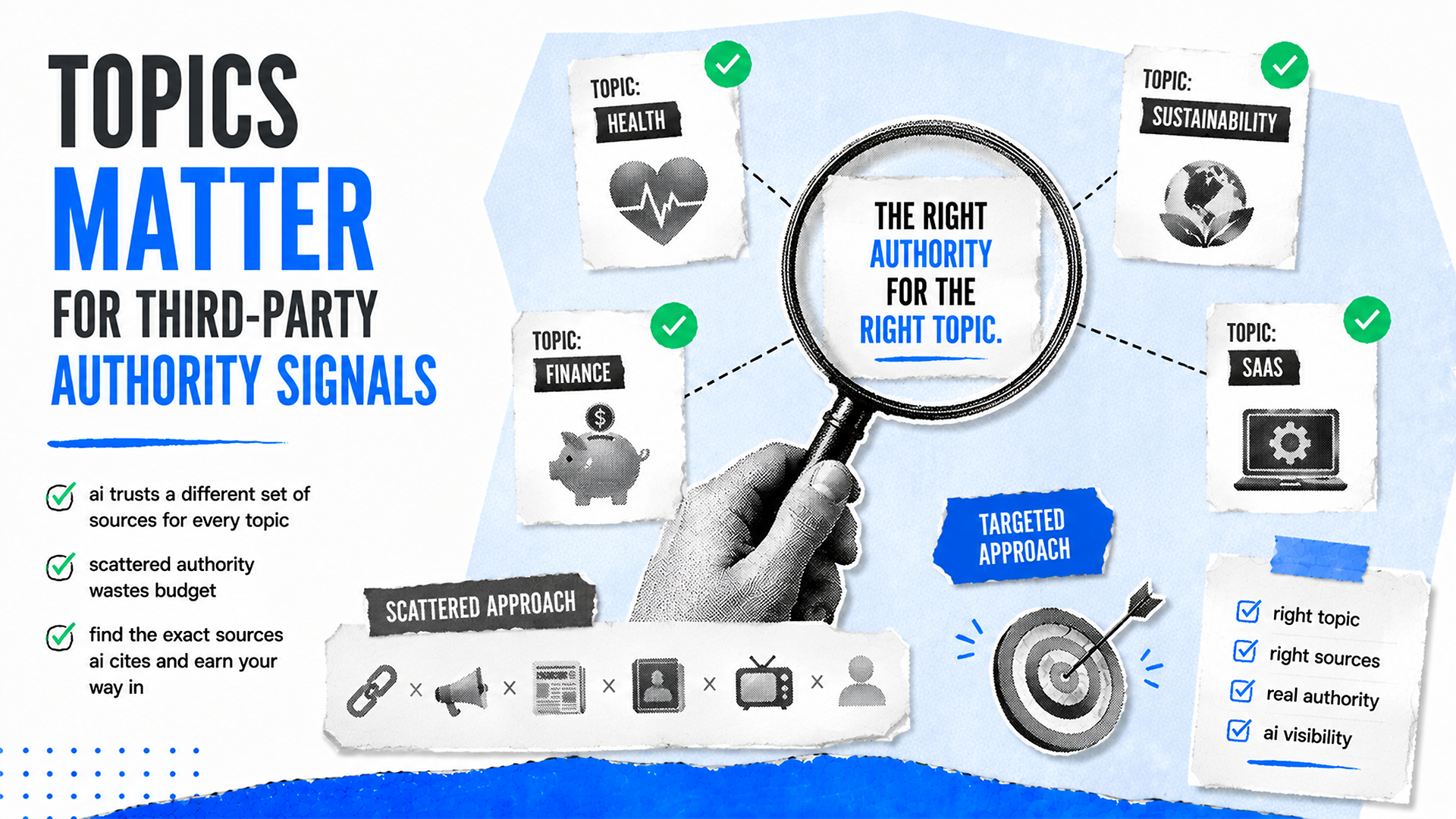
The traditional playbook for building online authority has long been clear: secure high-authority backlinks, generate digital PR mentions, and establish a robust off-site footprint to boost organic rankings. However, the rise of artificial intelligence-driven search engines and Retrieval-Augmented Generation (RAG) is fundamentally transforming this landscape.
Recent search data indicates that AI engines do not rely on a static, universal index of trusted websites. Instead, they dynamically construct unique sets of trusted sources tailored to the specific topic of a user’s query. This shift requires a fundamental reassessment of search engine optimization (SEO) and digital PR strategies. To build authority that AI engines recognize, brands must pivot from broad, scattershot backlink campaigns to highly targeted, topic-specific authority-building efforts.
1. Main Facts: The Dynamic Nature of AI Trust
At the core of this paradigm shift is a critical technical reality: AI search engines rebuild their trusted-source sets for every topic.
When an AI engine processes a query, it evaluates the context of the question and selects sources based on topic-specific credibility. For instance, a query about "invoicing software" triggers a completely different set of trusted domains and source types than a query about "how to start a business."
This dynamic retrieval process has profound implications for digital marketers:
- Source-Type Flipping: The types of sources cited by AI engines vary dramatically by topic. In some categories, competitor domains are highly cited; in others, editorial publishers or government (.gov) websites dominate.
- The Power of Recognized Entities: AI models favor documents and entities they already associate with a topic. On-page optimization remains important, but an off-property reputation trusted by the model is often the deciding factor in whether a brand is cited.
- Authorship Over Brand: Content attributed to a recognized, real-world expert (a named author with a verified digital footprint) frequently outperforms content published under a faceless corporate brand.
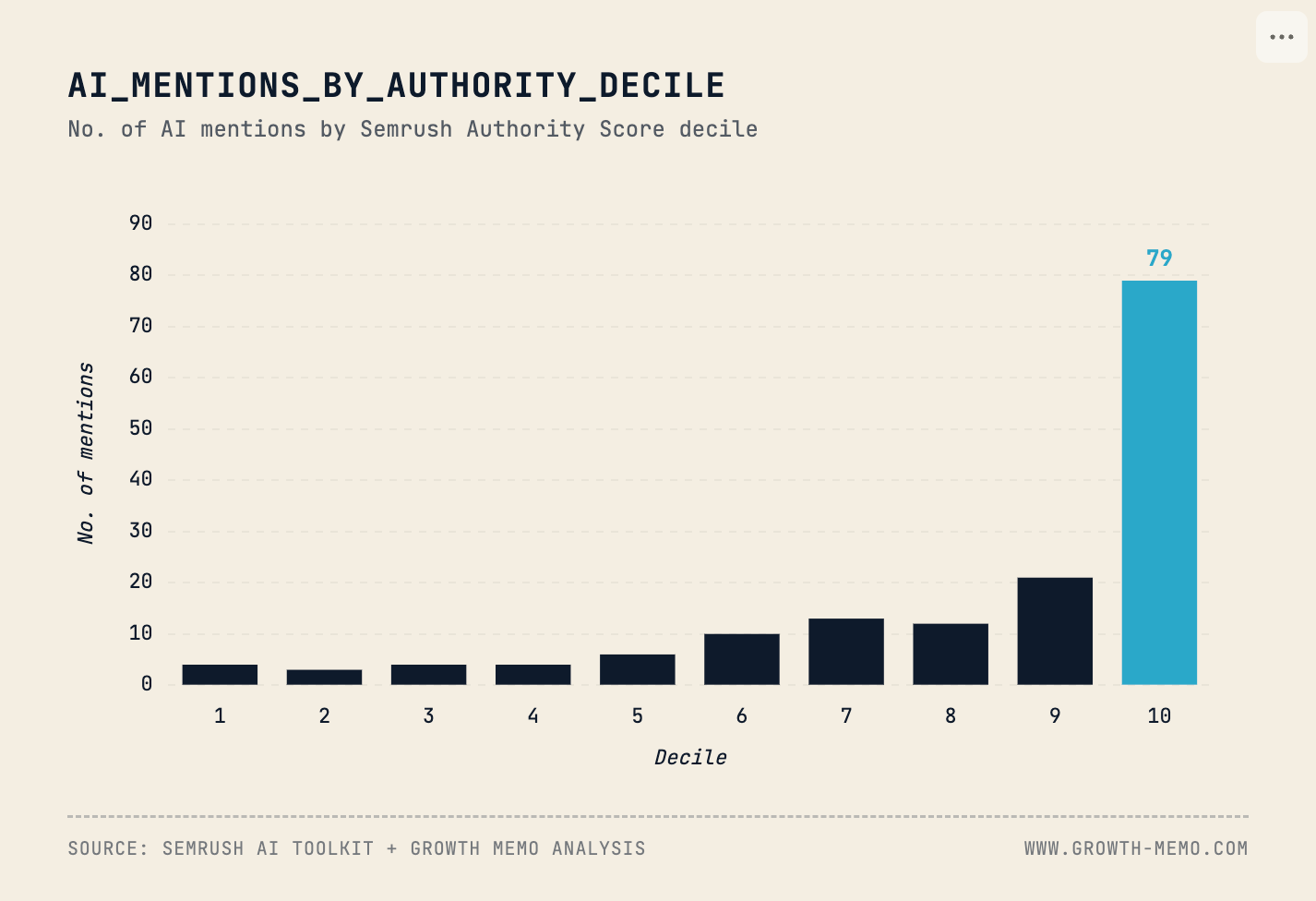
- The Step-Function Nature of Authority: Link building does not yield linear returns in AI search visibility. Instead, authority behaves like a step-function: marginal increases in mid-tier mentions provide little to no lift, whereas entering the top decile of authoritative sources for a specific topic triggers a significant increase in citations.
- The Equivalence of Nofollow and Follow Links: For AI engines, "nofollow" links carry nearly the same weight as "follow" links. Because LLMs process semantic relationships and mentions rather than traditional PageRank link equity, the technical attribute of a link matters far less than the contextual association it creates.
2. Chronology: The Evolution of Algorithmic Trust
To understand how search reached this point, it is helpful to trace the evolution of search engine architecture and how algorithmic trust has shifted over the last two decades.
[Traditional PageRank Era] ───► [Semantic & E-E-A-T Era] ───► [The Generative AI & RAG Era]
  - Focus: Raw link volume        - Focus: Topical authority      - Focus: Dynamic source selection
  - Metric: Domain Authority      - Metric: Context & expertise   - Metric: Entity-level trust & formats
The PageRank Era (Early 2000s–2010s)
In the early days of search, trust was primarily domain-centric. Google’s PageRank algorithm treated links as votes of confidence. A link from a high-authority domain passed "link juice" to the receiving page, raising its search visibility across a wide range of keywords. During this era, digital PR focused on acquiring as many high-Domain Authority (DA) links as possible, regardless of topical relevance.
The Semantic Search and E-E-A-T Era (2010s–2023)
With the introduction of updates like Hummingbird, RankBrain, and BERT, Google transitioned from literal keyword matching to semantic search. The search engine began to understand the entities (people, places, things) and concepts behind queries.

Concurrently, Google introduced and refined its E-E-A-T (Experience, Expertise, Authoritativeness, Trustworthiness) guidelines. Trust became more segmented; a website highly trusted for medical advice was no longer treated as an authority on financial planning.
The Generative AI and RAG Era (2023–Present)
The launch of ChatGPT, Perplexity, Google Gemini, and Microsoft Copilot accelerated this evolution. AI search engines rely on Retrieval-Augmented Generation (RAG) to answer queries. Rather than pointing users to a list of blue links, these engines retrieve a small subset of relevant documents, synthesize an answer, and cite their sources.
Recent studies from late 2024 through mid-2026 show that this retrieval process is highly sensitive to the topic of the prompt. This has transformed digital PR from a game of volume into a game of highly contextual, entity-level associations.
3. Supporting Data: Analyzing the AI Citation Landscape
Recent data analyses provide empirical support for this shift in how AI search engines evaluate and cite sources.
The Topic-Specific Source Gap
An analysis of anonymous client data across different B2B and finance queries reveals how drastically AI citation patterns change depending on the topic.
When analyzing queries related to invoicing, competitor domains accounted for 33.5% of the sources cited by the AI model. Conversely, for queries related to starting a business, competitor domains made up just 7% of the citations—a near-total inversion of source-type preferences within the same LLM.
| Source Type | Invoicing Queries (% of Citations) | Starting a Business Queries (% of Citations) |
|---|---|---|
| Competitor Domains | 33.5% | 7.0% |
| Editorial/Publisher Sites | High | Very High |
| Video/Social Surfaces | ~6.5% | ~6.5% |
This gap demonstrates that a digital PR strategy copied from a neighboring vertical may target the wrong publications entirely. If an AI engine relies primarily on editorial publishers for one topic and SaaS competitors for another, your outreach must align with those specific patterns.
The Semrush 1,000-Domain Study: Authority and Link Types
A comprehensive study conducted in partnership with Semrush analyzed 1,000 domains to identify the strongest predictors of AI mentions and citations.

- Authority Score (AS) Correlation: The study found that a domain’s Semrush Authority Score is the strongest predictor of AI mentions, boasting a 0.65 Pearson correlation. This is significantly higher than raw backlink volume.
- The Non-Linear Trust Curve: The data showed that AI mentions do not scale linearly with Authority Score. Instead, the curve bends sharply upward at the top decile. Brands in the middle tier of authority saw virtually identical citation rates, whereas those in the top tier experienced an exponential increase in AI visibility.
- The Nofollow Revelation: In traditional SEO, "nofollow" links are often viewed as less valuable because they do not pass PageRank. However, the study revealed that for AI engines, nofollow links are highly valuable. The Spearman correlation between nofollow links and AI mentions was 0.509, compared to 0.504 for standard follow links.
AI Mention Correlation (Spearman):
┌────────────────────────────────────────┐
│ Nofollow Links: 0.509                  │
├────────────────────────────────────────┤
│ Follow Links:   0.504                  │
└────────────────────────────────────────┘
Because LLMs prioritize semantic relationships and entity associations, a mention on an authoritative site carries weight regardless of the technical link attribute.
Format Dominance in Citations
AI engines prefer structured, "answer-ready" content formats. An analysis of cited source structures indicates that how-to guides and roundups account for 62.3% of all cited source rows.
AI Citation Formats:
┌────────────────────────────────────────────────────────┐
│ How-To Guides & Roundups: 62.3%                        │
├────────────────────────────────────────────────────────┤
│ Other Formats: 37.7%                                   │
└────────────────────────────────────────────────────────┘
These formats provide clear, structured answers that LLMs can easily parse and synthesize into generative summaries.
4. Official Responses and Expert Perspectives
Platforms and industry leaders are actively adapting to this new reality. LinkedIn’s internal analysis of AI search visibility confirms that clear authorship, timestamps, and structured expertise are critical for earning citations.
In a report titled "How LinkedIn Is Adapting to AI-Led Discovery," the platform shared key findings from its testing:
"Our early testing showed meaningful lift in visibility and citations across the topics we focused on, with owned content delivering the fastest and most scalable gains so far… Publishing authoritative, fresh content improves visibility. LLMs favor content that signals credibility and relevance, authored by real experts, clearly time-stamped, and written in a conversational, insight-driven style on platforms like LinkedIn."
SEO industry experts note that this aligns with the underlying mechanics of LLMs. An AI model does not have a human-like understanding of a brand’s reputation. Instead, it looks for recognizable entities—such as a certified industry expert, a named executive, or a highly cited researcher.
When a trusted human author is associated with a piece of content, it gives the model a verified entity node to anchor trust to, whereas a post published by a faceless brand offers a weaker signal.
5. Strategic Implications: A Playbook for Topic-First Authority
To succeed in an AI-driven search ecosystem, brands must move away from generic link-building campaigns and adopt a topic-first, entity-based authority strategy.
Traditional PR Blueprint             AI-Era Entity Blueprint
┌─────────────────────────┐          ┌─────────────────────────┐
│ • Target high-DA sites  │          │ • Target topic-specific │
│ • Focus on link volume  │    ───►  │   citation leaders      │
│ • Faceless brand posts  │          │ • Focus on top-decile   │
│ • Ignore nofollow links │          │ • Leverage named SMEs   │
└─────────────────────────┘          └─────────────────────────┘
Below is a structured, actionable playbook designed to build authority within the specific sources AI engines cite.
Step 1: Deploy Dedicated Subject Matter Experts (SMEs)
Brands should select two to three internal subject matter experts to serve as the public faces of their content. These individuals do not need to be high-profile executives, but they must possess genuine expertise and a clear point of view.
- Action: Establish a streamlined process for these SMEs to produce deep, insight-driven content.
- Format: Focus on how-to guides, detailed walkthroughs, and expert roundups, which make up 62.3% of cited AI sources. Ensure all content is clearly bylined with the author’s name, credentials, and a structured bio.
Step 2: Map the AI Citation Landscape
Before launching outreach campaigns, identify the specific sources that AI engines already trust for your target topics.
- Action: Input your high-intent search prompts into AI engines (e.g., Perplexity, Google Gemini, Copilot) and document which domains, journalists, and publications are cited.
- Tools: Use audience research platforms like SparkToro to identify where your target audience and these trusted sources overlap.
- Targeting: Focus your PR efforts on getting your SMEs cited alongside or by the exact journalists and authors who are already highly cited by AI models. This co-occurrence signals to the LLM that your expert belongs in the same trusted-source set.
Step 3: Prioritize Depth Over Spread
Because authority returns behave like a step-function, a few placements in top-tier publications will yield better results than dozens of mentions on low-authority, general blogs.
- Action: Rank your target publications by topical authority and focus your outreach resources on the top decile.
- Tactics: Use platforms like Qwoted and Help a Reporter Out (HARO) to secure high-quality commentary opportunities for your SMEs in top-tier industry publications.
Step 4: Actively Pursue Nofollow Placements
Do not filter out publications or opportunities simply because they use "nofollow" tags.
- Action: Identify highly authoritative, industry-specific resources that default to nofollow links (e.g., major news outlets, academic resource pages, prominent industry wikis).
- Rationale: Since AI models prioritize the semantic context of a mention over PageRank, these placements are highly valuable for AI discovery and are often easier to secure than standard follow links.
Step 5: Produce and Distribute Embeddable, Bylined Data
LLMs rely heavily on structured data, statistics, and factual claims. Providing original, easily digestible data is an effective way to earn widespread citations.
- Action: Conduct original surveys, proprietary research, or data analyses. Package these findings into clear charts, infographics, and tables.
- Distribution: Publish these assets under your SME’s byline and encourage external sites to embed them with attribution. As other high-authority sites reference your data, the AI model associates your brand and expert with the foundational data of that topic.
Step 6: Leverage LinkedIn as an Indexing Fast Lane
LinkedIn has emerged as a powerful platform for rapid indexing and citation gains by AI search engines.
- Action: Have your SMEs regularly publish original, conversational, and insight-driven posts on LinkedIn.
- Tactic: Focus on real-world experiences, case studies, and contrarian perspectives. If resource-constrained, consider partnering with established LinkedIn creators in your space to co-author content, allowing you to leverage their existing authority and accelerate your inclusion in AI search results.
 Suro Senen
  rifanmuazin
  Sagoh
Sagoh 