In an era where digital audiences are increasingly fragmented across devices, platforms, and formats, maintaining a cohesive advertising frequency has become one of the most complex challenges for media buyers. Overexposure breeds ad fatigue and wastes precious budget, while underexposure fails to drive brand recall.
To address this delicate balance, Google Ads has officially initiated the global rollout of video campaign groups for YouTube reach and frequency campaigns. This new feature offers advertisers an automated, centralized mechanism to coordinate delivery across multiple video campaigns, optimizing toward a unified reach or frequency target.
By bridging the gap between automated cross-campaign coordination and granular, campaign-level control, Google aims to simplify workflow management for digital marketers while drastically reducing media waste. This update represents a significant step forward in Google’s broader effort to integrate machine learning with strategic human oversight.
Main Facts: Inside the Video Campaign Groups Feature
The core objective of video campaign groups is to provide a unified framework for managing reach and frequency across distinct YouTube initiatives. Historically, media buyers running multiple creative assets, targeting distinct sub-segments, or utilizing different video formats (such as Shorts, in-stream, and bumper ads) had to manage and cap frequency independently for each campaign. This approach often led to unintended overlap, where the same user was targeted repeatedly across different campaigns, artificially inflating frequency and diminishing overall campaign ROI.
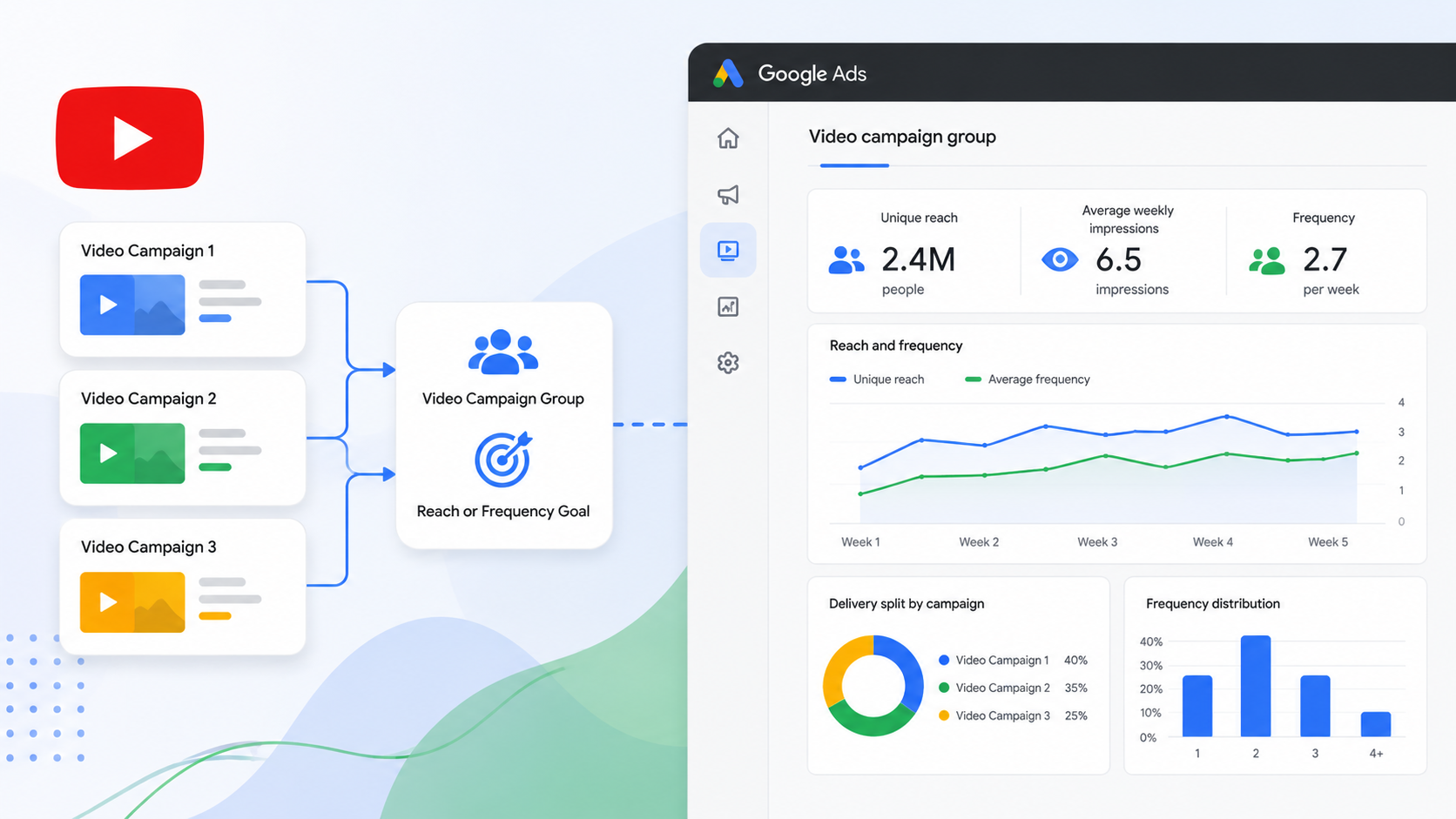
With the launch of video campaign groups, advertisers can aggregate multiple video campaigns under a single, overarching reach or frequency objective. The feature operates on a dual-layer logic:
Macro-Level Optimization: Google’s algorithms dynamically adjust delivery across the grouped campaigns to meet a shared frequency target or to maximize unique reach within a specified timeframe.
Micro-Level Control: Advertisers retain complete autonomy over individual campaign settings. Budgets, bidding strategies, geographic targeting, and specific creative assets remain customizable at the individual campaign level.
Unified Reporting Metrics
Beyond delivery optimization, the feature introduces consolidated reporting. Rather than manually aggregating data via spreadsheets or external business intelligence tools, advertisers can access unified reports directly within the Google Ads dashboard. These consolidated reporting suites provide visibility into critical performance metrics, including:
Coordinated Unique Reach: The total number of unique users exposed to the campaign group, eliminating duplicate counts across individual campaigns.
Average Frequency per User: The actual average number of times a unique user saw ads from any campaign within the group.
On-Target Reach Distribution: Insights into how effectively the campaign group hit its target frequency brackets (e.g., ensuring the bulk of the audience falls into the sweet spot of 2–3 impressions rather than 10+).
Unified Cost-Per-Reach (CPR): An aggregated financial metric demonstrating the true cost efficiency of the combined reach strategy.
Chronology: The Evolution of YouTube Ad Buying and the Feature Roadmap
The launch of video campaign groups is the latest milestone in a multi-year journey toward programmatic efficiency on YouTube. Understanding the timeline of this evolution highlights why this update is a natural and necessary progression for Google Ads.
The Era of Manual Silos (2010s–2020)
For years, YouTube advertising relied heavily on individual campaign structures. Advertisers set up separate campaigns for TrueView In-Stream, Bumper Ads, and Outstream formats. Frequency capping was strictly campaign-bound. If a brand ran three parallel campaigns targeting the same audience segment with different creatives, there was no native mechanism to prevent a single user from seeing ads from all three campaigns in rapid succession.
The Rise of Reach Campaigns and Frequency Capping (2021–2023)
To mitigate this, Google introduced YouTube Video Reach Campaigns (VRCs), which allowed advertisers to mix bumper ads and skippable in-stream ads within a single campaign to optimize reach. This was followed by the introduction of dedicated frequency target options within Google Ads, allowing buyers to set a target weekly frequency (e.g., two impressions per week). However, this capability remained locked within the confines of a single campaign. Large-scale advertisers with multi-product lines or complex creative testing frameworks still faced fragmented delivery.
Discovery and Global Rollout (Mid-2024)
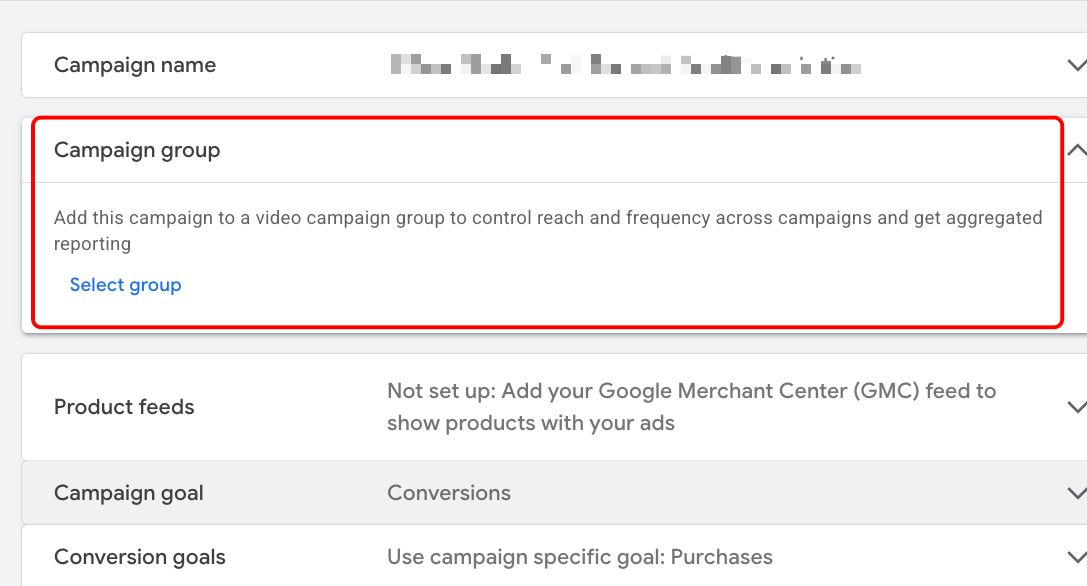
The industry first caught wind of the new video campaign groups functionality when Paid Search Expert Arpan Banerjee spotted the interface update in a live Google Ads environment and shared screenshots on LinkedIn. Following a limited beta testing phase, Google confirmed the global availability of video campaign groups for YouTube reach and frequency campaigns within the Google Ads platform.
Future Roadmap: Display & Video 360 (DV360) Integration
Google has confirmed that the utility of video campaign groups will not be restricted to the standard Google Ads interface. The tech giant plans to expand this capability to Display & Video 360 (DV360) in the near future. This integration will allow enterprise-level programmatic advertisers to coordinate reach and frequency across multiple YouTube line items, aligning programmatic open-web strategies with YouTube-specific campaigns.
Supporting Data: The Science of Frequency and the Meridian Study
The release of video campaign groups is heavily supported by statistical modeling and empirical research regarding ad recall and return on investment (ROI).
A major catalyst for this update is Google’s proprietary Meridian marketing mix modeling (MMM) project. Meridian is an open-source MMM tool designed to help advertisers measure marketing effectiveness with privacy-durable methodologies. Through comprehensive MMM studies, Google sought to identify the optimal frequency of ad exposure on YouTube that yields the highest return on investment.
Frequency vs. ROI Lift (Meridian MMM Study)
--------------------------------------------------
Weekly Frequency:   2.7 Impressions
ROI Increase:       +19%
Optimal Range:      2.0 - 3.0 Impressions/Week
--------------------------------------------------
*Data source: Google Meridian Marketing Mix Modeling Study
The study revealed a critical inflection point: an optimal frequency of 2.7 impressions per week resulted in a 19% increase in ROI compared to lower or unstructured frequency models.
The Cost of Oversaturation
The data underscores a long-held marketing principle: the law of diminishing returns. When frequency drops below 2 impressions per week, brand recall suffers because the message fails to register in the consumer’s long-term memory. Conversely, when frequency climbs past 4 or 5 impressions per week without creative variation, ad fatigue sets in.
Overexposure leads to:
Ad Blindness: Users actively ignore the ad.
Brand Erosion: Consumers develop negative sentiments toward a brand due to repetitive and intrusive ad placements.
Financial Waste: Advertisers pay CPMs (Cost Per Mille) to serve impressions to users who are already saturated, rather than reallocating those impressions to net-new prospects.
By grouping campaigns, advertisers can closely target that "sweet spot" of ~2.7 weekly impressions across multiple creative executions, maximizing both consumer sentiment and budget efficiency.
Official Responses and Expert Perspectives
Google’s positioning of the update focuses heavily on automation, simplicity, and strategic control. In official documentation surrounding the release, Google emphasized that the tool is designed to "simplify campaign management while helping advertisers improve audience reach and avoid overexposure."
Industry experts have reacted positively to the update, viewing it as a pragmatic solution to a long-standing workflow bottleneck.
"Managing reach and frequency across multiple YouTube campaigns has traditionally required advertisers to monitor performance campaign by campaign, manually shifting budgets to keep frequency in check," noted Anu Adegbola, Paid Media Editor. "Video campaign groups centralize optimization and reporting, making it easier to control audience exposure while maintaining separate budgets and creative strategies."
Other paid search professionals have highlighted how this feature fits into Google’s broader philosophical shift. By automating the mechanical aspects of media buying—such as shifting budgets to balance frequency—Google is nudging human marketers to focus on higher-level strategy, such as creative storytelling, audience segmentation, and overall business KPIs.
Implications: How This Reshapes the Digital Advertising Landscape
The introduction of video campaign groups carries profound implications for brands, advertising agencies, consumers, and the broader competitive ad-tech ecosystem.
1. Strategic and Financial Implications for Enterprise Brands
For enterprise-level brands with multimillion-dollar annual video budgets, the financial implications are massive. When running large-scale awareness campaigns, even a minor reduction in duplicate reach can reclaim hundreds of thousands of dollars in wasted ad spend.
By utilizing video campaign groups, brands can run sophisticated multi-campaign setups—such as a teaser campaign, a main launch campaign, and a testimonial-driven follow-up—while ensuring that a single user is exposed to these creatives sequentially and in a controlled manner, without exceeding the weekly frequency ceiling. This level of coordination was previously only achievable through highly complex, manual programmatic setups.
2. Operational Efficiencies for Agencies
For digital marketing agencies, the update is a major administrative relief. Media planners and account managers will spend fewer hours pulling daily performance reports, calculating cross-campaign reach overlap, and manually adjusting individual campaign budgets to stay within client-mandated frequency caps. The automated coordination and unified reporting suite allow agencies to present cleaner, more accurate data to clients with fewer manual calculations.
3. Improving the Consumer Ad Experience
From the consumer’s perspective, this update addresses one of the most persistent complaints about modern digital video streaming: ad repetition. Most internet users have experienced the frustration of seeing the exact same 15-second ad during every single commercial break of a video or stream. By allowing advertisers to cap and coordinate frequency across a group of campaigns, Google is facilitating a more diverse, less intrusive ad experience for YouTube viewers.
4. Pressure on Competitive Platforms
With YouTube representing a massive share of global streaming watch time, this update puts competitive pressure on other major ad platforms, including Meta, TikTok, and Connected TV (CTV) networks. While Meta has long offered unified frequency controls within its ad sets, the open-web and CTV space has struggled with fragmented frequency capping. Google’s ability to offer this seamlessly across YouTube’s vast ecosystem—and eventually through DV360—strengthens its position as the premier platform for video brand-building.
Summary of Key Benefits
Feature
Legacy Method
New Video Campaign Groups
Frequency Capping
Managed independently per campaign
Unified across multiple grouped campaigns
Reporting
Manual aggregation via Excel/BI tools
Consolidated dashboard with unique reach metrics
Creative Delivery
High risk of overexposure and creative fatigue
Balanced exposure across different creative assets
Budget Management
Rigid; hard to balance across parallel goals
Flexible campaign-level controls with automated optimization
Ultimately, video campaign groups represent a win-win for the digital advertising ecosystem. Advertisers gain a powerful, data-backed tool to drive up to a 19% increase in ROI through optimal frequency management; agencies benefit from streamlined workflows; and YouTube users enjoy a significantly less repetitive, more engaging viewing experience.

 By Evan Lee Salim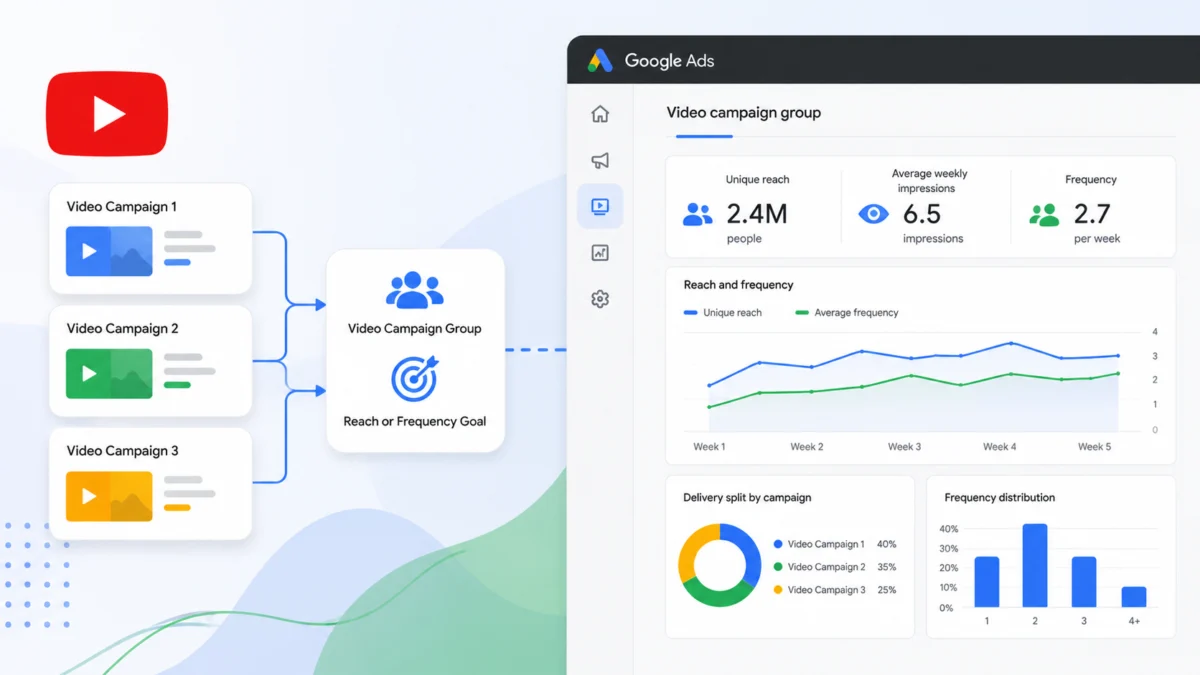
 Jia Lissa
  Nana Muazin
  Layla Zulfa