
 By Lina Irawan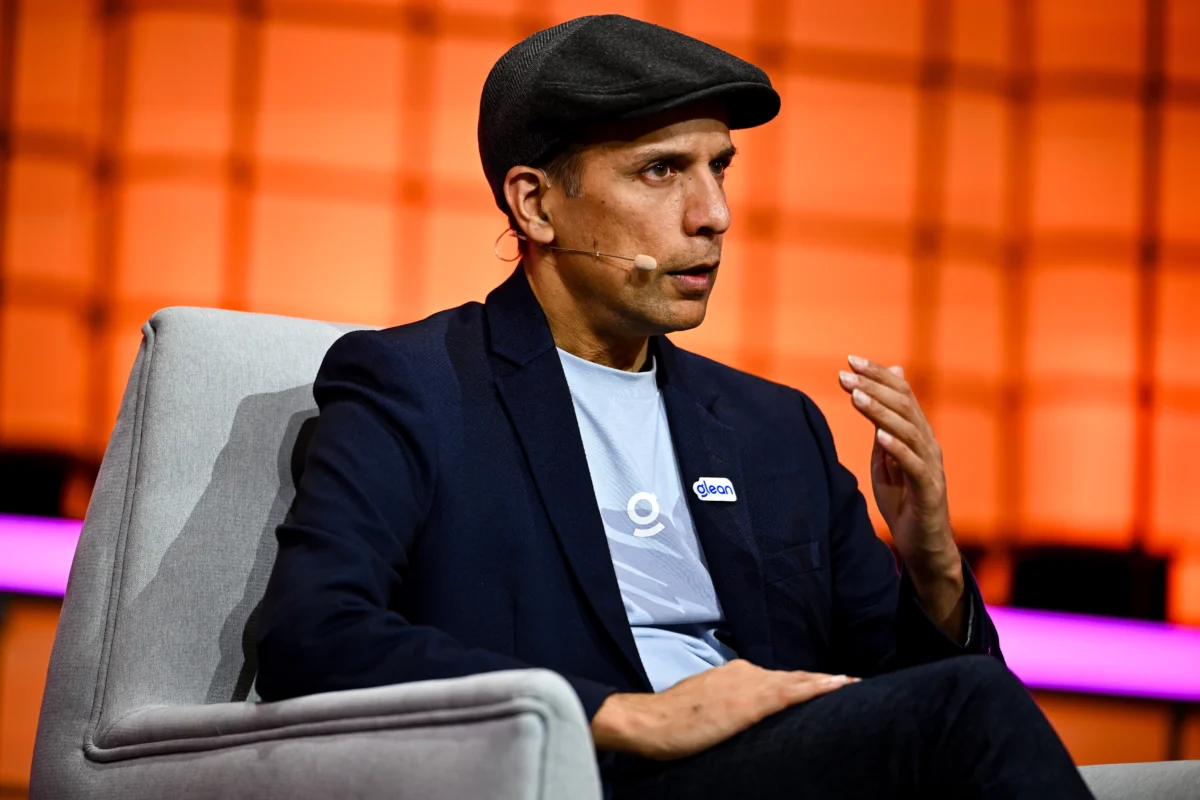
In the high-stakes theater of enterprise artificial intelligence, few companies have managed to maintain the velocity of Glean. Often referred to as the “Google for the enterprise,” the seven-year-old startup has announced a monumental achievement: reaching $300 million in annual recurring revenue (ARR). This figure represents a staggering three-fold increase from the $100 million milestone the company celebrated just 15 months ago.
As the industry grapples with the transition from experimental AI to operational utility, Glean’s trajectory offers a masterclass in product-market fit. By positioning itself as the "layer beneath the interface," Glean has successfully navigated a market that is rapidly becoming crowded with the most well-funded tech giants in history.
The Main Facts: A Rapid Ascent
Glean’s growth is not merely a product of the current AI hype cycle; it is a testament to the company’s ability to solve a specific, painful problem for large organizations: information fragmentation. Enterprises today are drowning in data scattered across Slack, Google Drive, Jira, Salesforce, and a dozen other platforms. Glean’s platform aggregates this data, allowing employees to query their entire company’s knowledge base through a single, intelligent interface.
The milestone of $300 million ARR places Glean in an elite tier of enterprise software companies. While the company reached $100 million in ARR roughly 15 months ago, the subsequent acceleration to $300 million highlights an exponential compounding effect—as more enterprises adopt the tool, the network effect of its "context graph" becomes increasingly valuable.
Chronology: From Solitary Player to Crowded Market
To understand Glean’s current position, one must look at its evolution since its founding seven years ago.
- The Early Years (2018–2022): For the first half-decade of its existence, Glean operated in a relative vacuum. While search tools existed, few were capable of deeply indexing the diverse and siloed environments of modern corporations. Glean spent these years building the connective tissue required to make enterprise data searchable and secure.
- The Inflection Point (2023): With the arrival of Generative AI, enterprise search moved from a "nice-to-have" utility to a mission-critical infrastructure component. Glean leveraged its existing architecture to integrate Large Language Models (LLMs), allowing it to provide conversational answers rather than just links.
- The Acceleration (2024–2025): The company hit $100 million in ARR, proving the business model. The following 15 months saw a surge in adoption as enterprises moved past the "PoC" (Proof of Concept) phase and into full-scale deployments.
- The Current Landscape (2026): Glean now faces a landscape populated by tech titans. Google, Microsoft, OpenAI, Anthropic, Salesforce, and Atlassian have all introduced products that overlap with Glean’s core functionality.
The "Context Graph": Glean’s Defensive Moat
Glean CEO Arvind Jain, a veteran of Google’s search division, has long argued that being a "first mover" is secondary to having a superior, context-aware product. In the enterprise AI wars, the primary differentiator is the "context graph."
Unlike a general-purpose AI model that operates on public data, Glean’s context graph is a bespoke map of a specific company’s internal operations. It understands the nuances of an organization’s hierarchy, project status, document history, and internal jargon.
By connecting to internal software systems, Glean’s AI does more than just retrieve documents; it understands the "why" and "who" behind the data. This contextual depth ensures that when an employee asks, “What is the status of project X?” the AI provides an answer grounded in the actual, real-time activity logged across Jira, Slack, and email, rather than a hallucinated summary or a generic document.
Economic Implications: Cost Efficiency as a Selling Point
Beyond mere convenience, Glean has hit upon a vital economic lever: the reduction of AI computing costs. As enterprises deploy LLMs, they are finding that the "token tax"—the cost of processing information—can become exorbitant if the AI is unleashed on raw, unorganized data.
Jain explains that by utilizing the context graph, Glean acts as a sophisticated filter. "If you connect your AI to Glean, it gives you all the information that you need to do your work, and that results in AI consuming far fewer tokens compared to if you unleash AI onto your systems directly," Jain notes.
By performing fewer, more surgical operations, the AI becomes more efficient. In a corporate environment where CFOs are scrutinizing AI budgets with unprecedented rigor, this cost-saving feature has transitioned from a technical benefit to a primary sales driver. For a large enterprise with thousands of users, the ability to cut LLM consumption costs while improving output quality is an irresistible value proposition.
Official Responses and Strategic Positioning
In his discussions with media, Jain remains pragmatic about the competitive landscape. He acknowledges that every major tech company wants to be in the enterprise search space, but he believes that the "platform-agnostic" nature of Glean gives it an edge.
"The first four or five years of our existence, we had no competition," Jain told TechCrunch. "Given how important search is to make AI work in the enterprise, every single company in the world wants to be in this space."
Glean’s strategy is to remain the independent layer. By not being tied to a single ecosystem—such as Microsoft 365 or Google Workspace—Glean positions itself as a neutral, cross-platform intelligence layer. This is particularly appealing to large, heterogeneous enterprises like Databricks, Reddit, Pinterest, and Samsung, which rely on a mix of vendors and cannot afford to be locked into a single provider’s search infrastructure.
Supporting Data: Understanding the ARR Nuance
It is important to note that the "$300 million ARR" figure carries a degree of complexity, as is common with modern SaaS companies utilizing consumption-based billing.
Glean employs a dual pricing strategy:
- Consumption-based model: Clients pay based on the volume of usage or tokens processed.
- Hybrid model: A combination of fixed monthly fees for active users paired with variable usage fees.
Because pure consumption models do not rely on fixed, annual contracts with guaranteed renewals, the term "ARR" is technically an "annualized revenue run rate." This means the company is calculating its revenue based on recent monthly performance extrapolated over a year. While this is standard practice among high-growth startups, it is a metric that investors view with a critical eye, as it is susceptible to fluctuations in customer activity.
However, at a valuation of $7.2 billion—established during its Series F funding round last June—the market clearly views Glean’s growth as sustainable and highly scalable.
Implications for the Future of Enterprise AI
Glean’s success suggests a broader trend in the AI industry: the shift from "Foundational Models" to "Contextual Models."
The initial excitement in the AI market was focused on the models themselves—the raw intelligence of GPT-4, Claude, or Gemini. However, the next phase of the AI revolution is about the "last mile" of intelligence: connecting those models to the private, messy, and siloed data of the enterprise.
Glean is betting that the company that owns the context—the "graph" of the company—will be the company that wins the enterprise. By embedding itself into the workflows of its clients, Glean is creating a high-moat business that is difficult for even the most well-funded incumbents to displace.
As tech giants continue to iterate on their own enterprise offerings, Glean’s ability to remain "the layer beneath" will be tested. Yet, for now, the data confirms that enterprises are prioritizing deep, secure, and cost-effective integration over the convenience of a "one-stop-shop" platform. Glean’s rapid growth serves as a powerful signal that in the enterprise world, intelligence is only as good as the context it is given.
 Sagoh
Sagoh  Iffa Jayyana
  Lina Hope