
 By Basiran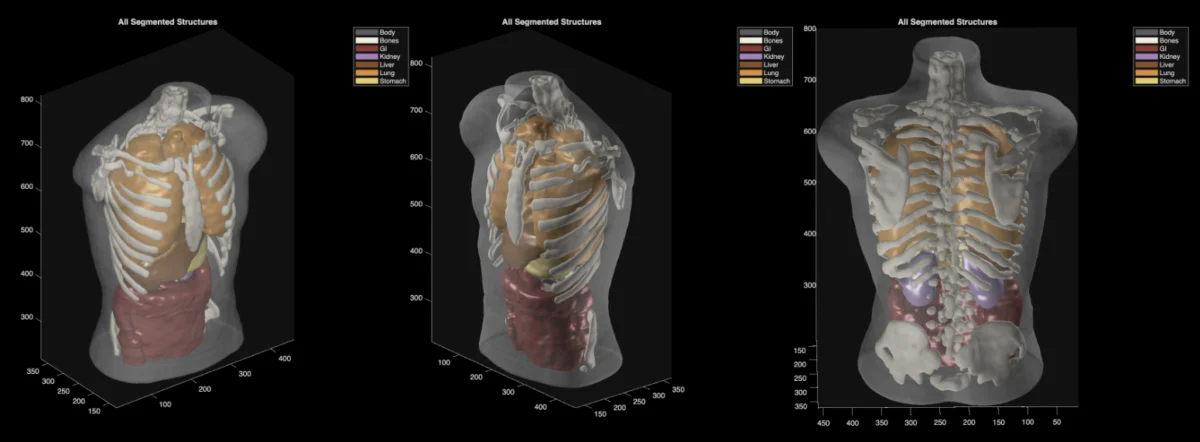
In a move that has stunned the tech industry, Midjourney—the San Francisco-based company synonymous with high-end generative AI art—is venturing far beyond the realm of "cat pictures." CEO David Holz has officially unveiled the company’s first foray into physical hardware: "The Midjourney Scanner." This ambitious project aims to democratize access to high-fidelity, preventative health data through a futuristic, spa-like experience. By leveraging ultrasound technology in a novel, immersive format, Midjourney is attempting to bridge the gap between aesthetic AI and clinical diagnostics.
The Core Concept: Redefining Preventative Scanning
At its heart, the Midjourney Scanner is an ultrasound-based, full-body imaging system designed to provide deep, actionable insights into human physiology. Unlike traditional, often clinical and sterile, diagnostic environments, the Midjourney approach prioritizes comfort and accessibility.
The process is deceptively simple but technologically dense. A user steps onto a specialized platform that descends into a shallow, "golden-lit" pool of water. As the user submerges, they pass through a precision-engineered ring housing thousands of ultrasonic transducers. These sensors act in concert—much like the echolocation systems of dolphins—sending high-frequency sound waves through the body from a multitude of angles. The resulting data is synthesized by massive computational power (estimated at two petaflops per system) to generate detailed, three-dimensional vertical slices of the body’s internal composition, including muscle, fat, bone, and organ structures.
Holz envisions a future where such scans are not merely reactive medical necessities for the sick, but proactive, routine maintenance for the healthy. "Ideally, you could do this once a year or every single day," Holz remarked, noting that the goal is to provide image quality comparable to an MRI—minus the radiation, the claustrophobia, and the powerful magnets that currently define conventional diagnostic imaging.
A Chronology of Innovation and Expansion
The trajectory from generative AI to medical hardware has been rapid, though the underlying ambition to "measure" the human condition has reportedly been part of Holz’s personal philosophy for some time.
- Early Development: Midjourney began quietly collaborating with Butterfly Network, a leader in point-of-care ultrasound technology. This partnership provided the backbone of the scanner’s imaging capability, utilizing 40 of Butterfly’s proprietary "Ultrasound-on-Chip" modules per system.
- The Reveal: In June 2026, David Holz officially demonstrated the hardware to the public via a livestreamed event, showcasing the user experience and the high-resolution abdominal scans the system is capable of producing.
- The Path to Union Square: Midjourney is currently in the planning stages for its flagship "Midjourney Spa" in San Francisco’s Union Square. The facility, slated for completion before the end of 2027, is designed as a wellness hub, integrating the scanners into a comprehensive environment that includes gyms, saunas, and cold plunge therapy.
- The Pilot Phase: While the technology is still in its infancy regarding public access, Holz confirmed that approximately a dozen individuals have already undergone the scan process during private testing, providing the initial data set required to calibrate the sensors and processing algorithms.
Supporting Data and Technical Architecture
The technical foundation of the Midjourney Scanner rests on the intersection of advanced acoustics and extreme computational efficiency. The reliance on Butterfly Network’s "Ultrasound-on-Chip" technology allows for a miniaturization of components that would otherwise be bulky and immobile. By arranging these chips in a circular array, the device circumvents the need for manual probe movement, allowing for a full-body scan in approximately 60 seconds.

The processing requirement is equally significant. Handling the sheer volume of ultrasonic reflections requires roughly two petaflops of processing power. While skeptics have questioned the synergy between generative AI and medical imaging, industry analysts suggest that Midjourney is uniquely positioned to handle this workload. The company has spent years building vast GPU clusters for its image generation models; pivoting a portion of this "otherwise-unused AI compute" toward the processing of complex medical imaging datasets is a logical, if unorthodox, utilization of infrastructure.
Official Responses and Regulatory Strategy
Midjourney is acutely aware of the regulatory hurdles facing a medical device manufacturer. In his presentation, Holz acknowledged that while the company aspires to clinical-grade diagnostics, various medical applications will necessitate rigorous FDA clearance.
For the time being, the company is positioning the product as a tool for "body composition mapping." By categorizing the output as wellness-oriented metrics rather than definitive diagnostic medical imaging, the company hopes to bypass some of the immediate, stringent requirements for clinical devices. However, the long-term roadmap remains clear: Midjourney intends to lobby for a new class of FDA-cleared devices—a category specifically designed to facilitate "data-rich" preventative monitoring for the general population.
Regarding data security, the company has been measured but firm. As the project moves toward a public launch, the "library of scans" created by users will be treated with a high degree of confidentiality. Midjourney has explicitly stated that users will have the ability to share their health data with doctors, AI-driven health analytics platforms, or other trusted entities, promising that more granular details on their privacy policies will be released as the launch date approaches.
Implications for the Future of Healthcare
The implications of the Midjourney Scanner are twofold: one for the individual and one for the healthcare industry at large.
The Quantified Self
For the individual, this device represents the ultimate "quantified self" tool. Holz, who admits he is "not the most measured man on Earth yet," hopes that by providing people with daily, measurable information about their internal physiology, they can better understand how specific lifestyle interventions—such as dietary changes or new workout regimens—actually affect their internal health. It is a shift from "feeling" healthy to "seeing" health in real-time.

The Disruption of Diagnostic Medicine
For the broader medical community, the potential to bring high-fidelity imaging into a "magical spa experience" is disruptive. If successful, Midjourney could effectively move the diagnostic process out of the hospital and into the community. By providing accessible, radiation-free imaging, they could catch chronic conditions or anomalies at an earlier stage than currently possible under traditional insurance-gated healthcare models.
However, questions remain. Does the public want to know the internal status of their organs on a daily basis? Could the influx of raw imaging data lead to "medical anxiety" or an over-reliance on AI-interpreted health metrics? And perhaps most importantly, how will the established medical establishment react to a tech-first company entering their space without the traditional pedigree of medical device manufacturers?
Conclusion: A Bold, Uncharted Path
David Holz’s vision for Midjourney is clearly expanding beyond the generative capabilities that made the brand famous. Whether the Midjourney Scanner is a brilliant leap toward a more proactive future of human health or an overly ambitious diversion remains to be seen. What is certain, however, is that the company is betting heavily on the idea that the next great frontier in AI isn’t just about creating new images—it’s about visualizing the reality that already exists within us.
As we look toward the 2027 opening of the San Francisco spa, the world will be watching to see if Midjourney can transform from a generator of digital art into a pioneer of physical wellness. For now, the "golden light" of the scanner remains a fascinating, if mysterious, glimpse into the future of medicine.
 Suro Senen
  Azzam Bilal Chamdy