
 By Dwi Wanna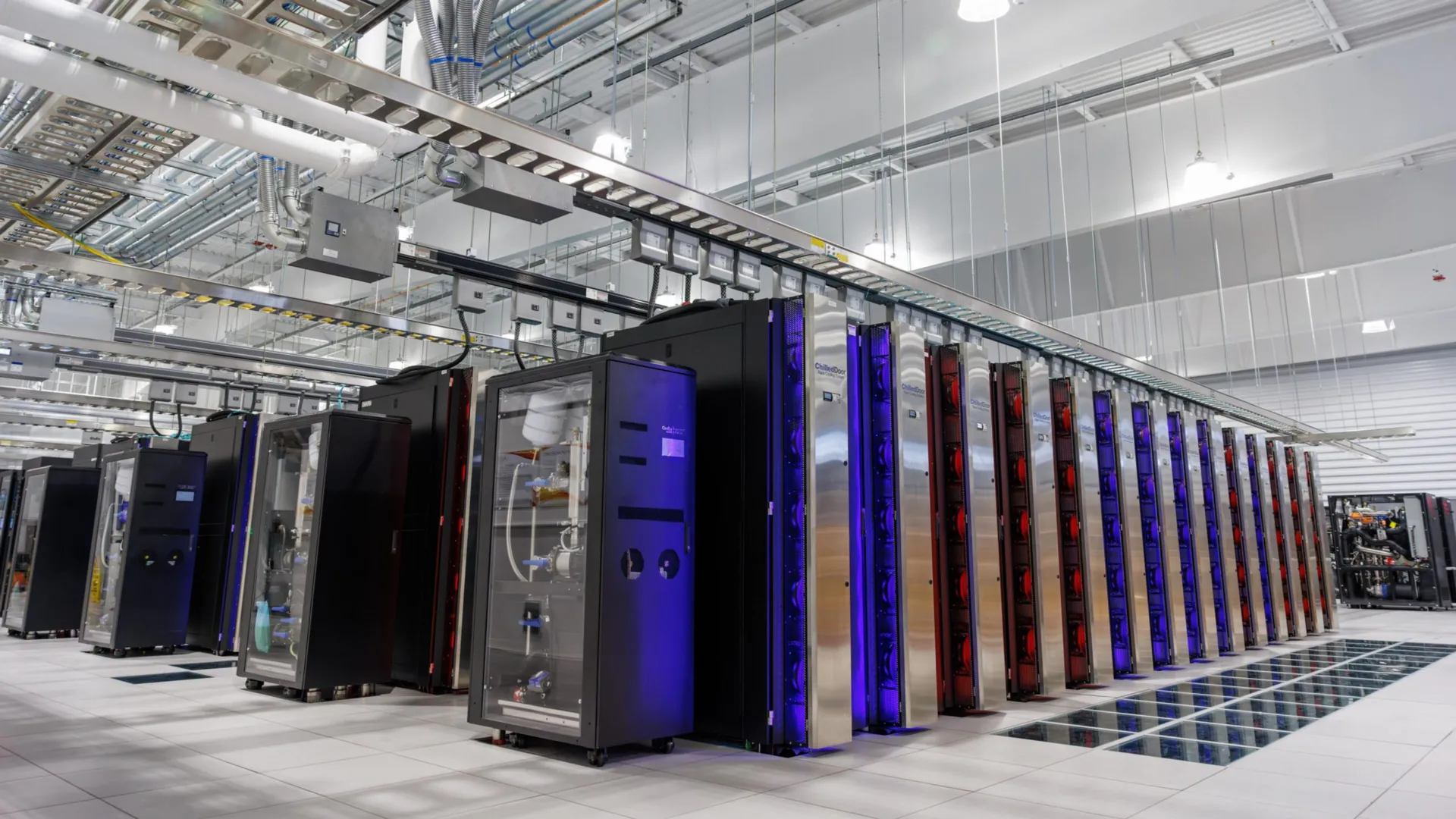
Executive Summary: The Mounting Power Bill of Intelligence
Artificial intelligence has become the modern era’s most transformative tool, yet its rapid ascension has brought an inconvenient truth to the forefront: the carbon footprint of digital cognition is reaching a breaking point. In 2024 alone, AI systems and the massive data centers housing them consumed an estimated 415 terawatt-hours of electricity. This figure represents more than 10% of the total electricity production of the United States—a consumption level that rivals the needs of entire small nations.
As industry leaders race to scale Large Language Models (LLMs) and Visual-Language-Action (VLA) models, the infrastructure required to power this growth is straining the national grid. With energy demand for AI projected to double by 2030, the search for efficiency is no longer merely a corporate cost-saving measure; it has become an existential imperative for the technology sector.
Amidst this energy crisis, researchers at the School of Engineering, led by Matthias Scheutz—the Karol Family Applied Technology Professor—have unveiled a groundbreaking proof-of-concept. Their work, focusing on "neuro-symbolic AI," suggests a paradigm shift that could slash energy consumption by up to 100 times while simultaneously enhancing the reliability of robotic decision-making.
Chronology: From Brute Force to Logical Reasoning
The trajectory of AI development over the last decade has been defined by the "bigger is better" philosophy.
- 2012–2020: The Deep Learning Era. The industry prioritized scale, feeding neural networks increasingly massive datasets. This period saw the rise of architectures that relied on statistical probability rather than logical understanding.
- 2022–2023: The Generative Surge. The public release of LLMs like ChatGPT and Gemini demonstrated the power of statistical prediction but masked the massive computational cost associated with training and inference.
- 2024: The Sustainability Reckoning. As data center energy consumption began to exceed the capacity of local power grids, researchers began pivoting toward "Green AI."
- May 2025: The Vienna Breakthrough. The research team from the School of Engineering is set to present their findings at the International Conference of Robotics and Automation (ICRA) in Vienna, marking a formal introduction of neuro-symbolic VLA models to the global scientific community.
Supporting Data: The Efficiency Gap
The current standard for robotics—the conventional VLA model—relies on trial-and-error learning. These models process millions of data points to "guess" the correct physical action. The inefficiency of this approach is staggering.
Comparative Performance Metrics
In rigorous testing involving the "Tower of Hanoi" puzzle—a classic benchmark for sequential planning—the neuro-symbolic approach outperformed standard models by an order of magnitude:
| Metric | Traditional VLA | Neuro-Symbolic VLA |
|---|---|---|
| Success Rate (Standard) | 34% | 95% |
| Success Rate (Complex) | 0% | 78% |
| Training Time | 36+ Hours | 34 Minutes |
| Training Energy Cost | 100% (Baseline) | 1% |
| Operational Energy Cost | 100% (Baseline) | 5% |
These figures highlight a critical flaw in current AI architectures: they are expending massive amounts of energy to "re-learn" basic physical constraints that could be codified through logic.
The Hybrid Architecture: Defining Neuro-Symbolic AI
To understand the innovation, one must distinguish between the "black box" nature of current AI and the transparency of symbolic reasoning.
Neural Networks: The Intuition
Traditional LLMs and VLAs function as probabilistic engines. They predict the next word or movement based on a statistical average of the data they were trained on. While this creates an appearance of intelligence, it lacks an underlying framework for "truth." This is why chatbots "hallucinate" and robots struggle with basic spatial awareness, such as distinguishing shadows from solid objects.
Symbolic Reasoning: The Logic
Scheutz’s team integrates symbolic reasoning into the VLA framework. By hard-coding rules—such as the laws of physics, geometric constraints, and hierarchical planning—the AI no longer needs to learn that a block cannot float in mid-air through thousands of failures. It simply "knows" the rule.
"Like an LLM, VLA models act on statistical results from large training sets of similar scenarios, but that can lead to errors," says Professor Scheutz. "A neuro-symbolic VLA can apply rules that limit the amount of trial and error during learning and get to a solution much faster."
Official Perspectives: The Ethics of Energy Consumption
The implications of this research extend far beyond robotics. In a broader conversation regarding the AI industry’s ecological footprint, Professor Scheutz draws a parallel to daily internet usage.
"These systems are just trying to predict the next word or action in a sequence, but that can be imperfect, and they can come up with inaccurate results or hallucinations," Scheutz notes. "Their energy expense is often disproportionate to the task. For example, when you search on Google, the AI summary at the top of the page consumes up to 100 times more energy than the generation of the website listings."
This sentiment is echoed by grid operators and environmental advocates, who are increasingly concerned that the AI boom is effectively slowing the decarbonization of the global energy supply. By requiring more electricity, AI forces utilities to keep aging fossil-fuel power plants online longer than planned to meet the "always-on" requirements of data centers.
Implications: A Sustainable Future for Robotics
The integration of neuro-symbolic AI into robotics provides a blueprint for a more sustainable future. If the energy required to train a robot to perform a task can be reduced by 99%, the environmental barrier to deploying autonomous systems in manufacturing, healthcare, and logistics drops significantly.
1. Reducing Infrastructure Strain
If the industry adopts neuro-symbolic methods, the demand for massive, energy-hungry data centers could plateau. By prioritizing logical efficiency over brute-force computation, companies can achieve higher levels of robotic competence without needing to build additional power plants or expand grid capacity at current, unsustainable rates.
2. Enhancing Reliability
The 78% success rate in novel, complex puzzles proves that neuro-symbolic systems are more robust. In real-world applications—such as surgical robots or autonomous disaster-relief vehicles—the difference between a 34% success rate and a 95% success rate is the difference between a functional tool and a dangerous liability.
3. The Path Toward "Reasoning" AI
The ultimate goal of this research is to move AI away from "statistical mimicry" toward "reasoning." By combining the sensory capabilities of VLAs with the rigid logical structures of symbolic AI, we are moving toward a future where machines do not just guess what to do next, but understand why they are doing it.
Conclusion: The Necessary Shift
The current trajectory of AI development is undeniably unsustainable. As we approach the limits of what energy-intensive, statistical-only models can achieve, the industry must look toward hybrid architectures. The work of the School of Engineering serves as a wake-up call: true intelligence, whether biological or artificial, does not come from doing more with more; it comes from doing more with less.
As the researchers prepare for their presentation in Vienna, the tech community watches with anticipation. The transition to neuro-symbolic AI may well be the bridge that connects the current era of "expensive, hallucinatory AI" to a future of "efficient, reliable, and sustainable autonomy." The question remains whether the industry will pivot toward this more disciplined approach or continue to chase the diminishing returns of massive, power-consuming models. For the sake of the climate and the long-term viability of the technology itself, the choice is clear.
 rifanmuazin
  Ammar Sabilarrohman
  Nana Muazin