
 By Lina Hope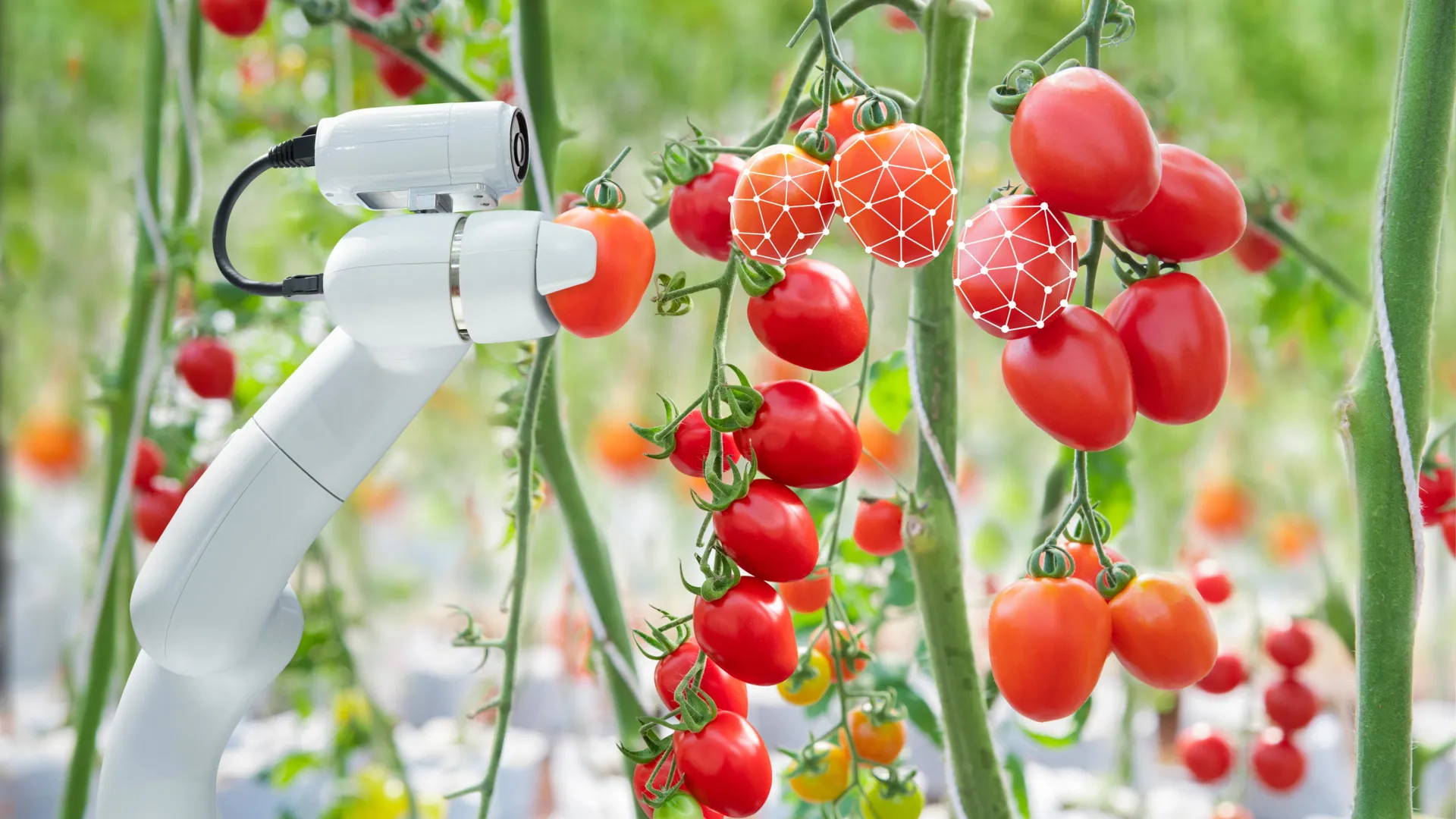
As the global agricultural sector grapples with an aging workforce and chronic labor shortages, the promise of automation has moved from a futuristic concept to an urgent necessity. While tractors and large-scale harvesters have long mechanized the fields of broad-acre crops like wheat and corn, delicate produce—specifically tomatoes—has remained a persistent hurdle. Unlike grains, tomatoes grow in complex, tangled clusters, requiring a level of dexterity and decision-making that has historically been the sole domain of human pickers.
However, a breakthrough from Osaka Metropolitan University (OMU) is bridging this divide. Assistant Professor Takuya Fujinaga of the Graduate School of Engineering has developed a pioneering system that teaches robots not just to "see" fruit, but to evaluate the strategic "harvest-ease" of each individual tomato before extending a mechanical arm.
The Technological Hurdle: Why Tomatoes Defy Automation
The challenge of harvesting tomatoes is a masterclass in spatial complexity. In a greenhouse environment, tomatoes do not present themselves in orderly, isolated rows. They are shielded by dense foliage, connected by fragile stems, and clustered in ways that create visual occlusion—where one fruit hides another from the robot’s sensors.
Traditional agricultural robots have struggled with this binary approach: detect the fruit, attempt to pick the fruit. If the robot miscalculates the angle or encounters a stem hidden behind a leaf, the result is often damaged produce or a mechanical error. To solve this, Dr. Fujinaga shifted the paradigm from mere object detection to a sophisticated "harvest-ease estimation" framework.
Chronology of the Development
The path to this innovation reflects a multi-year effort to integrate computer vision with statistical decision-making.
- Initial Research Phase (Early 2020s): Dr. Fujinaga and his team began by analyzing the failure points of existing robotic harvesters. They identified that the primary bottleneck was not the lack of mechanical dexterity, but the lack of "situational awareness."
- Model Training: The team curated a vast dataset of tomato clusters, annotating not just the fruit, but the stems, the leaves, and the surrounding environment. This allowed the machine learning model to categorize the physical constraints of each harvest site.
- The "Harvest-Ease" Metric Development: By mid-2023, the research shifted toward creating a quantitative metric for difficulty. Instead of a "yes/no" command, the robot was programmed to assign a probability score to the success of a pick based on the angle of approach.
- Validation Testing: In recent laboratory and pilot greenhouse trials, the system was subjected to real-world conditions, where it demonstrated its capacity to re-evaluate its strategy in real-time.
- Publication: The findings were formally published in the journal Smart Agricultural Technology, marking a significant milestone in the integration of AI into agricultural robotics.
Supporting Data: Quantifying Success
The performance of the OMU system has exceeded initial benchmarks. In controlled testing, the robot achieved an 81% success rate—a figure that is highly competitive given the environmental variables inherent in greenhouse cultivation.
One of the most compelling aspects of the data is the robot’s "dynamic adjustment" capability. Approximately 25% of successful harvests were achieved only after an initial front-facing approach was deemed unfavorable by the system. Upon assessing that the first attempt would likely fail, the robot autonomously recalibrated its trajectory to harvest the tomato from the side. This iterative problem-solving capability mimics the human ability to adjust one’s stance or reach to avoid foliage, representing a major leap in robotic intelligence.
The Philosophy of "Harvest-Ease"
Dr. Fujinaga’s work introduces a shift in how we define robotic success. By establishing "ease of harvesting" as a quantitatively evaluable metric, the research allows engineers to build robots that act with intentionality.
"This moves beyond simply asking ‘can a robot pick a tomato?’ to thinking about ‘how likely is a successful pick?’," Dr. Fujinaga noted in his recent commentary on the study. By quantifying the variables—such as stem position, fruit shape, and the density of visual obstruction—the robot is no longer blindly grabbing at red spheres. It is effectively "thinking" through the physical geometry of the plant.
Implications for Global Agriculture
The implications of this research extend far beyond the laboratory. If deployed at scale, this technology could fundamentally alter the economics of produce farming.
Labor Shortages and Economic Sustainability
Agricultural labor shortages are not merely a logistical annoyance; they are a threat to food security. Farmers frequently report losing significant portions of their harvest because they cannot find the labor to pick produce at the exact moment of peak ripeness. A robotic system that can operate 24/7, maintaining a consistent standard of care, provides a buffer against these volatile labor markets.
The Rise of Human-Robot Collaboration
Perhaps the most pragmatic takeaway from Dr. Fujinaga’s research is the vision of a "hybrid" harvest. Rather than aiming for total, 100% automation—which remains prohibitively expensive and technically complex—the future of farming likely lies in human-robot collaboration.
In this model, robots handle the "low-hanging fruit"—the tomatoes that are clearly visible and easy to access. Humans, meanwhile, can focus their labor on the complex clusters or delicate areas that require the nuanced dexterity of the human hand. This allows farmers to maximize their human labor force, assigning them to high-value tasks while machines handle the high-volume, repetitive work.
Expert Analysis: The Path Forward
The integration of image recognition and statistical analysis has long been the "holy grail" of robotics, but applying it to the messy, non-linear environment of a greenhouse has historically been an uphill battle.
Industry observers suggest that the OMU study is significant because it accounts for the "hidden" variables of agriculture. By treating the environment as a set of probabilities rather than a static map, the robot becomes more resilient to the unpredictable nature of biological growth. The ability of the machine to "change its mind" and adjust its angle is a precursor to more advanced AI agents that will eventually manage entire agricultural ecosystems, from irrigation to harvest.
Challenges to Widespread Adoption
Despite the success of the 81% success rate, the path to commercialization remains fraught with challenges. The current system requires significant computational power, which must be streamlined for on-board processing in greenhouses that may lack high-speed infrastructure. Furthermore, the durability of these robots in humid, dusty, and hot greenhouse environments remains a hurdle for manufacturers.
However, as the cost of sensors and high-performance processors continues to drop, the barrier to entry for this technology is lowering. The next phase of research will likely involve scaling the system to different types of crops—such as peppers or cucumbers—which present their own unique spatial challenges.
Conclusion
The work conducted by Dr. Takuya Fujinaga at Osaka Metropolitan University serves as a blueprint for the next generation of agricultural technology. By framing harvesting as an exercise in decision-making rather than a simple mechanical action, he has brought the industry one step closer to the realization of intelligent, autonomous farms.
As we look to the future, the integration of robots into the field is not a replacement for human farmers, but an evolution of the practice. By automating the most taxing and repetitive aspects of the harvest, we empower human workers to focus on crop management, sustainability, and quality control. The tomato, once a stubborn holdout against the march of automation, is now leading the way toward a new, collaborative future for agriculture.
 rifanmuazin
  Ammar Sabilarrohman
  Nana Muazin