
 By Lina Irawan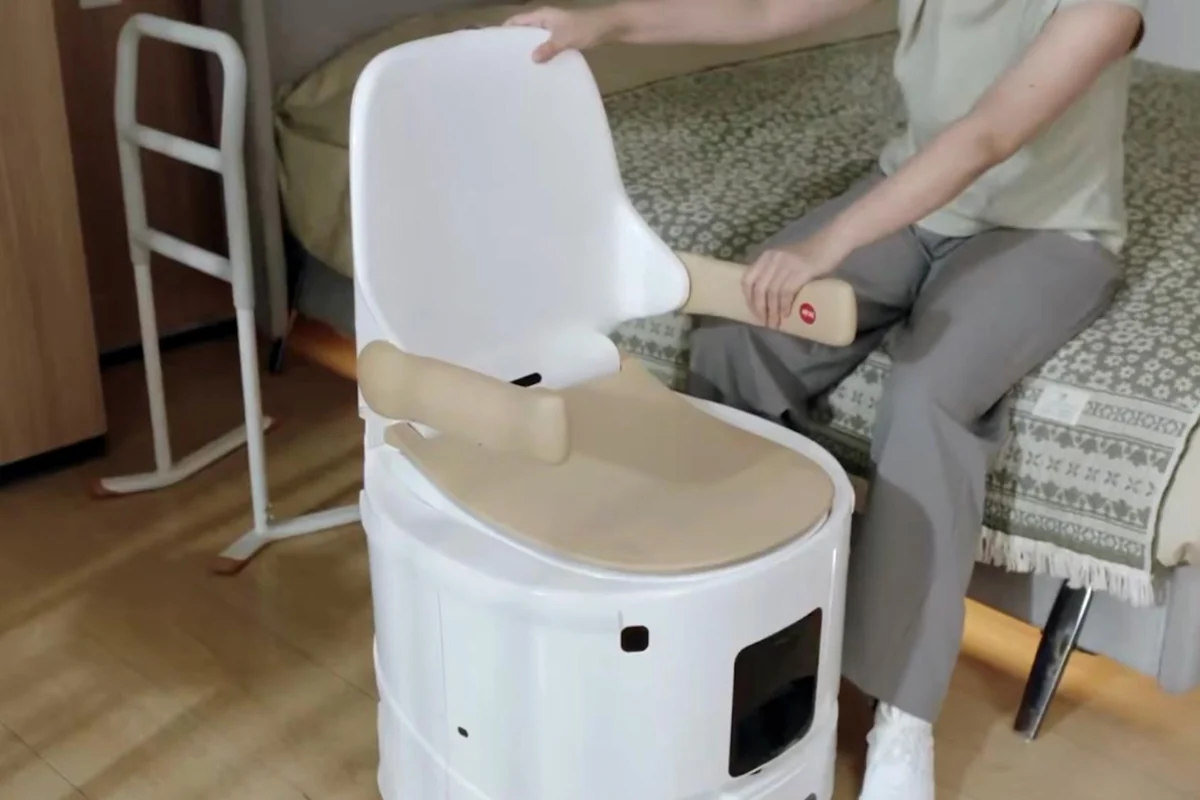
In a striking convergence of robotics and healthcare, the landscape of assistive technology has been irrevocably altered. At a recent expo in Shanghai dedicated to elderly care and rehabilitation medicine, a Chinese firm named Yueban unveiled an innovation that seems to leap straight from the pages of science fiction: the Xiaoban, an autonomous, self-driving smart toilet designed specifically for those with limited mobility.
For millions of people worldwide—including the elderly, those recovering from debilitating injuries, and individuals living with chronic disabilities—the simple act of traversing a hallway to reach a restroom represents a daily gauntlet of physical exertion and risk. The Xiaoban aims to solve this fundamental struggle by reversing the traditional paradigm of the bathroom: instead of the user going to the toilet, the toilet comes to the user.
The Technological Underpinnings: How It Works
At its core, the Xiaoban is a marvel of navigation engineering. It utilizes a sophisticated sensor suite remarkably similar to that found in high-end, top-tier robot vacuums. By integrating LiDAR (Light Detection and Ranging) with ultrasonic sensors, the device constructs a real-time, three-dimensional map of its surroundings.
When summoned via a handheld remote or a voice command, the Xiaoban plans a safe, efficient path through a residence or care facility. Its navigation software is specifically programmed to identify and avoid obstacles—ranging from furniture to doorways—and, crucially, to detect and stop at stairwells or steep elevation changes. Once the unit reaches the user, it locks into position, providing a stable, accessible base for the individual to transition onto the seat.
While the device does not eliminate the need for mobility assistance entirely, it drastically reduces the physical burden on caregivers and patients alike. By keeping the toilet within the immediate living area, the energy expenditure required for daily hygiene is significantly mitigated.
Chronology: From Concept to Expo Floor
The development of the Xiaoban represents a multi-year effort by Yueban to address the growing global crisis of aging populations.

- Initial Development (2022-2023): Yueban began internal R&D focused on "mobile hygiene units," experimenting with various chassis designs that could handle the weight of a traditional toilet seat while maintaining the maneuverability of a domestic robot.
- The Prototype Phase (2024): Engineers integrated the "self-cleaning and sealing" mechanism, which is arguably the most complex component of the build. The challenge was to create a portable waste system that would not emit odors or leak during the transit phase.
- The Shanghai Debut (2025): The official unveiling at the Shanghai expo served as a stress test for public perception. The device was demonstrated in a simulated home environment, navigating around chairs and tables to reach a volunteer, successfully performing the full "cycle" of use and disposal.
- Market Entry (Upcoming): With a projected price point of ¥28,999 yuan (approximately $4,300 USD), the company is currently positioning the device for institutional adoption in care homes before targeting the consumer residential market.
Supporting Data and Technical Specifications
The Xiaoban is not merely a motorized chair; it is a full-service sanitation station. To function as an autonomous unit, it incorporates several critical systems:
- Hygiene Automation: The unit replaces traditional paper with an integrated bidet system, complete with adjustable water temperature and pressure. This is followed by a warm air drying mechanism, ensuring the user remains comfortable and dry without manual intervention.
- Waste Management: Perhaps the most impressive feat of engineering is the internal waste-containment system. The toilet features a pulverization mechanism that breaks down waste to prevent clogs. This is coupled with a hermetic sealing system that locks the waste away until the unit can reach a disposal point.
- Sanitization Protocols: To maintain hygiene in a mobile unit, the bowl is equipped with ultraviolet (UV) light arrays that activate after each use, effectively neutralizing bacteria and pathogens.
- Disposal Modalities: The unit offers two distinct operational modes. In a "plumbed" setup, the charging dock is connected directly to the home’s drainage system. Once the toilet returns to its dock, it self-empties, refills its reservoirs, and recharges its battery. In a "non-plumbed" scenario, the unit drives to a standard bathroom, where a robotic arm extends to pump the waste into a stationary toilet.
Implications for Healthcare and Aging-in-Place
The introduction of the Xiaoban arrives at a critical juncture. As global life expectancies increase, the "aging-in-place" movement—the desire for the elderly to remain in their own homes rather than moving to assisted living facilities—has become a central focus of public health policy.
Reducing Caregiver Burnout
Caregiving is a physically and emotionally demanding profession. A significant portion of a caregiver’s time is spent assisting patients with toileting. By offloading the transit and cleanup aspects of this process, the Xiaoban allows caregivers to focus on more complex health monitoring or social interaction, potentially reducing the high rates of injury and burnout associated with the profession.
Restoring Dignity and Autonomy
Beyond the physical logistics, there is an undeniable psychological dimension. The loss of autonomy is often the most difficult aspect of aging or illness. Being able to manage one’s own basic hygiene without requiring the constant, hands-on assistance of another person is a massive boon for the individual’s self-esteem and sense of agency. The Xiaoban is not just a tool; it is a mechanism for maintaining personal privacy.
The Stigma of Medicalized Living
In many homes, the introduction of medical equipment like bedside commodes creates a "clinical" atmosphere that can be demoralizing. The Xiaoban, by appearing as a sleek, modern piece of technology rather than a traditional medical device, helps normalize the home environment. The use of UV light and automated sealing ensures that the device does not negatively impact the air quality or cleanliness of the living space, effectively "de-medicalizing" the experience of disability.
The Path Forward: Challenges and Questions
Despite the excitement surrounding the debut, several hurdles remain before the Xiaoban becomes a household reality.

Global Availability: As of now, the device is slated for the Chinese market. Adapting the technology for international plumbing standards, electrical safety regulations, and building codes (such as the Americans with Disabilities Act requirements) will be a significant undertaking.
Cost and Accessibility: At roughly $4,300, the device is expensive for the average consumer. For the Xiaoban to truly impact the quality of life for the elderly, it will likely need to be integrated into insurance plans, government-subsidized care programs, or rental models offered by nursing homes.
Maintenance and Reliability: A robot that manages human waste is a high-stakes piece of hardware. The mechanical complexity—involving pumps, seals, and sensors—means that maintenance will be a constant necessity. If the device breaks down while away from a drainage point, the resulting logistical issue could be a major inconvenience for the user.
Conclusion
The Xiaoban represents a bold step forward in the integration of robotics into the most intimate aspects of human life. While it is not a cure-all, it demonstrates that innovation can be directed toward the most fundamental of human needs: dignity, independence, and cleanliness. As Yueban moves toward a broader rollout, the world will be watching to see if this "smart toilet" can truly transform the standard of care for our most vulnerable populations.
Whether the device eventually finds its way into every home remains to be seen, but the message from the Shanghai expo is clear: the future of home health is not just mobile—it is autonomous.
 Suro Senen
  Azzam Bilal Chamdy