
 By Ammar Sabilarrohman
In the hyper-competitive landscape of modern e-commerce, the standard playbook for email marketing is well-defined: welcome sequences, browse abandonment reminders, cart recovery flows, and aggressive promotional blasts. While these tactical maneuvers are essential for moving customers through a sales funnel, they often fail to cultivate something far more valuable: a loyal community.
For many digital entrepreneurs, the goal is to drive immediate conversion. However, the most resilient brands have shifted their focus from simply harvesting email addresses to fostering genuine human connection. This evolution requires a fundamental change in philosophy—viewing the inbox not as a billboard for sales, but as a digital space for community engagement.
The Paradigm Shift: List vs. Community
To understand the difference between a list and a community, one must look at the psychological tether between a brand and its subscribers. A "list" is merely a database of contacts who have provided their information, often in exchange for a discount code. It is a transactional ledger.
A "community," by contrast, is a collective of individuals who feel a sense of belonging. They are not merely buying a product; they are participating in a culture. When a business treats its email list as a community, it focuses on shared values, storytelling, and mutual investment. While the transactional infrastructure—the automated flows that drive revenue—remains a necessary foundation, it is the relationship-building layer that creates a "moat" around the business.
When a brand successfully builds this connection, customers become advocates. They recommend products without prompting, they remain loyal even when cheaper alternatives flood their social feeds, and they offer candid feedback that helps the company iterate and improve.
Chronology of Connection: Moving Beyond the Funnel
Building this rapport does not happen overnight. It follows a predictable, albeit slow, trajectory:
- The Permission Phase: A user enters your ecosystem. The immediate goal is to establish trust, not to force a purchase.
- The Transparency Phase: The brand begins to pull back the curtain, sharing the "why" behind their operations rather than just the "what."
- The Dialogue Phase: The communication shifts from a monologue (the brand speaking) to a dialogue (the brand listening).
- The Integration Phase: The customer begins to see themselves as part of the brand’s story, leading to high-value advocacy and long-term retention.
This process is not linear, but each step is essential. Brands that attempt to skip directly to the sale often find their audience becomes "blind" to their marketing emails, leading to plummeting open rates and increased unsubscribe activity.
Insider Access: The Currency of Community
The most effective way to foster a sense of belonging is to grant subscribers "insider status." This does not necessitate complex loyalty software or expensive gated memberships. Instead, it requires a change in framing.
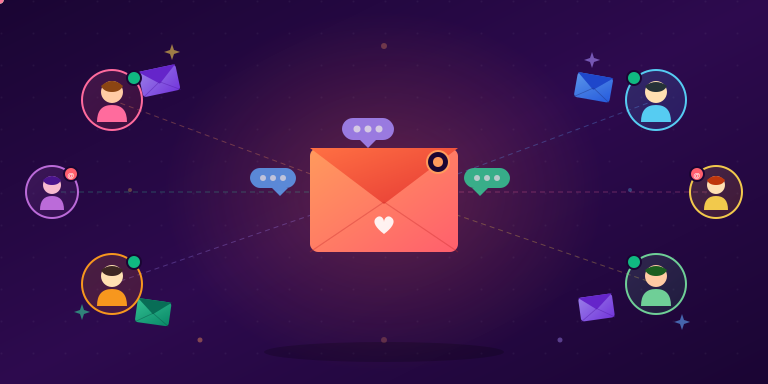
Consider the difference in these two approaches:
- The Transactional Approach: "Our new summer collection is now live. Get 10% off for the next 24 hours."
- The Community Approach: "We spent six months obsessing over the fabric for this summer collection. We actually scrapped two prototypes because they didn’t hold up in the wash. We wanted to share this with our inner circle before it hits the general public."
The latter builds investment. By sharing the "failures" and the "process," you invite the subscriber into the journey. People are naturally drawn to stories of struggle and triumph. When a founder shares their genuine thinking—or even the ideas they chose not to pursue—the subscriber feels a deeper connection to the end product.
Furthermore, the "Founder-Led Email" has emerged as a powerful, underutilized tool. In an era of polished, AI-generated, and hyper-designed newsletters, a plain-text, personal note from a founder often cuts through the noise. It signals authenticity and vulnerability, two traits that are rarely found in corporate marketing.
The Art of the Two-Way Street: Why Listening Matters
Traditional marketing is fundamentally one-directional. To break this cycle, brands must embrace "Reply-Based Marketing."
The simplest way to initiate this is to pose a question at the end of an email. It should not be a corporate survey, but an open-ended invitation to converse: "What is the one thing you are still struggling with regarding [Topic]?" or "What should we build next?"
When a subscriber takes the time to reply, the brand must reciprocate with a human response. While this does not scale to an audience of 50,000, it is incredibly powerful for early-to-mid-stage businesses. Engaging in even ten genuine email conversations per week creates "super-fans." These individuals are the ones who will write the most thoughtful reviews, defend your brand in public forums, and provide the most accurate product feedback.
Crafting a Recognizable Voice
Identity is the glue that holds a community together. If your brand’s emails are indistinguishable from those of your competitors, you are replaceable.
Building a distinct voice requires answering difficult questions: What does your brand believe about the industry? What does it intentionally avoid? What is your "manifesto"?
When these answers are consistently woven into your emails—regardless of whether the message is a product launch or a piece of educational content—the audience begins to feel a sense of shared identity. A consistent voice acts as a lighthouse; it attracts the people who resonate with your values and naturally filters out those who do not.
Measuring the "Soft" Metrics of Loyalty
While revenue is the ultimate health metric, it is a lagging indicator of community strength. To measure the health of a community, entrepreneurs should track the following "leading" metrics:
- Reply Rate: This is the most accurate measure of engagement. A high reply rate indicates that your audience feels comfortable speaking to you, which is the hallmark of a healthy community.
- Forward Rate: When a subscriber forwards your email, they are effectively staking their reputation on your content. It is the ultimate endorsement of your brand’s value.
- Referral Growth: Track how many new subscribers identify "a friend" as their source of discovery. High organic growth via referral is the strongest signal that you have built a community, not just a list.
- Unsubscribe Patterns: Do not fear unsubscribes; use them as data. If you see a spike after a specific type of content, it indicates a disconnect. However, if your unsubscribe rate remains low during content-heavy, non-promotional emails, it confirms that your audience values your voice beyond the checkout page.
Implications for Modern E-commerce
The shift toward community-driven email marketing has profound implications. First, it lowers Customer Acquisition Cost (CAC) over time by increasing Customer Lifetime Value (CLV). Second, it creates a buffer against platform volatility; if social media algorithms change, your direct line to your community remains intact.
To operationalize this, tools like Omnisend provide the necessary scaffolding. By utilizing advanced segmentation, you ensure the right people receive the right messages, while automation handles the heavy lifting of transactional emails. This creates the "mental space" for founders to focus on the qualitative side of their business—writing, connecting, and listening.
Conclusion: The Human Element
The most successful businesses are not those with the most complex marketing funnels, but those that treat their subscribers as human beings. By shifting from a mindset of "conversion" to a mindset of "connection," entrepreneurs can build a brand that is durable, resilient, and deeply meaningful.
Email remains the only channel where you own the relationship, free from the interference of algorithms or sidebar distractions. It is an invitation to talk. If you use that invitation to offer value, share your story, and listen to the people on the other end, you won’t just build a successful business—you will build a community that lasts.
 Dwi Wanna
  rifanmuazin
  Asep Darmawan