
 By Jia Lissa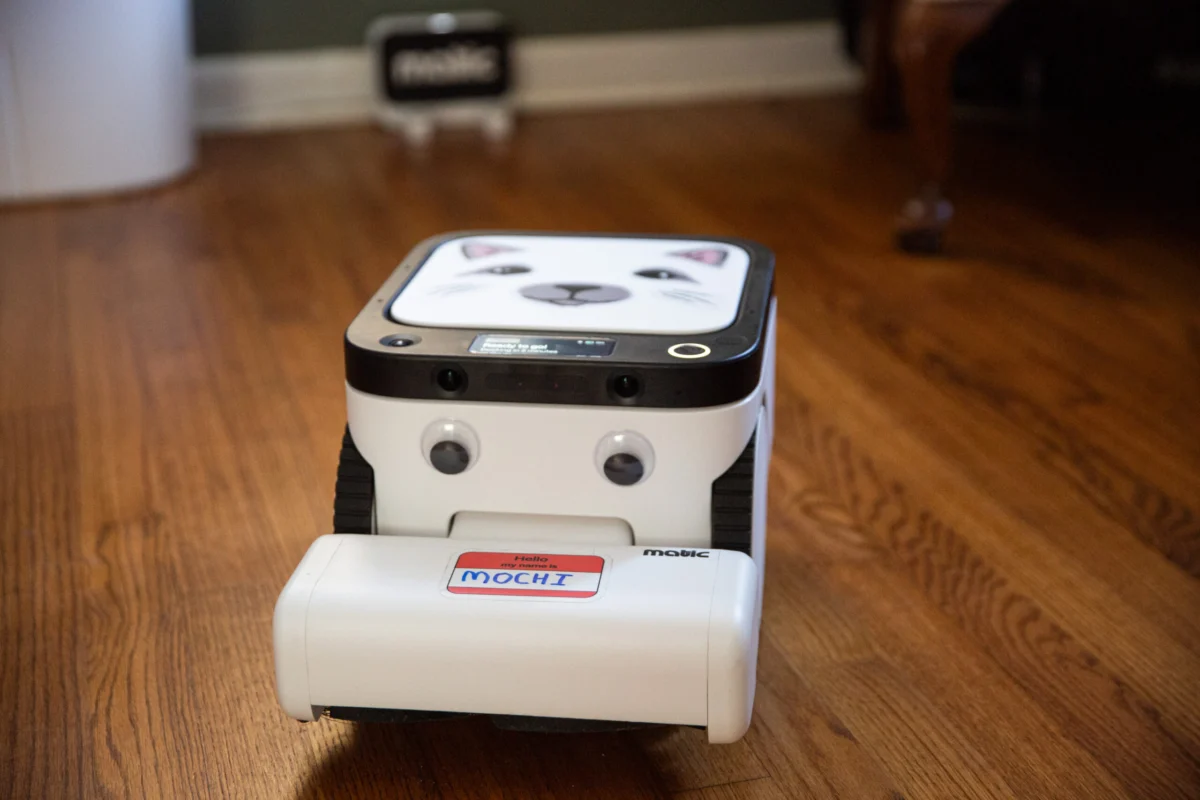
For consumers who view home automation not just as a convenience but as a necessity, the robot vacuum market has long been defined by a trade-off between price and performance. However, one standout device—the Matic—has consistently risen above the competition, earning the title of the best robot vacuum currently available. But for those eyeing this high-end cleaning solution, a significant financial shift is on the horizon. Starting September 9th, the cost of entry for the Matic will increase by $250, pushing its retail price from $1,245 to $1,495.
As the industry grapples with shifting supply chains and the rising costs of advanced components, this price hike serves as a case study in the current economic realities of high-end consumer robotics.
The Core Facts: A $250 Increase
The upcoming price adjustment is not a subtle shift; it represents a roughly 20% increase in the unit’s cost. For prospective buyers, the window to secure the current $1,245 price point is closing rapidly.
According to company representatives, the decision to raise prices was not made lightly. Matic has cited a sharp increase in the costs of essential internal components—specifically memory modules and other high-precision hardware—which the company claims have risen tenfold in cost over recent cycles. By adjusting the retail price, the company aims to maintain the high standard of manufacturing and component quality that has defined the Matic’s performance since its launch.
A Timeline of the Matic’s Rise and Evolution
To understand why a $1,495 price tag might still be justifiable to enthusiasts, it is necessary to look at the product’s trajectory.
- The Launch Phase: Matic entered a saturated market dominated by massive, feature-heavy base stations. It differentiated itself by focusing on "human-like" navigation and a sleek, compact design.
- The Review Period: Over the last six months, the device underwent rigorous real-world testing. Critics and early adopters alike highlighted its ability to navigate complex, multi-story environments with minimal intervention.
- The Market Shift (Early 2025): As the company scaled production, it encountered the global semiconductor and component shortages that have plagued the tech sector.
- The Price Announcement (August 2025): The company officially notified consumers of the upcoming September 9th deadline, providing a roughly two-week grace period for those waiting on the fence.
- The Post-September 9th Era: Moving forward, the $1,495 price point will become the standard, marking the next chapter for the brand as it transitions from a boutique entrant to a premium staple in the smart home space.
Supporting Data: Why It’s Rated at the Top
The praise surrounding the Matic is rooted in its unique engineering. Unlike competitors that rely on massive, space-consuming "all-in-one" docks, the Matic manages its own resources. It features an onboard water tank and stores debris in disposable bags, which significantly reduces the amount of space required for maintenance.

Performance Metrics
In extensive testing conducted by The Verge, the Matic proved its worth in "complicated, cluttered" environments. Key performance indicators include:
- Navigation Success: In six months of continuous use, the unit became stuck only twice. This is a remarkable statistic for any autonomous machine navigating high-threshold transitions, thick rugs, and household obstacles.
- Quiet Operation: The unit is designed to be unobtrusive, making it suitable for users who work from home and cannot tolerate the auditory distraction of a loud vacuum.
- Offline Sovereignty: In an era where "smart" often means "cloud-dependent," the Matic stands out by operating entirely offline. Maps and cleaning data are stored locally, providing a layer of privacy that is increasingly rare in the home appliance market.
- Operational Intelligence: The unit is sophisticated enough to continue its vacuuming cycles even if the water tank runs dry, ensuring that floor debris is managed even when the mopping function is unavailable.
Mitigating the Blow: Incentives for Early Adopters
Acknowledging the friction that a $250 price hike creates, Matic is introducing a series of incentives for those who purchase directly through their website.
The "Refill" Bonus
To soften the financial impact, buyers who purchase before the price increase—or even those who commit to the new price—will receive a one-year supply of replacement bags at no additional cost. Valued at $96, this bundle includes 12 individual bags. The inclusion of free shipping for these refills further lowers the total cost of ownership for the first year of operation.
Extended Return Policy
Perhaps most importantly, Matic has overhauled its return policy. While the industry standard typically hovers around 30 to 60 days, Matic has expanded its trial window to a full six months. This extended window is a bold statement of confidence in their product’s durability and performance, allowing users to experience the machine through various seasons and household conditions before committing fully to the purchase.
Official Responses and Industry Implications
The company’s decision to cite a "tenfold" increase in component costs highlights a broader trend in the tech industry: the rising cost of "edge" computing and onboard memory. As robot vacuums transition from simple "bump-and-go" devices to AI-driven navigation systems, they require more powerful processors and memory than ever before.
"We are committed to delivering the most reliable, human-like cleaning experience on the market," a company spokesperson indicated. "To maintain that level of autonomy and data privacy, we have to utilize high-grade components that are currently facing significant supply-side inflationary pressure."

The Implications for the Consumer
What does this mean for the average household? If you have been researching a high-end robot vacuum, the decision has effectively been accelerated.
- The "Premium" Divide: The robot vacuum market is splitting into two distinct categories: mass-market commodity cleaners and premium, high-autonomy devices. The Matic clearly sits in the latter. By pricing itself at $1,495, it positions itself alongside high-end home appliances like premium dishwashers or top-tier laundry systems.
- Privacy as a Premium Feature: The trend of cloud-based mapping has caused significant consumer anxiety. Matic’s decision to prioritize local, offline storage is a value-add that justifies a higher price for privacy-conscious users.
- Longevity and Service: With an extended six-month return policy and a robust, low-maintenance design, the company is betting that once a user brings the machine into their home, the convenience of the "drive-to-sink" water refill and the lack of manual docking maintenance will make the price increase a secondary concern compared to the daily time savings.
Conclusion: Is It Worth It?
The Matic is not a budget device, and at $1,495, it represents a significant investment in household infrastructure. However, for those living in large, multi-story, or complex homes, the value proposition remains strong. Its ability to operate independently, its privacy-first architecture, and its demonstrated reliability in cluttered environments place it in a class of its own.
As we approach the September 9th deadline, the window to save $250—plus the value of the included year-long supply of bags—is rapidly closing. For those who value silence, privacy, and true autonomy in their cleaning routines, the Matic remains the gold standard, even at its new, higher price point. If the math of your home maintenance budget allows for it, the smart move is to act before the company shifts its pricing structure.
In the long run, the real cost of a robot vacuum isn’t just the price tag on the box; it’s the cost of the time you spend maintaining it. By reducing that maintenance to the bare minimum, the Matic continues to justify its place at the top of the market.
 Raul Delapena Setiawan
  Siti Muinah
  Asro
Asro 