
 By Layla Zulfa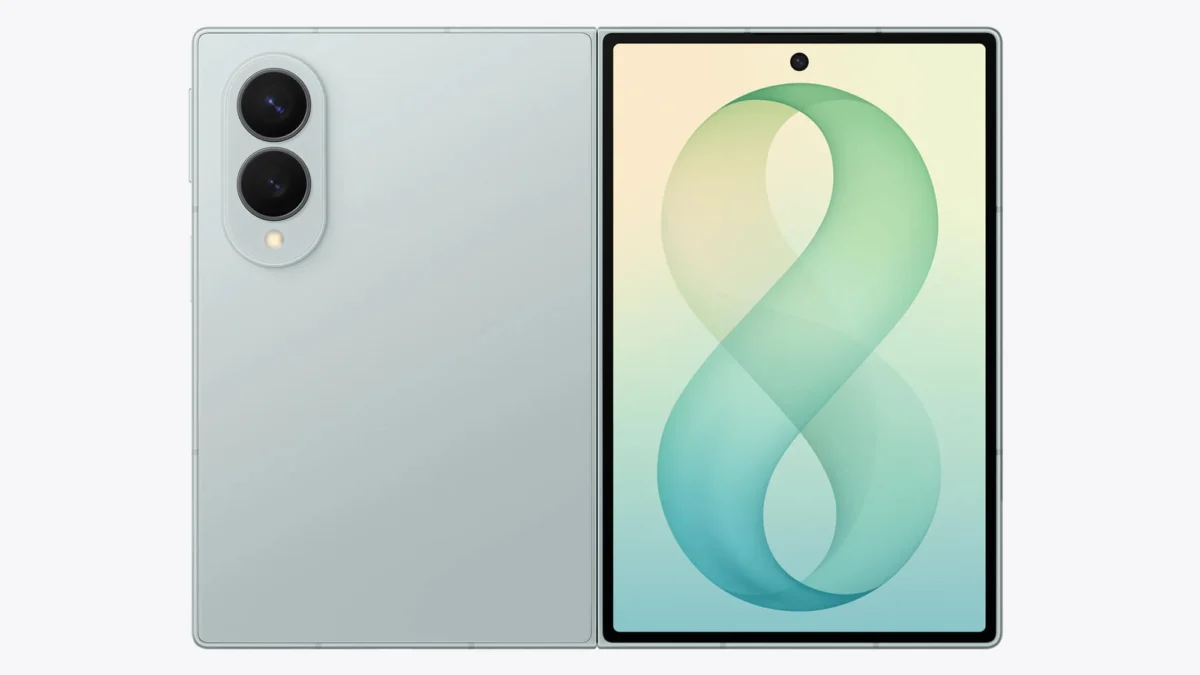
By David Nield
Published: September 11, 2026
Introduction and Main Facts
After years of relentless industry rumors, patent filings, and consumer speculation, Apple has finally entered the foldable device market with the official announcement of the iPhone Duo. Preorders are slated to kick off on Friday, October 16, marking a monumental shift for the Cupertino-based tech giant.
Initial online reactions to the iPhone Duo have been overwhelmingly positive. Tech enthusiasts and casual observers alike have praised Apple’s thoughtful adaptation of iOS for a dual-screen format, alongside neat aesthetic touches like the fluid, responsive transition wallpaper effect. However, the debut of the iPhone Duo inevitably raises a critical question for consumers and industry analysts alike: How does Apple’s very first foldable device stack up against established competitors that have been refining this form factor for years?

To evaluate the iPhone Duo’s market viability, it must be measured directly against current heavyweights in the space: the Google Pixel 11 Pro Fold and the Samsung Galaxy Z Fold 8 (setting aside the more massive Z Fold 8 Ultra). While Apple is late to the party, its entry fundamentally changes the dynamics of the ultra-premium smartphone segment.
Chronology and Industry Background: The Road to the iPhone Duo
The journey toward a foldable iPhone is a story years in the making. While competitors like Samsung and Google commercialized their folding devices as early as 2019 and 2023 respectively, Apple remained notably patient. Industry watchers long speculated that Apple was waiting for display technology, hinge durability, and software multitasking capabilities to mature to its strict quality standards.
- 2019–2022: Competitors flood the nascent foldable market with first- and second-generation devices. Early hurdles—such as prominent screen creases, fragile ultra-thin glass (UTG), and clunky software optimization—plague the form factor.
- 2023–2025: Samsung and Google refine their designs, introducing "passport-style" wider aspect ratios, improved multi-window support, and more robust water-resistance ratings. Foldable phones transition from a pure novelty to a viable niche for power users.
- September 11, 2026: Apple officially breaks its silence, unveiling the iPhone Duo. By entering the market at this juncture, Apple bypasses the early growing pains of foldable engineering, leveraging mature supply chains—notably utilizing display panels sourced from Samsung—to deliver a polished hardware package.
Supporting Data: Spec-by-Spec Comparison
Spec sheets can only tell part of the story, but they remain vital for understanding how the iPhone Duo positions itself against the Google Pixel 11 Pro Fold and the Samsung Galaxy Z Fold 8.

1. Weight and Dimensions
Google and Samsung have been in the foldable hardware game significantly longer than Apple, and their devices currently hold an advantage in terms of sheer thinness and lightness.
- Form Factor Philosophy: Apple and Samsung have both adopted a "passport" style approach for their devices—displays that are shorter and wider, creating a more tablet-like experience when unfolded.
- The Google Approach: Conversely, the Google Pixel 11 Pro Fold maintains the aspect ratio of a standard smartphone when closed, resulting in a main display that is noticeably squarer.
2. Displays
The choice of form factor heavily dictates daily usability, particularly when the phone is closed. Because users frequently rely on the outer display for quick tasks—such as checking notifications, replying to texts, or making contactless payments—the outer screen dimensions are crucial.
- It is worth noting through industry supply chain insights that both Apple and Google rely on Samsung to manufacture their premium folding OLED displays, ensuring a baseline level of top-tier visual fidelity across all three handsets.
3. Pricing, Storage, and RAM
Foldable phones are luxury items, and regardless of brand loyalty, purchasing one requires a heavy financial investment.

- Pricing: The iPhone Duo starts at a slightly higher price point than its Android rivals.
- Storage Tiers: Apple pushes the envelope by offering configurations scaling up to a massive 2TB of internal storage—a capacity neither Google nor Samsung currently matches in their standard foldables.
- RAM Allocation: The iPhone Duo features 12GB of RAM, compared to the Pixel 11 Pro Fold’s 16GB, and the Galaxy Z Fold 8’s variable 12GB or 16GB depending on the chosen storage tier. However, this is not an apples-to-apples (pun intended) comparison; Apple’s iOS handles memory management and resource allocation differently than Android, historically requiring less raw RAM to achieve high-performance fluidity.
4. Cameras
Foldables require a complex array of camera sensors, including selfie shooters for both the inner and outer displays.
- Notably, Apple has opted not to disclose specific megapixel and sensor hardware specs for the iPhone Duo’s inner selfie cameras.
- Among the three, Google’s foldable remains unique in its inclusion of a dedicated telephoto lens suite.
- Because modern photography relies heavily on computational software processing as much as raw hardware, real-world testing will determine whether the iPhone Duo can rival dedicated flagships like Apple’s own traditional iPhone 18 Pro.
Official Responses and Ecosystem Perspectives
Industry reactions from competing manufacturers have been muted publicly, but behind closed doors, the arrival of the iPhone Duo is viewed as a validation of the foldable market. For years, skeptics argued that foldables would remain a passing fad. Apple’s endorsement essentially cements foldables as a permanent, mainstream category of consumer electronics.
Furthermore, software developers have responded enthusiastically to Apple’s implementation of iOS on a dual-screen device. Unlike early Android foldables, which struggled with app scaling and awkward UI stretching, Apple has leaned heavily on its vast iPad operating system experience.

Early previews of the iPhone Duo running iOS showcase an elegant, thoughtful adaptation:
- Shifting interface buttons that adapt to how the phone is held.
- Split keyboards designed for thumb typing on larger canvases.
- A sophisticated dual-pane mode that transforms the user experience.
To many observers, the software fluidity on the iPhone Duo feels inherently more cohesive than traditional Android implementations, though both Google and Samsung have made massive strides with Android’s "Large Screen" UI initiatives in recent years.
Implications: What Are Foldable Phones Actually Like to Use?
While technical specifications and software demonstrations provide a rosy picture, the ultimate test for the iPhone Duo—and foldable phones as a whole—lies in day-to-day practical utility.

Having spent years utilizing foldable devices from both Samsung and Google, a recurring dilemma emerges: Beyond the novelty, why open the phone?
For the vast majority of daily tasks—such as quickly checking incoming messages, glancing at transit directions, snapping a quick photo, or tapping a terminal to pay for coffee—opening a bulky, heavy folding display offers no tangible workflow benefit. In fact, it often introduces friction. When closed, foldables are typically thicker and heavier than traditional candy-bar smartphones, yet they offer smaller outer screens relative to their overall body mass.
Would any consumer reasonably choose to unfold a tablet-sized device to snap a quick photo at a concert, make a casual phone call, or navigate an unfamiliar city street? For most, the answer is no.

The Real Competition
Apple has undoubtedly succeeded in crafting an exquisite piece of hardware with the iPhone Duo, paired with arguably the most refined foldable software interface on the market. However, even for consumers who can easily afford its premium price tag, the fundamental compromise remains: Is the added weight, thickness, and cost worth having a larger screen available only occasionally?
The iPhone Duo stacks up remarkably well against the Google Pixel 11 Pro Fold and the Samsung Galaxy Z Fold 8. Yet, its true competition isn’t coming from Android. The iPhone Duo’s biggest hurdle to mass adoption is the traditional, sleek, and lightweight iPhone sitting right alongside it in Apple’s own lineup.
 Asro
Asro  Reynand Wu
  Siti Muinah