
 By rifanmuazin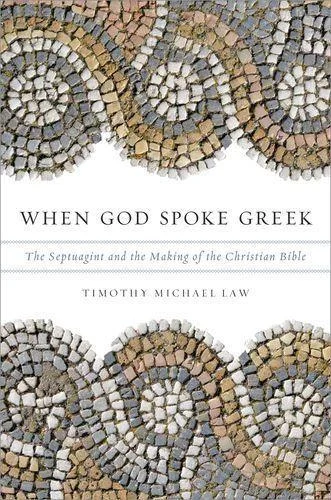
In the landscape of modern biblical studies, few texts are as misunderstood or as consequential as the Septuagint. For the average reader, the Bible is a monolith—a collection of books whose contents and order are largely taken for granted. Yet, as Timothy Michael Law argues in his seminal work, When God Spoke Greek: The Septuagint and the Making of the Christian Bible, the path to our current canon is far more complex and serendipitous than tradition suggests.
In a comprehensive review of Law’s scholarship, Professor Kevin Hart of the University of Virginia explores why the Septuagint (LXX)—the ancient Greek translation of the Hebrew Scriptures—remains a critical, yet often overlooked, protagonist in the history of Western theology.
The Mystery of the Canon: What is the Bible?
The fundamental question posed by Law is deceptively simple: What, in truth, is the Bible? While contemporary Christians typically perceive the Bible as a combination of the Greek New Testament and a Hebrew-derived Old Testament, this structure is a relatively late historical development.
For the early Church, the Bible was, in its entirety, a Greek document. The Old Testament was not merely a Hebrew text translated for convenience; it was a revelation of the Word of God as it had been captured in the Koine Greek language. The Septuagint served as the foundational scripture for early Christian communities, shaping their theology, their liturgy, and their understanding of the divine. Law’s work serves to remind the modern reader that the “original” version of the Old Testament was, for centuries, a Greek one.
Chronology: The Evolution of the Septuagint
The history of the Septuagint is a tale of cultural exchange, Hellenistic expansion, and the shifting tides of religious authority.
- 3rd Century BCE: The project begins in Alexandria, Egypt. According to the Letter of Aristeas, King Ptolemy II Philadelphus commissioned 72 Jewish scholars to translate the Torah into Greek for the Great Library of Alexandria. While modern scholars view this account as a narrative constructed by a Jewish author to bolster the prestige of their tradition within the Hellenistic world, the timeline of a mid-third-century origin remains widely accepted.
- 2nd Century BCE: The translation efforts expanded beyond the Torah to include historical, prophetic, and wisdom books. This was a "work in progress" for centuries, occurring in both Egypt and Palestine, with no single, finalized "canon" during this period.
- 3rd–4th Century CE: The era of the Church Fathers. Figures like Origen and later Jerome began comparing the Greek translations with emerging Hebrew manuscripts.
- 4th–5th Century CE: Jerome produces the Vulgate, a new Latin translation that leans heavily on Hebrew sources. Despite resistance from figures like St. Augustine—who feared that abandoning the established Greek tradition would fracture the Church—Jerome’s work eventually became the standard, fundamentally altering the Western relationship with the text.
- 1947: The discovery of the Dead Sea Scrolls at Qumran provides physical evidence of ancient Hebrew manuscripts that often align more closely with the Septuagint than with the later, standardized Hebrew texts.
The Hellenistic Context and the "Common" Tongue
To understand the emergence of the Septuagint, one must view it through the lens of the Hellenistic Age (330 BCE–30 BCE). Following the conquests of Alexander the Great, the Mediterranean and Near East were unified by the spread of Greek culture, architecture, and language. Koine (Common) Greek became the lingua franca of the era.
By the time Jesus of Nazareth was born, this Greek influence was pervasive in the Holy Land. While Aramaic remained the daily language of the common people, Greek was the language of administration, commerce, and, crucially, the intellectual life of the diaspora. When the writers of the New Testament—including Paul and the Gospel authors—quoted the Old Testament, they were overwhelmingly citing the Septuagint. Their theological framework was built upon the phrasing, interpretations, and linguistic nuances of the Greek translation, not the Hebrew original.
:quality(75)/https%3A%2F%2Fassets.lareviewofbooks.org%2Fuploads%2F201311when-god-spoke-greek-the-septuagint-and-the-making-of-the-christian-bible_6575_5001.jpg)
Supporting Data: The Impact of the Dead Sea Scrolls
For centuries, the reliability of the Septuagint was questioned because it often diverged from the Masoretic Text (the traditional Hebrew text preserved by Jewish scholars, finalized in its complete form around the 10th and 11th centuries). Scholars frequently viewed these divergences as "corruptions" or errors made by Greek translators.
However, the 1947 discovery of the Dead Sea Scrolls fundamentally shifted this paradigm. These manuscripts, predating the Masoretic Text by nearly a thousand years, contained readings that frequently matched the Septuagint. This provided incontrovertible proof that the Septuagint was not merely a sloppy translation, but an accurate rendering of an older, different Hebrew tradition. The "received" Hebrew Bible, as we know it today, was, in some instances, a later revision of those earlier texts. Consequently, the Septuagint acts as a vital bridge, allowing scholars to reconstruct earlier versions of the biblical narrative that were previously lost to history.
Theological Implications: Peace, Justice, and the Divine
Law highlights that the differences between the Hebrew and Greek texts are not merely linguistic; they carry profound theological weight. In Exodus 15:3, the Hebrew text describes the Lord as a "warrior," whereas the Septuagint translates the passage to suggest the Lord "shatters wars"—a shift from a violent deity to a peacemaker. Similarly, in Psalm 9:21, the Septuagint portrays God as the provider of a "lawgiver" to the nations, rather than an entity who instills fear.
These variations reveal that the translators of the Septuagint were active participants in the theological life of their community, shaping the text to communicate the nature of God to a Hellenistic audience. This challenges the notion that the "canon" was a fixed, unchanging entity. As Hart notes, when we read Paul’s letters, we are reading a theology deeply indebted to these specific Greek phrasings. If we accept the authority of the New Testament writers, we must grapple with the fact that they saw the Septuagint as a divine, inspired vessel for the truth.
Conclusion: A New Standard for Biblical Literacy
Despite the historical significance of the Septuagint, its study has largely remained confined to the ivory towers of seminaries and universities. The dominance of the Vulgate and later Reformation-era translations has long obscured the Greek roots of the Christian faith.
However, with the publication of the New English Translation of the Septuagint (NETS) in 2007, the barrier to entry for the lay reader has been significantly lowered. Timothy Michael Law’s When God Spoke Greek stands as the first accessible, scholarly introduction to this subject for the general public. It is a work that demands a reassessment of our Bibles, reminding us that the text we hold today is the product of a long, dynamic, and fascinating history of translation and interpretation. For any serious student of the Bible, the message is clear: to understand the foundation of our faith, one must be willing to listen to the voice that once spoke in Greek.
 Layla Zulfa
  Evan Lee Salim
  Sagoh
Sagoh 