
 By Asep Darmawan
For nearly two decades, the internet has been awash with a recurring question: Can you actually make a living by tapping away at a keyboard?
The digital landscape is a battlefield of conflicting narratives. On one side, aggressive marketers promise "six-figure passive income streams" overnight, often peddling dubious courses or proprietary software. On the other side, skeptics dismiss the entire industry as a house of cards, labeling full-time bloggers as either charlatans or outliers.
The reality of the professional blogging ecosystem lies in the nuanced space between these two extremes. While it is undeniably possible to build a sustainable, professional income through blogging, it is rarely the "get-rich-quick" scheme that social media influencers suggest. It is a business—one that requires the same level of grit, strategic planning, and long-term commitment as any traditional brick-and-mortar venture.
Main Facts: The Anatomy of a Profitable Blog
The foundational truth of the blogging industry is that monetization is not reserved for "make-money-online" gurus. In fact, some of the most profitable blogs in existence focus on niche, everyday topics ranging from woodworking and interior design to photography and health.
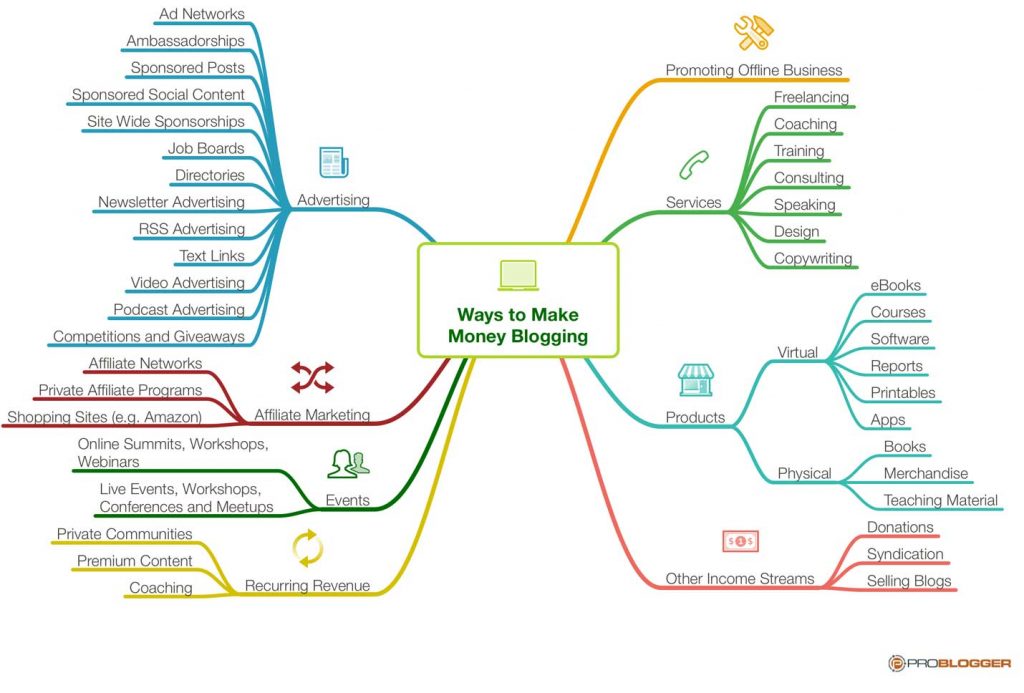
A successful blog is, at its core, a media company. To generate revenue, a blogger must bridge the gap between content creation and audience value. There is no single "formula" for success; rather, the most successful creators often utilize a hybrid approach. This might include:
- Affiliate Marketing: Earning commissions by recommending products relevant to the niche.
- Direct Advertising: Selling ad space or participating in programmatic ad networks.
- Digital Products: Creating ebooks, online courses, or templates that solve specific audience pain points.
- Membership Models: Offering exclusive content or community access via subscription.
- Services and Consulting: Leveraging the authority built through the blog to sell personal coaching, speaking, or professional services.
A Chronology of Growth: From Hobbyist to CEO
The path to profitability is almost never linear. For most professional bloggers, the trajectory follows a recognizable arc:
Phase 1: The Incubation Period (Years 0–1)
In the beginning, blogging is rarely lucrative. Most creators spend the first 12 months focusing on establishing a voice, building a library of content, and attempting to find an audience. During this time, the "income" is often non-existent or limited to a few cents per day via basic ad clicks.
Phase 2: The Traction Phase (Years 1–2)
As search engine visibility improves and a community begins to form, bloggers may start to see a "part-time" income. This phase is characterized by experimentation—testing which monetization methods resonate with the specific audience.

Phase 3: The Scaling Phase (Years 3–5)
This is the tipping point. Statistics consistently show that the top earners—those making a full-time living—have almost universally been active for at least three to four years. By this stage, the blogger has built the trust and authority necessary to sell higher-ticket items, secure lucrative brand partnerships, or launch their own flagship products.
Phase 4: The Enterprise Phase (Year 5+)
At this level, the blog is no longer a solo operation. Successful bloggers often transition into business owners, hiring editors, virtual assistants, and content strategists to maintain the momentum while they focus on high-level growth and product development.
Supporting Data: What the Numbers Reveal
A deep dive into industry surveys—such as those conducted by ProBlogger—provides a sobering look at the reality of blogging economics. When analyzing a sample of roughly 1,500 aspiring bloggers, the data reveals a stark pyramid structure:
- The Baseline: Approximately 10% of those attempting to monetize make zero dollars, while 28% earn less than 30 cents per day.
- The Struggle: Nearly 63% of aspiring bloggers earn less than $3.50 per day, highlighting the massive barrier to entry.
- The Elite Tier: Only about 4% of bloggers reach the "top bracket," earning over $10,000 per month.
Crucially, the data shows that this top 4% is not composed of "lucky" beginners. Over 85% of these high earners have been blogging consistently for four years or longer. This suggests that the primary variable in financial success is not a "secret formula," but rather longevity and consistency.
Professional Perspectives and Industry Reality
Industry veterans emphasize that the "passive income" myth is the most damaging narrative in the space. While a blog can eventually become a self-sustaining asset, it is rarely "passive" in the early to mid-stages.
Successful bloggers operate with a high degree of "action-bias." They are constantly monitoring their analytics, adjusting content strategies to meet changing search engine algorithms, and proactively building products that serve their community.
Furthermore, many newcomers fall into the trap of believing they must blog about "how to blog" to make money. The data proves otherwise. The most profitable blogs are often those that solve practical problems in specialized fields. For example, a photography blog or a home-wellness site often carries higher profit potential than a general "how to make money" site because the audience intent is more focused and the products are more tangible.
Implications for the Aspiring Blogger
If you are considering starting a blog with the intent of generating income, you must approach the endeavor with professional expectations.
1. Shift Your Mindset
Stop viewing your blog as a diary. View it as a media outlet. Every post you write should serve one of three purposes: educating your reader, entertaining them, or helping them solve a specific, nagging problem.
2. Focus on Value, Not Volume
In the age of AI-generated content, the internet is flooded with generic noise. To survive, your content must be original, authoritative, and helpful. You are not competing for attention; you are competing for trust. Trust is the only currency that converts into long-term revenue.
3. Build Your Infrastructure
Do not rely on a single income stream. Relying solely on ad revenue makes you vulnerable to algorithm changes. A sustainable business model includes a mix of owned assets (like an email list) and diversified revenue streams (products, services, and partnerships).
4. Embrace the "Marathon" Mentality
If you are looking for a get-rich-quick solution, blogging is not for you. However, if you are looking to build a digital business that allows you to share your expertise, build a community, and generate an income that scales over time, the barrier to entry is simply your willingness to work.
Conclusion: The Breakthrough Starts Today
The myth of the "overnight success" in blogging has done a disservice to thousands of creators who quit just before their momentum began to compound. The reality is that the digital economy is still in its infancy, and there is more room than ever for authentic, high-quality voices to carve out a profitable space.
Success in blogging is not a result of a secret, hidden algorithm or a magical product launch. It is the result of years of persistence, a commitment to understanding your audience, and the daily discipline of showing up even when the financial rewards are not yet apparent.
If you have been waiting for a sign to start, consider this it. The path is difficult, the competition is real, and the work is significant—but for those who are willing to treat their blog as a business rather than a hobby, the potential for a full-time, independent career is not just a dream. It is a verifiable, achievable goal. Start today, focus on building value, and remember that your "breakthrough" is not an event—it is the cumulative effect of thousands of small, professional actions taken over time.
 Siti Muinah
  Azzam Bilal Chamdy
  Jia Lissa