
 By Raul Delapena Setiawan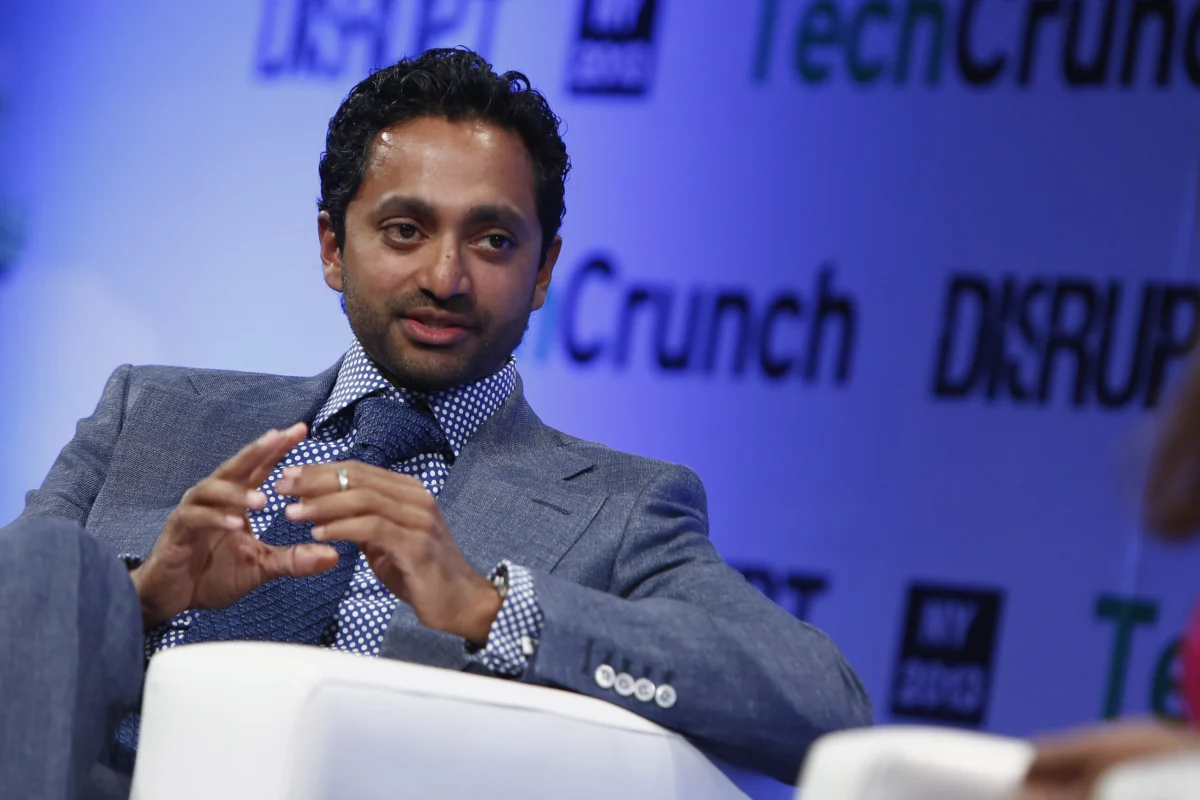
By TechBeat Editorial Desk
June 29, 2026
In a move that signals a significant pivot for one of Silicon Valley’s most prominent venture capitalists, Chamath Palihapitiya has officially stepped out of the boardroom and back into the C-suite. On Monday, the former Facebook executive and founder of Social Capital announced that his AI coding startup, 8090 Labs, has successfully closed a $135 million Series A funding round. The investment, led by Salesforce Ventures, marks a massive vote of confidence in Palihapitiya’s vision for the future of enterprise software development.
The round drew an elite cohort of backers, including Jeffrey Katzenberg’s WndrCo, David Sacks’ Craft Ventures, and fellow "All-In" podcast hosts David Friedberg and Jason Calacanis. High-profile angel investors, including Palo Alto Networks CEO Nikesh Arora and Quora CEO Adam D’Angelo, also participated, underscoring the broad industry interest in the startup’s mission.
The Genesis of 8090 Labs
Founded in January 2024, 8090 Labs was initially conceived as a specialized solution to a growing problem in the software industry: the "vibe-coding" phenomenon. While generative AI tools have made it easier than ever to prototype applications, they have often struggled to meet the rigorous standards required for production-grade enterprise software.
8090 Labs aims to bridge this gap with its flagship product, "Software Factory." Unlike consumer-grade AI coding assistants, Software Factory is engineered specifically for corporate engineering teams. It provides the necessary "guardrails" that large enterprises require, including robust audit trails, compliance frameworks, and security protocols, allowing teams to deploy AI-generated code with the confidence that it is production-ready.
Chronology: From Venture Capital to Operator
The transition of 8090 Labs from a stealth-mode project to a major industry player has been rapid and calculated.
- January 2024: Palihapitiya officially incorporates 8090 Labs. The initial focus is on researching the limitations of LLMs (Large Language Models) in complex, multi-layered enterprise environments.
- Late 2024–Early 2025: The company begins beta testing the Software Factory platform with a select group of pilot corporate partners. The emphasis is on internal consistency and the reduction of "hallucinations" in code generation.
- Q2 2026: As the product gains traction, the company begins intensive negotiations for a Series A round, seeking a partner that understands the intersection of enterprise software and scalable AI infrastructure.
- June 29, 2026: The official announcement of the $135 million funding round. Concurrent with the announcement, Palihapitiya reveals his decision to assume the role of CEO, shifting from a passive investor role to a full-time operating capacity.
Supporting Data: Why Enterprise AI is the New Frontier
The massive capital injection into 8090 Labs reflects a broader trend in the venture ecosystem. According to recent market analysis, while AI "hype" dominated the 2023–2024 period, 2026 has become the year of "AI implementation."
Companies are no longer content with chat-based AI interfaces; they are demanding agents that can autonomously manage entire portions of their software development lifecycle (SDLC). The $135 million valuation is indicative of the "enterprise premium"—the willingness of institutional investors to pay a high price for startups that solve the "last mile" problem of AI: the transition from a prototype to a secure, audited production environment.
For 8090 Labs, the competitive advantage lies in the integration of security and auditability into the core code-generation engine. By allowing enterprises to maintain full visibility into the AI’s decision-making process, Palihapitiya is targeting the C-suite’s primary concern: risk management.
Official Responses and Strategic Rationale
In a statement posted to X (formerly Twitter) following the announcement, Palihapitiya drew a direct parallel between the current AI boom and his formative years at Facebook.

"Since I left Facebook, I was waiting for a moment like this to return to a full-time operating role," Palihapitiya wrote. "The current AI rush feels like the early days of social media, but the stakes are fundamentally different. I am convinced that what we are building now is even more important than the connectivity we built in the early 2000s, so there was no decision to make except to be all in."
The support from his "besties"—Friedberg and Calacanis—adds a layer of cultural weight to the announcement. By having his closest business confidants invest alongside institutional giants like Salesforce Ventures, Palihapitiya is signaling that 8090 Labs is not just a side project, but his primary professional focus for the foreseeable future.
"Chamath has an uncanny ability to identify tectonic shifts in technology," said one investor familiar with the round. "His move to lead 8090 Labs as CEO is the strongest possible signal that the ‘AI agent’ era of software engineering is about to hit an inflection point."
Implications: The Future of Corporate Programming
The entry of 8090 Labs into the market has immediate implications for the software development industry.
1. The Death of "Vibe-Coding"
The industry term "vibe-coding"—writing code based on a prompt without understanding the underlying architectural implications—is increasingly being viewed as a liability. By providing a platform that enforces corporate-grade standards, 8090 Labs is positioning itself as the "adult in the room" for AI-augmented development.
2. The Rise of the "Software Factory"
We are moving toward a model where the human developer becomes an architect, and the "factory" becomes the builder. This shifts the focus from writing boilerplate code to designing complex, secure systems. If successful, 8090 Labs could fundamentally change the economics of software development, potentially allowing companies to build enterprise-scale applications with significantly smaller teams.
3. A Potential Shift in VC Dynamics
Palihapitiya’s transition back to an operator may influence other high-profile venture capitalists to reconsider their own roles. As the AI market matures, the demand for hands-on expertise from founders who have "been there, done that" is rising. The "operator-founder" archetype is once again becoming the gold standard in Silicon Valley.
Looking Ahead
As 8090 Labs begins to deploy its $135 million war chest, the focus will likely turn to talent acquisition and scaling the Software Factory platform to support a wider array of programming languages and enterprise cloud environments.
For Palihapitiya, the challenge will be to balance his public-facing role on the "All-In" podcast with the grueling demands of scaling a company during one of the most competitive periods in technology history. However, for an executive who helped scale Facebook to a global phenomenon, the task may be the perfect challenge to define his next chapter.
The industry will be watching closely. If 8090 Labs succeeds in standardizing AI-driven enterprise coding, it won’t just be a success for Palihapitiya—it will be a fundamental upgrade to the way the world builds software. As the company looks toward its next phase of growth, one thing remains clear: the "all-in" bet has been placed, and the stakes for the future of enterprise AI have never been higher.
 Sagoh
Sagoh  Iffa Jayyana
  Lina Hope