
 By Siti Muinah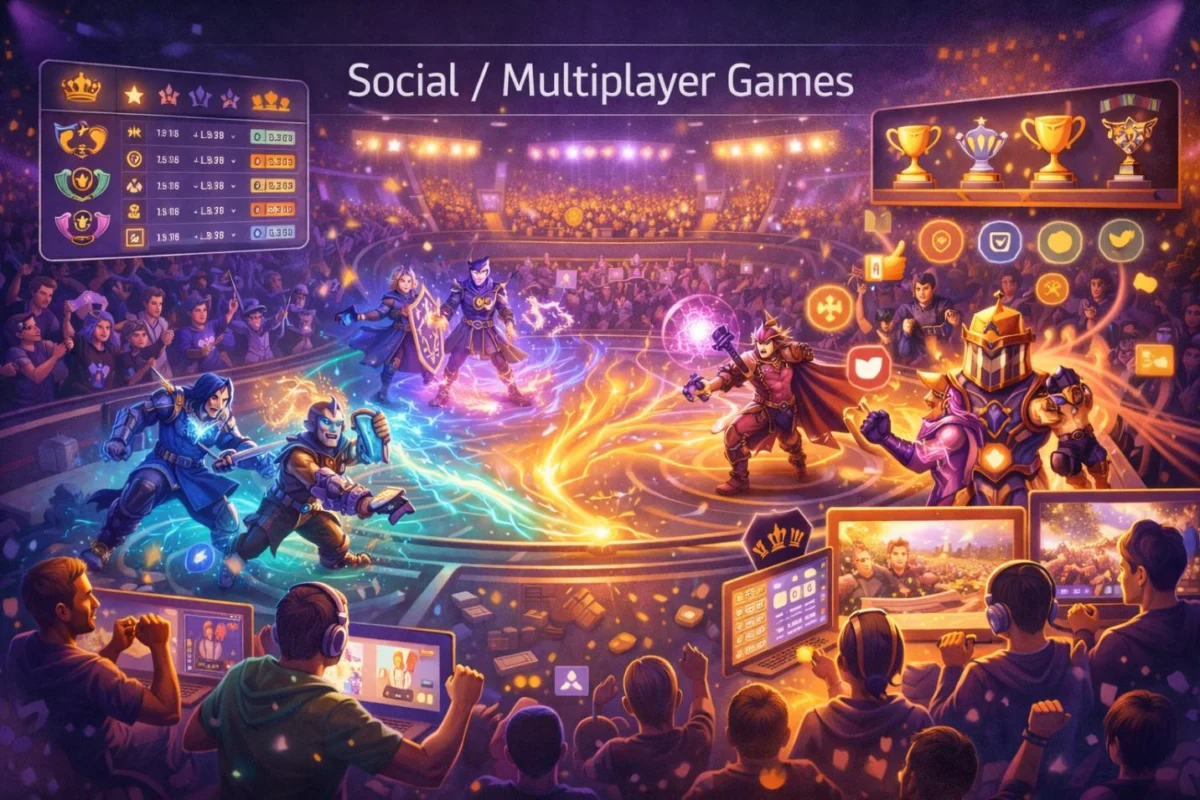
In the modern digital landscape, the term "gamification" has become a boardroom buzzword, often treated as a magical additive—a dash of points here, a leaderboard there, and a sprinkle of digital badges to boost retention. However, a growing consensus among behavioral designers and product architects suggests that this "sprinkle-on" approach is fundamentally flawed.
The core issue? Product teams treat gamification as a monolithic psychology, failing to recognize that "game" is not a genre, but a medium. To label a progress bar as "gamification" is akin to calling a synthesizer, a violin, and a distorted electric guitar simply "music." While they all produce sound, they operate on entirely different emotional frequencies and attract vastly different audiences.
The Missing Framework: Gamification 2.0
The transition to "Gamification 2.0" requires a paradigm shift: moving away from arbitrary reward systems toward intentional genre alignment. Designers must stop grafting random mechanics onto products and start asking which psychological "hook" naturally aligns with their core value proposition.
By analyzing the successful psychological frameworks of traditional gaming genres, we can derive a roadmap for more sophisticated, human-centric design.
The Six Pillars of Genre-Driven Design
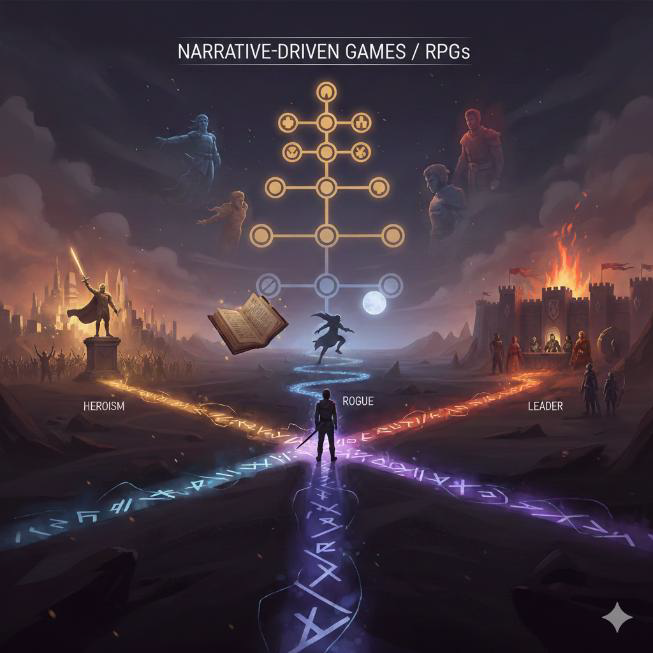
1. Narrative-Driven Games: The Power of Purpose
Games like The Last of Us or Mass Effect do not rely on flashing lights; they rely on emotional weight. Players are not merely performing tasks; they are protagonists in a journey.
- The Implication: Product designers often treat the user journey as a feature checklist. Instead, shift the framing to a narrative arc.
- Practical Application: Consider a language-learning app like Duolingo. Instead of "Level 5," the milestone could be "You can now navigate a local market in Madrid." By reframing progress as an expansion of identity and capability, developers move from tracking arbitrary numbers to fostering genuine personal growth.
2. Action/Twitch-Based Games: The Virtue of "Juice"
Titles like Street Fighter or DOOM thrive on sensory feedback. The core loop—input, immediate response, and visual/auditory confirmation—is what creates the "flow state."
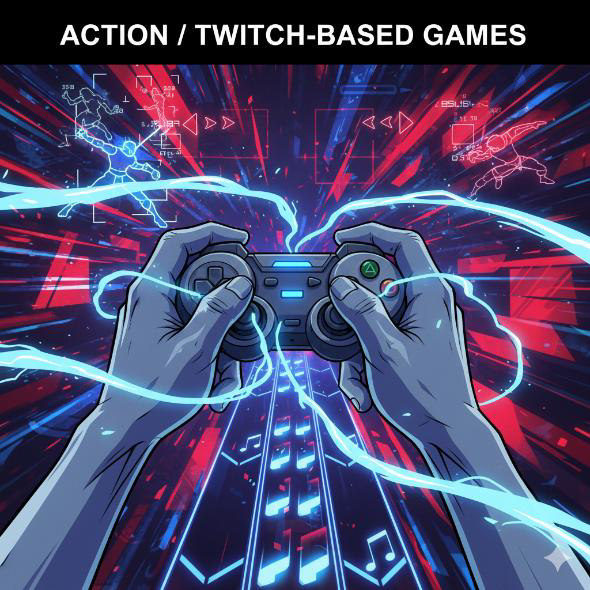
- The Implication: Most productivity apps fail because they treat interaction as a chore. If logging a workout feels like filing taxes, no amount of badges will save the user experience.
- Practical Application: Introduce "juice"—responsive animations, haptic feedback, and satisfying micro-interactions. If the action itself feels pleasurable, the reward becomes secondary.
3. Strategy and 4X Games: Mastering Complexity
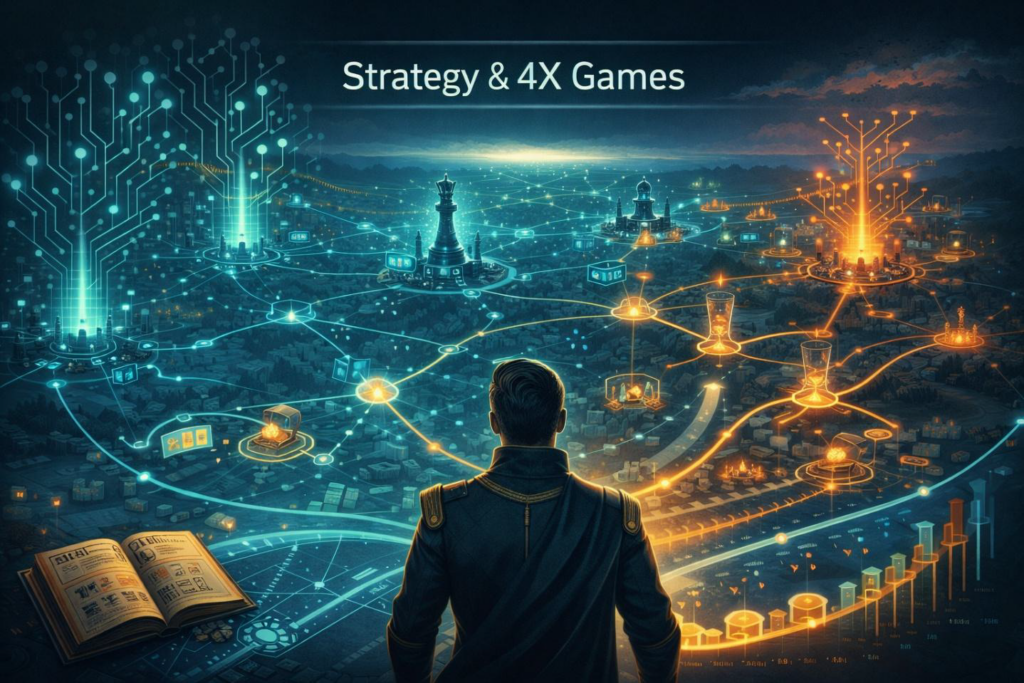
Civilization and Whiteout Survival succeed because they offer the player agency over complex, long-term systems. These games appeal to "optimizers" who want to see their choices compound over weeks or months.
- The Implication: Stop measuring engagement by Daily Active Users (DAU) alone. Strategy games demonstrate that users will engage weekly for years if they are allowed to make meaningful, long-term decisions.
- Practical Application: Financial planning tools should adopt "tech tree" models. Rather than showing a stagnant balance, show how current small savings compound into various "future states," allowing users to treat their finances like a strategic asset.
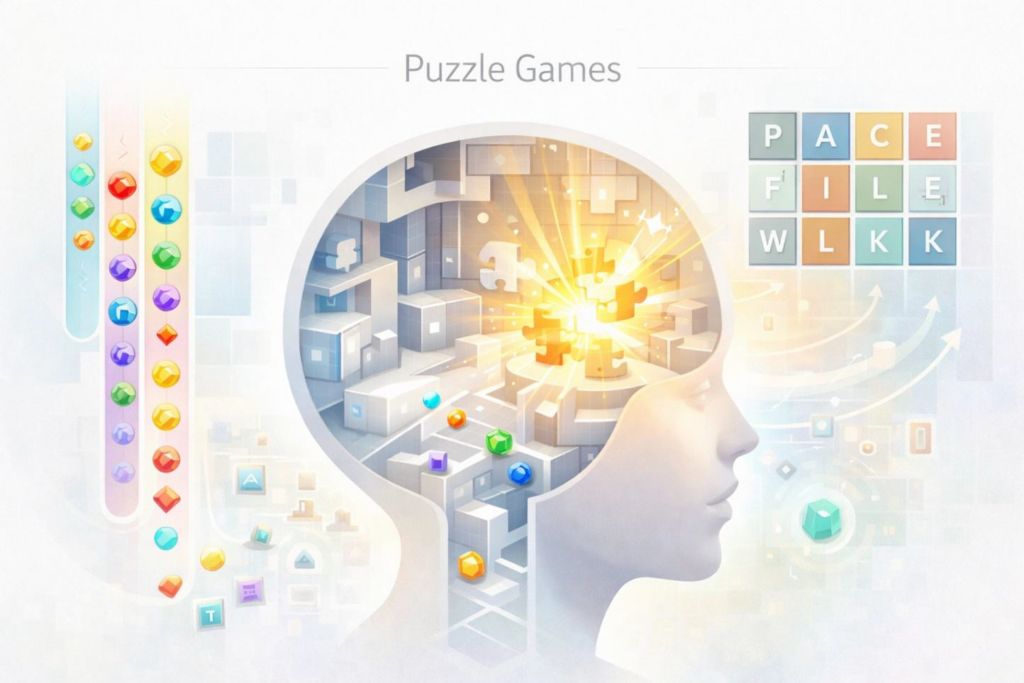
4. Puzzle Games: The "Aha!" Moment
Games like Portal or Royal Match rely on the psychological satisfaction of solving a problem. They do not force-feed information; they allow the user to deduce patterns.
- The Implication: Onboarding should not be a manual. It should be a series of challenges that teach the user through play.
- Practical Application: When designing for learning or professional tools, present concepts as puzzles to solve. The "aha!" moment of deduction creates deeper memory retention than explicit instruction ever could.
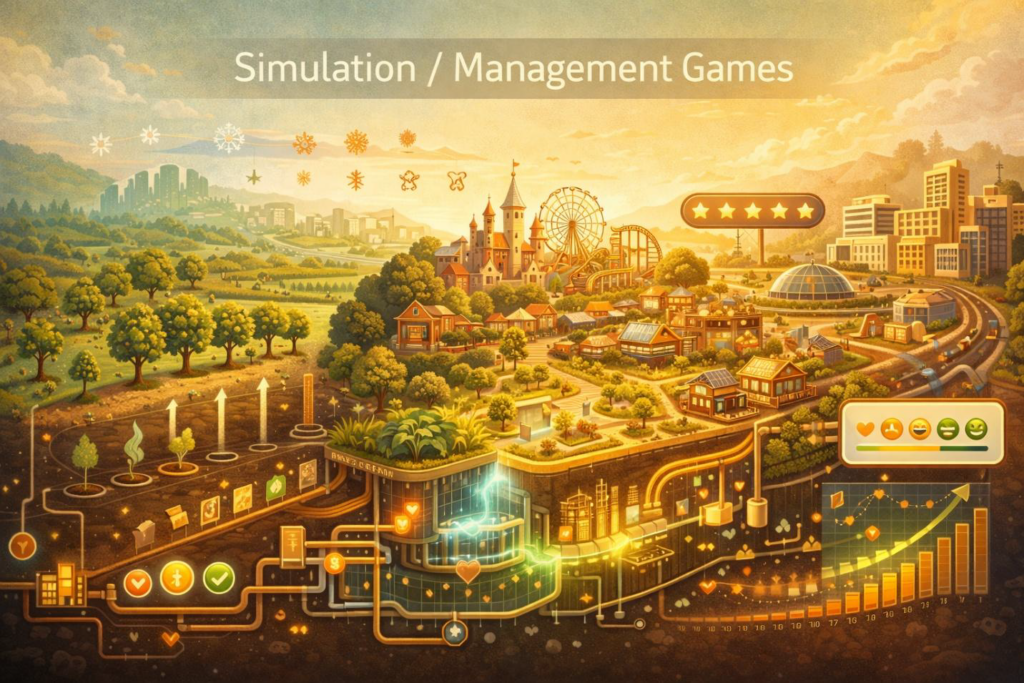
5. Simulation/Management Games: The Architect’s Instinct
The Sims and Cities: Skylines provide the ultimate hook: the ability to build and grow something that reflects the player’s personality.
- The Implication: Shift the product from a "consumption experience" to a "construction experience." Users want to feel like they are building a project, a habit, or a career.
- Practical Application: CRM tools should visualize relationship-building as a garden. Some connections need daily watering; others thrive on weekly touchpoints. This visual metaphor creates an emotional investment in the system.
6. Sandbox/Open-Ended Games: The Ultimate Agency
In Minecraft or Breath of the Wild, the designer’s primary goal is to provide tools, not a path.
- The Implication: Rigid, linear onboarding is a retention killer for creative users. If your app is meant to be a workspace, provide building blocks, not just templates.
- Practical Application: Note-taking apps like Notion succeed because they are essentially digital sandboxes. By giving users the agency to define their own workflow, they foster a level of "power user" loyalty that prescriptive software cannot match.
Supporting Data and Industry Implications
The revenue success of mobile titles like Roblox ($3B+ annually) and Whiteout Survival highlights a critical trend: players are willing to spend money not to "skip" the game, but to accelerate their own agency and strategic influence within a community.
Industry analysis shows that:
- Retention: Platforms that enable user-generated content (UGC) or social interdependence show 40% higher long-term retention than those relying on traditional extrinsic reward cycles.
- Monetization: Players gravitate toward items that express identity or expand creative capabilities (the "Sims" model) rather than items that simply provide temporary performance boosts.
Official Industry Perspective: Moving Beyond the "Gamification" Label
Experts in the field are beginning to distance themselves from the term "gamification" entirely, preferring "Behavioral Design." The consensus is that the term has been co-opted by marketers to imply "tricking users into doing things they don’t want to do."
True design, however, is about aligning the product’s core functionality with the user’s intrinsic desire for mastery, autonomy, and relatedness. As one lead designer noted, "If you have to force users to engage with your product using points and badges, your product is likely failing at its primary job: being useful or enjoyable."
The Path Forward: Implications for Product Teams
For product managers and developers looking to implement these strategies, the roadmap is clear:
- Audit your current loop: Are you rewarding activity or progress? If you are rewarding activity (logins), you are building a Skinner box. If you are rewarding progress (milestones), you are building a game.
- Define your archetype: Is your user an Explorer (Sandbox), a Competitor (Action), or an Architect (Simulation)? Design your UI and UX to cater to that specific psychological profile.
- Prioritize Social Interdependence: Move away from isolated leaderboards, which often demoralize the 99% of users who aren’t at the top. Instead, build systems where users need each other—cooperative missions, shared goals, and collaborative project spaces.
- Embrace the "Juice": Never underestimate the power of a smooth animation or a clear, immediate confirmation sound. These sensory details signal to the brain that the effort was worth it.
Conclusion
The era of "one-size-fits-all" gamification is coming to an end. The future belongs to designers who treat their users with the respect of a game developer—understanding that players don’t want to be "gamified." They want to be challenged, they want to create, and they want to feel a sense of agency within a well-constructed world.
By choosing a genre-first framework, companies can move beyond the superficial metrics of the last decade and build products that don’t just occupy time, but create lasting, meaningful value for their users. The next generation of engagement isn’t about badges; it’s about the depth of the experience.
 Ammar Sabilarrohman
  Neng Nana
  Sagoh
Sagoh 