
 By Nana Wu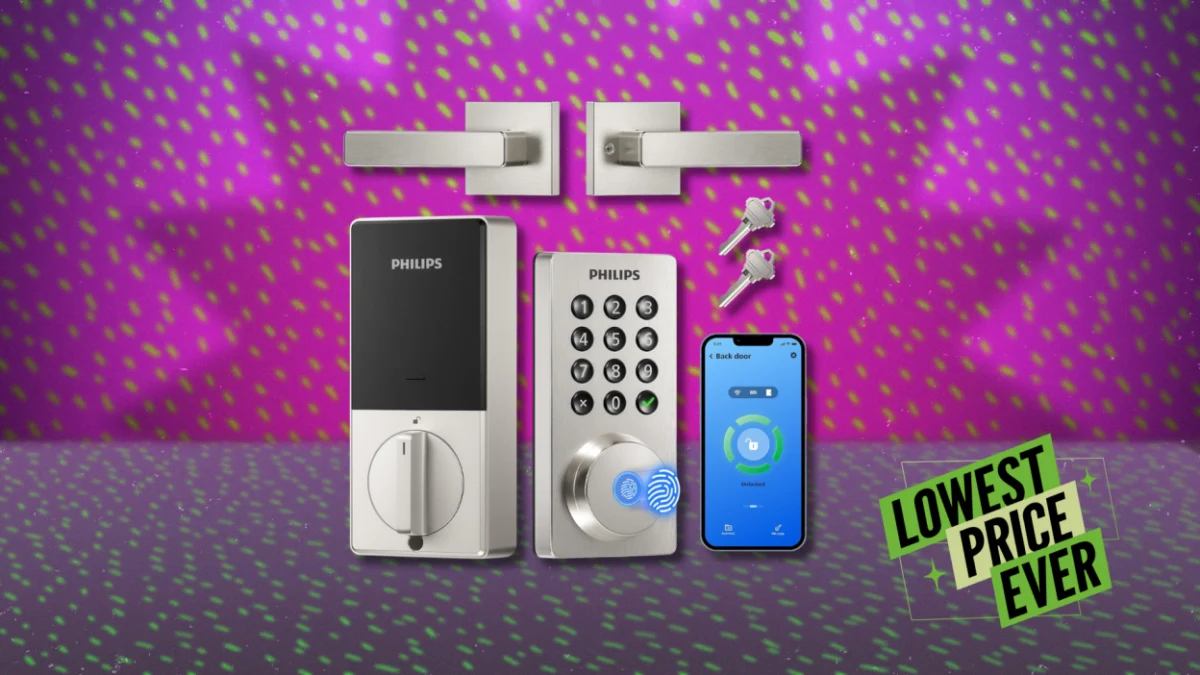
By Pradershika Sharma
July 8, 2026
In an era where home automation is shifting from a luxury to a standard component of modern living, the security of our entryways remains a primary focus for homeowners. Whether you are looking to eliminate the inconvenience of misplaced keys, provide temporary access to service workers, or simply monitor your front door from the office, smart locks have become the quintessential upgrade.
Currently, a standout deal has emerged in the smart home market: the Philips WiFi Keypad Door Lock with Handle is now available for just $109.98, down significantly from its standard retail price of $179.99. This discount represents the lowest price point ever recorded for this specific model, making it an opportune moment for those looking to modernize their home security without the premium cost often associated with high-end, all-in-one hardware bundles.
The Core Value Proposition: A Complete Security Overhaul
What sets the Philips WiFi Keypad Door Lock apart from its competitors in this price bracket is its comprehensive nature. Many smart locks currently on the market are designed solely as "deadbolt replacements," requiring the user to retain their existing door hardware or purchase a matching handle set separately, which can lead to aesthetic mismatches and additional installation headaches.
The Philips package, however, includes the smart deadbolt, the integrated keypad, a high-sensitivity fingerprint reader, and a matching handle set. By providing a unified aesthetic, this bundle functions as a complete front-door upgrade. For approximately $110, you are not just getting a gadget; you are replacing the entire entry mechanism with a cohesive, smart-enabled system.
A Chronology of Modern Access
To understand why this specific deal is significant, it helps to look at the evolution of residential access.
- The Traditional Era: For decades, the mechanical key remained the gold standard. While reliable, it offered no audit trail, no remote access, and no security against lost keys.
- The Keypad Revolution (Early 2010s): The introduction of simple PIN-based keypads removed the need for keys but often required complex wiring or lacked integration with broader smart home ecosystems.
- The Connected Era (2020-Present): Today’s standard is the "always-connected" lock. The Philips unit fits squarely into this category, utilizing 2.4GHz WiFi to bridge the gap between the physical door and the digital cloud.
The transition to this system involves a straightforward, albeit patient, installation process. Designed for standard door thicknesses between 1⅜ and 1¾ inches, the unit can be installed using nothing more than a standard screwdriver. However, users should note that as a battery-operated device (requiring eight AA batteries, which are not included), the system relies on efficient power management. The lock’s ability to "sleep" when not in use while maintaining a constant connection to the WiFi network is a testament to current advancements in low-power wireless protocols.
Supporting Data and Technical Capabilities
The technical specifications of the Philips WiFi Keypad Lock address the most common "pain points" identified by smart home enthusiasts.
Direct Connectivity
One of the most persistent frustrations with early-generation smart locks was the requirement for a proprietary "bridge" or "hub." These devices were often bulky, difficult to troubleshoot, and created yet another point of failure in a home network. The Philips lock bypasses this entirely by connecting directly to your 2.4GHz WiFi network. This allows for real-time alerts and remote management via the Philips Home Access app.

Authentication Versatility
The lock offers four primary methods of entry:
- Biometric Fingerprint Access: Designed for speed, this allows for near-instant entry without fumbling for codes or keys.
- PIN Keypad: A secure backup for guests or family members who prefer a physical code.
- App-Based Management: Utilizing the Philips Home Access app, users can unlock the door remotely, check status, or review access logs.
- Physical Key: Ensuring peace of mind for those concerned about total power failure or network outages.
Ecosystem Integration
For the connected home, the ability to query the status of a door via voice command is invaluable. The Philips lock integrates seamlessly with both Amazon Alexa and Google Assistant. This allows for routines—such as a "Goodnight" scene that ensures all smart locks are engaged—and voice-based verification to ensure the door is locked before you leave for work or head to bed.
Implications for Homeowners and Security
The implications of installing a smart lock like this extend beyond mere convenience; they touch upon the fundamental management of domestic space.
Granular Access Control
The most profound shift is the ability to move away from "master keys." Through the app, homeowners can issue time-sensitive or one-time codes. If you have a cleaner arriving on Tuesday mornings, a dog walker in the afternoon, or a guest staying for the weekend, you can provide access that expires automatically. This audit trail is a significant security upgrade over traditional keys, which can be duplicated without the homeowner’s knowledge.
Peace of Mind
The "did I lock the front door?" anxiety is a common psychological burden. With the Philips app, the answer is always a tap away. Furthermore, the automatic relocking feature—which can be set to trigger between 0 and 180 seconds after the door is closed—ensures that the home remains secure even if you are distracted while carrying in groceries or dealing with children.
Considerations Before You Buy
While the current $109.98 price tag is compelling, potential buyers should consider the logistical requirements.
- Battery Management: The device requires eight AA batteries. While the system is designed to provide warnings when power is low, it is a recurring maintenance task that is absent in traditional mechanical locks.
- Installation Patience: While the hardware is user-friendly, replacing both a deadbolt and a handle set is a more intensive project than simply swapping a deadbolt. Homeowners should set aside at least an hour to ensure proper alignment, as an improperly aligned smart lock can strain the motor and reduce battery life.
- WiFi Reliability: Because the lock relies on 2.4GHz WiFi, its performance is contingent on the strength of the signal at your front door. If your router is tucked away in the back of the house, you may need a WiFi extender or a mesh node nearby to ensure the lock stays connected.
Conclusion: A Worthwhile Investment?
The current market for smart locks is crowded, but few offer this specific combination of hardware completeness, brand reliability, and price. By moving away from the "deadbolt-only" model, Philips has created a product that feels like a permanent fixture rather than a bolted-on accessory.
For those looking to secure their home, simplify access for friends and family, and finally embrace the convenience of a keyless lifestyle, the Philips WiFi Keypad Door Lock is currently the most logical entry point. At nearly 40% off the standard price, it offers a high return on investment in both security and daily convenience.
Disclaimer: Deal pricing and availability are subject to change after the time of publication. Lifehacker may earn a commission from links on this page. All product selections are curated by our commerce team to ensure quality and relevance.
 Layla Zulfa
  Asro
Asro  Reynand Wu