
 By Basiran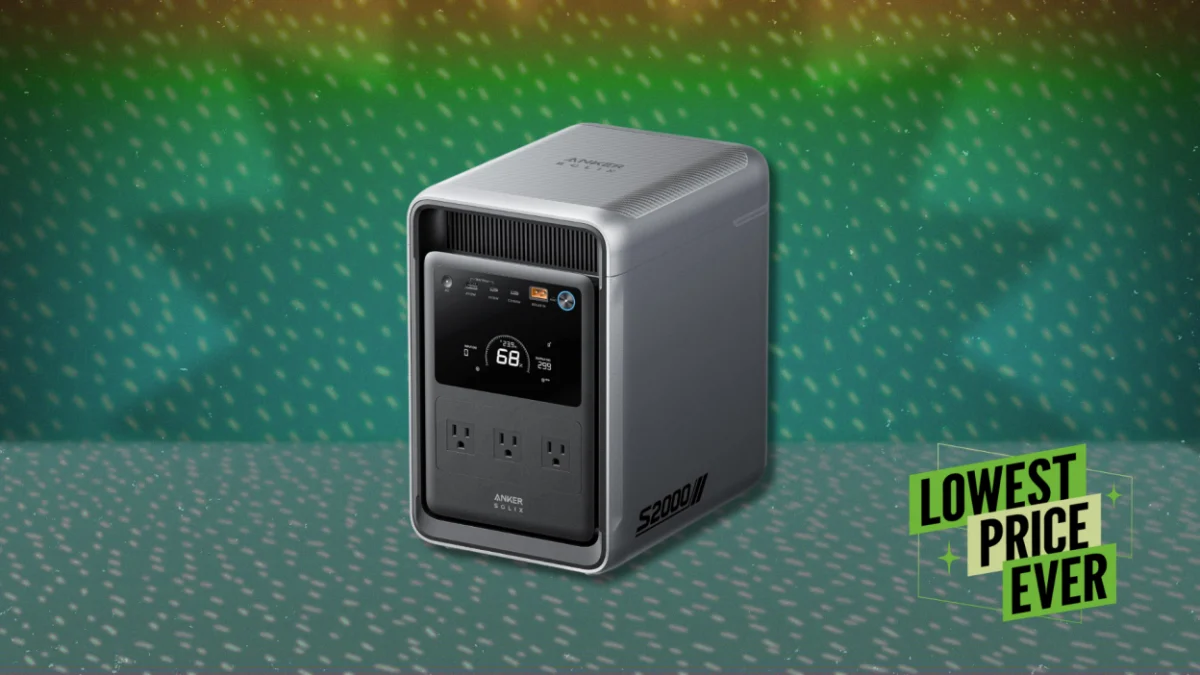
By Pradershika Sharma
July 9, 2026
In an era where grid reliability is increasingly scrutinized and the transition toward sustainable, mobile power solutions is accelerating, consumers are constantly seeking hardware that balances performance with affordability. As of July 9, 2026, a significant market shift has occurred: the Anker Solix S2000 portable power station, a cornerstone of Anker’s energy storage lineup, has seen its price slashed by 50% on Amazon.
Currently listed at $599.99—down from its original $1,199 manufacturer’s suggested retail price (MSRP)—this offer represents the lowest recorded price for the unit since its market debut. For homeowners, remote workers, and outdoor enthusiasts, this reduction in price marks a critical entry point into the ecosystem of high-capacity lithium-ion backup systems.
The Core Specifications and Value Proposition
The Anker Solix S2000 is engineered to serve as a reliable bridge during unexpected power outages. At its heart lies a 2kWh (kilowatt-hour) battery capacity, designed to support essential home appliances and sensitive electronics. In practical terms, this capacity allows for the operation of critical loads such as refrigerators, Wi-Fi routers, LED lighting, fans, laptops, and essential medical equipment like CPAP machines for extended durations.
Weighing in at approximately 35.7 pounds, the S2000 strikes a deliberate balance between power density and portability. While it is not intended for the casual hiker looking to carry power over long distances, its weight profile is significantly more manageable than industrial-grade power stations, making it an ideal candidate for closet storage or emergency household deployment.
Chronology of Market Fluctuations
The path to this current $599.99 price point has been gradual. Following the initial product launch, the Solix S2000 maintained a premium price tier, reflecting its build quality and proprietary battery management software.
- Launch Phase: The unit entered the market at the $1,199 price point, positioning itself as a mid-to-high-tier solution for domestic power backup.
- Early Adoption: Throughout the first year, minor discounts were observed during major retail holidays, typically ranging from 10% to 15%.
- Market Saturation & Innovation: As newer iterations of the Solix series have reached the market, Anker has strategically adjusted the pricing of the S2000 to maintain competitive relevance.
- The July 2026 Milestone: The current 50% discount represents a strategic clearance of inventory to make room for newer, higher-density energy storage solutions, providing a rare "best-in-class" value for consumers currently in the market.
Supporting Data: Efficiency and Output Analysis
To understand the utility of the S2000, one must look at the technical throughput. The unit provides a continuous output of 1,500W. This threshold is sufficient for the vast majority of household "must-haves."
According to manufacturer data, the unit can sustain a standard refrigerator for up to 35 hours. However, users should approach these figures with a degree of critical nuance: actual runtimes are heavily dependent on variables such as ambient room temperature, the efficiency rating of the refrigerator, the frequency with which the door is opened, and the starting current of the appliance’s compressor.
Practical Design Considerations
One of the most praised features of the S2000 is its thoughtful outlet layout. With eight total power outlets distributed between the front and rear of the chassis, the design team at Anker has addressed a common user complaint in the power station market: clutter.

- Rear Outlets: Designed for "always-on" appliances, these allow for a clean cable management profile.
- Front Outlets: Positioned for rapid access, these are best suited for devices that are plugged in and disconnected frequently, such as smartphones, tablets, or small kitchen appliances.
Management and Integration: The Digital Ecosystem
Modern power stations are no longer "dumb" batteries; they are smart, interconnected devices. The S2000 utilizes an integrated management system accessible via a companion mobile application. By utilizing either Wi-Fi or Bluetooth connectivity, users can:
- Monitor real-time battery health and state-of-charge (SoC).
- Remotely toggle individual power outlets on or off.
- Adjust power settings to prioritize either longevity or performance.
Charging Modalities
Versatility is a hallmark of the Anker ecosystem. The S2000 is designed to ingest energy from a variety of sources:
- Grid Charging: Standard AC wall outlets for rapid recovery.
- Solar Integration: The system supports up to 400W of solar input, allowing for off-grid operations in emergency scenarios.
- Hybrid Charging: The ability to combine AC and solar inputs simultaneously for reduced recharge times.
- Mobile Charging: Support for vehicle-based charging, ensuring that power can be replenished while on the move.
Limitations and Critical Observations
Despite its strong performance metrics, the S2000 is not a universal panacea for all power needs. The unit lacks a dedicated 12V DC car socket—a notable omission for van-life enthusiasts or those relying on specialized automotive accessories that draw directly from DC sources.
Furthermore, users should temper their expectations regarding high-wattage demand. While 1,500W is robust, it is not designed to handle the simultaneous operation of multiple high-draw appliances, such as microwaves and hair dryers. Those requiring heavy-duty power for construction tools or full-home heating systems would likely require a larger system or a series-linked configuration.
Implications for the Consumer
The current pricing strategy adopted by Anker has broad implications for the consumer market. By bringing a 2kWh system down to the $600 range, Anker is effectively lowering the barrier to entry for disaster preparedness.
Why This Matters Now
In 2026, the intersection of extreme weather events and grid instability has pushed home energy storage from a niche hobby into a mainstream necessity. A device that can keep a CPAP machine or a refrigerator running for over a day is no longer just a luxury; it is a critical safety tool. The $599.99 price point makes this level of security accessible to a demographic that may have previously been priced out of the market.
Final Recommendations for Potential Buyers
For those considering the purchase, the following steps are advised:
- Assess Your Load: Calculate the total wattage of the appliances you would actually need to run during an outage. If your needs exceed 1,500W, look for a larger unit.
- Verify Compatibility: Ensure your essential appliances have standard plug types that fit the S2000’s layout.
- Check Local Regulations: If you plan on using solar panels, ensure you have the appropriate mounting space and weather exposure.
While the Anker Solix S2000 may be reaching the later stages of its product lifecycle, its reliability and current price-to-performance ratio make it one of the most compelling tech deals available this summer. As always, consumers should remain aware that deal pricing and availability are subject to change. For those who have been waiting for a significant discount to invest in household energy security, the window for this specific model appears to be wide open.
Note: As an affiliate, Lifehacker may earn a commission from links on this page. Our team independently selects deals based on technical merit and consumer value.
 Layla Zulfa
  Asro
Asro  Reynand Wu