
 By Layla Zulfa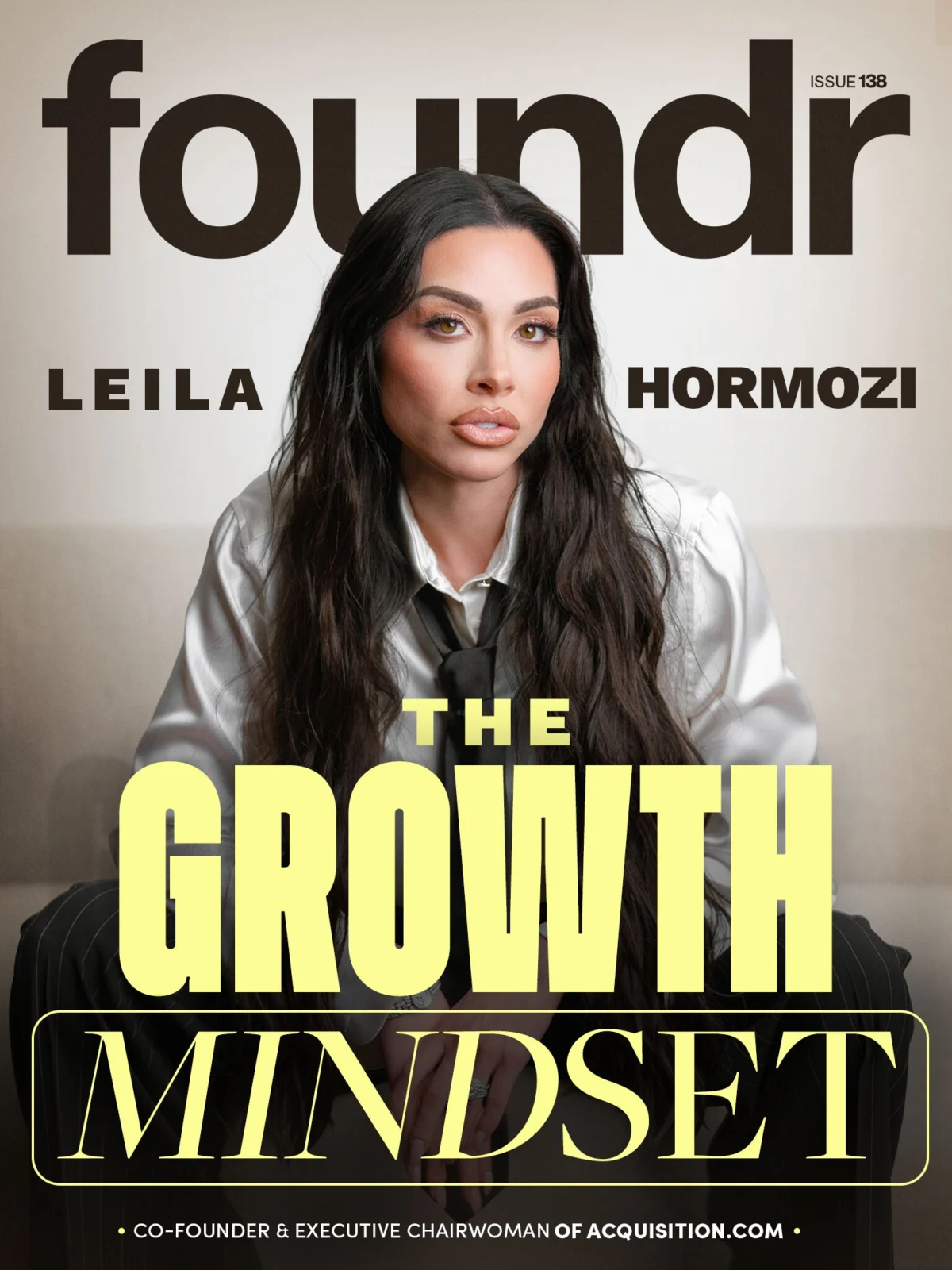
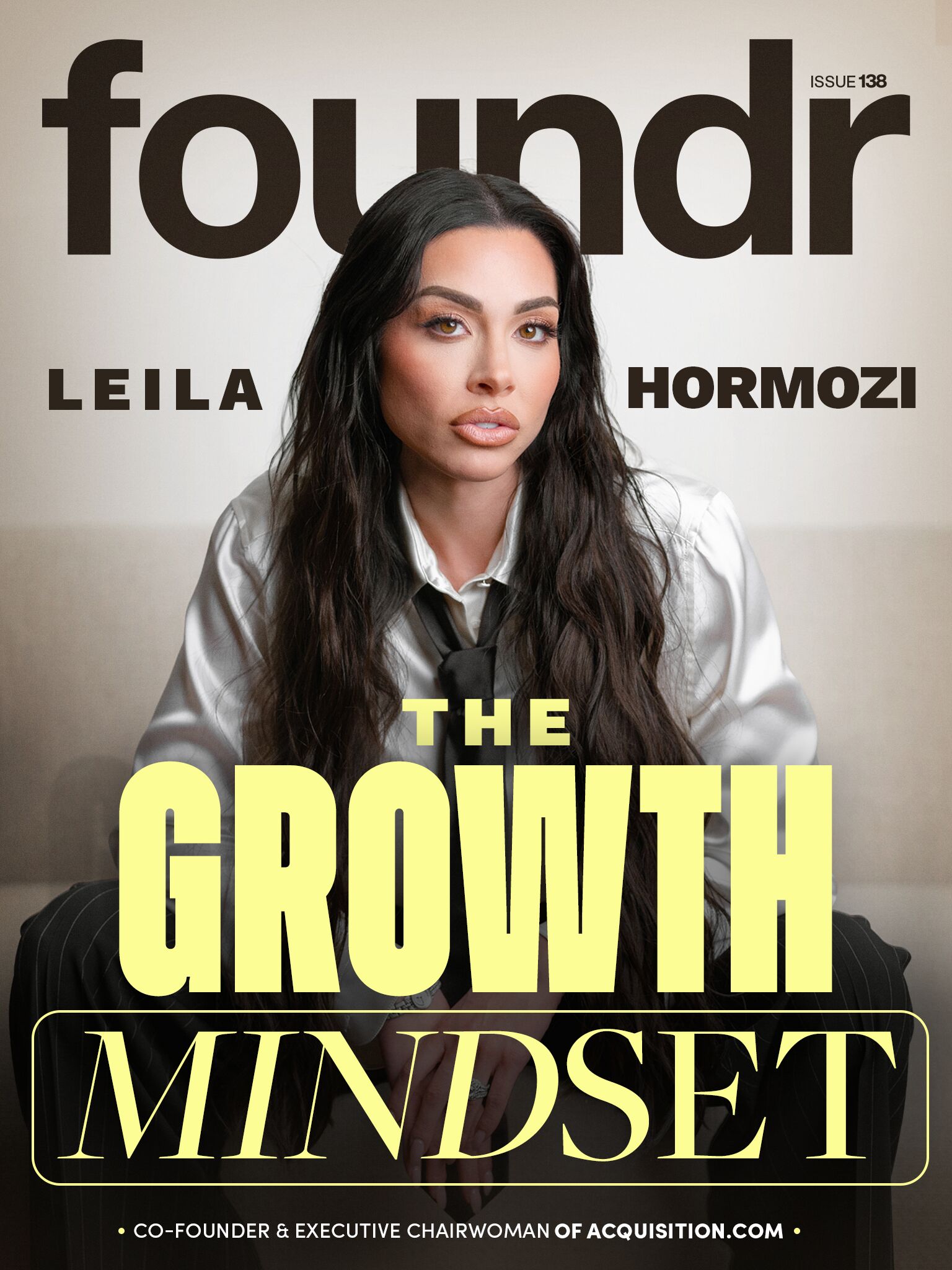
In the high-stakes world of modern entrepreneurship, few figures have navigated a trajectory as volatile—or as successful—as Leila Hormozi. As the co-founder of Acquisition.com, she has built a reputation not merely as a business strategist, but as a master operator capable of scaling companies with clinical precision. Yet, her journey to managing a portfolio generating over $250 million in annual revenue is not a story of linear progression or academic pedigree; it is a story of radical self-reckoning.
For Hormozi, the path to the boardroom began in the chaos of a troubled youth. Her story serves as a stark reminder that the same intensity and propensity for excess that can lead to personal ruin can, if properly channeled, be the engine of unparalleled business success.
The Chronology of a Transformation: From Six Arrests to Stability
The narrative of Leila Hormozi’s life is often framed by a harrowing eighteen-month period during which she faced six arrests. At the time, she was trapped in a cycle of substance abuse and unchecked anger, fueled by unresolved family trauma. She describes this period as a time when she was a "victim of her own life," lacking the maturity to take accountability for her circumstances.
The turning point occurred at her father’s home following her sixth arrest. In a moment of quiet vulnerability that stands in stark contrast to the chaos of her previous months, her father opted not to scold her, but to offer a sobering reality check: he told her that her current path would inevitably lead to her death.
"It was the first time I realized that my actions had real consequences," Hormozi recalls. "I wasn’t a kid anymore, and this was my fault."
That night, she stood before a mirror and made a definitive decision: she no longer wanted to be that person. She moved across the country, stripped her environment of all unhealthy influences, and began an aggressive regime of self-education, consuming the works of motivational titans like Jim Rohn and Les Brown. This was not a change sparked by gentle introspection, but by the overwhelming pain of remaining stagnant. As she famously notes, "It wasn’t discipline. It was complete pain."

Building the Foundation: The Personal Trainer Era
With only $5,000 in her bank account and a monthly rent of $1,500, Hormozi entered the workforce as a personal trainer. This phase of her life was defined by extreme resourcefulness and survival-level execution. She walked to every gym within a reasonable radius to secure work, eliminating the overhead cost of fuel.
This period of her life was the crucible in which her skills as an operator were forged. Managing a small client roster from zero, navigating survival-level finances, and learning the fundamentals of direct sales provided the bedrock upon which her later, larger-scale enterprises would be built. It was here that she learned the essential lesson of self-leadership—a principle she maintains is the prerequisite for any form of effective external management.
The Partnership: Launching Gym Launch and Scaling to $50 Million
The trajectory of her career shifted permanently when she met Alex Hormozi. Their partnership began on a dating app, but it quickly evolved into a business juggernaut. On their first date, Alex pitched her the concept for "Gym Launch," a business model aimed at helping gym owners scale their operations.
Leila saw the potential, reasoning that even in a worst-case scenario, she would simply return to the baseline of her personal training career—a risk she felt comfortable taking. The early days of the company were fraught with "disaster after disaster," including fraudulent business partners who drained accounts and merchant processors freezing funds during the holidays.
Despite these setbacks, the pair scaled Gym Launch from zero to $50 million in just twenty months. This era of rapid growth was a testament to their combined expertise, but it also exposed the growing pains inherent in scaling an organization at such an aggressive velocity.
Lessons in Leadership: The Glassdoor Wake-Up Call
Despite the financial success of Gym Launch, the company’s internal culture hit a significant roadblock. Hormozi admits that during this time, her lack of experience in organizational management led to a disastrous hiring cycle.
"We had a 4.9 [star rating] on Glassdoor up until I learned a very hard lesson," she says. "You cannot let inexperienced managers make hiring projections."
The company hired 35 people when only five were needed. The resulting layoffs were handled poorly, with the news leaking to the team prematurely due to a breakdown in HR communication. The company’s Glassdoor rating plummeted to 2.2. This failure taught her a painful but vital lesson about the cost of being "too nice" and the danger of failing to provide honest, constructive feedback to employees.
"I desperately wanted to be liked and I didn’t know it," she reflects. "I realized it’s really not better to be nice in that way, because the two personalities—being a pushover or being a tyrant—have the same effect on people long term. That person doesn’t know what they need to do better."
By adopting the philosophy of legendary coach John Wooden, Hormozi reframed her role. She was no longer just a boss; she was a coach whose primary responsibility was to provide the clarity necessary for her team to move from their current performance level to their potential.
Strategic Execution: Why Businesses Fail
When asked why so many businesses fail, Hormozi points not to the product or the strategy, but to the execution. She divides business capacity into four critical pillars: financial, personnel, systems, and "thinking" capacity—the number of people in the room dedicated to solving the company’s most pressing problems.
"Most businesses don’t fail because of a bad strategy," she asserts. "They fail because they have poor execution, and they have nobody to tell them what good execution looks like."
For the portfolio companies under the Acquisition.com umbrella, she emphasizes that outsized growth is the standard result of building the right "offer"—a combination of the money model and deep market understanding—and then supporting it with the necessary operational capacity.
Cultivating Talent in a High-Growth Environment
Hormozi’s approach to talent is obsessive. She believes that a great environment can elevate a mediocre performer, but that the founder is the ultimate source of that environment. She recognizes that in a fast-moving organization, her every action is magnified.
"Every single thing I did was heard through a megaphone and seen through a microscope by my team," she says. "They modeled all of my behavior."
To attract top-tier talent without necessarily competing on salary alone, she focuses on the "offer" she makes to prospective employees: an environment of rapid growth. She actively seeks out individuals who view inflection points and organizational changes as challenges rather than threats. By building a robust "people team"—a department often neglected by companies of similar size—she demonstrates a commitment to the employee experience that mirrors her commitment to the customer experience.
The Philosophical Implications of Failure
Leila Hormozi’s story is a compelling case study on the nature of resilience. She argues that the massive success she enjoys today is inextricably linked to the massive failures of her past. The same psychological makeup—the capacity for risk, intensity, and deep emotional investment—that led to her darkest moments is what allows her to push through the barriers of scaling a $250 million empire.
Her journey challenges the traditional narrative of the "perfect founder." Instead, she posits that the ability to recognize when the pain of change is lower than the pain of remaining the same is the single greatest indicator of long-term success.

Ultimately, her mission has evolved. While the financial milestones are impressive, she views her business as a vehicle to help others improve their lives. Whether she is advising a portfolio company or building out her internal team, the objective remains the same: to leave people and businesses better than they were before.
As she moves forward, Hormozi’s legacy is defined by this transformation—a transition from a woman who was a victim of her circumstances to an operator who masters them. Her life serves as a blueprint for any entrepreneur willing to do the hard work of self-leadership and the even harder work of building a culture that values truth over comfort.
 Dwi Wanna
  rifanmuazin
  Asep Darmawan