
 By Evan Lee Salim
For years, the gold standard of ecommerce has been the "conversion funnel." Marketers have spent billions obsessing over cart abandonment rates, click-through metrics, and the relentless optimization of transactional flows. While these metrics are essential for survival, a growing cohort of modern entrepreneurs is discovering a fundamental truth: a customer list is a commodity, but a community is an asset.
In an era where digital noise is at an all-time high, the brands that endure are not the ones with the loudest advertisements, but those that have cultivated a genuine, two-way relationship with their audience. They are moving beyond the transactional—where the subscriber is merely a recipient of sales pitches—and into the relational, where the subscriber is an active participant in the brand’s journey.
The Paradigm Shift: List vs. Community
To understand the evolution of modern email marketing, one must first distinguish between a "list" and a "community." A list is a passive database—a collection of email addresses stored in a CRM, often treated as a resource to be "mined" for revenue. Conversely, a community is a collection of people who feel a sense of belonging. They identify with the brand’s values, they feel heard, and they act as organic ambassadors.
The gap between these two concepts is not technological; it is philosophical. Most ecommerce brands view email as a broadcast channel: Welcome email, browse abandonment, purchase, win-back. This infrastructure is necessary for revenue stability, but it is entirely one-directional. It treats the subscriber as a target rather than a partner.
Brands that foster community treat the inbox as a sanctuary. They prioritize relationship-building, understanding that when trust is established, revenue becomes a natural, repeatable byproduct rather than a forced outcome.
The Anatomy of Insider Access
The most effective way to foster community is through the strategic use of "insider access." Contrary to popular belief, this does not require complex loyalty programs or gated, pay-to-play content. It requires a fundamental shift in communication strategy.
From "Product Announcement" to "Product Story"
Instead of blast-emailing a "New Arrival" notification, successful brands share the "why." They pull back the curtain on the product development process, detailing the specific problems they were trying to solve and the iterations that failed before the final version was realized. By sharing the "near-misses"—the ideas that were discarded or the packaging designs that didn’t work—brands humanize their process. This builds a sense of "shared investment" among subscribers.
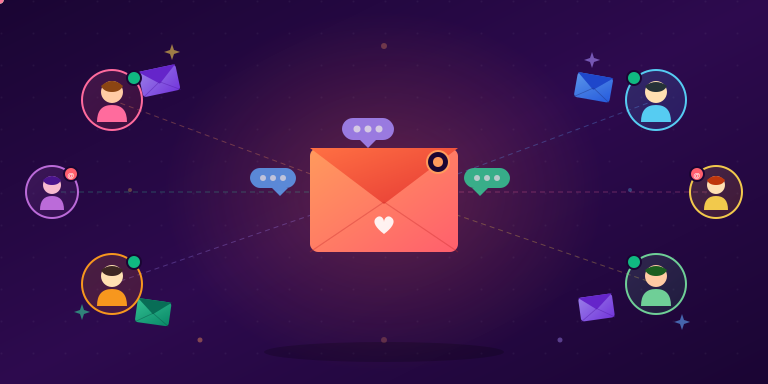
The Power of Founder-Led Communication
There is a growing trend toward "founder-led" emails—unvarnished, plain-text messages that feel less like a newsletter and more like a personal letter. In an era of hyper-polished graphic design and complex automation, a simple, conversational email from a founder can cut through the noise with startling effectiveness. When a reader feels they are hearing from a human being, the psychological barrier between "brand" and "consumer" begins to dissolve.
The Feedback Loop: Listening as a Growth Strategy
If email is traditionally a broadcast medium, building a community requires it to be a conversational one. The most direct way to signal to your audience that they are part of a community is to ask for their input—and, crucially, to act on it.
Implementing "Low-Friction" Feedback
Avoid long-form surveys. Instead, leverage the power of the reply. Ending an email with a genuine, open-ended question—"What is the one thing you are still trying to figure out regarding [Topic]?" or "What should we build next?"—transforms the dynamic. When a subscriber replies and receives a thoughtful, human response in return, that subscriber is transformed from a passive reader into a loyal advocate.
While this may not scale to 50,000 subscribers, the impact of a few dozen high-quality, one-on-one interactions per month is profound. These are the individuals who will leave detailed product reviews, defend your brand in social media comments, and provide the word-of-mouth growth that money cannot buy.
Cultivating a Recognizable Brand Identity
Identity is the glue that holds a community together. In the digital space, that identity is communicated through voice.
If your emails could be swapped with those of your primary competitor without the reader noticing the difference, you lack a distinct voice. Building a recognizable brand identity requires answering difficult questions:
- What does your brand fundamentally believe?
- What industry norms do you actively push back against?
- What do you stand for, even when it’s inconvenient?
When these beliefs are woven into your communications—whether you are launching a product or sharing a simple update—they create a "presence." Subscribers don’t just sign up for your product; they sign up for your point of view.
Measuring Community Health: Beyond Conversion
When shifting toward a community-first model, founders often worry that they are abandoning metrics. On the contrary, the move to community requires a more sophisticated set of KPIs. While conversion rates remain important, community-centric brands also track:
- Reply Rate: This is the most critical metric for engagement. If your emails are not generating replies, you are likely failing to build a two-way channel.
- Forward Rate: A forwarded email is the ultimate form of social proof. It signifies that your content is valuable enough for a reader to stake their personal reputation on recommending it to a peer.
- Referral Growth: By asking new subscribers how they found you, you can quantify how much of your growth is coming from organic, community-led word-of-mouth.
- Unsubscribe Patterns: Monitor what causes spikes in unsubscribes. Conversely, if your "value-add" content—such as educational tips or behind-the-scenes stories—sees lower unsubscribe rates than your promotional emails, you have a clear signal of what your audience truly values.
The Strategic Role of Technology
Building community at scale is difficult, which is why having the right infrastructure is vital. Platforms like Omnisend are designed to support this evolution. By offering advanced segmentation tools, these platforms allow brands to send the right message to the right people at the right time.
More importantly, by automating the tedious transactional emails (like receipts and shipping updates), they clear the "mental space" for founders to focus on the high-level relationship building required to foster a community. When the infrastructure handles the logistics, the brand is free to focus on the human element.
Implications for Future Growth
The future of ecommerce belongs to those who recognize that attention is the most valuable resource in the digital economy. While paid ads and aggressive sales funnels provide the fuel for growth, community provides the engine.
As customer acquisition costs (CAC) continue to rise across social media and search engines, building a "walled garden" of loyal subscribers—people who actually look forward to hearing from you—is no longer a luxury; it is a defensive moat.
In conclusion, the most successful brands of tomorrow will not be the ones with the most aggressive automation. They will be the ones that made their subscribers feel like they were part of something larger. By treating your email list as a group of people rather than a data set, you ensure that your brand remains relevant, resilient, and deeply connected to those you serve.
Start today: send an email that doesn’t ask for a sale, but instead invites a conversation. Your community is waiting to be heard.
 Dwi Wanna
  rifanmuazin
  Asep Darmawan