
 By Sagoh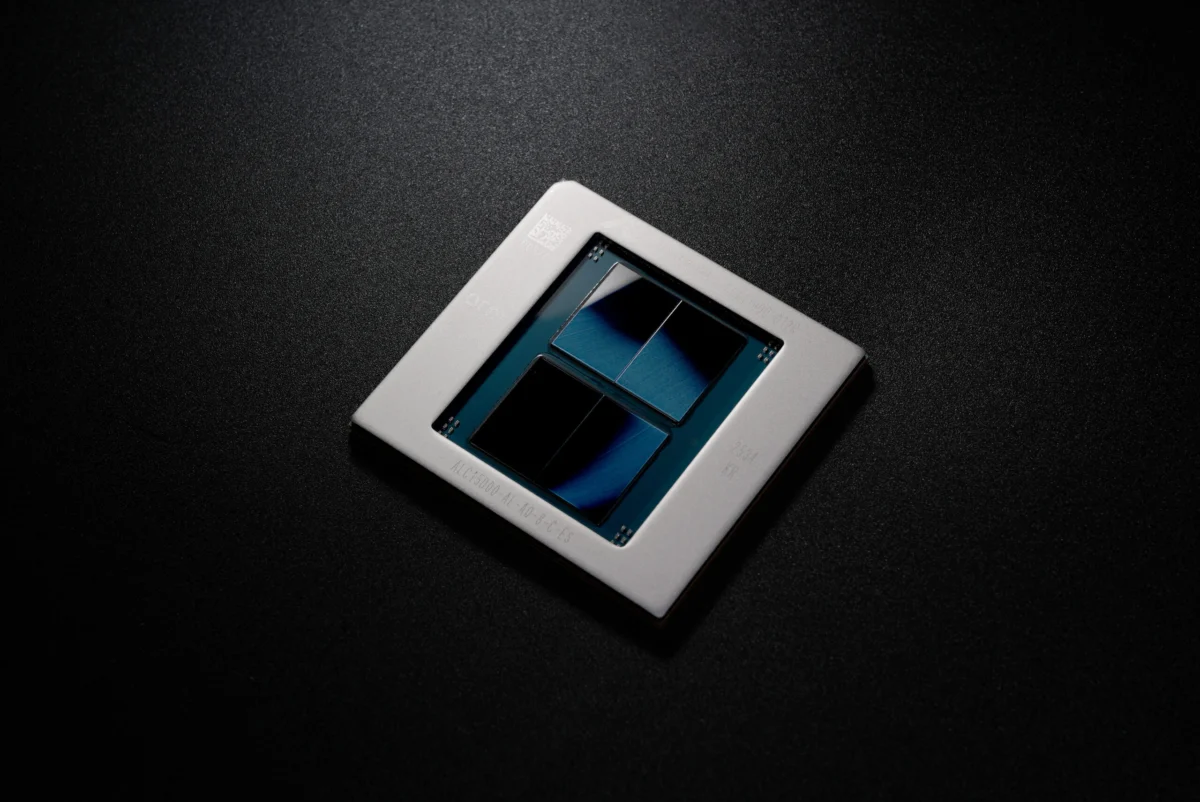
In a significant leap for cloud infrastructure, Amazon Web Services (AWS) has officially announced the general availability of the M9g and M9gd Amazon EC2 instances. Powered by the fifth-generation AWS Graviton5 processor, these instances represent the pinnacle of eight years of custom silicon development. As enterprise workloads shift from static data processing to dynamic, agentic AI-driven tasks, the Graviton5 architecture arrives as a response to the growing demand for higher compute density, extreme energy efficiency, and mathematically verifiable security.
The Evolution of Custom Silicon: A Chronology
The release of the M9g instances is not an isolated event but the latest milestone in a sustained strategy that began in 2018 with the introduction of the first Graviton processor.
- 2018 (The Genesis): AWS introduces the first Graviton processor, signaling a move to control its own silicon destiny and optimize for specific cloud-native workloads.
- 2019-2021 (Maturation): Graviton2 and Graviton3 rapidly improved price-performance ratios, proving that Arm-based architectures were not just viable but superior for many standard web and application server tasks.
- 2023 (Graviton4): Introduced as a massive jump in core count and memory bandwidth, Graviton4 solidified AWS’s position in the high-performance computing (HPC) and database sectors.
- 2025 (The M9g Preview): At re:Invent 2025, AWS unveiled the Graviton5 preview, inviting select customers to stress-test the new hardware.
- 2026 (General Availability): Today marks the global rollout of M9g and M9gd instances, integrating the latest PCIe Gen6 and DDR5-8800 memory standards.
Technical Superiority: Breaking Down Graviton5
The Graviton5 processor is built to tackle the "agentic shift"—the transition of AI from simple chatbot interactions to autonomous, multi-step task orchestration. To handle this complexity, AWS has fundamentally re-engineered the chip’s internal layout.
Unprecedented Compute Density
The Graviton5 features 192 cores, a massive expansion that provides the raw throughput necessary for modern microservices and machine learning (ML) inference. Perhaps more critical than the core count is the memory subsystem: with a 5x larger L3 cache compared to the previous generation and the implementation of DDR5-8800 memory, the processor minimizes the "memory wall" that often throttles CPU performance in large-scale data environments.
The Nitro Isolation Engine: A New Security Standard
With the general availability of M9g, AWS has also introduced the "Nitro Isolation Engine." This is a profound shift in cloud security. Unlike traditional hypervisors that rely on software-defined security layers, the Nitro Isolation Engine uses formal verification—a mathematical technique—to prove that the hardware and software behave exactly as intended. By mediating access to CPU registers, memory, and I/O devices through a minimal, formally verified API set, AWS is setting a new industry benchmark for what "secure cloud computing" truly means.
Real-World Impact: Customer Success Stories
The transition to Graviton5 has already yielded measurable results for early adopters, proving that the hardware gains translate directly to bottom-line efficiency.

- ClickHouse: The analytics database giant reported a 36% performance boost over the M8g (Graviton4) generation, requiring zero code changes, which highlights the seamless compatibility of the Graviton ecosystem.
- Honeycomb: Through a rigorous six-month A/B test on production observability workloads, Honeycomb observed a 36% improvement in throughput per core, demonstrating the processor’s ability to handle high-cardinality data at scale.
- HubSpot: By migrating their MySQL database instances to M9g, HubSpot saw query durations drop by as much as 60%, significantly improving user-facing latency and reducing infrastructure overhead.
- Meta: Perhaps most notably, Meta is deploying Graviton at a scale involving tens of millions of cores. This massive investment is specifically geared toward powering their agentic AI efforts, which demand the high-memory bandwidth and core density inherent in the Graviton5 architecture.
The Implications for Modern Workloads
The launch of M9g and M9gd instances changes the calculus for CTOs and architects planning their 2027 infrastructure roadmap.
Performance and Sustainability
The "green" aspect of the Graviton5 is not merely marketing; it is a fundamental design philosophy. By maximizing the efficiency of compute, memory, and I/O, AWS has created a chip that delivers more work per watt than any of its predecessors. For enterprises under pressure to meet ESG (Environmental, Social, and Governance) targets, moving to M9g is a direct way to lower the carbon footprint of their compute-heavy operations.
High-Speed Storage with M9gd
For workloads requiring local high-speed, low-latency storage—such as data logging, media processing, and batch jobs—the M9gd instances offer a critical upgrade. With up to 11.4 TB of NVMe SSD storage and a 30% increase in IOPS compared to their predecessors, these instances are specifically designed for applications that cannot afford the network latency of remote storage (EBS) for their temporary scratch space or caching needs.
Flexibility and Optimization
AWS has introduced features like Instance Bandwidth Configuration (IBC), allowing customers to dynamically tune the balance between network and EBS bandwidth. This granular control means that a database cluster can be optimized for write-heavy performance, while an application server can be tuned for high network throughput, all on the same underlying instance family.
The Broader Ecosystem: Why Graviton Leads
While Arm-based silicon has become a standard in the cloud industry, AWS maintains a unique advantage through its depth of integration. With over 350 instance types supported and over 120,000 customers, the Graviton ecosystem is supported by a robust ISV partner network.
Tools like AWS Transform—which uses AI to automate the migration of Java applications from x86 to Graviton—are lowering the barrier to entry. This reduces the "migration tax" that companies often fear when switching architectures, allowing teams to move faster and spend less on refactoring.

Future Outlook: The Road Ahead
The release of M9g is a clear signal that AWS intends to continue its aggressive pace of innovation. As AI-driven agents become the standard interface for software, the reliance on CPU-bound logic will only increase. By providing the raw, efficient power of Graviton5, AWS is ensuring that the "brain" of these AI agents—the CPU—is never the bottleneck.
For developers and enterprises, the call to action is clear. The Graviton Savings Dashboard and the "Getting Started" guides are no longer just optional resources; they are essential tools for any team looking to optimize their cloud spend and maximize the performance of their modern applications.
As we look toward the next year of cloud evolution, the M9g instances represent more than just a spec bump. They represent the maturing of the cloud into a specialized, hyper-efficient, and mathematically secure platform, ready to support the next generation of global-scale software. Whether you are running a startup or managing a multinational enterprise, the Graviton5 architecture provides the headroom necessary to innovate in an increasingly competitive, AI-accelerated world.
Technical Summary Table: A Quick Reference
| Metric | Graviton4 (M8g) | Graviton5 (M9g) |
|---|---|---|
| Max Cores | Lower | 192 Cores |
| L3 Cache | Baseline | 5x Larger |
| Memory Standard | DDR5 | DDR5-8800 |
| PCIe Support | Gen5 | Gen6 |
| Performance Gain | – | Up to 25% (General Compute) |
For organizations looking to begin their migration, the M9g and M9gd instances are now generally available in US East (N. Virginia, Ohio), US West (Oregon), and Europe (Frankfurt) regions.
 Neng Nana
  Suro Senen
  Lina Hope