
 By Neng Nana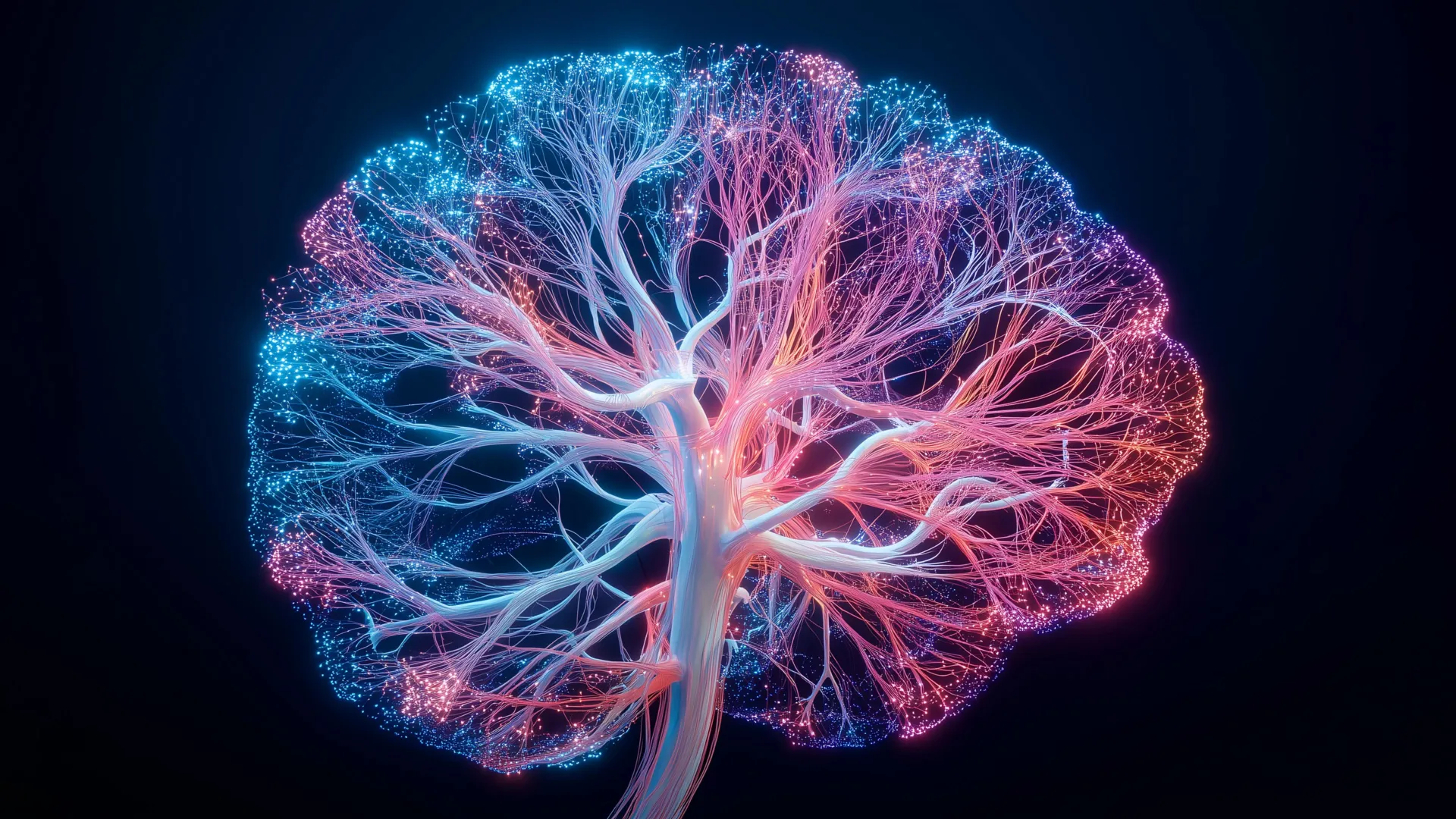
In the quest to decode the human mind—the most complex structure in the known universe—scientists have long relied on a hierarchical "assembly line" model of cognition. For decades, the prevailing dogma in neuroscience and artificial intelligence (AI) has held that sensory information travels a one-way street: input enters the periphery, climbs through increasingly complex processing layers, and finally reaches the frontal cortex, where a "decision" is formulated.
However, a groundbreaking study from the University of Illinois Urbana-Champaign (UIUC) is challenging this foundation. Led by Yurii Vlasov, a professor of electrical and computer engineering at The Grainger College of Engineering, researchers have uncovered evidence that decision-making begins far earlier in the neural pipeline than previously believed. Published in the Proceedings of the National Academy of Sciences (PNAS), the study suggests that the brain is not a linear processor, but a dynamic, bidirectional network. This discovery offers a radical new roadmap for engineers attempting to build the next generation of artificial intelligence—one that is not only more capable but drastically more energy-efficient.
The Myth of the One-Way Street
For over 50 years, the architecture of artificial neural networks, including the sophisticated convolutional neural networks (CNNs) that power modern computer vision, has been predicated on the "feed-forward" model. In this framework, data is processed in sequential stages.
"The traditional view was that sensory information moves upward through a strict hierarchy," explains Vlasov. "You see something, it hits your sensory cortex, moves to the mid-brain, and eventually arrives at the decision-making centers. We assumed the process was unidirectional."
This model has been the bedrock of AI development. It is computationally efficient for machines, allowing for predictable data flow. Yet, biological intelligence—refined by hundreds of millions of years of evolution—operates with a fluidity that silicon-based systems cannot yet match. While a supercomputer might consume megawatts of electricity to perform complex pattern recognition, a human brain manages the same feat using roughly the energy of a dim lightbulb. Vlasov and his team hypothesized that the key to this efficiency lies not in the speed of the processors, but in the architecture of the communication.
Chronology of the Discovery: Observing the "Early" Decision
To test the limits of the hierarchical model, the research team conducted an intricate study involving mice navigating a virtual reality corridor. The experiment was designed to track neural activity in real-time as the subjects were forced to make perceptual decisions based on sensory cues.
Phase 1: Tracking the Sensory Cortex
The team focused on the primary somatosensory cortex (S1). Traditionally, S1 is considered a "low-level" region responsible only for the initial registration of sensory input. If the hierarchy theory were correct, S1 would act as a passive relay station, passing raw data to higher-level areas without influencing the decision-making process itself.
Phase 2: Detecting the Feedback Loop
Using high-resolution neural monitoring, the researchers observed a startling phenomenon: S1 was not merely "relaying" information. Instead, it showed signs of decision-related activity while the mouse was still actively processing the virtual environment.
Phase 3: The Role of Top-Down Regulation
The data revealed that S1 was being actively modulated by higher brain regions through feedback loops. This confirmed that the brain uses "top-down" regulation, where higher-order cognitive centers communicate back to the sensory periphery to fine-tune perception. This is not a linear stream; it is a constant, bidirectional conversation.
Supporting Data: Why Energy Efficiency Matters
The discrepancy between biological power consumption and artificial power consumption is one of the most pressing challenges in computer science. As AI models like GPT-4 or Gemini grow, their energy demands have scaled exponentially, leading to concerns about sustainability and hardware limitations.
The UIUC findings provide a potential solution. In a feed-forward AI model, every layer must be active and perform complex calculations on all incoming data. However, if an AI were modeled after the biological "feedback" system discovered by Vlasov, the system could potentially "prune" or ignore irrelevant data early in the process.
By using top-down signals to tell the early sensory layers what to focus on, the system could save immense amounts of computational power. Instead of processing the entire environment in high resolution, the AI could prioritize only the information relevant to the current task—effectively "thinking" before it fully "sees."
Official Responses and Expert Perspectives
The study has sent ripples through the engineering and neuroscience communities, particularly among those tasked with fulfilling the National Academy of Engineering’s 2008 challenge: Reverse-engineer the human brain.
"We want to learn from a billion years of evolution," says Vlasov. "How is that biological intelligence organized architecturally? Can we learn from the architectural side of the brain and emulate that to make AI more effective, less power-hungry, and more intelligent than it currently is? At the level of decision-making, that is where current AI is lacking."
External experts in neuro-inspired computing note that while the study does not provide a "plug-and-play" architecture for AI developers, it serves as a crucial proof of concept. The shift from "feed-forward" to "recurrent, feedback-driven" neural architectures is already a topic of high interest in neuromorphic computing—an emerging field that seeks to build hardware that physically mimics the structure of biological neurons.
Implications: Building the "Next-Generation" AI
What does this mean for the future of artificial intelligence? The transition from the findings in this study to actual technology will likely unfold in three distinct stages:
1. Re-evaluating Neural Network Topology
Engineers will likely begin experimenting with "recurrent neural networks" (RNNs) that incorporate more sophisticated feedback mechanisms. Current RNNs exist, but they are often difficult to train and prone to instability. Understanding the "language" of the brain’s feedback loops could provide the mathematical rules needed to stabilize these architectures.
2. Dynamic Resource Allocation
Future AI systems may employ "attention-gated" feedback. Much like the S1 cortex in the mice, these systems would possess a "gatekeeper" function that uses top-down data to decide which sensory inputs are processed at full power and which are filtered out. This would allow for a significant reduction in the parameters required for real-time decision-making.
3. Temporal Dynamics and Speed
A core part of the UIUC team’s future work involves studying the timing of these signals. In the brain, the timing of a spike matters just as much as the frequency. By measuring the "fast temporal dynamics" of neural activity, Vlasov’s team hopes to identify the exact point at which a decision begins to form. If AI can be trained to recognize these temporal signatures, it could potentially reach conclusions in milliseconds, mirroring the split-second decision-making of a human.
A New Era of Engineering
The journey toward truly intelligent machines has often felt like trying to build a plane by studying the aerodynamics of a bird, but ignoring the fact that the bird flaps its wings. For years, we have built "static" AI; now, the research from the University of Illinois Urbana-Champaign suggests we must pivot toward "dynamic" AI.
"The neural code of the brain is still mostly an unknown language," Vlasov admits. However, the study marks a departure from pure black-box machine learning toward a biologically informed engineering philosophy. By acknowledging that decision-making is a distributed, bidirectional process, we open the door to systems that are not only smarter but inherently more sustainable.
As the team moves into the next phase of their research—developing advanced tools to measure these feedback loops in even greater detail—they remain optimistic. They aren’t just trying to mimic the brain’s output; they are trying to mimic the brain’s efficiency. In the coming decade, as we look to scale AI into everything from robotics to personalized medicine, the lessons learned from the primary somatosensory cortex of a mouse may well prove to be the most valuable data we have.
The path forward is clear: to build machines that think like us, we must stop treating them like calculators and start treating them like the highly integrated, feedback-driven organisms that nature perfected long ago.
 Sagoh
Sagoh  Asro
Asro  Siti Muinah