
 By Asep Darmawan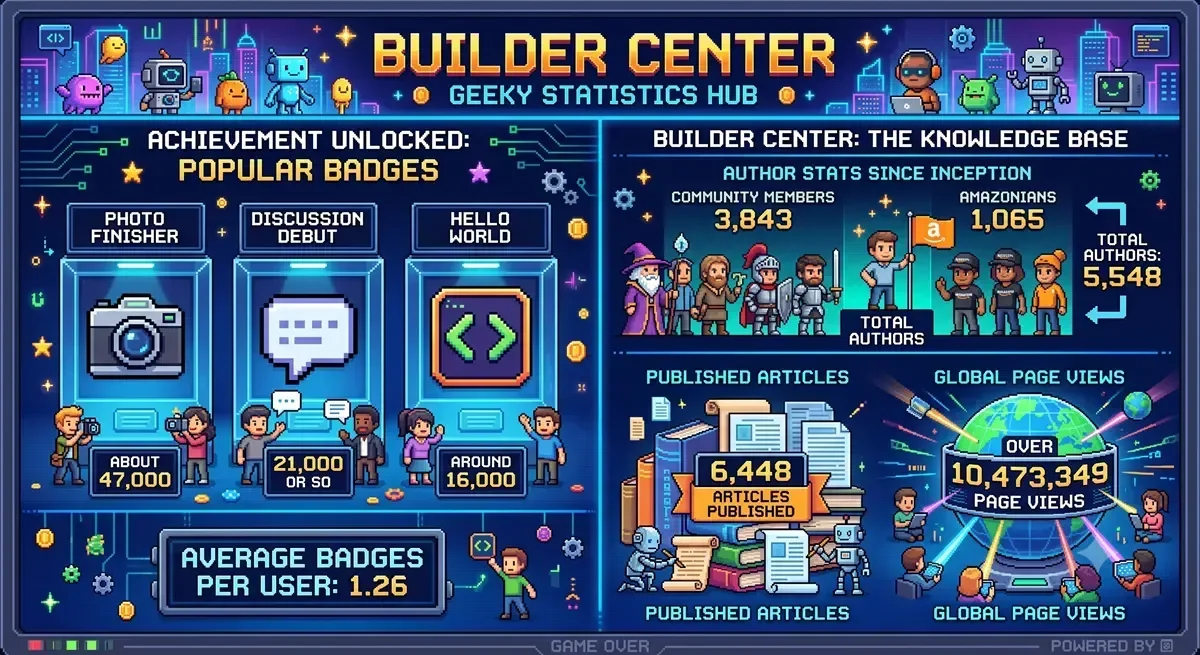
Last week, the cloud computing community celebrated a significant milestone: the first anniversary of the AWS Builder Center. Since its inception on July 9, 2025, the platform has evolved from a nascent community hub—initially focused on wishlist voting and basic profile management—into a comprehensive, multi-faceted ecosystem that serves as the central nervous system for cloud developers, architects, and engineers worldwide.
As the platform enters its second year, it stands as a testament to the power of community-led growth. By integrating sandbox environments, collaborative "Spaces," and a robust library of technical resources, the AWS Builder Center has successfully bridged the gap between theoretical learning and hands-on cloud application.
The First Year: A Timeline of Strategic Expansion
To commemorate the anniversary, Rick Suttles, a lead architect behind the initiative, released a comprehensive feature timeline that highlights the rapid iteration cycle characterizing the platform’s first twelve months. The evolution of the Builder Center was not merely additive; it was strategic, focusing on reducing the friction between learning a new service and deploying it.
Phase 1: Foundational Community Tools (Q3 2025)
The platform launched with a focus on engagement. Features like community profiles, wishlist voting, and a centralized toolbox allowed AWS to listen to its user base. By enabling developers to signal which features were missing, AWS created a feedback loop that directly influenced its roadmap.
Phase 2: Knowledge Sharing and Gamification (Q4 2025 – Q1 2026)
As the community grew, the focus shifted toward content curation. The introduction of the Builders’ Library and the article series feature allowed subject matter experts to share deep-dive tutorials. To encourage participation, AWS rolled out badges and streaks in March 2026, successfully gamifying the learning process.
Phase 3: Technical Integration and Accessibility (Q2 2026 – Present)
The most recent phase has been defined by lowering the barrier to entry. Features such as "Sign-in with GitHub and Amazon," student status verification, and availability notifications have made the platform more accessible. Most notably, the integration of AWS Capabilities by Region now allows users to track over 1,500 services across 37 global regions, providing a granular view of the AWS footprint.
Supporting Data: By the Numbers
The success of the AWS Builder Center is reflected in its metrics, which reveal a highly active and engaged user base. In his retrospective, AWS veteran Jeff Barr shared data that underscores the platform’s impact:
- Content Proliferation: 5,548 individual authors have contributed to the platform, publishing a collective total of 6,448 articles.
- Audience Reach: These articles have generated over 10.4 million page views, proving that the Builder Center has become a primary destination for technical documentation and community-driven insights.
- Engagement Milestones: Since the implementation of the gamification system in March 2026, users have earned 99,226 badges, indicating a high level of persistent engagement.
- Community Influence: The "Wishlist" feature has proven to be more than a vanity metric. Of the 565 feature requests submitted by the community, 10 have already been fully deployed into production, with another 20 currently occupying slots on the near-term development roadmap.
Top Performing Content
The community has shown a clear preference for practical, project-based content. The top three most-read articles illustrate the diversity of the platform’s utility:
- Building an AWS Study Buddy with MCP + Strands Agents SDK by Dineshraj Dhanapathy: 50,000+ views.
- Migrating an EOL Linux Server to AWS in 8 Hours with Kiro by Chris Miller: 45,000+ views.
- AIdeas: NeuroVoice — Multimodal AI for Early Screening of Neurological Diseases by Yash Aggarwal: 38,000+ views.
These articles highlight a trend: users are most interested in AI integration, legacy system modernization, and healthcare-focused machine learning applications.
Official Responses and Strategic Shifts
The centerpiece of the anniversary celebration is the official launch of Sandbox Environments, announced by Rick Suttles. This feature represents a fundamental shift in how AWS handles technical education.
"The goal of the Sandbox is to remove every possible hurdle between a user and their first ‘Hello World’ in a new service," Suttles noted in his announcement. Previously, users were often hesitant to experiment with complex AWS services due to concerns regarding cost or the administrative overhead of cleaning up resources after a test.
How Sandbox Environments Work
The new system provides users with a free, pre-provisioned AWS account specifically for workshop exercises. The technical specifications include:
- Duration: Each environment remains active for exactly 8 hours.
- Lifecycle Management: Resources are automatically de-provisioned at the end of the session, ensuring no lingering costs or security risks.
- Accessibility: Users are permitted one active sandbox at a time, with a limit of one per week.
- Zero Friction: The process requires no personal credit card information and no manual cleanup, effectively turning the Builder Center into a risk-free laboratory for the cloud.
Implications for the Cloud Developer Ecosystem
The maturation of the AWS Builder Center has significant implications for both AWS and the broader developer community.
1. Democratization of Cloud Expertise
By providing sandboxes and high-quality tutorials, AWS is effectively democratizing access to cloud engineering. Developers who previously lacked the budget or the infrastructure to practice with enterprise-grade tools now have a level playing field. This is particularly vital for students and developers in emerging markets, as evidenced by the introduction of specific student-status features.

2. Feedback Loops and Rapid Iteration
The "Wishlist" success rate confirms that AWS is using the Builder Center as a crowdsourced research and development tool. By observing which features gain the most traction, the company can prioritize engineering resources toward the services that are most in demand, rather than relying solely on internal projections.
3. Strengthening the "Builder" Brand
The move to consolidate community groups into "Spaces" suggests that AWS is aiming to foster a sense of belonging among its users. By moving beyond simple documentation and into community-led mentorship and collaborative project building, AWS is reinforcing its brand identity as the platform that enables, rather than just provides, cloud infrastructure.
Looking Ahead: The Future of the Builder Center
As the AWS Builder Center moves into its second year, the focus will likely shift from building infrastructure to optimizing engagement and depth of content. With over 10 million page views in its first year, the challenge will be to maintain the quality of contributions while the community continues to scale.
The platform has already proven that it can serve as a catalyst for innovation. From AI-driven healthcare solutions to rapid server migrations, the projects showcased on the platform suggest that the "Builder" community is solving real-world problems with increasing sophistication.
For those looking to get involved, the AWS Builder Center remains open. Whether you are a novice looking for your first workshop or an expert aiming to publish your own architectural series, the platform provides the tools to keep building.
As we look toward the next year, one thing is certain: the success of the AWS Builder Center is a reflection of the users themselves. In the words of the community management team, the mission remains simple: "Meet other builders, contribute solutions, and find the resources that help you keep building."
As summer progresses and the platform continues to iterate, the cloud community remains in a position to benefit from an increasingly robust and responsive ecosystem. We look forward to seeing what the next 6,000 articles—and the next 100,000 badges—bring to the world of cloud computing.
 Neng Nana
  Suro Senen
  Lina Hope