
 By Siti Muinah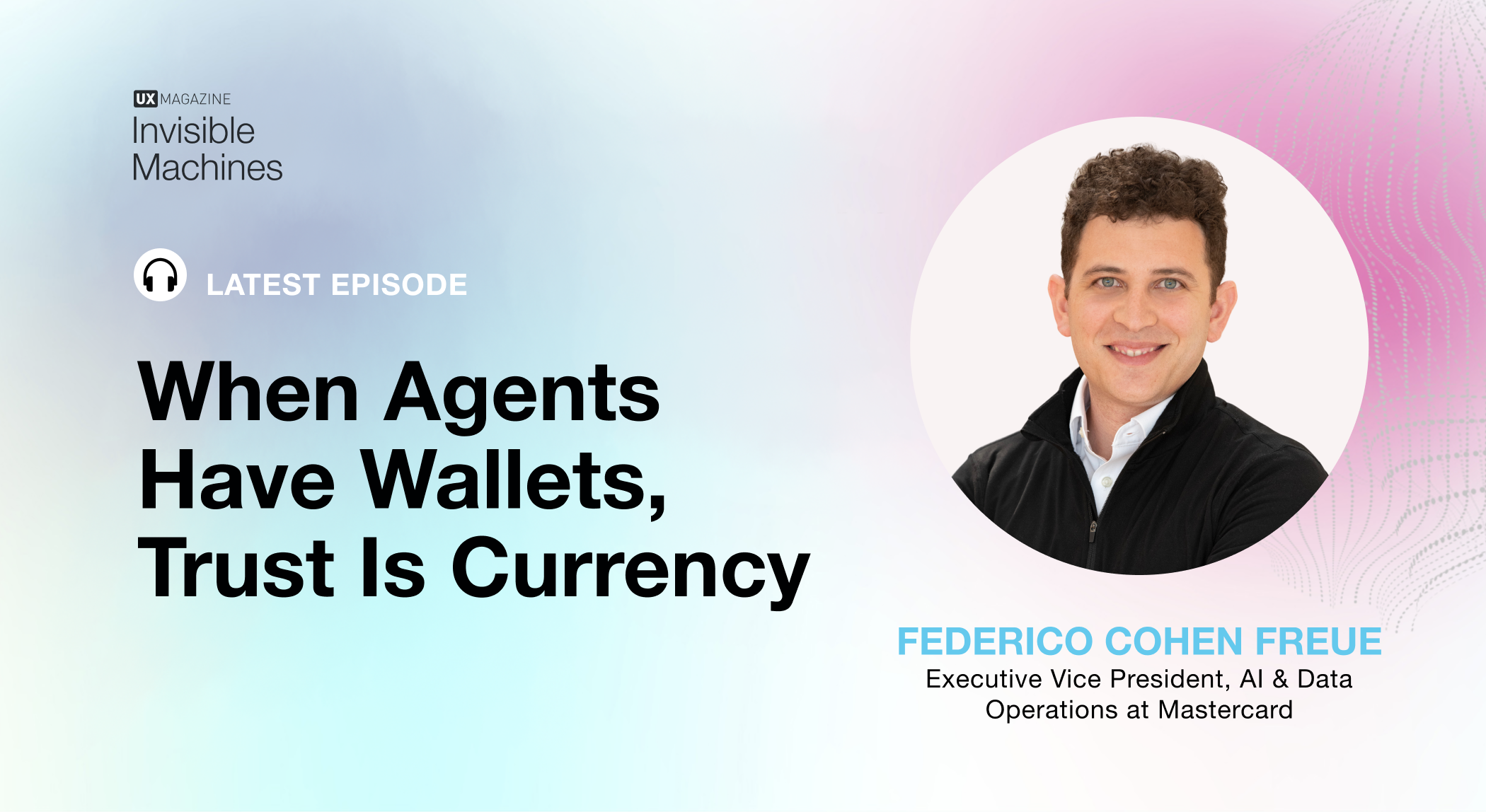
In the high-stakes environment of global finance, artificial intelligence is no longer a peripheral experiment; it is the central nervous system of future commerce. At Mastercard, Federico Cohen Freue, the lead for the company’s central AI and data team, finds himself at the epicenter of this shift. Managing an influx of nearly 1,000 AI-related proposals annually from across the global enterprise, Cohen Freue has a front-row seat to the maturation of corporate ambition.
A few years ago, the request pipeline was dominated by simple, reactive chatbots. Today, the discourse has pivoted decisively toward "agents"—autonomous AI entities capable of executing complex workflows, making decisions, and acting on behalf of users. However, beneath this surge in demand lies a sobering reality: most organizations are clamoring for agents long before they have built the foundational infrastructure required to support them.
The Chronology of Maturation: From Chatbots to Agency
The evolution of AI at Mastercard serves as a microcosm for the broader enterprise landscape. Initially, the excitement surrounding Large Language Models (LLMs) was tethered to accessibility—the desire to turn static documentation into a conversational, Q&A-style interface.
As the technology progressed, so did the "mental models" of the stakeholders. The transition from chatbot to agent marks a significant psychological shift within the organization. Employees are no longer looking for a digital librarian; they are looking for a digital delegate. This shift toward agentic workflows—where AI is embedded into operational processes to perform tasks, negotiate, or facilitate transactions—is the new frontier.
Yet, Cohen Freue emphasizes that "wanting agents" and "being ready for agents" are distinct states. The current phase of the enterprise journey is one of bridging that gap, moving from the novelty of AI interaction to the rigorous engineering required for AI execution.
The "Ball Bearing" Problem: Why Demos Can Be Deceptive
One of the most profound challenges in the current AI gold rush is the visual similarity between a viable product and a failure-prone prototype. To illustrate this, Cohen Freue employs a compelling analogy: the ball bearing.
Two ball bearings may appear identical to the naked eye. One is precision-machined to exacting tolerances, capable of enduring the immense pressures of an airplane engine. The other, seemingly identical, lacks the structural integrity to function under stress. In the context of AI, the demo represents the exterior finish. A "beautifully polished failure" can look exactly like a robust, enterprise-ready solution during a presentation. The difference only manifests when the system is placed under real-world, high-stakes operational pressure.
This reality explains Mastercard’s strategic emphasis on "fluency before deployment." By prioritizing deep internal training and educating teams on the nuances of what makes an AI model "machined correctly," the organization aims to empower its staff to act as filters. When employees understand the technical and operational conditions necessary for success, they become better architects of their own tools, capable of identifying potential failure points long before they are integrated into the production environment.
Strategic Prioritization: A Framework for Scale
With a thousand incoming ideas and an exponentially expanding technological landscape, the risk of "innovation drift" is high. Mastercard manages this through a surprisingly lean, potent framework. Their prioritization logic is not a complex, multi-variable spreadsheet; it is a simple strategic lens.
Every proposed AI initiative is evaluated against a core, four-part mandate:
- Does it make commerce more secure?
- Does it make commerce smarter?
- Does it make commerce more personal?
- Does it strengthen the Mastercard ecosystem?
This simplicity is the point. By establishing a shared language, Mastercard transforms the process of project selection from a political negotiation into a strategic conversation. It provides a clear, consistent filter that remains effective even as the underlying models evolve. Importantly, this framework is not a compliance checklist or a set of legal guardrails; it is a strategic compass that ensures every team, regardless of their department, is rowing in the same direction.
The Rise of Agentic Payments and the New "Middleman"
As the industry moves toward agentic payments—where autonomous agents act as intermediaries for consumers to book travel, replenish stock, or negotiate deals—the risks are no longer abstract. They are existential.
The consumer demand for these frictionless, automated transactions is already here. However, Mastercard’s priority remains the "base case." Before the company launches flashy, multi-vendor booking platforms, it is focusing on the "plumbing" of the new economy:
- Agent Identity Verification: How does a merchant know the AI agent on the other side of a transaction is authorized?
- Delegated Authority Frameworks: What are the rules for when an agent can authorize a purchase on a user’s behalf?
- Acceptance Standards: Ensuring that the global network can handle the rapid, autonomous, and high-frequency nature of agentic interactions.
In this new era, trust is the ultimate currency. As transactions become more complex and decentralized, the role of a "trusted network" does not diminish; it compounds. The traditional middleman, once dismissed as a relic of the pre-AI era, becomes the most critical node in the system. The entity that can verify identity, guarantee security, and manage the "rules of the road" will be the cornerstone of the autonomous economy.
Knowledge as Infrastructure: A Paradigm Shift
Perhaps the most disruptive idea currently taking root at Mastercard is the transition from a "reactive" knowledge model to a "proactive" one. Conventional enterprise AI often mirrors the traditional document repository: a static library where information sits, waiting for a user to query it. This places the cognitive burden on the employee—the person who least understands the topic—to ask the right question.
Mastercard is exploring an alternative: a system that functions as a "GPS for expertise."
- The Knowledge Model: A structured, canonical source of truth where each concept exists only once, interconnected with related ideas and historical context.
- The Learning Twin: A digital representation of an individual’s current knowledge state.
- Dynamic Pathing: Instead of a static training curriculum, the system calculates the most efficient route for the learner, rerouting in real-time as the user gains knowledge or as the underlying domain changes.
This approach treats knowledge not as a file to be stored, but as infrastructure to be managed. Cohen Freue notes that this is as much a cultural challenge as a technical one. Organizations are accustomed to "onboarding"—a one-time event. Moving to a model of "ongoing, dynamic learning" requires a fundamental change in how companies value and incentivize expertise.
The Implications: Sequence Over Speed
The central thread running through Mastercard’s AI strategy is the importance of sequence. In an industry obsessed with being "first to market," Mastercard is prioritizing being "first to understand."
The prevailing wisdom in many AI initiatives is to start with the action: build the agent, automate the task, deploy the chatbot. Mastercard’s experience suggests that this is fundamentally flawed. When these initiatives fail, they are often labeled as "technology problems," when in reality, they are "knowledge problems." The systems were not grounded in a solid infrastructure of truth, and the teams managing them lacked the fluency to navigate the limitations of the models.
By shifting the focus—by mandating that knowledge must come before action, and that verification must come before authorization—Mastercard is setting a blueprint for sustainable enterprise transformation. Before an organization asks what its AI can do, it must first ask what its organization actually knows. In the race toward an autonomous future, the organizations that will thrive are not necessarily those with the most powerful models, but those with the most reliable, structured, and accessible foundation of truth.
As AI agents begin to take control of our wallets and our workflows, the value of the network—and the trust it provides—has never been higher. The agents are only as good as the knowledge they are built on, and for those who take the time to build that foundation correctly, the potential for scale is unprecedented.
 Ammar Sabilarrohman
  Neng Nana
  Sagoh
Sagoh 