
 By Basiran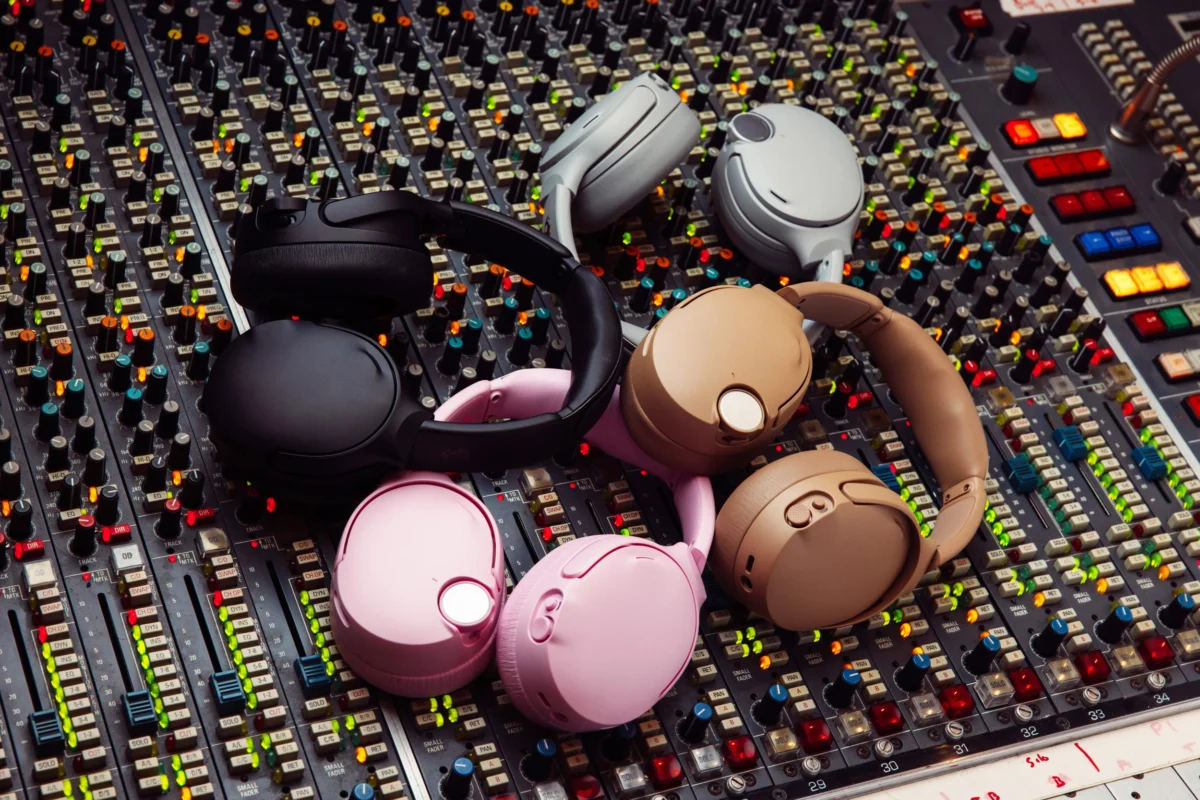
For years, the Skullcandy Crusher line has occupied a unique, somewhat polarizing niche in the high-fidelity audio market. Known as the "bass-head’s dream," the series built its reputation on a signature haptic bass technology that physically rattles the listener’s skull. However, this aggressive pursuit of low-end dominance often came at the expense of midrange clarity and overall harmonic balance. Today, that narrative shifts significantly.
Skullcandy has officially unveiled the Crusher 1080 ANC, a flagship release that represents a radical departure in engineering philosophy. By partnering with audio titan Bose, Skullcandy is attempting to marry its legendary, visceral bass response with the refined, industry-standard acoustic precision that has defined Bose for decades.
Main Facts: A Convergence of Two Worlds
The Crusher 1080 ANC is not merely an iterative update; it is a collaborative masterclass. Retailing for $279.99, these headphones arrive in four distinct colorways: black, candy, primer, and cement. At their core, they retain the iconic dual-driver architecture—full-range drivers for standard audio and dedicated bass drivers for the deep frequencies—that has made the series a cult favorite.
The most notable shift is the integration of proprietary Bose technologies. For the first time in a non-Bose product, the Crusher 1080 ANC features Bose’s TrueSpatial audio technology with advanced head tracking. This allows the soundstage to remain anchored to the listener’s environment, whether they are stationary at a desk or moving through a crowded transit hub. Furthermore, the headphones utilize the WaveForm audio engine, a processing suite designed to keep the sonic profile full, balanced, and smooth—a direct corrective measure for the "muddiness" often associated with previous Crusher models.
To house this new internal tech, Skullcandy has redesigned the physical drivers themselves. Using a stiffer, proprietary diaphragm material, the 1080 ANC minimizes harmonic distortion even at high volumes. When paired with the signature, adjustable bass slider—now featuring a more prominent, tactile dial on the exterior of the ear cup—the result is a headphone that promises the raw power of the past with the surgical precision of the present.

The Evolution of the Crusher: A Chronology
To understand the magnitude of the Crusher 1080 ANC, one must look at the history of the product line.
- 2013–2016: The Haptic Foundation: The original Crusher was a gimmick-forward product that gained massive popularity among younger demographics who favored energy and impact over neutral studio monitoring.
- 2019–2022: The ANC Integration: As the market trended toward noise cancellation, Skullcandy introduced the Crusher ANC, successfully bringing silence to the party. However, audiophile reviews frequently noted that when the bass slider was pushed to maximum, the midrange was "swallowed," leading to a distorted, V-shaped sound signature.
- 2024: The Strategic Pivot: Realizing that casual listeners were becoming more discerning, Skullcandy began exploring high-end partnerships. Internal research suggested that their core customer base loved the "physicality" of the music but wanted the clarity found in higher-end competitors.
- 2025: The Bose Partnership: The announcement of the Crusher 1080 ANC marks the culmination of a multi-year effort to license Bose’s QuietControl technology. This move effectively closes the "quality gap" that had long separated Skullcandy from the premium audio elite.
Supporting Data and Technical Specifications
Beyond the partnership, the Crusher 1080 ANC is a powerhouse of modern wireless connectivity.
Audio and Noise Cancellation
The device utilizes a six-microphone array powered by Bose’s QuietControl ANC. Unlike static noise cancellation, this system is adaptive, sampling the external environment thousands of times per second to neutralize incoming sound waves. For telecommunications, the SpeechClarity technology filters out ambient noise to isolate the user’s voice, a feature that significantly improves the experience for professional calls in noisy environments.
Power and Connectivity
- Battery Life: The headphones offer an impressive 60 hours of playback with ANC disabled, and 50 hours with full noise cancellation engaged.
- Rapid Charge: A 10-minute quick charge via USB-C provides four hours of additional listening time.
- Bluetooth Standards: The inclusion of Bluetooth 5.3 with LE (Low Energy) Audio ensures future-proof connectivity. Furthermore, the support for Auracast allows for shared audio experiences, enabling the user to broadcast their music to other nearby Auracast-enabled devices.
- Smart Features: The headphones include multipoint pairing, wear detection (auto-pause), and a fold-flat hinge design for portability.
Official Responses and Engineering Philosophy
In a statement regarding the partnership, Skullcandy’s engineering team addressed the elephant in the room: the traditional compromise between bass-heavy output and audio fidelity.
"We have spent years perfecting the ‘shake,’" a spokesperson noted. "But we realized that to take the Crusher brand into the next decade, we needed to ensure that the shake didn’t come at the cost of the song. By integrating the WaveForm engine and stiffer diaphragm materials, we have created a transducer that doesn’t ‘break up’ when the bass driver is engaged. We aren’t just adding bass; we are adding texture to that bass."

The collaboration with Bose is viewed as a "technical mentorship." While Bose provided the QuietControl architecture and the spatial processing algorithms, Skullcandy maintained its signature industrial design and the tactile, analog feel of the bass adjustment wheel.
Implications: A Shift in the Market Hierarchy
The release of the Crusher 1080 ANC has profound implications for the mid-to-high-end headphone market.
1. The Death of the "Bass vs. Fidelity" Dichotomy
For years, consumers were forced to choose between "fun" headphones (Skullcandy, Beats) and "accurate" headphones (Sennheiser, Sony, Bose). The 1080 ANC suggests that the industry is moving toward a hybrid model. If Skullcandy can maintain its market share while providing audiophile-grade processing, competitors will be forced to re-evaluate their own product offerings.
2. Bose’s Platform Strategy
By licensing their technology to Skullcandy, Bose is pivoting from being merely a hardware manufacturer to becoming a foundational software/DSP provider for the broader industry. This suggests that "Bose-powered" may become a certification mark similar to "Dolby Atmos" or "THX," allowing smaller companies to tap into world-class acoustic engineering without the decade-long R&D investment.
3. Sustainability and Longevity
The inclusion of LE Audio and Auracast signals that these headphones are designed for the long term. With the rise of shared audio in public spaces, the 1080 ANC is positioned to be a central hub for a user’s digital life rather than just a pair of headphones for a commute.

Final Verdict
The Skullcandy Crusher 1080 ANC is, on paper, the most complete product the company has ever released. It retains the identity that built the brand—the ability to physically feel your music—but surrounds it with a level of sophistication that was previously missing. At $279.99, it sits in a sweet spot that makes it accessible to the average consumer while offering enough "tech-cred" to satisfy the enthusiasts.
Whether you are a long-time fan of the Crusher series looking for an upgrade, or an audiophile who has previously looked down on the brand, the 1080 ANC demands a listen. It is a rare instance of a company listening to its critics without losing the heart of its product.
 Raul Delapena Setiawan
  Siti Muinah
  Asro
Asro 