
 By Iffa Jayyana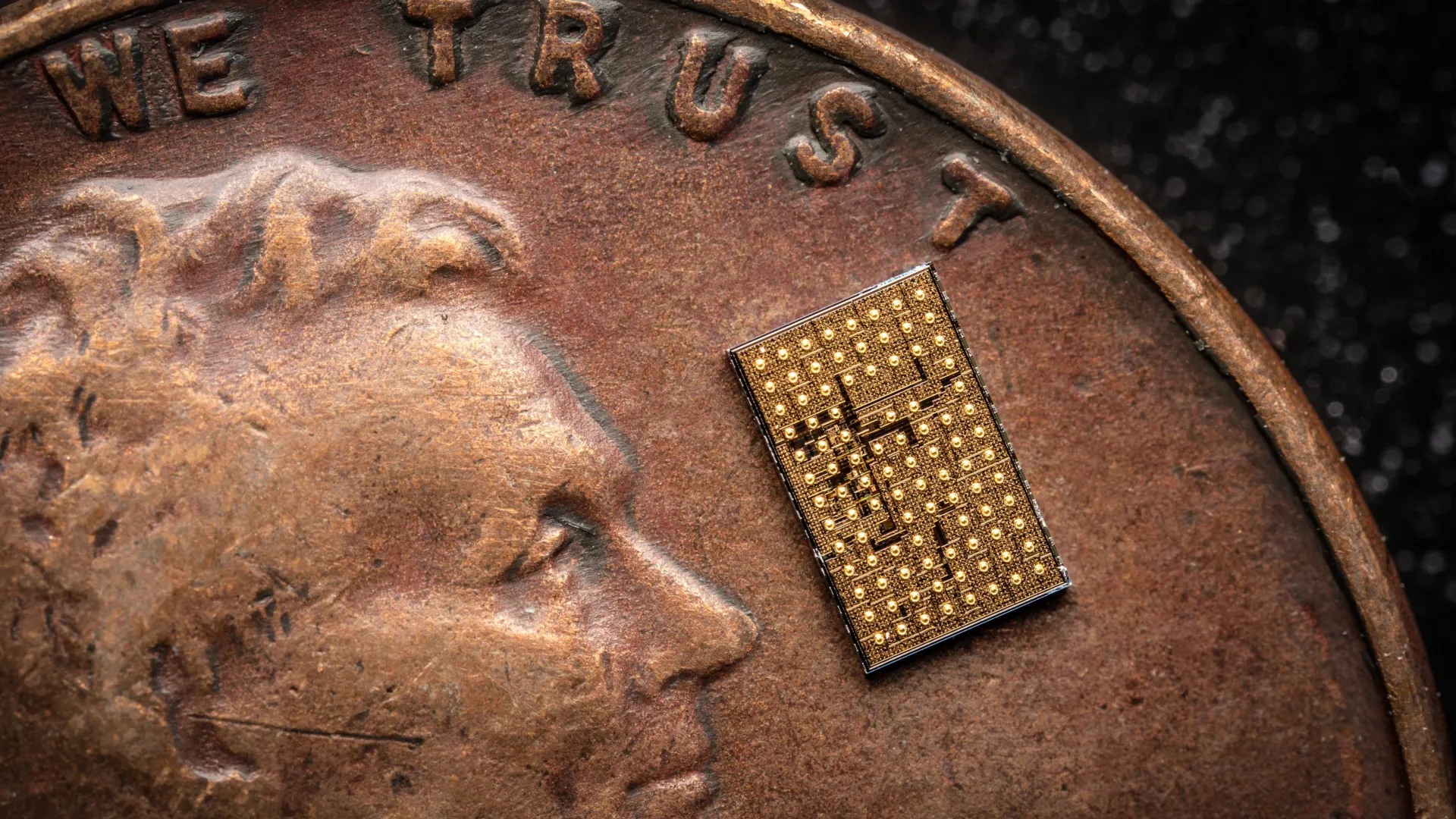
As the global appetite for digital processing power surges—driven by the rapid expansion of artificial intelligence, cloud computing, and high-performance gaming—the physical infrastructure of our data centers is reaching a critical inflection point. The energy required to feed the latest generation of Graphics Processing Units (GPUs) is immense, and the traditional methods used to deliver that electricity are becoming a bottleneck. Now, a team of engineers at the University of California San Diego has unveiled a pioneering chip design that promises to rewrite the rules of power conversion, offering a pathway toward significantly more efficient and compact computing systems.
The research, recently published in the journal Nature Communications, details a hybrid DC-DC step-down converter that utilizes piezoelectric resonators rather than traditional magnetic components. By achieving a peak efficiency of 96.2 percent in laboratory testing, the team has signaled a potential shift away from legacy technology that has dominated the industry for decades.
The Bottleneck: Why Data Centers Need a Power Revolution
To understand the magnitude of this breakthrough, one must first understand the "last mile" of power delivery within a server rack. Data centers typically receive electricity from the grid at high voltages, which is then distributed across server boards at 48 volts to minimize transmission losses. However, the sensitive silicon at the heart of a GPU—the engines of modern AI—cannot handle such high potential; they require a delicate, stable supply of electricity usually between 1 and 5 volts.
Bridging the gap between 48 volts and 1 volt is the job of the DC-DC converter. For years, these converters have relied on inductors—components that use magnetic fields to store and transfer energy. While inductors have been the industry standard for a long time, they are reaching their physical limitations. As computing systems become more powerful, they demand higher current in smaller footprints. Inductive converters, however, are bulky, difficult to miniaturize further, and suffer from efficiency drops as the voltage conversion ratio increases.
Chronology of the Innovation: From Magnetic Limits to Mechanical Vibrations
The path to this discovery was paved by a growing recognition within the electrical engineering community that the "inductive era" of power management was hitting a wall.
The Stagnation of Inductive Technology
For decades, engineers have incrementally improved the performance of inductive converters. Through advanced materials and refined manufacturing, these components have become highly optimized. However, according to Professor Patrick Mercier, senior author of the study and a faculty member at the UC San Diego Jacobs School of Engineering, the industry has squeezed nearly all the potential out of magnetic-based designs. "We’ve gotten so good at designing inductive converters that there’s not really much room left to improve them to meet future needs," Mercier noted.
Pivoting to Piezoelectrics
Recognizing this impasse, Mercier’s team—led by doctoral student and first author Jae-Young Ko—began exploring an alternative: piezoelectric resonators. Unlike inductors, which rely on magnetic flux, piezoelectric devices function through mechanical vibrations. When a voltage is applied to a piezoelectric material, it physically deforms; conversely, mechanical pressure generates an electric charge. This mechanism allows for the storage and transfer of energy with theoretically higher efficiency and power density.
The Hybrid Breakthrough
While the concept of piezoelectric converters is not new, their practical implementation has historically been plagued by poor power output and an inability to handle the massive voltage drops required in modern data centers. The UC San Diego team’s breakthrough was the creation of a "hybrid" architecture. By pairing a piezoelectric resonator with a specific configuration of commercially available capacitors, the team created a circuit that distributes the energy load across multiple paths. This design mitigates the stress on the resonator, allowing for a much larger voltage step-down while maintaining exceptional efficiency.
Supporting Data: Testing the Prototype
The performance metrics of the new prototype chip provide a compelling argument for the viability of this technology. During controlled laboratory testing, the researchers subjected the chip to a rigorous conversion scenario: stepping down 48 volts to 4.8 volts.
The results were statistically significant:
- Peak Efficiency: The converter achieved 96.2 percent efficiency, a figure that rivals or exceeds many high-end commercial inductive converters currently on the market.
- Current Delivery: The hybrid configuration delivered approximately four times the output current compared to previous experimental piezoelectric designs, proving that the technology could potentially meet the high-demand requirements of modern GPUs.
- Thermal and Size Impact: Because the hybrid design reduces wasted power, the system generates less heat, which is a major operational expense for data centers. Furthermore, the researchers managed to achieve this performance without significantly increasing the footprint of the chip, validating the claim that piezoelectric systems could be more energy-dense.
Official Perspectives: The Road Ahead
The research has drawn attention from both academic and industrial circles, particularly those involved in the Power Management Integration Center (PMIC), an Industry-University Cooperative Research Center (IUCRC) funded by the National Science Foundation.
Professor Mercier remains cautiously optimistic, emphasizing that while the laboratory success is a milestone, the journey toward commercialization is still in its infancy. "Piezoelectric-based converters aren’t quite ready to replace existing power converter technologies yet," he stated. "But they offer a trajectory for improvement. We need to continue to improve on multiple areas—materials, circuits, and packaging—to make this technology ready for data center applications."
The team’s primary hurdle moving forward is one of manufacturing and integration. Because piezoelectric resonators are mechanical devices, they do not behave like standard electronic components. They cannot be attached to circuit boards using the high-heat, high-speed soldering processes currently used in automated manufacturing. Developing new, scalable integration strategies will be the next major phase of the research.
Broader Implications for the Digital Economy
The implications of this research extend far beyond the walls of a laboratory. If successfully scaled, the transition to piezoelectric-based power conversion could have a cascading effect on the digital ecosystem:
1. Sustainability and Carbon Footprint
Data centers are among the world’s largest consumers of electricity. By improving the efficiency of voltage conversion by even a few percentage points, global data centers could save gigawatt-hours of energy annually. This reduction in power consumption directly correlates to a lower carbon footprint, helping technology companies meet their ambitious sustainability targets.
2. The Future of AI Hardware
As AI models grow in complexity, the demand for "compute-per-watt" is becoming the most important metric in the industry. Efficient power delivery allows for more transistors to be packed into a smaller space without the risk of thermal throttling. This could lead to faster, more powerful AI training chips that consume less power than current generations.
3. Edge Computing and Miniaturization
The benefits of piezoelectric resonators are not limited to massive data centers. As computing migrates to the "edge"—into autonomous vehicles, smart city sensors, and mobile devices—the need for efficient, small-scale power management becomes paramount. A technology that is both smaller and more efficient is a natural fit for these space-constrained environments.
Conclusion: A New Era of Power Engineering
The work conducted at UC San Diego represents a fundamental shift in how we approach the "plumbing" of our digital world. By challenging the long-held reliance on magnetic inductors and successfully demonstrating the viability of hybrid piezoelectric systems, the team has opened a new frontier in electrical engineering.
While significant engineering hurdles remain—specifically in the realms of packaging and mass-manufacturing integration—the research provides a clear roadmap for the future. As the world continues to integrate AI and high-performance computing into every facet of society, innovations like the hybrid DC-DC converter will prove to be the unsung heroes, ensuring that our digital future is not only more powerful but also more sustainable. The path from the lab bench to the server rack is often long, but with this latest development, the transition to a more efficient power paradigm has officially begun.
 Sagoh
Sagoh  Asro
Asro  Siti Muinah