
 By Raul Delapena Setiawan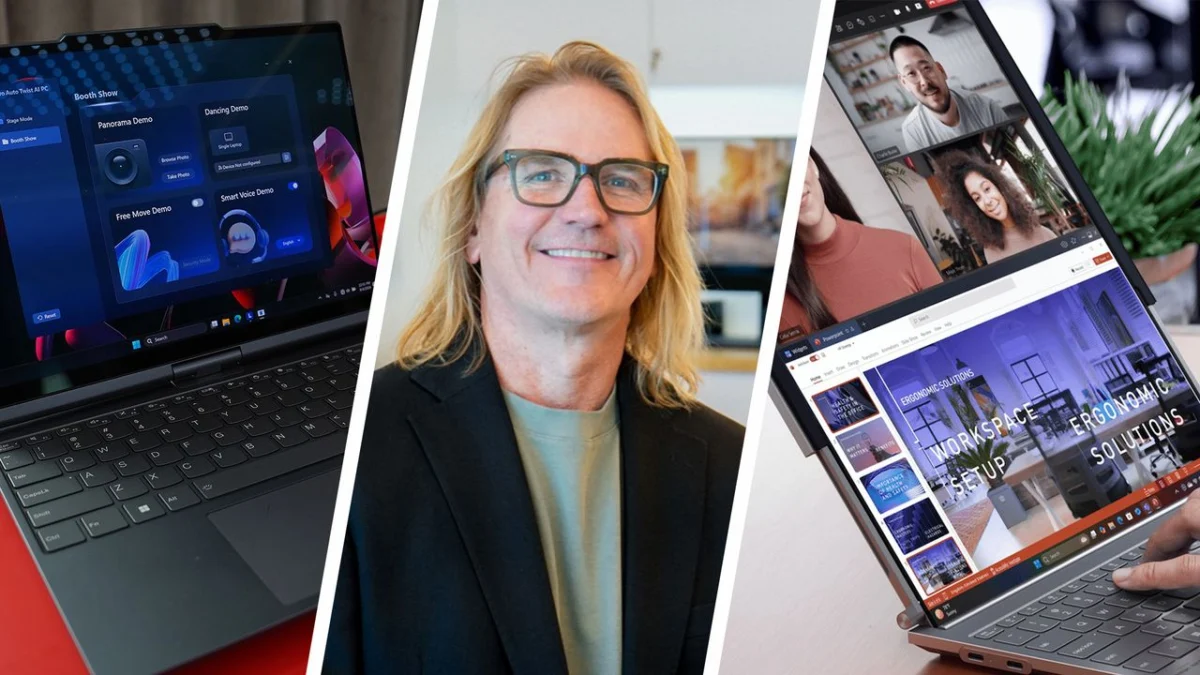
The very notion of a laptop, as we understand it today, stands at a precipice. With artificial intelligence rapidly reshaping the intricate relationship between humans and their digital tools, the architects of tomorrow’s hardware face an unprecedented challenge: to design devices for experiences that are, as yet, largely undefined.
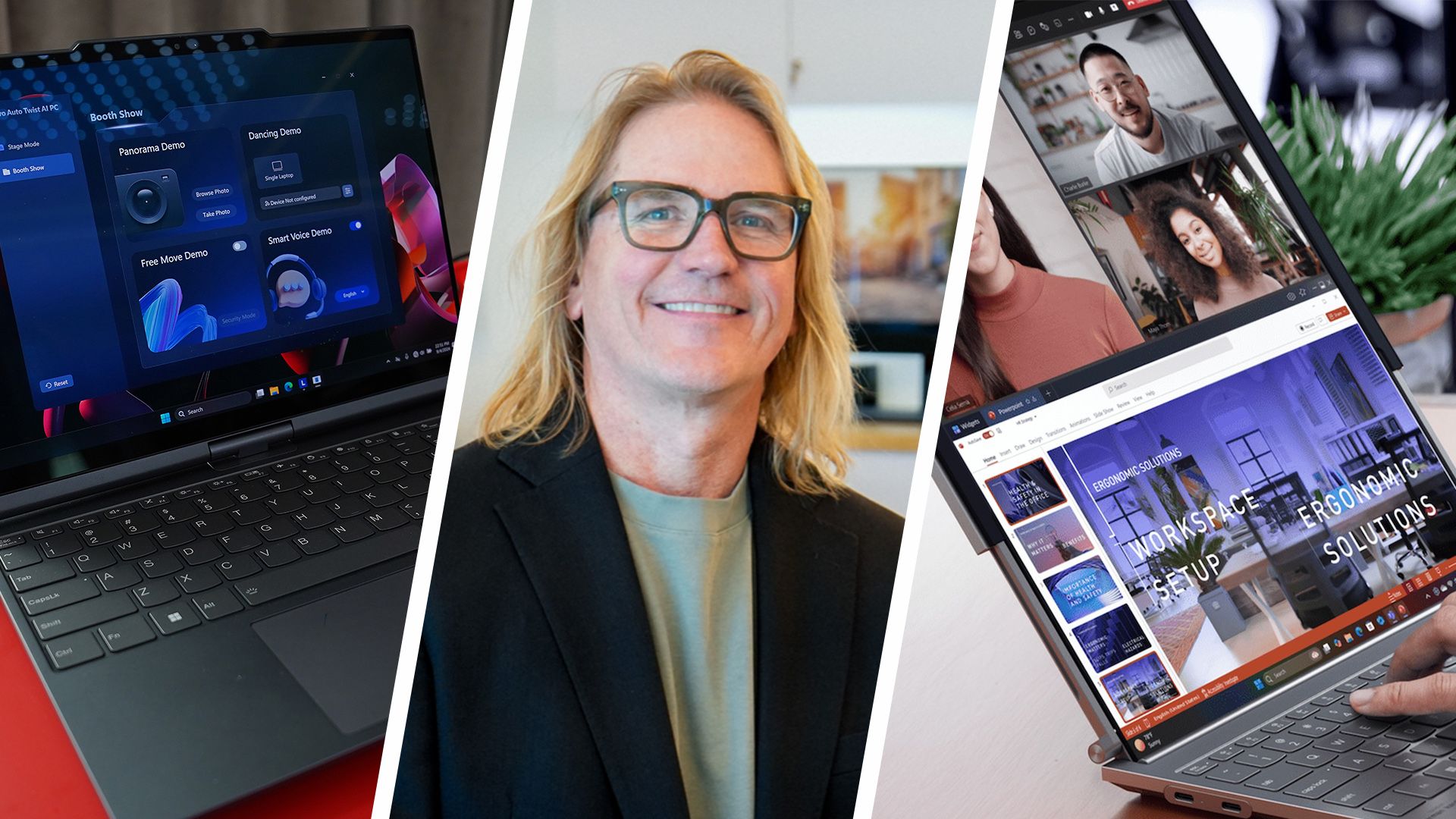
In a revealing and extensive conversation, Brian Leonard, Vice President of Design at Lenovo, offered profound insights into the seismic shifts currently reshaping the field of personal computing. From the emergence of flexible displays and modular components to the gradual decline of purely software-driven interfaces, Leonard painted a picture of a design philosophy in constant, dynamic evolution, driven by the transformative power of AI.
The Dawn of a New Design Paradigm: Beyond Thin and Light
For decades, the guiding principle of laptop design was deceptively straightforward: achieve ever-increasing levels of thinness, lightness, and affordability. This relentless pursuit of portability and cost-efficiency defined an era, pushing engineering boundaries and shaping consumer expectations. However, Leonard firmly asserts that this era is now unequivocally behind us.
"If we look back a couple of years ago, we were focused on how do we make it thinner, how do we make it lighter," Leonard reflects. "And now it’s completely different, because we have the opportunity to change the way we use computers every day."
This isn’t merely an aesthetic evolution or a marginal improvement in specifications. The profound shift, Leonard explains, is driven by the maturation of capable artificial intelligence. AI has opened a conceptual door that hardware designers previously didn’t need to consider: the possibility that the fundamental act of computing – the manual input of text, commands, and data to elicit predictable outputs – may itself be dramatically reconfigured, if not outright replaced.
"I think in the future, our relationship with the devices that we use can dramatically change," he posits. "We can shift people from that manual process of being doers to now directing a process. Giving your intent. And AI helps understand who you are so that it delivers an outcome that’s more personalised to you."
This vision suggests a move away from the user as an operator meticulously executing tasks, towards a role as a conductor, articulating desires and delegating execution to an intelligent system. The device, empowered by AI, would not just process commands but anticipate needs, learn preferences, and proactively deliver tailored outcomes, fundamentally altering the interaction model.
The Indispensable Hardware-Software-AI Triangle
Leonard, a seasoned hardware designer credited with conceptualizing between 700 and 800 notebook designs throughout his career, is remarkably candid about the expanded scope of his responsibilities. The days when hardware could be conceived in isolation are long gone.
"When we look at what the future is, it’s not just about hardware. It’s about this relationship between hardware, software, and AI. So it’s no longer just about what it looks like and what it did, but what are those possibilities?"
This intricate, interdependent triangular relationship forms the cornerstone of Lenovo’s burgeoning AI strategy. At the heart of this strategy is Qira, a personalisation platform designed to move beyond generic AI responses. By controlling and integrating all three pillars – hardware, software, and AI – Lenovo aims to craft experiences that are deeply individual and contextually aware.
The objective is clear: to transition from mass-market, one-size-fits-all digital interactions to a truly bespoke computing experience. "It starts to become a more personalised experience versus a generic experience," Leonard emphasizes, highlighting a future where devices don’t just respond to commands, but truly understand and adapt to their user’s unique workflows, habits, and preferences. This integration promises a more intuitive and efficient digital life, where technology seamlessly anticipates and supports human intent.
The Expanding Canvas: Foldables, Rollables, and the Future of Form Factors
One area where Leonard’s enthusiasm is particularly palpable is in the realm of novel form factors that boldly depart from the ubiquitous clamshell design. Foldable and dual-screen devices, he argues, are not mere technological novelties or experimental curiosities, but rather logical and necessary responses to the evolving demands of computing.
"Foldables, rollables, dual displays… these types of things have a huge role in the future of computing, because even software flows are going to be different."
He elaborates on how Lenovo’s own experimental dual-screen products, such as the Yoga Book, were directly inspired by keen observational research. Designers noted individuals in coffee shops, for instance, often arriving with a conventional laptop, an external keyboard, and even a stand, laboriously assembling makeshift workstations on small café tables. This real-world behavior illuminated a clear user need for greater screen real estate and flexible input options, often simultaneously.
"That is actually what led into the original concept work for Yoga Book," Leonard reveals. "We started building models with two displays; if you’re going to do that and have an accessory keyboard in front, why wouldn’t you have two displays?"
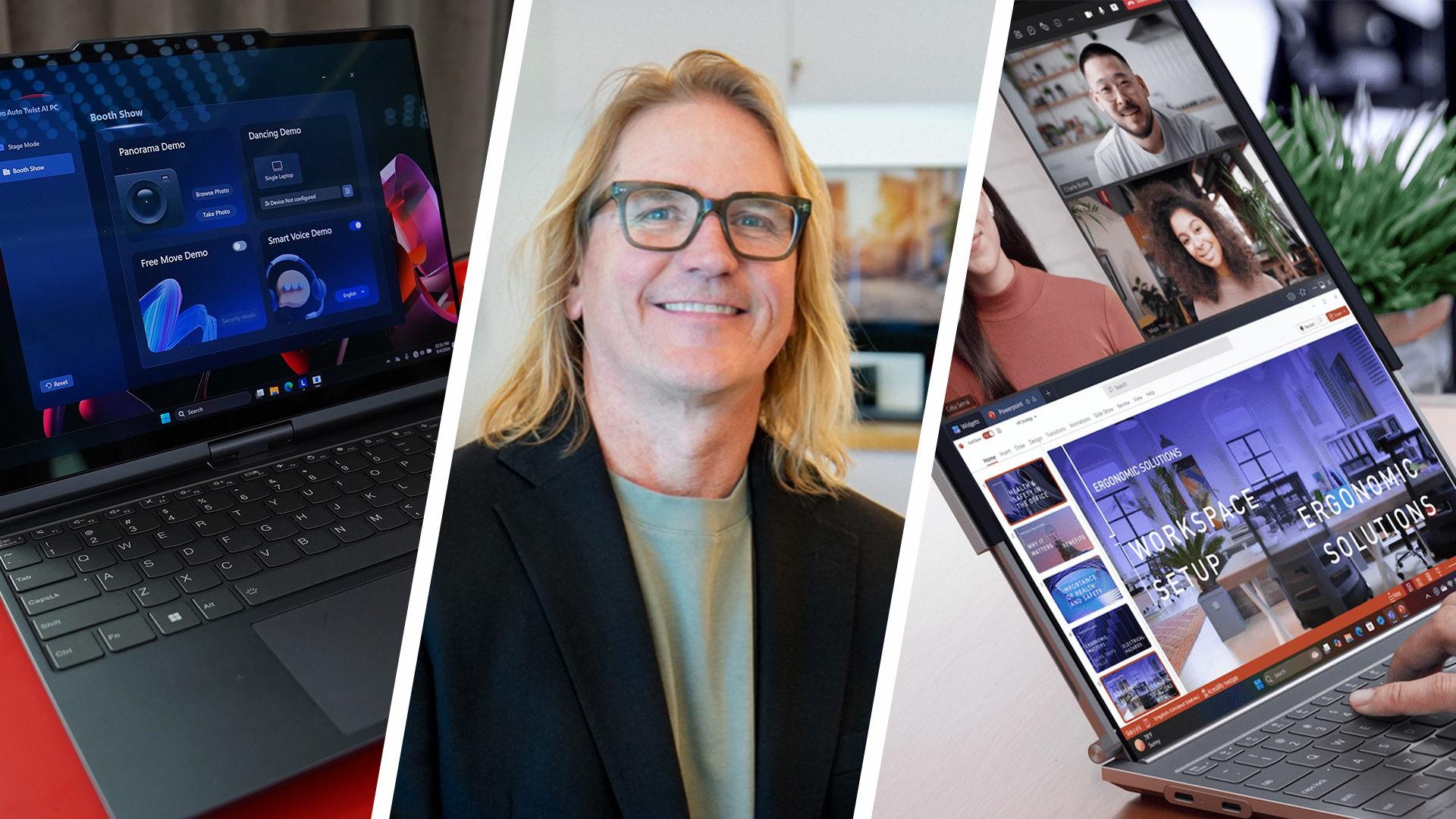
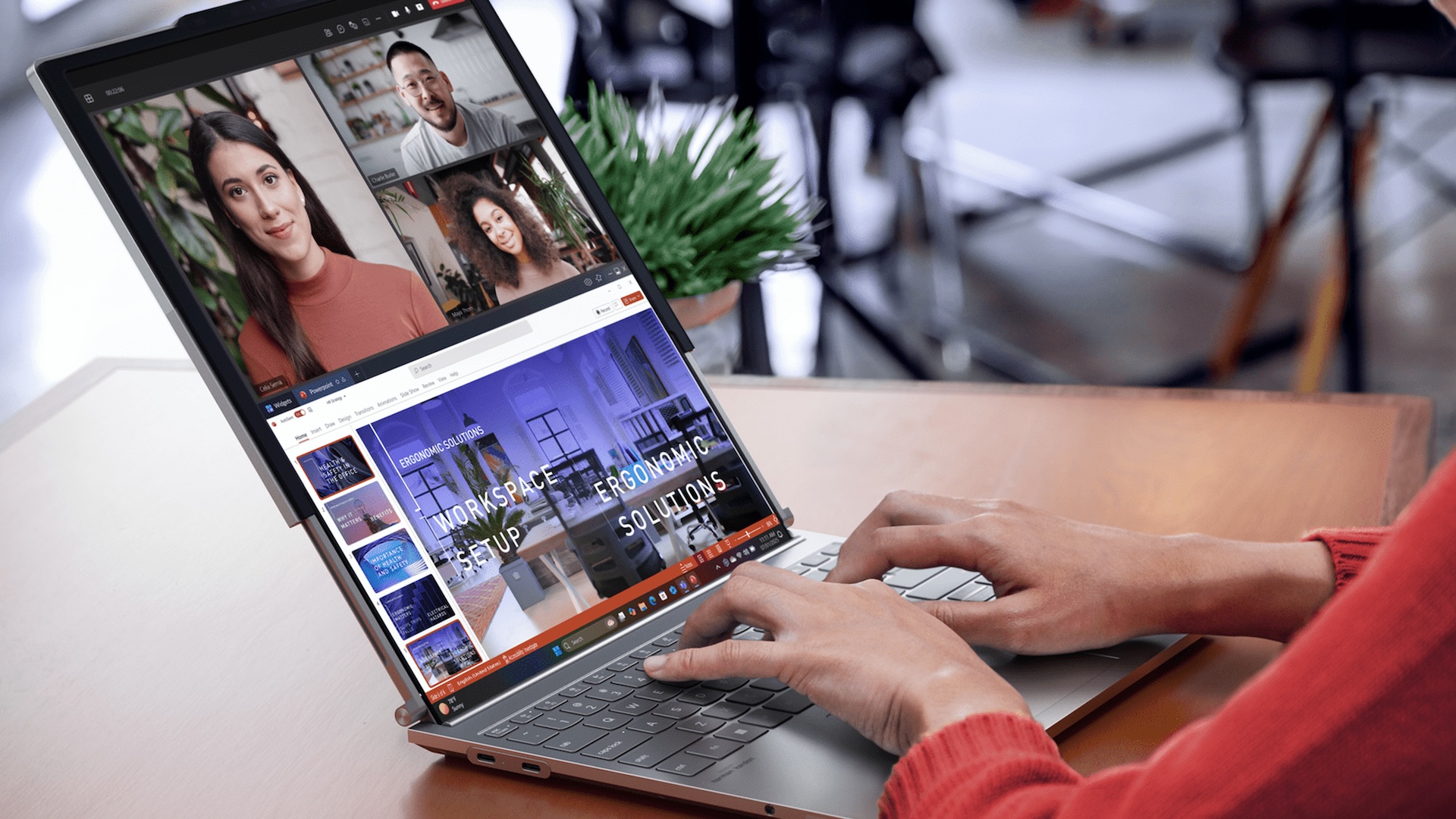
These innovative devices, Leonard contends, challenge the long-held primacy of the physical keyboard, not by eliminating it entirely, but by rendering it optional and transforming it into a modular, adaptable element of the device. The Lenovo ThinkBook Plus Gen 6 Rollable AI PC, for instance, with its unique expandable screen, exemplifies this philosophy, allowing users to dynamically adjust their display area based on their current task.
"I can use a physical keyboard when I really have some intense writing to do, but I can also use a digital keyboard if it’s just a little bit of editing," Leonard explains. "It starts to let me make the choice." This flexibility empowers users to optimize their setup for various tasks, from intensive content creation requiring tactile feedback to casual browsing or quick edits where a digital interface suffices, offering a fluid and adaptable user experience previously unattainable with rigid clamshell designs.
The Ecosystem Imperative: Seamless Integration for a Connected World
Beyond individual device innovation, however groundbreaking, Brian Leonard articulates a broader design philosophy centered on the imperative of building products that function as integral parts of a coherent, interconnected system, rather than isolated objects. In an increasingly multi-device world, the utility of a single gadget, however advanced, is diminished if it cannot seamlessly interact with its digital brethren.
"We’ve been working on a piece of software called Smart Connect, which connects my phone, my tablet, and my PC together so I can use the value of each one of those devices independently," Leonard explains. The initial phase focused on enabling devices to work independently but within a shared framework. The next, more ambitious step, however, targets genuine functional integration: "But the next step is: I need a picture, or I need to make a sketch on my tablet for the presentation I’m working on, and instantly I sketch it, and it’s available to me."
The aspiration here transcends mere visual consistency or shared branding across devices. It’s about creating an utterly frictionless workflow, where digital assets and creative outputs flow effortlessly between platforms. This vision directly addresses a common frustration in modern computing: the cumbersome steps often required to transfer files or content between devices.
"I don’t want to take a picture and email it to myself and then open it up in email and offload it and then put it into a presentation," Leonard stresses. "That should be seamless." This emphasis on seamlessness speaks to a future where the distinction between devices blurs, and the user’s focus remains on the task at hand, unhindered by technological boundaries. Smart Connect, in this context, represents a strategic move to design for the entire user journey, ensuring that the collective utility of an ecosystem far surpasses the sum of its individual parts.

The Return of Tangibility: Modularity, Repairability, and Physical Buttons
Our conversation also delved into a quieter, yet increasingly influential, movement within consumer electronics: the growing demand for devices that are inherently more repairable, upgradable, and customizable at a component level. Brands like Framework and Fairphone have successfully cultivated dedicated followings by prioritizing these principles, and Leonard sees this as a natural and historically resonant direction for Lenovo as well. It’s a return to values deeply embedded in the company’s heritage.
"I can remember opening up the palm rest on a historical ThinkPad, and inside there are blue tabs to take out the hard drive, the optical drive, the memory," Leonard reminisces. "At that point, it was table stakes for how we designed computers. Somewhere along the way, the world focused on thin and light."
That singular focus on miniaturization and minimalist aesthetics, he suggests, came at a significant cost: sacrificing user agency over their devices and contributing to a disposable culture. The industry, he believes, is now undergoing a crucial course correction, driven by evolving consumer values and a heightened sense of corporate responsibility.
"The world is now focused on different things: the responsibility of the products, which may be about sustainability, accessibility, as well as repairability," Leonard states. "That’s the true value of some of the modular things; making these things repairable so that it’s easy to upgrade as well as get service parts." This commitment to modularity and repairability aligns not only with environmental sustainability goals but also empowers users, offering greater longevity and customization options for their tech investments.
On the broader question of tactility and the role of physical controls, Brian Leonard is equally direct and passionate. Asked about design trends he believes have run their course, he points immediately to the wholesale migration of all controls to touchscreens.
"I really hope we’re done with: all we have to do is give you a screen, and you press and do things on the screen," he asserts. Drawing a parallel with another industry, he adds, "I love the trend in automotive where they put the buttons back. I hope we get away from things being completely software-driven and bring back some of those natural, multimodal things. The tactility."
This isn’t mere nostalgia for a bygone era. Leonard explains that the haptic and physical quality of an interface communicates something fundamental about the value, craftsmanship, and intended user experience of an object. He traces Lenovo’s own profound keyboard heritage directly back to the iconic IBM Correcting Selectric typewriter, a lineage that continued through the ThinkPad’s acquisition from IBM. This legacy underscores a decades-long commitment to considered physical design and the profound impact of well-engineered tactile feedback on user satisfaction and efficiency. The return of physical buttons signifies a recognition of human preference for tangible, intuitive controls over an exclusively flat, visual interface.
Designing a Dream Workspace: An Environmental, Not Just a Device, Focus
When prompted to imagine what he would design if completely unfettered by commercial constraints, Brian Leonard’s response was refreshingly telling. Rather than describing a singular, revolutionary device, he articulated a vision for an integrated environment.
"I would really be interested in designing a workspace that encompassed an ecosystem of devices that were about my person, focused on it more like the cockpit of a car versus a desk and a chair. To get out of the scope of the devices and design an environment that supported the devices."
This profound insight encapsulates the broader trajectory of Leonard’s thinking: a decisive move away from conceiving of technology purely as discrete objects, and towards a holistic understanding of the user experience. It’s a shift from isolated screens and peripherals to a seamlessly connected, personalized, and multimodal workspace – a true "cockpit" designed around human needs and intentions. Such an environment would anticipate, adapt, and respond to the user, making the interaction with technology feel less like operating machinery and more like an extension of one’s own capabilities.
What emerges from this wide-ranging conversation with Brian Leonard is a vivid picture of a design discipline in genuine, exhilarating flux. Far from being anxious about these profound changes, the Lenovo design chief is palpably energized by them. The pressing questions that preoccupied hardware designers for the previous two decades – how thin, how light, how cheap – have now given way to something far more open-ended and human-centric: how should a device truly understand you, adapt to your unique needs, and work in seamless concert with all the other devices that populate your life?
Leonard’s insights suggest that the most compelling design decisions of the coming era will not be measured in millimetres or material compositions, but rather in the sophistication of the intelligence woven into the very fabric of the human-machine relationship. Whether through the ingenious adaptability of foldable screens, the reassuring return of physical controls, or the transformative power of AI that intimately learns the contours of individual intent, the future of personal computing appears poised to be one that is, finally and fundamentally, genuinely personal. It’s a future where technology doesn’t just perform tasks, but enriches lives by becoming an intuitive, integral partner in every aspect of our digital existence.
 Evan Lee Salim
  Nana
Nana  Ammar Sabilarrohman